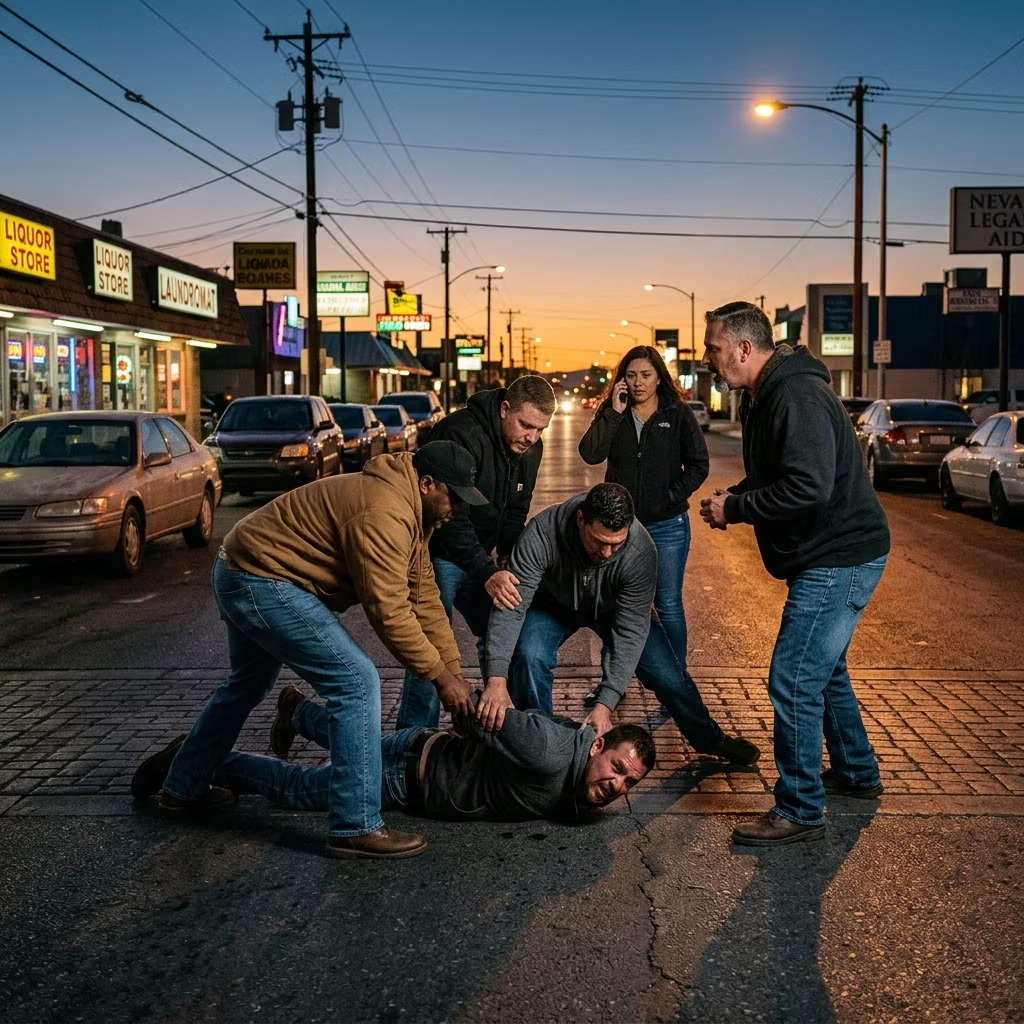
Citizen’s arrest sounds like something out of a movie: a private individual detaining an alleged wrongdoer until police arrive. In Nevada, this power is real—but it is far more restricted than many people assume. A recent Nevada Supreme Court decision involving an overzealous vigilante illustrates both the reach and the limits of what ordinary people can legally do when they take the law into their own hands.
This article explains Nevada’s citizen’s arrest rules, unpacks the Supreme Court’s ruling in Ser v. State, and offers practical guidance on when stepping in helps—and when it can put you behind bars instead of the person you’re trying to stop.
What Is a Citizen’s Arrest in Nevada?
Under Nevada law, a citizen’s arrest occurs when a private person restrains another individual based on suspected criminal activity, intending to turn that person over to law enforcement. It is a narrow exception to the general rule that only trained police officers can make arrests.
The governing statute is NRS 171.126, which lays out when a private person may lawfully arrest someone and under what circumstances that power applies.
When Private Citizens May Arrest
According to the Nevada Supreme Court, NRS 171.126 authorizes private citizens to arrest in three specific situations:
- Any public offense in your presence: You personally see a crime occur.
- A felony actually committed: The suspect has in fact committed a felony, even if you did not witness it.
- Reasonable cause for a felony: A felony has in fact been committed, and you have reasonable cause to believe the person you detain committed it.
Critically, the Nevada Supreme Court has clarified that when the crime occurs outside your presence, the citizen’s arrest authority extends only to Nevada felonies, not to alleged violations of federal law.
What Counts as “Reasonable Cause”?
“Reasonable cause” is similar to the concept of probable cause used for police. It means a person in your position, with your information, would reasonably believe that:
- A felony actually occurred; and
- The person you are detaining is the one who committed it.
You cannot rely purely on rumors, guesses, or vague suspicions. Acting on weak information increases the risk that your detention will be viewed as an unlawful arrest, exposing you to criminal and civil liability.
Limits on Citizen’s Arrests: Nevada’s Legal Boundaries
Despite the broad-sounding idea of ordinary people arresting criminals, Nevada places careful limits on this power. These limits focus on two main concerns: what type of crime is involved and how much force is used.
State vs. Federal Crimes: A Critical Distinction
The key takeaway from Ser v. State is that Nevada’s citizen’s arrest statute does not authorize private persons to arrest for federal felonies committed outside their presence.
In other words:
- You may act on Nevada felonies under the conditions in NRS 171.126.
- You may not use Nevada’s citizen’s arrest powers to enforce alleged federal crimes that you did not personally witness.
This distinction matters because many serious offenses—such as federal obscenity violations, certain firearms crimes, or federal fraud schemes—are prosecuted under federal law. Even if the conduct might also violate state law, a private person who frames their actions as enforcing federal law risks stepping outside Nevada’s statutory protections.
Force: Only What Is Reasonably Necessary
Even when a citizen’s arrest is authorized, Nevada law limits the amount of force a private individual may use. The general rule is that only reasonable force—no more force than necessary under the circumstances—is permitted.
Key principles include:
- Minimal necessary force: Physical restraint should be no more than needed to keep the suspect from fleeing until police arrive.
- Deadly force only in self-defense: Deadly force is not justified merely to stop a suspect from escaping or to punish them. It is allowed only when the person performing the arrest reasonably believes it is necessary to protect against serious bodily harm or death.
- No punitive force: Force cannot be used as punishment or retaliation after a suspect is subdued.
Time and Place: When Citizen’s Arrests Can Occur
Unlike some limitations that apply to law enforcement, Nevada’s rules for private arrests are not restricted to daytime hours. Citizen’s arrests may occur at any time, day or night, provided the legal criteria are met.
However, individuals must still respect other laws, such as those governing trespass, burglary, and unlawful entry. Forcing your way into someone’s home in the name of a citizen’s arrest can itself be a serious crime if the legal requirements are not satisfied.
A Vigilante’s Misstep: The Ser v. State Case
The Nevada Supreme Court case often cited in discussions of citizen’s arrest is Ser v. State (2025). It involved a private individual who repeatedly took it upon himself to target people he believed were committing serious wrongdoing. His attempt to use citizen’s arrest authority backfired, leading to his own criminal convictions.
Background of the Case
In Ser v. State, the defendant tried to justify his conduct by arguing that he was performing a lawful citizen’s arrest based on alleged federal felony offenses by his targets. He believed that federal obscenity or related laws were being violated and attempted, more than once, to intervene personally.
Instead of being treated as a good Samaritan, he was charged with multiple crimes arising from his conduct during these episodes. Ultimately, a jury convicted him, and he appealed, arguing that the trial court had improperly limited his defense and failed to instruct jurors about his claimed authority under Nevada’s citizen’s arrest statute.
Key Legal Questions Before the Nevada Supreme Court
The Supreme Court had to answer several important questions:
- Does NRS 171.126 authorize a citizen’s arrest for a federal felony committed outside the arrestor’s presence?
- Was the defendant entitled to present evidence and jury instructions based on the alleged federal felonies?
- Did the trial court have a duty to give additional jury instructions on its own (sua sponte) regarding lesser-included offenses or the citizen’s arrest theory?
The Court’s Core Holdings
The Nevada Supreme Court upheld the defendant’s convictions and clarified several critical points of law.
| Issue | Court’s Ruling | Practical Impact |
|---|---|---|
| Scope of citizen’s arrest under NRS 171.126 | NRS 171.126 does not permit citizen’s arrests for federal felonies committed outside the arrestor’s presence. | Private individuals cannot invoke Nevada’s citizen’s arrest statute to enforce alleged federal crimes they did not directly witness. |
| Evidence and jury instructions about federal offenses | Because the statute didn’t cover the alleged federal felonies, the trial court properly excluded related evidence and instructions. | Defendants cannot build a legal defense on citizen’s arrest powers where those powers do not apply. |
| Unrequested jury instructions | The district court was not required to give certain instructions on its own initiative, and the defendant forfeited arguments by not requesting them. | Defense counsel must affirmatively request desired jury instructions; failing to do so can limit grounds for appeal. |
Why the Defendant’s Vigilantism Failed
From a practical perspective, the defendant’s behavior in Ser v. State illustrates how easily a self-styled vigilante can become a criminal defendant. Several factors contributed to the failure of his citizen’s arrest defense:
- Wrong legal foundation: He relied on federal law as the basis for his actions, even though Nevada’s citizen’s arrest statute does not extend to federal felonies committed outside his presence.
- Repeated confrontations: Multiple attempts at “enforcement” suggested a pattern of vigilantism rather than a one-time emergency response.
- Excessive conduct: His methods went beyond reasonable restraint and raised independent criminal concerns such as unlawful entry or other offenses, undermining any claim of lawful arrest authority.
- Procedural missteps at trial: Failing to request specific jury instructions reduced his ability to challenge the trial court’s decisions on appeal.
Risks of Playing Vigilante in Nevada
Although Nevada recognizes citizen’s arrest in narrow circumstances, the legal and practical risks for would-be vigilantes are substantial. Misjudging the law or the facts can turn an attempted citizen’s arrest into a criminal act.
Possible Criminal Liability
An unlawful citizen’s arrest can expose a private person to multiple charges, depending on their conduct. These may include:
- False imprisonment – for unlawfully detaining someone without legal authority.
- Battery – for using physical force not justified as reasonable restraint.
- Assault – for placing another person in fear of imminent harm.
- Burglary or unlawful entry – for breaking into a dwelling or other protected space under the guise of making an arrest.
- Weapons offenses – for brandishing or improperly using firearms or other weapons during the confrontation.
Civil Lawsuits and Financial Exposure
Beyond criminal penalties, a private person who misuses citizen’s arrest powers can be sued in civil court. Potential claims include:
- False arrest and false imprisonment
- Assault and battery
- Intentional infliction of emotional distress
- Negligence – including negligent use of force
Judgments or settlements in these cases can involve substantial damages, especially if the detained person suffers serious physical injury or emotional trauma.
Practical Dangers and Safety Concerns
Aside from legal consequences, attempting a citizen’s arrest can be physically dangerous:
- The suspect may be armed or under the influence of drugs or alcohol.
- Bystanders might misunderstand who the aggressor is and intervene against the would-be arrestor.
- Police arriving on the scene may initially see the private person using force as the threat.
For all these reasons, law enforcement agencies and legal experts generally advise that private individuals prioritize calling the police over physically intervening, except in immediate, life-threatening situations.
Best Practices for Nevada Residents
For those who still feel compelled to act in emergencies, there are ways to reduce risk and stay within the law’s narrow path.
When It May Be Safer to Intervene
Intervention is most defensible when:
- You personally witness a clear, ongoing crime, especially a violent felony.
- Someone faces immediate danger of serious bodily harm, and waiting for police is not feasible.
- You can intervene with minimal force, such as blocking an exit or loudly directing the person to stop, rather than initiating a physical struggle.
Safer Alternatives to Citizen’s Arrest
In many circumstances, you can contribute to public safety without attempting a physical arrest:
- Call 911 immediately: Provide specific details about the suspect, location, and nature of the crime.
- Gather evidence: If safe, note license plates, take photos or video, or record descriptions that can help police later.
- Protect victims and bystanders: Direct people away from danger, help them find shelter, or provide first aid if you are trained.
Checklist: Before You Consider a Citizen’s Arrest
Ask yourself these questions:
- Is this clearly a Nevada crime, not merely a possible federal offense?
- Is it a felony or a crime occurring right in front of me, as required by NRS 171.126?
- Do I have reasonable cause to believe this particular person committed the crime?
- Can I limit my response to minimal, non-deadly force?
- Have I called law enforcement and clearly communicated what is happening?
If your answer to any of these questions is “no,” the safest legal option is usually to avoid a physical arrest and let law enforcement handle the situation.
Frequently Asked Questions About Citizen’s Arrest in Nevada
Can I perform a citizen’s arrest for any crime I see?
No. Nevada law allows a private person to arrest for any public offense committed in their presence, but if the crime occurs outside your presence, the statute limits you to situations involving Nevada felonies that have in fact been committed, combined with reasonable cause to believe the suspect is responsible.
Can I make a citizen’s arrest based on a suspected federal crime?
Generally not. The Nevada Supreme Court has held that NRS 171.126 does not authorize citizen’s arrests for federal felonies committed outside the arrestor’s presence. If your entire justification rests on enforcing federal law you did not personally witness, you are likely outside the statute’s protection.
Am I allowed to enter someone’s home to make a citizen’s arrest?
Forcing entry into a home is extremely risky. While Nevada’s citizen’s arrest provisions contemplate some ability to apprehend a suspect, breaking into a residence without clear statutory authority could lead to charges such as burglary or home invasion if the arrest is deemed unlawful. Courts scrutinize these actions carefully, and private citizens do not enjoy the same legal protections as police executing a warrant.
What if I reasonably believed I was acting within the law?
A mistaken but honest belief may sometimes affect how your actions are viewed, but it does not automatically provide a defense. If your understanding of the law is wrong—for example, believing you could arrest for a federal crime outside your presence—courts may still treat your conduct as criminal. Legal reasonableness is judged by objective standards, not just your personal intentions.
Should I talk to a lawyer if I’m involved in a citizen’s arrest incident?
Yes. If you have detained someone, used force, or been accused of overstepping your authority, consult a qualified Nevada criminal defense attorney as soon as possible. They can evaluate whether NRS 171.126 applies, advise you on potential defenses, and help protect your rights during any investigation or prosecution.
References
- NRS 171.126 – Arrest by Private Person — Nevada Legislature. Accessed 2026-07-10. https://www.leg.state.nv.us/NRS/NRS-171.html
- Nevada Supreme Court Keeps Overzealous Vigilante Behind Bars for Excessive Citizen’s Arrest — FindLaw Legal Blogs. 2025-11-25. https://www.findlaw.com/legalblogs/law-and-life/nevada-supreme-court-keeps-overzealous-vigilante-behind-bars-for-excessive-citizens-arrest/
- Ser v. State (87890) — Supreme Court of Nevada (via Justia). 2025-11-20. https://law.justia.com/cases/nevada/supreme-court/2025/87890.html
- “Citizen’s Arrest” Law in Nevada – A Legal Guide — Las Vegas Defense Group. Updated 2024. https://702defense.com/nrs/171-126-citizens-arrest/
- Citizen’s Arrest Gone Awry — Courthouse News Service. 2025-11-20. https://www.courthousenews.com/citizens-arrest-gone-awry/