
How Circumstantial Evidence Can Prove a DUI
Learn how indirect signs like driving behavior, officer observations, and test refusals can be enough to support a DUI conviction.
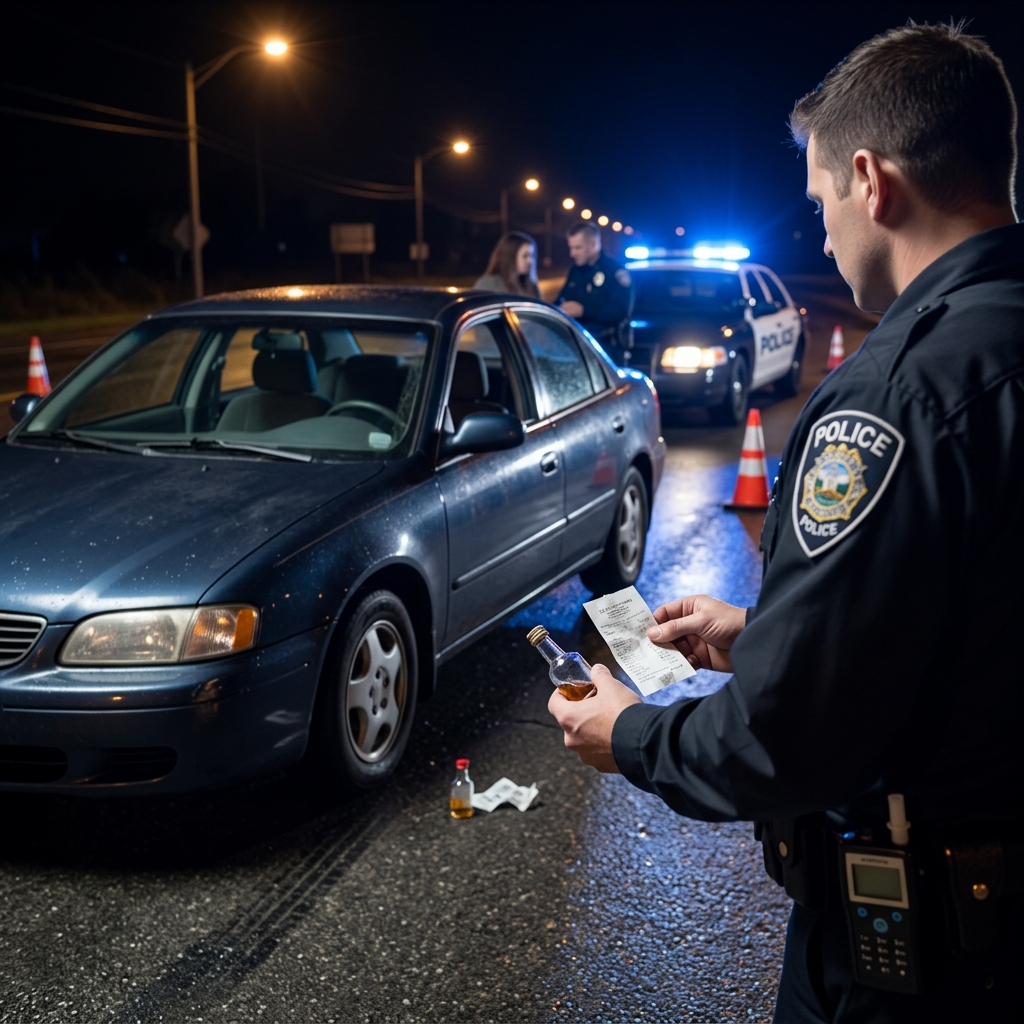
Many people assume that a DUI case lives or dies on the results of a breath, blood, or urine test. In reality, a driver can be convicted of impaired driving based entirely on circumstantial evidence, even when no chemical test was performed or the results are unavailable. Understanding how prosecutors use circumstantial proof—and how defense attorneys challenge it—is critical if you are facing DUI charges.
This guide explains the role of circumstantial evidence in DUI prosecutions, illustrates common types of indirect proof, and outlines key defense strategies that can help protect your rights.
Direct Evidence vs. Circumstantial Evidence in DUI Cases
Criminal law distinguishes between direct and circumstantial evidence, and both can appear in a DUI case.
What Counts as Direct Evidence?
Direct evidence is proof that, if believed, immediately establishes a fact without the need to draw inferences.
- Testimony from an officer who saw the driver consuming alcohol moments before driving.
- Video footage showing the defendant behind the wheel and appearing to drink.
- Admissible chemical test results reporting a specific blood alcohol concentration (BAC), such as 0.10%.
These forms of evidence speak directly to a critical issue—such as intoxication or driving—without requiring the judge or jury to fill in gaps.
How Circumstantial Evidence Works
Circumstantial evidence, sometimes called indirect evidence, does not directly prove a fact. Instead, it establishes other facts that reasonably support an inference that the key fact occurred.
- Slurred speech, bloodshot eyes, and an odor of alcohol may suggest intoxication.
- Tire marks, vehicle damage, and the driver found alone near a damaged car can suggest that the person was driving at the time of a crash.
- A refusal to take a breath test can suggest the driver believed they would fail the test.
Courts routinely instruct juries that they may rely on circumstantial evidence and that it is not inherently weaker than direct evidence. In many criminal cases, including DUI, convictions rest largely or entirely on circumstantial proof.
Why Circumstantial Evidence Matters in DUI Prosecutions
There are several reasons prosecutors regularly build DUI cases on circumstantial evidence, sometimes without any chemical test results.
- Tests are not always available. The driver may refuse testing, equipment may malfunction, or medical issues may complicate drawing blood.
- Statutes focus on impairment, not just numbers. Many jurisdictions make it illegal to drive while impaired to the point of being unable to operate safely, regardless of the measured BAC.
- Indirect signs can be compelling. Erratic driving, dangerous behavior, and obvious physical signs of intoxication often convince juries even without a precise alcohol level.
For example, in Pennsylvania, courts have held that the prosecution does not need to prove an exact BAC for certain DUI charges. Instead, they may rely on circumstantial evidence such as the driver’s behavior, appearance, and manner of driving to show that the person was unable to drive safely due to alcohol.
Common Types of Circumstantial Evidence in DUI Cases
DUI prosecutions generally combine several strands of circumstantial evidence to create a narrative of impairment. Each piece may be weak on its own but more persuasive when viewed together.
Driving Behavior and Road Conditions
Police officers and witnesses often describe the driver’s conduct before the stop or crash.
- Weaving across lane lines or drifting into other lanes.
- Driving significantly below or above the posted speed limit without explanation.
- Failing to use headlights at night or ignoring traffic signals.
- Sudden braking, jerky maneuvers, or delayed reactions to hazards.
Such behavior can support an inference that the driver was impaired, particularly when no other obvious explanation (like weather or mechanical failure) exists.
Physical Appearance and Speech
Officers routinely document their observations of a driver’s physical condition. These details are classic forms of circumstantial evidence of intoxication.
- Red, glassy, or watery eyes.
- Flushed face or droopy eyelids.
- Slurred, mumbled, or unusually slow speech.
- Difficulty following instructions or answering simple questions.
While none of these signs conclusively prove intoxication—each can have innocent causes—they may appear persuasive when combined with other factors.
Odor of Alcohol and Surroundings
The smell of alcohol, containers in the vehicle, and environmental context often appear in police reports and trial testimony.
- Odor of alcoholic beverages on the driver’s breath or clothing.
- Open containers, spill marks, or bar receipts found in the car.
- Admission of recent drinking or leaving a bar or party.
Courts treat these facts as circumstantial evidence suggesting consumption of alcohol, which may support an inference of impairment when combined with other observations.
Field Sobriety Tests
Field sobriety tests (FSTs) are standardized physical and cognitive tasks officers ask drivers to perform during roadside investigations. Examples include the walk-and-turn, one-leg stand, and horizontal gaze nystagmus (HGN) tests.
How they are used:
- Officers observe balance, coordination, ability to follow instructions, and eye movements.
- Poor performance may be introduced as evidence of impairment at trial.
- In some jurisdictions, even without a breath test, credible testimony about FST performance can be enough to support a guilty verdict.
Although some aspects of field sobriety tests produce direct observations (such as the officer’s testimony about what they saw), the overall significance—whether the driver was impaired—remains circumstantial, because the jury must infer intoxication from the test results.
Chemical Test Refusals
When a driver lawfully offered a breath or blood test refuses to comply, that refusal can itself be treated as circumstantial evidence.
- Prosecutors may argue that refusal suggests the driver believed they would fail the test.
- Some states allow the jury to consider the refusal as evidence of consciousness of guilt.
- Refusal can also trigger administrative penalties, such as automatic license suspension, separate from the criminal case.
While refusal does not directly prove intoxication, courts often treat it as a significant circumstantial factor when evaluating the total evidence.
Crash Scene Evidence and Who Was Driving
In collision cases, one dispute may be whether the defendant was actually the driver. When no one saw the person behind the wheel at the moment of impact, prosecutors must rely on circumstantial evidence.
- Location of injuries and bruises on the defendant corresponding to the driver’s side of the vehicle.
- Position of the seat, steering wheel, and deployed airbags.
- Defendant found alone near the vehicle with keys in hand or in the ignition.
- Witness statements placing the defendant in the driver’s seat shortly before the crash.
These facts allow the jury to infer that the defendant was driving, which is a necessary element of a DUI offense.
Legal Standards Governing Circumstantial Evidence
Even though circumstantial evidence can support a conviction, courts impose important safeguards.
Proof Beyond a Reasonable Doubt
In every criminal case, including DUI, the prosecution must prove each element of the offense beyond a reasonable doubt. This standard applies whether the evidence is direct, circumstantial, or a combination.
Jurors are often instructed that:
- They may rely on circumstantial evidence as long as the inferences they draw are reasonable.
- They must be convinced of guilt to a high level of certainty, not just suspicion or probability.
- If there is a reasonable alternative explanation for the circumstantial evidence that is consistent with innocence, they should acquit.
Statutory Elements of Impairment
Different jurisdictions define DUI or DWI somewhat differently, but many statutes include a version of the following requirement: the driver must be under the influence of alcohol or drugs to the extent that they are incapable of safe driving.
Under such statutes:
- The government does not always need to show a particular BAC figure.
- Evidence of unsafe driving, physical signs of intoxication, and poor field test performance can combine to establish that the driver could not operate a vehicle safely.
- Even a BAC below the per se limit might still lead to conviction if circumstantial evidence shows substantial impairment.
Examples of Circumstantial Evidence Building a DUI Case
The following table summarizes how common pieces of circumstantial evidence can be used together to support a DUI prosecution.
| Type of Evidence | What It Shows | Possible Inference |
|---|---|---|
| Weaving and erratic speed | Unsteady vehicle control and failure to maintain lane | Driver’s ability to safely operate the vehicle is impaired. |
| Odor of alcohol and open container | Recent alcohol consumption in or near the time of driving | Driver may be under the influence while driving. |
| Slurred speech, bloodshot eyes | Physical indicators commonly associated with intoxication | Alcohol or drug use affecting physical and cognitive functions. |
| Poor field sobriety test performance | Difficulty with balance, coordination, and following instructions | Significant impairment inconsistent with safe driving. |
| Refusal to take breath test | Driver declines objective measurement of BAC | Driver believes test would show unlawful level of intoxication. |
| Injury pattern and seat position after crash | Physical clues about who was behind the wheel | Defendant was the driver at the time of collision. |
Defense Strategies for Challenging Circumstantial DUI Evidence
Although circumstantial evidence can be powerful, it is also vulnerable to challenge. Experienced defense attorneys look for alternative explanations and weaknesses in the prosecution’s inferences.
Highlighting Innocent Explanations
Many signs of impairment have non-alcohol-related causes:
- Medical conditions such as diabetes, neurological disorders, or eye problems may affect speech, balance, or gaze.
- Fatigue or stress can cause red eyes, slowed responses, and trouble concentrating.
- Environmental factors including uneven surfaces, poor lighting, or bad weather can make field sobriety tests more difficult.
By presenting medical records, expert testimony, or other evidence, the defense can show that the circumstantial signs may not be reliable indicators of intoxication.
Questioning Observations and Procedures
Officers are human observers, and their conclusions can be challenged, especially if procedures were not followed correctly.
- Was the officer properly trained and certified in administering standardized field sobriety tests?
- Did the officer document observations promptly, or are there inconsistencies between the report and later testimony?
- Were there language barriers or hearing issues that affected the driver’s ability to understand instructions?
Any inconsistency or deviation from protocol can undermine the reliability of circumstantial evidence.
Attacking the Logic of Inferences
The defense can argue that the prosecution’s inferences go beyond what the evidence reasonably supports.
- An odor of alcohol proves consumption, but not the quantity consumed or the level of impairment.
- A test refusal may stem from mistrust of police or fear of needles rather than consciousness of guilt.
- Erratic driving may result from distraction, mechanical problems, or avoiding hazards rather than intoxication.
By sowing reasonable doubt about the interpretation of circumstantial facts, the defense can weaken the prosecution’s case.
Using Expert Witnesses
In some cases, experts in toxicology, accident reconstruction, or standardized field sobriety testing can help explain why circumstantial evidence should be viewed with caution.
- Toxicologists may testify that certain BAC levels do not always lead to impairment, or that behavior attributed to alcohol could stem from other factors.
- Accident reconstruction specialists can provide alternate explanations for crash dynamics.
- SFST experts can demonstrate that tests were conducted improperly or under unsuitable conditions.
Practical Tips If You Are Facing a Circumstantial Evidence DUI
If you have been arrested or charged with DUI based primarily on circumstantial evidence, consider the following practical steps:
- Consult an experienced DUI attorney quickly. Early legal advice can help preserve evidence and identify weaknesses in the prosecution’s case.
- Write down your recollection. Document what happened before, during, and after the stop or crash, including weather, road conditions, and your physical state.
- Identify witnesses. Friends, passengers, or bystanders may help explain your behavior or driving, or support alternative explanations.
- Gather medical information. Conditions, medications, or recent injuries may be relevant to explaining physical signs or test performance.
- Avoid discussing the case publicly. Social media posts or casual statements may be misinterpreted as admissions or used to support circumstantial inferences.
Frequently Asked Questions About Circumstantial Evidence and DUI
Can I be convicted of DUI without a breath or blood test?
Yes. Many jurisdictions allow DUI convictions based solely on circumstantial evidence of impairment, such as driving behavior, physical appearance, and field sobriety test performance, even when no chemical test is available.
Is circumstantial evidence weaker than direct evidence?
No. Courts typically instruct juries that circumstantial evidence is not inherently weaker than direct evidence and that either type can be sufficient to prove guilt if the jury is convinced beyond a reasonable doubt.
Does refusing a breath test help my case?
Refusing a lawful breath or blood test may prevent the government from obtaining BAC results, but the refusal itself can be used as circumstantial evidence and may result in civil penalties like license suspension. Whether refusal helps or hurts your case depends on the overall evidence and the law in your state.
What should I do if the officer’s observations are wrong?
If you believe the officer misinterpreted your behavior or physical condition, discuss this with a defense attorney. It may be possible to present medical records, witness testimony, or expert analysis showing that the circumstantial evidence does not reliably indicate impairment.
Can circumstantial evidence prove I was driving during a crash?
Yes. When no one directly saw you behind the wheel at the moment of impact, prosecutors may rely on injury patterns, vehicle damage, seat position, key location, and witness accounts to infer that you were the driver. These facts, taken together, can support the driving element of a DUI charge.
References
- Evidence — Georgia DUI Lawyer. 2024-01-15. https://www.dui.info/evidence
- Pennsylvania Court Discusses DUI Convictions Based on Circumstantial Evidence — Pennsylvania DUI Lawyers Blog. 2021-03-10. https://www.pennsylvaniaduilawyersblog.com/pennsylvania-court-discusses-dui-convictions-based-on-circumstantial-evidence/
- Can someone be convicted of DUI based on circumstantial evidence? — Avvo Legal Q&A. 2017-08-01. https://www.avvo.com/legal-answers/can-someone-be-convicted-of-dui-based-on-circumsta-2520625.html
- DUI Circumstantial Evidence in Los Angeles — Kraut Law Group. 2020-06-05. https://www.losangelescriminallawyer.pro/dui-and-circumstantial-evidence.html
- Circumstantial Evidence in Criminal Cases — Eisner Gorin LLP. 2019-09-12. https://www.egattorneys.com/circumstantial-evidence-in-criminal-cases
- Direct vs. Circumstantial Evidence in Criminal Cases: What You Need to Know — The Wagner Law Firm. 2022-04-18. https://www.westvirginiacriminallawfirm.com/blog/direct-vs-circumstantial-evidence-in-criminal-cases-what-you-need-to-know/
Similar Articles








Read full bio of Sneha Tete




