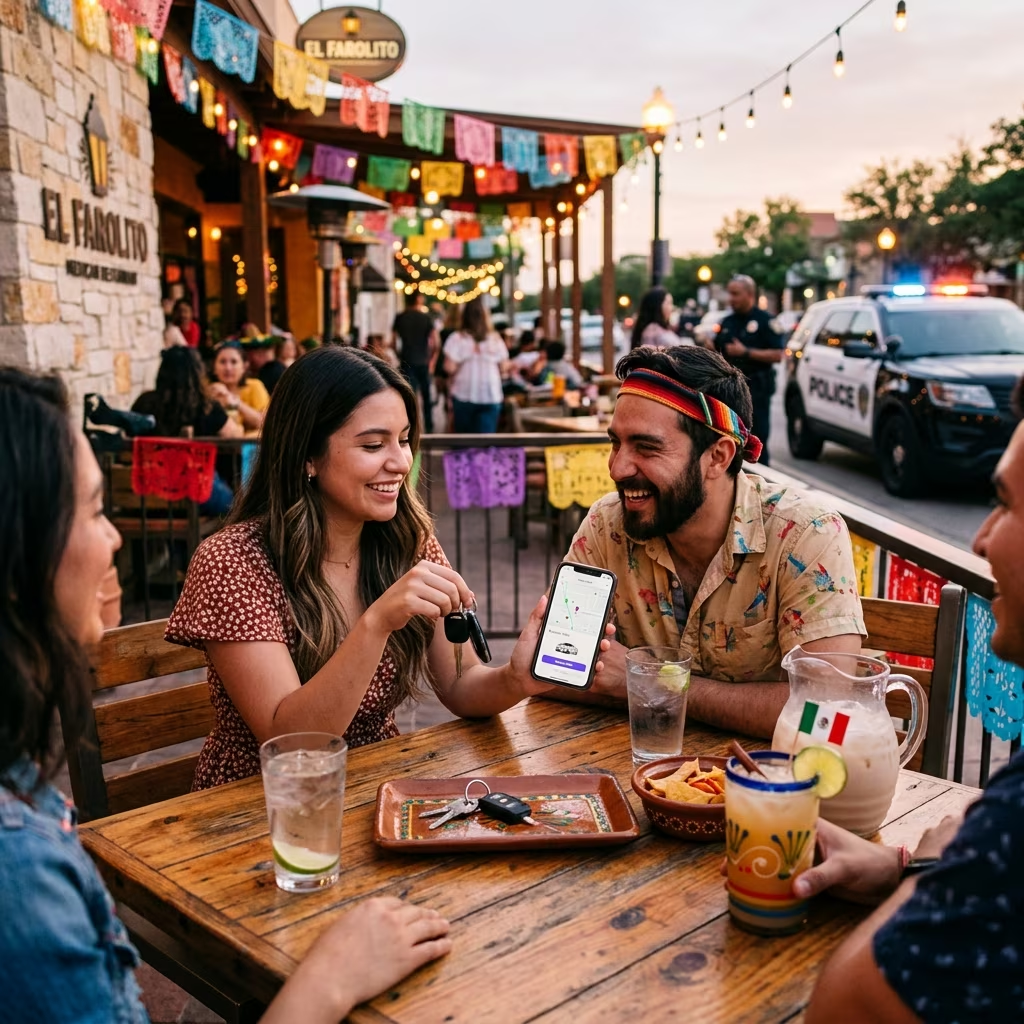
Cinco de Mayo is a popular day for social gatherings, margaritas, and late-night celebrations. It is also a time when law enforcement agencies significantly increase patrols and drunk driving enforcement, which means the risk of a DUI arrest rises sharply. This guide explains how to enjoy the holiday responsibly, understand the legal risks, and avoid decisions that could lead to an arrest, injuries, or long-term consequences.
Why Cinco de Mayo Brings Increased DUI Risk
Across the United States, holidays associated with alcohol often see more impaired drivers on the road and more aggressive enforcement from police and highway safety agencies. Cinco de Mayo has become one of these high-risk dates because of late-night bar promotions and large gatherings.
- More drinking occasions: Bars and restaurants commonly offer drink specials and themed events.
- Group celebrations: People may drink more in social settings than they would alone.
- Nighttime driving: Many celebrations run late into the evening, when crash severity tends to increase.
- Targeted enforcement: Agencies often announce saturation patrols and DUI checkpoints during holiday weekends.
Traffic safety agencies consistently stress a simple message: if you plan to drink, plan a sober ride home in advance.
DUI Basics: What the Law Typically Prohibits
Specific DUI laws vary by state, but most jurisdictions follow several common principles:
| Key Concept | Typical Legal Standard (Varies by State) |
|---|---|
| Per se alcohol limit | Driving with a blood alcohol concentration (BAC) of 0.08% or higher for most adult drivers. |
| Impairment-based DUI | Driving while your abilities are impaired by alcohol or drugs, even below 0.08% BAC. |
| Zero-tolerance for under 21 | Much lower allowable BAC, often 0.01%–0.02%, or any measurable alcohol for drivers under 21. |
| Drug-impaired driving | Driving while impaired by illicit drugs, certain prescription medications, or a combination of substances. |
Because alcohol affects judgment, many drivers underestimate their level of impairment and overestimate their ability to drive safely. Safety agencies repeatedly emphasize that even one drink can begin to affect reaction time and decision-making.
Plan Before You Pour: Building a Safe Transportation Strategy
The safest way to avoid a DUI is simply not to drive after drinking. That requires planning before you arrive at a bar, restaurant, or party.
Smart Pre-Planning Steps
- Pick your transportation method in advance:
- Designated sober driver
- Rideshare service
- Taxi
- Public transportation
- Walking (only if it is safe, well-lit, and legal)
- Decide your drinking limits early: Commit to a set number of drinks or a time to stop rather than improvising throughout the night.
- Keep your plan visible: Share it with friends so there is social accountability to stick to it.
- Charge your phone: A working phone ensures you can call for a ride if your original plan changes.
Public safety campaigns routinely urge people to “celebrate with a plan” by arranging a sober ride before the celebrations begin.
How to Use a Designated Driver Effectively
Many safety campaigns focus on the concept of the designated driver—someone who agrees to remain sober and handle driving responsibilities.
Qualities of a Reliable Designated Driver
- Commits to zero alcohol or drugs for the entire event.
- Understands the route and is comfortable driving at night.
- Respected by the group so others are less likely to pressure them to drink.
- Knows the responsibilities: getting everyone home safely, including making multiple trips if needed.
Ways to Support Your Designated Driver
- Pay for their non-alcoholic drinks or snacks as a thank-you.
- Back them up if anyone pressures them to drink.
- Agree not to bring open containers into the car.
Some state agencies even promote discounts or perks for designated drivers during holiday periods.
Hosting a Responsible Cinco de Mayo Party at Home
Hosting at home can reduce the need to drive, but it does not automatically eliminate risk. In some places, social hosts may face liability if they overserve guests who later cause crashes. Laws vary, but basic safety practices are widely encouraged.
Host Checklist for Safer Celebrations
- Offer plenty of food: Serve substantial snacks and meals, not just salty items that encourage more drinking.
- Provide non-alcoholic options: Offer water, soft drinks, and festive alcohol-free mocktails to support sober guests and designated drivers.
- Monitor your guests: Watch for signs of visible impairment, such as slurred speech, poor coordination, or confusion.
- Control access to alcohol: Avoid self-serve open bars that make it easy to lose track of how much guests consume.
- Help guests get home safely: Arrange rideshares, call taxis, or offer a place to sleep if someone has been drinking.
Traffic safety campaigns often emphasize that taking keys from an impaired friend and arranging a sober ride can literally save lives.
Recognizing Impairment: When It Is Not Safe to Drive
Alcohol and certain drugs can affect driving long before someone feels “drunk.” Reaction time, attention, and judgment often decline subtly at lower levels of intoxication.
Common Warning Signs You Should Not Drive
- You feel unusually relaxed, euphoric, or “invincible” about your driving ability.
- You are having trouble focusing, following conversations, or remembering details.
- You stumble slightly, misjudge distances, or knock things over.
- Friends comment that you seem different, louder, or more emotional than usual.
- You are calculating “how many drinks” you had instead of simply choosing not to drive.
If any of these apply, treat them as a clear signal to use your backup transportation plan. Traffic safety authorities stress that there is no safe level of impairment for operating a vehicle.
What to Expect from DUI Checkpoints and Holiday Patrols
Many jurisdictions use DUI checkpoints and high-visibility enforcement on holidays in order to deter impaired driving. At checkpoints, officers briefly stop vehicles to look for signs of impairment, license issues, or other safety concerns.
Typical Features of Holiday DUI Enforcement
- Announced campaigns: Agencies may publicly announce increased enforcement, such as “Drive Sober or Get Pulled Over.”
- Checkpoints: Vehicles are stopped according to a neutral pattern (for example, every third vehicle) rather than officer discretion.
- Enhanced patrols: Officers focus on areas with higher bar and restaurant traffic.
- Coordination across agencies: Local police, state patrol, and traffic safety offices may conduct joint operations.
Constitutional rules and procedures governing checkpoints differ by state, but courts generally permit them if they follow specific guidelines and are conducted fairly. Regardless of the details, the easiest way to avoid problems at a checkpoint is not to drive after drinking.
Legal and Personal Consequences of a DUI Conviction
A DUI is far more than a traffic ticket. Statutes in many states classify DUI as a crime that may carry jail time, fines, probation, license suspension, and mandatory treatment or education. Total financial costs—including increased insurance premiums—can reach thousands of dollars.
Common DUI Penalties (Vary by State)
- Criminal penalties:
- Fines and court costs
- Possible jail or mandatory minimum jail terms
- Probation or supervised release
- Driver’s license sanctions:
- Suspension or revocation for a set period
- Requirements for ignition interlock devices in some cases
- Other consequences:
- Raised auto insurance rates or policy cancellation
- Employment or professional licensing issues
- Travel restrictions to certain countries
In addition, if a drunk driving crash causes injuries or death, the driver may face felony charges and civil lawsuits. Government agencies repeatedly warn that the potential consequences of impaired driving can last for years and affect every part of a person’s life.
Helping Friends Make Safer Choices
Preventing DUI is not only an individual responsibility. Many safety campaigns encourage bystanders to intervene when they see someone attempting to drive after drinking.
Constructive Ways to Intervene
- Offer alternative transportation: Suggest calling a rideshare or taxi and offer to help pay the fare.
- Take the keys: Calmly hold onto the keys until a safe ride is arranged.
- Involve others: Ask sober friends or the party host to back you up.
- Provide a place to stay: Offer your couch or help them find a safe place to sleep.
Traffic safety agencies recommend calling 911 if you see an apparently impaired driver on the road and can safely report their location, direction of travel, and vehicle description.
Frequently Asked Questions About Cinco de Mayo and DUI
1. Is it safe to drive after just one or two drinks?
No amount of alcohol is completely risk-free when it comes to driving. Even small amounts can affect reaction time and decision-making. Safety campaigns emphasize that if you drink at all, the surest way to avoid a DUI and a crash is to use a sober driver or another safe transportation option.
2. Are DUI laws different on Cinco de Mayo?
The laws themselves do not change, but enforcement often does. Many police departments schedule extra officers, overtime patrols, and checkpoints around alcohol-heavy holidays, including Cinco de Mayo. As a result, your chances of being stopped, breath-tested, or arrested can be significantly higher than on an ordinary weeknight.
3. Can I be arrested for DUI even if my BAC is below 0.08%?
In many jurisdictions, yes. While 0.08% BAC is a common per se limit, drivers may still be charged if officers and prosecutors can show that alcohol or drugs impaired the person’s ability to drive safely, even at lower levels. Young drivers and commercial drivers may be held to even stricter standards.
4. What if I am taking prescription medication?
Certain prescription and over-the-counter medications can cause drowsiness, slow reaction time, or impair judgment. Many DUI statutes cover driving while impaired by any substance, not just alcohol. Always follow your doctor’s guidance and medication labels, and avoid driving if you feel sedated or impaired.
5. What should I do if I see a drunk driver on Cinco de Mayo?
If you can do so safely, pull over, call 911, and report the vehicle’s description, location, and direction of travel. Do not attempt to follow or confront the driver yourself. Law enforcement and highway safety agencies consistently urge the public to report suspected impaired drivers to help prevent crashes and save lives.
Key Takeaways for a Safer Cinco de Mayo
- Plan your transportation before you have your first drink.
- Use a sober driver, taxi, rideshare, or public transit rather than driving yourself.
- Host responsibly by offering non-alcoholic drinks, plenty of food, and support for guests who need a safe ride home.
- Stay alert for impaired behavior in yourself and others and step in before someone gets behind the wheel.
- Remember the legal and personal stakes: a DUI can mean criminal charges, license loss, and long-lasting financial and personal consequences.
With thoughtful planning, clear boundaries, and a commitment to safety, you can fully enjoy Cinco de Mayo without risking your life, other people’s safety, or your future.
References
- Impaired Driving Laws by State — Governors Highway Safety Association. 2024-01-15. https://www.ghsa.org/state-laws/issues/impaired-driving
- If you drink on Cinco de Mayo, plan a sober ride! — Arkansas Highway Safety Office / Toward Zero Deaths Arkansas. 2023-04-28. https://tzdarkansas.org/news/if-you-drink-on-cinco-de-mayo-plan-a-sober-ride/
- Rethink That Drink on Cinco de Mayo — California Office of Traffic Safety. 2017-05-01. https://www.ots.ca.gov/2017/05/01/rethink-that-drink-on-cinco-de-mayo/
- Celebrate Cinco de Mayo Responsibly — City of Long Beach Police Department. 2018-05-03. https://www.longbeach.gov/police/archive-news-releases/2018/celebrate-cinco-de-mayo-responsibly/
- Cinco De Mayo DUI Checkpoints and Arrests — Shah Law Firm (Arizona). 2024-04-20. https://arjashahlaw.com/blog/cinco-de-mayo-dui-checkpoints/