
Choosing the Right Construction Accident Attorney
Learn how to evaluate, select, and work effectively with a construction accident attorney to protect your rights and maximize your recovery.
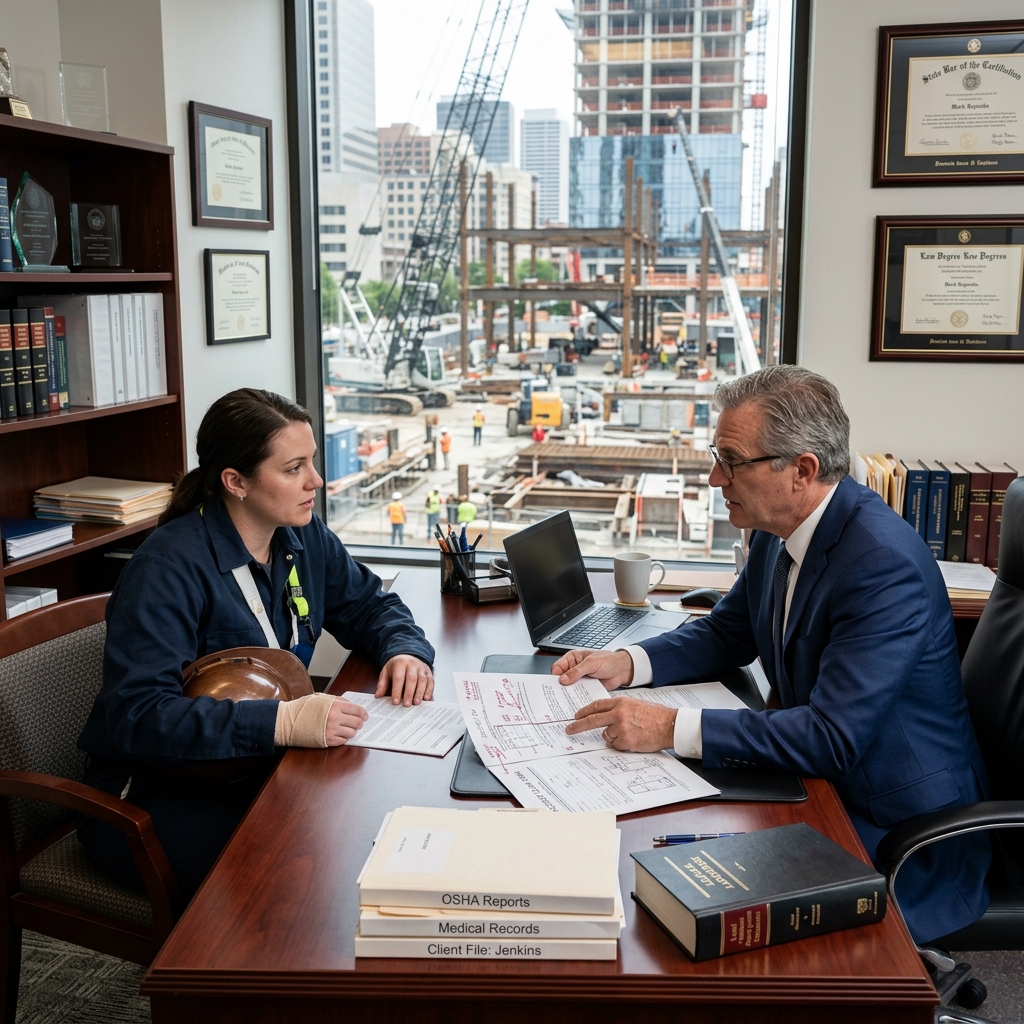
Construction sites are among the most dangerous workplaces, and when a serious accident occurs, the legal and financial consequences can be overwhelming. A construction accident attorney can help you navigate complex rules involving workers’ compensation, safety regulations, and potential claims against multiple parties, including contractors, property owners, or equipment manufacturers. Understanding how to choose the right lawyer—and how to work with them effectively—can make a substantial difference in the outcome of your case.
Why Construction Accident Cases Are Legally Complex
Unlike a simple car crash, a construction accident often involves multiple layers of law and several potentially responsible parties. Federal safety rules such as those issued by the Occupational Safety and Health Administration (OSHA) govern how job sites must operate, while state workers’ compensation laws determine benefits for injured employees. A well-qualified attorney understands how these systems interact and how to pursue additional claims when appropriate.
- Multiple liable parties: General contractors, subcontractors, property owners, architects, engineers, and equipment manufacturers may all share responsibility.
- Different legal pathways: Workers’ compensation claims, third-party personal injury lawsuits, and sometimes product liability claims may be available.
- Detailed regulations: OSHA standards outline safety rules for fall protection, scaffolding, electrical hazards, trenching, and more, which can influence liability and evidence.
- Evidence-intensive cases: Accident reports, safety records, training documentation, and medical evidence must be collected and preserved quickly.
Because of this complexity, choosing an attorney who regularly handles construction accidents—rather than general personal injury cases alone—is critical.
Clarifying Your Situation Before Contacting Lawyers
Before you start searching for a lawyer, take time to clarify your situation. Understanding the basics of your case will help you communicate clearly, ask better questions, and evaluate whether an attorney has the right background for your needs.
Key Facts to Gather
- Who was involved: Your employer, general contractor, subcontractors, and any equipment or crane operators.
- Type of accident: Falls, being struck by objects, electrocution, trench collapse, machinery incidents, or exposure to hazardous substances.
- Injuries sustained: Fractures, spinal injuries, traumatic brain injuries, burns, amputations, or repetitive trauma.
- Current benefits: Whether you have already filed a workers’ compensation claim, received wage replacement, or had medical treatment approved.
- Insurance communication: Any statements given to insurers, adjusters, or employer representatives.
Having this information ready will make your initial consultations more productive and help attorneys quickly assess potential strategies.
Where to Look for Construction Accident Attorneys
Finding a qualified lawyer begins with knowing where to search. Relying solely on advertisements can be risky; instead, use a combination of trusted sources to develop a shortlist.
Reliable Ways to Build a Shortlist
- Personal recommendations: Talk to coworkers, friends, or family members who have dealt with worksite injuries or personal injury claims and ask about their experiences.
- State and local bar associations: Many bar associations offer lawyer referral services and maintain lists of attorneys who focus on construction accidents or workers’ compensation.
- Reputable legal directories: Online directories maintained by legal organizations or bar-affiliated services can help you identify attorneys by practice area and location.
- Community legal clinics: Some nonprofit clinics and legal aid organizations can point you toward experienced personal injury attorneys if you meet eligibility criteria.
Use these sources to compile three to five potential attorneys. Interviewing more than one lawyer helps you compare qualifications, communication style, and case strategy.
Evaluating Experience and Specialization
Experience is one of the most important factors in selecting a construction accident attorney. While general personal injury knowledge is helpful, your case benefits most from a lawyer who frequently handles jobsite injuries and understands industry-specific issues.
| Criteria | General Personal Injury Lawyer | Construction Accident Specialist |
|---|---|---|
| Familiarity with OSHA and safety codes | Basic understanding | In-depth, case-tested knowledge |
| Experience with multi-party liability | Occasional | Routine part of practice |
| Handling of workers’ compensation plus third-party claims | Limited | Regularly coordinates both tracks |
| Understanding of construction site operations | General | Detailed familiarity with jobsite roles and processes |
Questions to Ask About Experience
- How many construction accident cases have you handled in the last few years?
- What types of accidents and injuries have you seen most often?
- Do you regularly work with safety experts, engineers, or medical professionals in these cases?
- Are you familiar with the specific trades involved in my accident (e.g., roofing, concrete, electrical)?
- Have you taken construction accident claims to trial, and what were the results?
Attorneys who can answer these questions clearly and provide examples of past work are more likely to have the expertise needed for a complex construction case.
Checking Reputation, Discipline History, and Track Record
Beyond experience, you should investigate each lawyer’s professional reputation and disciplinary history. Most states maintain public records showing whether an attorney has been disciplined for ethical or professional violations.
How to Research Reputation
- State bar disciplinary records: Many bar associations provide online tools to look up attorneys and view any past sanctions or complaints.
- Client reviews and testimonials: Reviews can give a sense of how the attorney communicates, negotiates, and supports clients throughout the case.
- Professional standing: Memberships in relevant legal organizations and speaking or writing on construction law topics can signal a deeper commitment to the field.
- Case outcomes: While no lawyer can guarantee results, a history of settlements and verdicts in construction accident cases may indicate strong advocacy skills.
Take time to compare reputations across your shortlist. Avoid attorneys with unexplained disciplinary actions or patterns of negative feedback about communication or honesty.
Understanding Fees and Payment Structures
Most construction accident attorneys work on a contingency fee basis, meaning the lawyer is paid a percentage of what you recover, and you typically owe no attorney fees if you receive no compensation. However, details vary, and it is important to discuss costs in advance to avoid surprises.
Common Fee Arrangements
- Contingency fee: Attorney receives a percentage (often around one-third, but this varies) of any settlement or judgment. Confirm whether the percentage changes if the case goes to trial or appeal.
- Costs and expenses: Filing fees, expert witness charges, medical record retrieval, and other expenses may be deducted from your recovery. Ask whether these are advanced by the firm and when they are repaid.
- Workers’ compensation vs. personal injury: Some firms handle workers’ compensation claims on different fee structures regulated by state law.
Always request a written fee agreement and read it carefully. Make sure you understand how fees are calculated, what happens if you change attorneys, and whether you might owe any costs if you decide not to pursue the case further.
Preparing for Your Initial Consultation
Initial consultations are often free and serve as an opportunity for both you and the attorney to evaluate whether you are a good fit to work together. Coming prepared helps the lawyer quickly assess potential claims and demonstrates that you are serious about pursuing your case.
Documents and Information to Bring
- Accident reports: Any incident reports from the jobsite, OSHA investigations, or employer documentation.
- Medical records: Hospital discharge summaries, imaging reports, surgery records, and bills related to your injury.
- Witness information: Names, phone numbers, and email addresses of coworkers or bystanders who saw the accident.
- Photographs and video: Images of the site, equipment, safety conditions, and visible injuries.
- Employment details: Pay stubs, job description, information about overtime, and any written safety policies you received.
- Insurance communications: Letters or emails from workers’ compensation insurers, liability insurers, or employer representatives.
Detailed documentation allows the attorney to evaluate liability, estimate potential damages, and determine whether expert witnesses or further investigation will be necessary.
Questions You Should Ask During the Consultation
- What legal options do I have—workers’ compensation, third-party claim, or both?
- What are the strengths and weaknesses of my case based on the facts I shared?
- How long might the process take, and what steps will be involved?
- Who in your office will handle my case day-to-day, and how will we communicate?
- What is your approach to negotiation versus trial in construction accident matters?
Use the consultation to evaluate whether you feel comfortable with the attorney’s communication style, explanations, and level of attention to your concerns.
Working Effectively With Your Attorney
Hiring a lawyer is only the first step. Successful outcomes in construction accident cases rely on an ongoing partnership in which you provide accurate information, respond promptly to requests, and follow legal and medical advice.
Your Responsibilities as a Client
- Honesty and transparency: Share all relevant facts, including prior injuries, safety violations, or previous claims. Concealing information can damage your case and your relationship with the attorney.
- Consistent medical care: Attend follow-up appointments, follow treatment plans, and document any limitations or ongoing symptoms.
- Preserving evidence: Avoid deleting photographs, messages, or social media posts that relate to the accident or your injuries.
- Communication: Respond promptly to calls or emails and keep your lawyer updated about changes in your condition, work status, or benefits.
What Your Attorney Should Provide
- Case strategy: A clear explanation of the legal theories, potential defendants, and milestones in your case.
- Regular updates: Periodic communication about negotiations, hearings, and key developments.
- Document handling: Collection and organization of evidence, preparation of legal filings, and coordination with experts.
- Negotiation and advocacy: Representation in settlement discussions, mediations, and court proceedings when necessary.
A strong attorney-client partnership can help ensure that your case progresses efficiently and that you understand each step along the way.
Common Pitfalls to Avoid When Hiring a Lawyer
While many attorneys are capable and ethical, some choices can hinder your case or create frustration. Being aware of common mistakes can help you avoid them.
- Choosing solely based on advertising: High-volume marketing does not necessarily indicate quality or specialization.
- Ignoring discipline history: Failing to check bar records may expose you to lawyers with past ethical violations.
- Not clarifying fees: Moving forward without a clear fee agreement can lead to disputes over costs later on.
- Limited communication expectations: Hiring a lawyer without discussing how often you will receive updates can create uncertainty and stress.
- Delaying legal advice: Waiting too long to contact an attorney can harm evidence collection and potentially affect statute of limitations deadlines.
Frequently Asked Questions (FAQ)
Do I need a construction accident attorney if I already have workers’ compensation?
Workers’ compensation benefits may not fully cover lost income, long-term disability, or pain and suffering. An attorney can determine whether you also have a claim against third parties, such as contractors or equipment manufacturers, which may allow additional recovery beyond workers’ compensation.
How soon should I contact a lawyer after my accident?
It is advisable to consult an attorney as soon as you are medically stable and have basic documentation of the incident. Early involvement helps preserve evidence, avoids mistakes when speaking with insurers, and ensures you comply with filing deadlines.
What if I cannot afford to pay a lawyer upfront?
Most construction accident attorneys work on contingency, meaning you generally pay no attorney fees unless they obtain a settlement or verdict for you. Discuss the specific percentage and expense structure during your consultation.
Can I change attorneys if I am unhappy with the one I hired?
In many cases, you can change lawyers, but you should review your fee agreement and consult with a new attorney first to understand how fees and costs will be handled. Switching mid-case may require coordination between firms regarding work already performed.
What information will my attorney need from me over time?
Your lawyer will likely need updated medical records, documentation of lost wages, information about any light-duty work or job changes, and details about how your injuries affect daily life. Providing accurate, timely information strengthens your case and supports appropriate damage calculations.
Taking the Next Step After a Construction Accident
After a serious construction injury, you may be coping with pain, financial uncertainty, and concern about your future ability to work. Selecting a qualified construction accident attorney and building a collaborative relationship can help you pursue the benefits and compensation you deserve. Begin by clarifying your situation, gathering documents, and scheduling consultations with a few experienced lawyers. Ask detailed questions about experience, strategy, fees, and communication so you can make an informed decision.
With the right legal guidance, you can better understand your rights, navigate complex rules, and focus on your recovery while your attorney works to build a strong case on your behalf.
References
- Common Types of Construction Accidents — Occupational Safety and Health Administration (OSHA). 2023-05-01. https://www.osha.gov/construction
- How to Find the Best Construction Accident Attorney Near You — Enjuris. 2022-04-15. https://www.enjuris.com/construction-accidents/choosing-construction-accident-attorney/
- Top 5 Things to Consider When Hiring a Construction Accident Lawyer — Craven, Hoover & Blazek, P.C. 2022-03-10. https://www.chblawfirm.com/blog/top-5-things-to-consider-when-hiring-a-construction-accident-lawyer/
- Hiring a Construction Accident Lawyer — LawInfo. 2021-11-20. https://www.lawinfo.com/resources/construction-worksite-accidents/hiring-a-construction-accident-lawyer.html
- Workers’ Compensation: Benefits for Workers Injured on the Job — U.S. Department of Labor. 2022-09-30. https://www.dol.gov/general/topic/workcomp
- Houston Construction Accident Lawyer — Longoria Law Firm. 2023-02-05. https://longoria.law/houston-construction-accident-lawyer/
Similar Articles








Read full bio of Sneha Tete




