
Choosing Federal or State Court for a Sexual Harassment Case
Understand key legal, strategic, and practical differences between federal and state courts before filing a sexual harassment lawsuit.
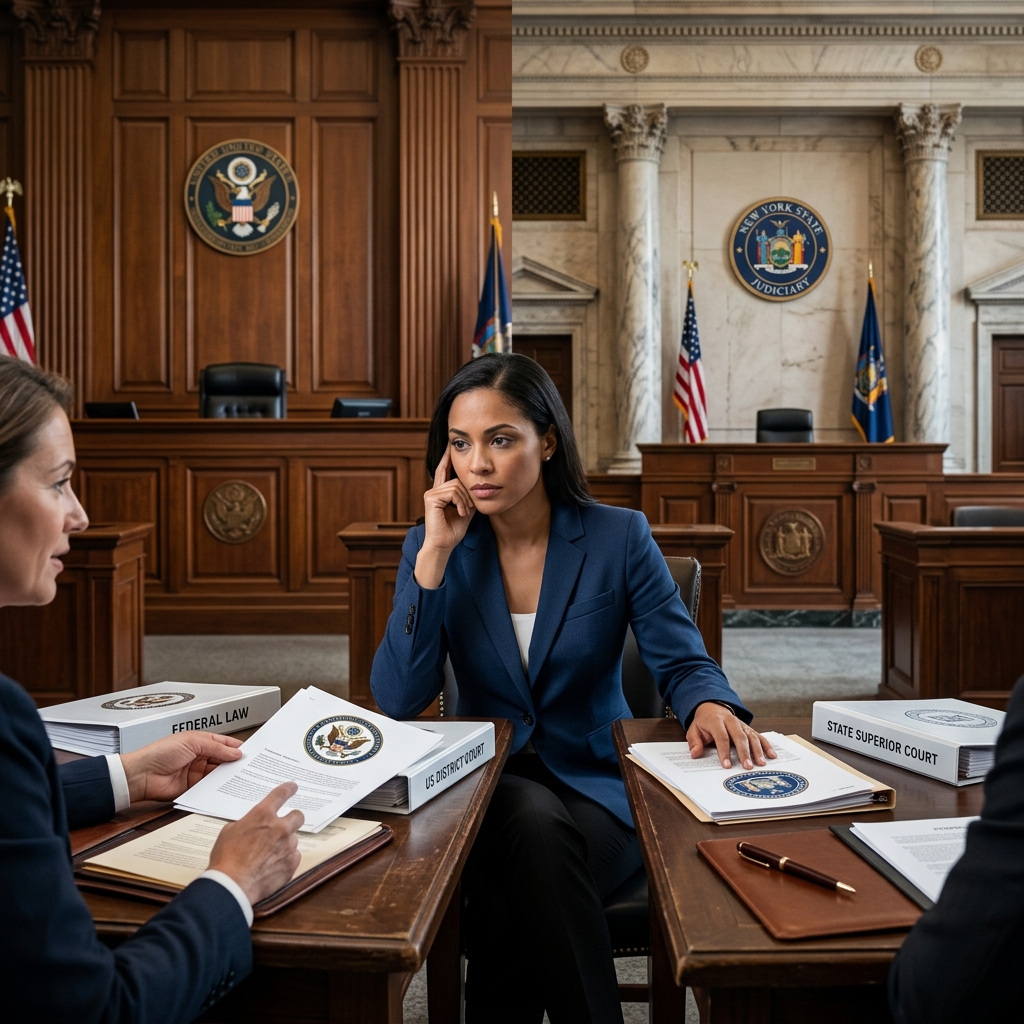
When someone experiences sexual harassmentfederal courtstate court[10]
This article explains the main differences between federal and state sexual harassment claims, how Title VII of the Civil Rights Act interacts with state laws, and why speaking with an experienced employment attorney is critical before choosing a forum.
Foundations of Sexual Harassment Law in the United States
Sexual harassment in employment is primarily regulated through a combination of federal civil rights law and state anti-discrimination statutes. At the federal level, the key statute is Title VII of the Civil Rights Act of 1964, which prohibits discrimination “because of sex” and has been interpreted to include sexual harassment.
Most states have enacted their own civil rights laws that similarly forbid harassment based on sex and other protected characteristics. In many jurisdictions, these state laws provide broader coverage than Title VII, including smaller employers and additional protected categories.
- Title VII coverage: Applies to private employers with at least 15 employees and certain federal entities.
- State statutes: Often cover smaller employers and may explicitly protect additional groups, such as LGBTQ+ workers, depending on the state.
- Non-preemption: Federal law does not preempt most state discrimination claims, allowing plaintiffs to bring both federal and state causes of action in many cases.
Types of Sexual Harassment Claims
While each case is fact-specific, sexual harassment claims commonly fall into two general categories recognized by courts:
- Quid pro quo harassment
Involves a supervisor or someone with authority conditioning job benefits (such as hiring, promotion, or continued employment) on the performance of sexual favors, or threatening negative consequences if those favors are refused. - Hostile work environment
Occurs when unwelcome sexual conduct or comments are so severe or pervasive that they create an abusive or hostile working environment for the victim.
Under federal law, a hostile work environment requires both an objective and subjective showing: the conduct must be something a reasonable person would find hostile or abusive, and the victim must in fact perceive it that way.
What Makes Harassment Legally Actionable?
Not every offensive remark meets the legal threshold for harassment. Courts generally look for conduct that goes beyond isolated or trivial incidents and rises to a level that materially changes the conditions of employment.
| Factor | Key Considerations |
|---|---|
| Severity | Explicit sexual demands, unwanted physical contact, threats, or graphic content may qualify as severe even if infrequent. |
| Pervasiveness | Frequent comments, jokes, or behaviors that create an ongoing climate of intimidation or humiliation can show pervasiveness. |
| Context | Courts examine workplace norms, power dynamics, and the impact on the victim’s ability to do their job. |
| Reasonable person standard | Behavior must be offensive from the standpoint of a reasonable person in similar circumstances, not just subjectively upsetting. |
Importantly, a victim does not need to show psychological injury or economic loss to pursue a hostile work environment claim under Title VII; what matters is the presence of unwelcome, discriminatory conduct that is severe or pervasive.
Federal Court Claims: Title VII and Related Remedies
Filing in federal court most often involves claims under Title VII. Federal litigation is governed by specific procedural steps and limitations that are important to understand.
Administrative Charge Requirement
Before bringing a Title VII sexual harassment lawsuit, a worker generally must file a charge of discrimination with the Equal Employment Opportunity Commission (EEOC), or with a state or local agency that has a work-sharing agreement with the EEOC.
- Charges must usually be filed within 180 to 300 days of the last discriminatory act, depending on the state and whether a deferral agency exists.
- The EEOC investigates, may attempt conciliation, and can issue a right-to-sue letter, which authorizes the worker to file in federal court.
Missing these administrative deadlines can bar federal claims, making timing a critical factor in the choice between federal and state court.
Who Can Be Held Liable?
Under Title VII, the defendant is typically the employer, not individual supervisors or co-workers. Courts have consistently held that Title VII does not create personal liability for the harasser as an individual, though their conduct is central to the case.
Available Remedies in Federal Court
Successful Title VII sexual harassment plaintiffs may receive several types of relief:
- Injunctive relief – orders prohibiting further harassment or requiring policy changes.
- Back pay and lost benefits – compensation for wages and benefits lost due to harassment or retaliation.
- Compensatory damages – for emotional distress and other non-economic harms, subject to statutory caps.
- Punitive damages – where the employer acted with malice or reckless indifference, also subject to caps.
Federal law limits the combined amount of compensatory and punitive damages based on employer size, with a maximum of $300,000 for the largest employers.
Federal Jury and Procedural Environment
Federal courts operate under uniform rules and are often perceived as more formal and procedurally demanding. In a federal jury trial, the verdict usually must be unanimous[10]
For some parties—especially corporate defendants—federal court is seen as a predictable forum with judges accustomed to complex federal statutes and constitutional issues.[10]
State Court Claims: Broader Options and Different Rules
State courts apply their own civil rights statutes alongside common-law claims, such as intentional infliction of emotional distress or battery, that may arise from the same conduct. State forums can offer plaintiffs different advantages compared to federal court.
State Anti-Discrimination Laws
Most states prohibit sexual harassment as a form of sex discrimination and have enforcement bodies or procedures separate from the EEOC.
- Coverage: State laws often apply to smaller employers that fall outside Title VII’s 15-employee threshold.
- Protected classes: Certain states expressly protect additional groups (for example, sexual orientation or gender identity) even where federal law has been slower to recognize these claims, though interpretations have evolved over time.
- Deadlines: Many state statutes allow longer timeframes for filing complaints or lawsuits than Title VII’s charge filing period.
State Court Juries and Outcomes
State courts may have different jury rules than federal courts. In many jurisdictions, a civil verdict does not require unanimous agreement; instead, a supermajority of jurors can be enough for the plaintiff to win.
This difference can be significant in close cases, making state jury standards an important strategic consideration for plaintiffs and their counsel.
Damages and Caps Under State Law
State civil rights statutes vary widely when it comes to damages:
- Some states impose no cap on compensatory or punitive damages in discrimination or harassment cases.
- Others mirror federal caps or restrict certain categories of damages.
- Some states allow additional remedies, such as statutory penalties or attorney’s fees, that may not be available under federal law.
Because these differences can dramatically affect potential recovery, lawyers often evaluate both federal and state damages structures when advising clients on where to file.
Comparing Federal and State Court: Key Factors
Choosing between federal and state court is rarely a simple decision. Attorneys typically weigh several major factors before deciding how to proceed.
| Consideration | Federal Court | State Court |
|---|---|---|
| Primary law | Title VII and other federal statutes. | State civil rights statutes and common-law claims. |
| Pre-filing process | Charge must be filed with EEOC or similar agency. | Procedures vary; some claims can be filed directly, some require state agency processes. |
| Employer size threshold | Generally 15+ employees. | Often smaller thresholds or none, depending on state. |
| Jury verdict standard | Usually unanimous. | Often supermajority (for example, nine of twelve jurors), varying by jurisdiction. |
| Damage caps | Combined compensatory and punitive damages capped based on employer size. | Some states have no caps; others have their own limits or restrictions. |
| Procedural environment | Uniform federal rules, perceived as formal and complex.[10] | Procedures differ by state; sometimes viewed as more varied and locally influenced.[10] |
Bringing Both Federal and State Claims Together
In many cases, plaintiffs are not limited to an either-or choice. A worker can file a lawsuit in federal court that includes both Title VII and state-law claims when the federal court has jurisdiction and state law permits such causes of action.
This strategy allows the plaintiff to benefit from federal procedural protections while also seeking broader remedies under state law, including potentially uncapped damages or additional claims like intentional infliction of emotional distress.
- Federal court can exercise supplemental jurisdiction over related state-law claims arising from the same factual scenario.
- Defendants sometimes remove state actions to federal court when federal claims are present or diversity jurisdiction exists.
Timing, Deadlines, and Preservation of Rights
Deadlines are among the most critical issues in sexual harassment litigation. Missing a limitation period can permanently bar certain claims.
- EEOC charge deadlines: Typically 180 or 300 days after the harassment, depending on the state and presence of a deferral agency.
- State-law limitation periods: Many states allow longer periods—often up to several years—for filing discrimination suits or related tort claims.
- Interaction of deadlines: Workers may need to pursue administrative remedies for federal claims while also keeping state deadlines in mind.
Because these time limits differ and can be complex, early consultation with counsel is essential to avoid unintentional forfeiture of either federal or state rights.
Employer Liability and Common Defenses
Regardless of forum, the question of employer liability is central. Under Title VII and many state statutes, employers can be liable for harassment perpetrated by supervisors or co-workers when certain standards are met.
- Supervisor harassment: When a supervisor’s harassment results in tangible employment action (such as firing or demotion), courts often find vicarious liability under federal law.
- Hostile environment by co-workers: Employers may be liable if they knew or should have known about the harassment and failed to take appropriate corrective action.
- Faragher/Ellerth defense: In some hostile environment cases, employers can raise a defense if they exercised reasonable care to prevent and correct harassment and the employee unreasonably failed to report it, subject to specific limitations.
Employers commonly challenge claims by arguing that the conduct was not severe or pervasive enough, that they had effective policies in place, or that the plaintiff did not use complaint procedures in a timely way.
Strategic Considerations When Choosing a Forum
An attorney assessing whether to file in federal or state court typically evaluates a range of strategic considerations beyond just the applicable law.
- Nature and strength of evidence – Cases with complex legal issues may benefit from federal judges’ experience with federal statutes, while cases heavily involving local norms or community standards might fare better in state court.[10]
- Potential damages – State law may offer uncapped or broader damages, making it attractive where significant emotional or punitive damages are sought.
- Procedural preferences – Lawyers may prefer federal discovery and motion practice in some cases, or find state procedures more flexible in others.[10]
- Jury composition – Geographic differences in jury pools can influence forum choice, particularly in cases likely to go to trial.
These strategic decisions are highly case-specific and should be informed by both legal analysis and practical experience in the relevant courts.
Frequently Asked Questions About Federal vs. State Sexual Harassment Claims
Do I have to choose only one court system?
Not always. In many situations, you can bring both federal and state claims together in a single lawsuit, typically in federal court. The decision depends on jurisdictional rules and the specific statutes at issue. An attorney can advise whether combining claims is possible and advantageous in your case.
Why would someone prefer state court over federal court?
State court may be preferred because of potentially broader damages, different jury rules that do not require unanimity, and state statutes that cover smaller employers or additional protected classes. In some states, limitation periods are longer, which can be crucial if significant time has passed since the harassment occurred.
What happens if my employer is very small?
If your employer has fewer than 15 employees, Title VII may not apply, but state or local laws might still provide a cause of action. In such cases, the primary route to relief may be through state court or local civil rights agencies rather than federal litigation.
Is filing with the EEOC always necessary?
Filing with the EEOC or a partner agency is generally required before pursuing a Title VII case in federal court. However, some state-law claims can be filed directly in court without prior administrative exhaustion. Whether an EEOC charge is necessary depends on the statutes you rely on and the procedural requirements of your jurisdiction.
Can I sue my harasser personally?
Under Title VII, lawsuits typically name the employer, not individual harassers. Some state laws and common-law tort theories, such as battery or intentional infliction of emotional distress, may allow claims against individuals, but the rules vary by state. Legal counsel can determine whether personal liability is available and appropriate in your case.
The Importance of Legal Advice
Sexual harassment litigation involves complex interactions between federal statutes, state laws, agency procedures, and local court practices. Choosing between federal and state court—or deciding to use both sets of claims—requires careful analysis of deadlines, potential remedies, evidentiary matters, and practical realities of litigation.
Because a misstep in timing, forum selection, or claim framing can affect your rights and potential recovery, consulting with an attorney who regularly handles employment discrimination cases is crucial. They can evaluate your facts, identify applicable laws, and help select the strategy that best protects your interests within the relevant legal framework.
References
- US Sexual Harassment Law — University of California, Berkeley. 2018-05-01. https://executive.law.berkeley.edu/wp-content/uploads/2018/05/US-Sexual-Harassment-Law.pdf
- Comparing Federal & State Courts — Administrative Office of the U.S. Courts. 2022-01-01. https://www.uscourts.gov/about-federal-courts/court-role-and-structure/comparing-federal-state-courts
- State or federal court? — Spivak Law Firm. 2019-01-01. https://www.fightsexualharassment.com/state-or-federal-court.php
- Sexual Harassment Case Ends in $5.5 Million Verdict — Ogletree Deakins. 2014-09-16. https://ogletree.com/insights-resources/blog-posts/sexual-harassment-case-ends-in-5-5-million-verdict/
- State Regulation of Sexual Harassment — Georgetown Journal of Gender and the Law. 2012-01-01. https://www.law.georgetown.edu/gender-journal/in-print/1526-2/state-regulation-of-sexual-harassment/
- Sexual Harassment Litigation with a Dose of Reality — University of Chicago Legal Forum. 1998-01-01. https://legal-forum.uchicago.edu/print-archive/sexual-harassment-litigation-dose-reality
Similar Articles








Read full bio of Sneha Tete




