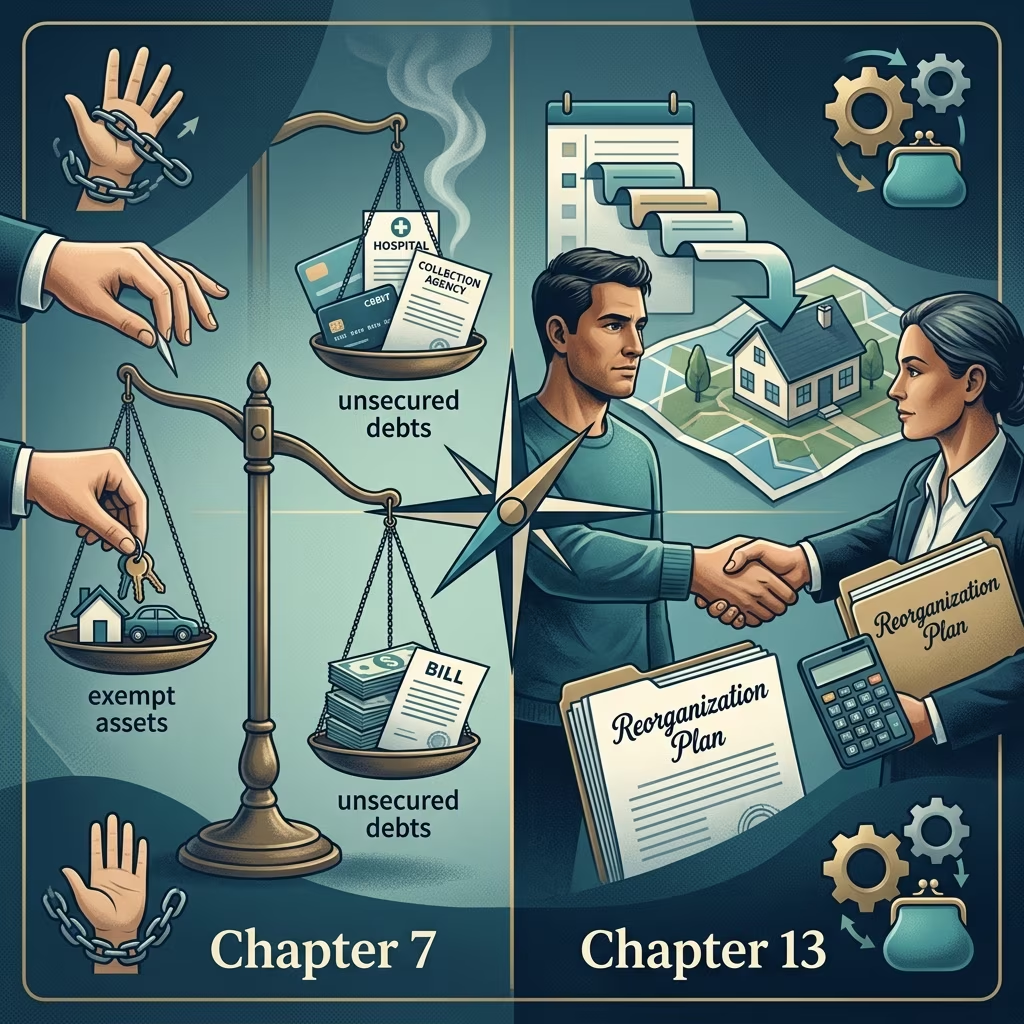
When debt becomes overwhelming, people often compare Chapter 7 and Chapter 13 bankruptcy to decide which path offers the most realistic and sustainable fresh start. Understanding how each chapter works, and why someone might prefer Chapter 7, is critical before filing.
Bankruptcy Basics: What Chapter 7 and Chapter 13 Do
Bankruptcy is a federal legal process designed to help individuals and businesses manage or eliminate debts they can no longer pay. The U.S. Bankruptcy Code offers different chapters, but for most consumers the main options are Chapter 7 and Chapter 13.
Chapter 7: Liquidation and Quick Discharge
Chapter 7 bankruptcy is commonly called liquidation bankruptcy. A court-appointed trustee may sell any non-exempt property you own and use the proceeds to pay creditors. Most remaining eligible unsecured debts are then wiped out.
- Focuses on eliminating unsecured debts such as credit cards, medical bills, and personal loans.
- Typically lasts about four to six months from filing to discharge.
- Most filers keep essential assets due to federal and state exemption laws.
- Available only if you meet income and eligibility standards, often determined through a means test.
Chapter 13: Repayment Plan and Reorganization
Chapter 13 bankruptcy is known as a reorganization or repayment chapter. Instead of immediately discharging most debts, you propose a plan to repay all or part of what you owe over three to five years.
- You keep your property but commit part of future income to a court-approved repayment plan.
- Works well for catching up on secured debts like mortgages and car loans while also dealing with unsecured debts.
- Requires regular, predictable income to make plan payments.
- Offers some expanded opportunities to discharge particular types of debts compared with Chapter 7.
Key Differences Between Chapter 7 and Chapter 13
Although both chapters offer relief, they do so in very different ways. The table below summarizes the most important distinctions that often drive the choice between them.
| Feature | Chapter 7 Bankruptcy | Chapter 13 Bankruptcy |
|---|---|---|
| Core approach | Liquidation of non-exempt assets; quick discharge of unsecured debts. | Reorganization and repayment plan over 3–5 years. |
| Eligibility | Must pass a means test or otherwise meet income/asset criteria. | Must have regular income and meet debt limits set by law. |
| Time to discharge | Generally completed in a few months. | Plan runs for 3–5 years before remaining eligible debts are discharged. |
| Treatment of property | Non-exempt property may be sold by the trustee; exempt property usually retained. | Debtor generally keeps all property but must pay creditors at least as much as they would receive in Chapter 7. |
| Primary benefits | Fast relief, low ongoing obligations, strong discharge of unsecured debts. | Ability to cure mortgage and car loan arrears, save home from foreclosure, and reschedule certain debts. |
| Impact on credit | Can remain on credit report for up to 10 years. | Can remain on credit report for up to 7 years. |
| Upfront and long-term costs | Generally lower attorney fees and no long-term payment plan. | Higher total costs due to multi-year payments and expanded obligations. |
Why Many Debtors Prefer Chapter 7
For individuals with heavy unsecured debt, modest assets, and limited income, Chapter 7 often offers the most direct path to a fresh financial start. The reasons typically fall into several categories.
1. Faster Path to a Fresh Start
One of the most compelling reasons to choose Chapter 7 is the speed at which you can move past your debt situation.
- Shorter timeline: Most Chapter 7 cases conclude in a few months, with a discharge order eliminating many debts relatively quickly.
- No multi-year payment plan: Unlike Chapter 13, there is no requirement to stay under court supervision making monthly payments for years.
- Quicker emotional relief: The shorter process often reduces the long-term stress and uncertainty that come with extended repayment.
2. Strong Relief from Unsecured Debts
Chapter 7 is especially effective for people whose main problem is unsecured debt—obligations not tied to specific collateral.
- Common unsecured debts addressed include credit cards, personal loans, utility bills, and many medical debts.
- After liquidation of any non-exempt assets, remaining dischargeable unsecured debts are typically wiped out, ending your legal obligation to pay them.
- This can dramatically reduce monthly expenses and create space for rebuilding savings and credit.
3. Lower Overall Cost and Complexity
By design, Chapter 7 cases tend to be simpler and cheaper than Chapter 13 cases.
- Lower attorney fees: Studies and practitioner reports suggest that Chapter 7 fees are generally lower than Chapter 13 fees.
- Limited duration: Because the case finishes faster, you are not paying legal and trustee-related costs over several years.
- Less administrative burden: No requirement to maintain a long-term repayment plan, track plan performance, or request plan modifications if your income changes.
4. Suitable for Simple Financial Situations
Chapter 7 is often recommended for relatively straightforward cases.
- Debtors primarily have consumer unsecured debts with few or no complex assets or business interests.
- No pressing need to restructure large secured loans, such as saving a home from foreclosure or reorganizing multiple investment properties.
- Income is not high enough to support a multi-year repayment plan, making Chapter 13 unrealistic.
When Chapter 7 Makes Particular Sense
Not every situation calls for Chapter 7, but several common scenarios illustrate when it can be the better fit compared with Chapter 13.
Heavy Unsecured Debt and Few Assets
People with large amounts of unsecured debt and minimal property often benefit most from Chapter 7.
- Credit card balances and medical bills far exceed what your income can realistically repay.
- You rent your home or have little equity in your house, and own no valuable non-exempt property.
- Liquidation risk is low because most or all of your property is covered by exemptions, so there is little practical downside.
Closed or Failed Small Business
After a small business closes, owners may face a mix of personal guarantees, trade debts, and tax obligations. In some cases, Chapter 7 is appropriate once personal and business debts are largely unsecured and manageable.
- Business operations have ceased and there is no need to restructure ongoing obligations.
- Most remaining debts are unsecured and can be discharged, leaving only a manageable tax balance or other nondischargeable obligations.
- If any remaining taxes are small enough to be paid through a payment plan with tax authorities, Chapter 7 may offer a clean break from other debts.
Limited Income and High Fixed Expenses
Chapter 13 repayment plans require stable, sufficient income for three to five years. For debtors with very tight budgets, Chapter 7 may be the only realistic option.
- Income barely covers necessary living expenses such as housing, utilities, food, and healthcare.
- There is no reliable surplus that could fund a multi-year payment plan.
- Debt relief needs to focus on elimination rather than restructuring.
Situations Where Chapter 13 Might Be Better
Understanding why Chapter 7 is attractive also requires recognizing when Chapter 13 is more appropriate. In some circumstances, Chapter 13’s features outweigh the benefits of liquidation.
- Saving a home from foreclosure: Chapter 13 lets you catch up on mortgage arrears over time while keeping your house, provided you continue making required payments.
- Protecting non-exempt assets: If you own valuable property that would be sold in Chapter 7, Chapter 13 allows you to keep it while repaying creditors through a plan.
- Managing priority and nondischargeable debts: Chapter 13 offers a structured way to pay obligations like certain taxes, alimony, and child support that cannot be discharged.
- Expanded discharge for specific debts: Some debts that survive Chapter 7 may be dischargeable in Chapter 13, including particular divorce-related property settlement obligations.
- Co-debtor and cosigner protection: Chapter 13 plans can shield cosigners on consumer debts from collection actions as long as the plan is completed.
Eligibility Considerations Before Choosing Chapter 7
Even if Chapter 7 seems preferable, you must satisfy legal eligibility requirements. U.S. law limits access to Chapter 7 to ensure it is used by people who genuinely cannot afford to repay their debts.
Income and Means Test
The means test compares your income to the median income in your state and evaluates whether you have enough disposable income to repay creditors.
- If your current monthly income falls below the median for your area and household size, you are typically eligible for Chapter 7.
- If your income is higher, more detailed calculations of allowable expenses may still show that you lack meaningful ability to repay.
- Failing the means test usually pushes consumers toward Chapter 13 or other non-bankruptcy options.
Prior Bankruptcy Filings
There are waiting periods for receiving another discharge if you have previously filed bankruptcy. These rules affect whether Chapter 7 is available and when.
- Specific time limits vary depending on which chapter you filed in the past and whether you received a discharge.
- In some circumstances, you may be able to file a new case but not receive an immediate discharge.
Impact on Credit and Long-Term Financial Health
Both Chapter 7 and Chapter 13 have significant effects on credit reports and future borrowing, which should be weighed against the benefits of debt relief.
Credit Report Duration
- Chapter 7: Can remain on your credit report for up to 10 years from the filing date.
- Chapter 13: Generally appears for up to 7 years.
Despite this difference, the practical impact varies. Lenders often view completed bankruptcy as evidence that older debts are resolved, and many consumers begin rebuilding credit within a few years.
Rebuilding After Chapter 7
Many debtors successfully improve their financial situation after a Chapter 7 discharge by adopting disciplined habits.
- Creating a realistic budget that avoids new high-interest debt.
- Using secured cards or credit-builder loans responsibly to demonstrate positive payment history.
- Building an emergency savings cushion to prevent reliance on credit for routine expenses.
Practical Steps Before Filing Chapter 7
Choosing Chapter 7 over Chapter 13 is a major decision. Taking a structured approach can help ensure you select the chapter that best aligns with your goals and legal constraints.
- Review all debts: List secured, unsecured, priority, and nondischargeable obligations and estimate how each would be treated in Chapter 7 and Chapter 13.
- Assess your assets: Determine what property is exempt under your state and federal laws and what might be at risk in Chapter 7.
- Analyze income stability: If your income is unstable or insufficient, Chapter 7 may be more realistic than Chapter 13’s long-term plan.
- Complete required counseling: Federal law requires credit counseling before filing and a financial management course before discharge.
- Consult a qualified attorney: Professional advice is crucial, as small details regarding assets, co-debtors, or prior filings can significantly change the recommended chapter.
Frequently Asked Questions
Is Chapter 7 always better than Chapter 13 if I qualify?
No. Even if you meet the means test for Chapter 7, Chapter 13 might still be better if you need to save a home from foreclosure, protect non-exempt property, or manage certain debts that Chapter 7 won’t eliminate.
Will I lose all my property in Chapter 7?
In most consumer cases, debtors keep most or all of their property because federal and state exemption laws protect essential assets such as household goods, basic vehicles, and retirement accounts. Non-exempt property, if any, can be sold to pay creditors.
Can Chapter 7 help with mortgage arrears or car loan arrears?
Chapter 7 does not provide a mechanism to catch up on arrears over time. If you are significantly behind on a mortgage or car loan and want to keep the property, Chapter 13 is usually more suitable because it allows structured repayment of those arrears.
Which option is cheaper overall?
Chapter 7 generally carries lower total costs, including attorney fees, and does not require ongoing plan payments. Chapter 13 often involves higher fees and multi-year payments but can deliver benefits such as asset protection and foreclosure avoidance.
How do I know which chapter to file?
Choosing between Chapter 7 and Chapter 13 requires a careful review of your income, assets, types of debt, and long-term goals. A bankruptcy attorney can compare outcomes under each chapter and help you decide which strategy is most likely to produce a stable, sustainable fresh start.
References
- What is the difference between bankruptcy cases filed under chapters 7, 11, 12 and 13? — United States Bankruptcy Court, Northern District of California. 2024-01-01. https://www.canb.uscourts.gov/faq/general-bankruptcy/what-difference-between-bankruptcy-cases-filed-under-chapters-7-11-12-and-13
- Chapter 7 vs Chapter 13 Bankruptcy — Experian. 2023-09-18. https://www.experian.com/blogs/ask-experian/bankruptcy-chapter-7-vs-chapter-13/
- The Difference Between Chapter 7 & 13 Bankruptcy — Federal Reserve Bank of St. Louis. 2019-09-12. https://www.stlouisfed.org/open-vault/2019/september/difference-between-chapter-7-chapter-13-bankruptcy
- Chapter 7 vs. Chapter 13 Bankruptcy (PDF) — U.S. Bankruptcy Court, Eastern District of Missouri. 2022-01-01. https://www.moeb.uscourts.gov/sites/moeb/files/Ch_7_v_Ch_13.pdf
- Chapter 7 vs. 13 Bankruptcy: The Main Differences — Leinart Law Firm. 2023-05-10. https://www.leinartlaw.com/blog/resources/chapter-7-vs-chapter-13/
- Bankruptcy: The Difference Between Chapter 7 & Chapter 13 — Goldstein Law. 2022-06-01. https://www.goldsteinlaw.legal/articles/bankruptcy-the-difference-between-chapter-7-chapter-13/