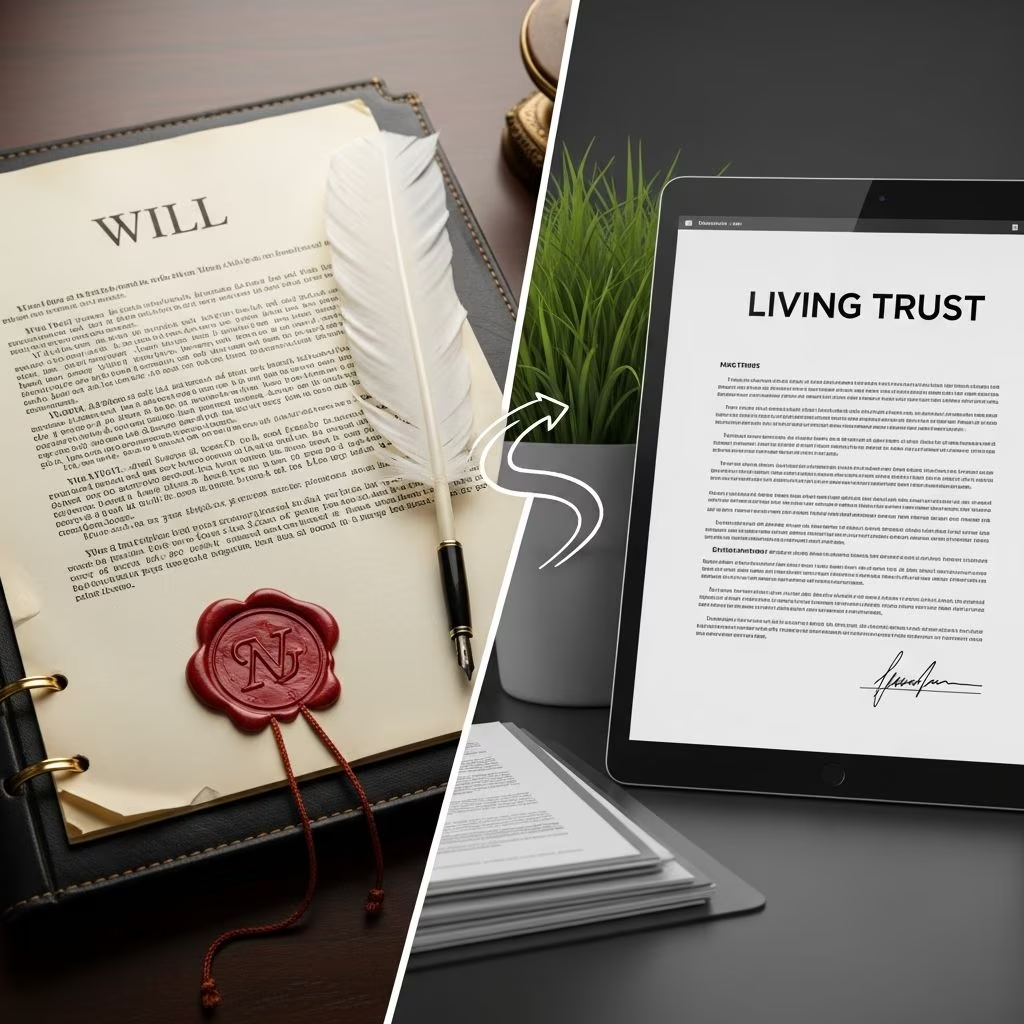
Both a will and a living trust are core estate planning tools that let you decide who receives your property after you die, but they operate in different ways and at different times. A thoughtful plan often uses both documents so your assets, family, and wishes are protected as efficiently as possible.
Understanding the Basics
What is a Will?
A last will and testament is a legal document that states how your individually owned property should be distributed after your death and who is responsible for managing that process.
Key characteristics of a will:
- Takes effect only at death – your instructions are not legally operative until you pass away.
- Goes through probate – a court-supervised procedure validates the will and oversees asset distribution.
- Names key people – you can appoint an executor (personal representative) and name guardians for minor children.
- Covers property in your name – typically includes assets owned individually that do not already pass by beneficiary designation or joint ownership.
What is a Living Trust?
A living trust (usually a revocable living trust) is a separate legal entity you create during your lifetime to hold and manage assets for your benefit and for your beneficiaries.
Key characteristics of a living trust:
- Effective while you are alive – once you sign the trust agreement and transfer assets into it, the trust can operate immediately.
- Can avoid probate – assets properly titled in the trust typically pass to beneficiaries without going through the probate process.
- Provides incapacity planning – if you become unable to manage your affairs, a successor trustee can step in without court intervention.
- Usually revocable – you can change or revoke a revocable living trust during your lifetime; irrevocable versions are much harder or impossible to change.
Side-by-Side Comparison
| Feature | Will | Revocable Living Trust |
|---|---|---|
| When it takes effect | Only after death. | As soon as signed and funded, during life and after death. |
| Probate | Most assets under a will go through probate. | Assets in the trust typically avoid probate. |
| Incapacity protection | Does not manage assets during incapacity; separate powers of attorney are needed. | Successor trustee can manage trust assets if you become incapacitated. |
| Guardians for minor children | Can name guardians. | Cannot appoint guardians; still need a will. |
| Privacy | Probate filings are generally public records. | Trust terms and distributions usually remain private. |
| Cost and complexity | Generally simpler and less expensive to create. | More complex and costly to set up and fund; requires ongoing maintenance. |
| Tax benefits | Typically no special tax advantages. | Standard revocable trusts usually do not reduce estate taxes; some irrevocable trusts can provide tax benefits. |
Advantages and Limitations of a Will
Benefits of Using a Will
- Simple starting point – drafting a basic will is often the first and most affordable step into estate planning.
- Guardian appointments – you can formally nominate who should care for your minor children if both parents die.
- Clear executor choice – you choose the person who will gather assets, pay debts, and distribute your estate.
- Flexible and easy to revise – wills can usually be updated with relatively straightforward amendments (called codicils) or by signing a new document.
Drawbacks of Relying Only on a Will
- Probate delay and cost – depending on the state and complexity of your estate, probate can be time-consuming and involve court fees and professional costs.
- Lack of privacy – because many probate documents become public, anyone may access certain information about your estate and beneficiaries.
- No automatic incapacity management – a will does nothing until you die; separate tools (like powers of attorney) are needed if you become incapacitated.
- Limited control over timing – without more complex provisions, heirs may receive property in lump sums rather than in stages or at specific ages.
Advantages and Limitations of a Living Trust
Why People Choose a Living Trust
- Probate avoidance for trust assets – correctly titled trust property generally passes directly to beneficiaries without court oversight, which can speed up distributions and reduce administrative burden.
- Continuity in case of incapacity – if you become unable to manage finances, a successor trustee can manage assets following your instructions without the delay of a court guardianship proceeding.
- More privacy – unlike a will filed in probate, the trust agreement is usually not part of the public record.
- Fine-tuned control over distributions – you can direct that beneficiaries receive funds in stages, for particular purposes (education, health, support), or at specified ages.
Limitations and Challenges of a Living Trust
- Up-front cost and complexity – creating a properly drafted trust and transferring assets into it typically requires more attorney time and coordination than a simple will.
- Ongoing maintenance – each time you acquire significant property (like a new home or investment account), you must decide whether and how to retitle it into the trust.
- Not a substitute for all documents – you still need a will to name guardians and to capture any assets you did not place in the trust (commonly through a “pour-over” will).
- Limited tax impact for revocable trusts – for tax purposes, you typically still own the assets in a revocable living trust; therefore, it usually does not reduce income or estate taxes.
Estate Planning Goals: Which Tool Fits What Need?
Your priorities and family situation should shape how you use wills and trusts. Common goals include:
- Minimizing court involvement – if you want to reduce the time and cost of probate for major assets, a living trust can be useful, especially for real estate in multiple states.
- Providing for young or vulnerable beneficiaries – both wills and trusts can create ongoing management for children, relatives with disabilities, or beneficiaries who need help handling money; living trusts can provide more detailed, long-term structures.
- Ensuring business continuity – for small business owners, transferring ownership interests to a trust can help a successor trustee keep operations running smoothly after death or incapacity.
- Maintaining privacy – individuals who value confidentiality about their wealth or family dynamics often prefer transferring substantial assets through a living trust.
- Planning for blended families – a trust can direct income or use of property to a surviving spouse while ultimately preserving principal for children from a prior relationship.
Using a Will and a Living Trust Together
In practice, many comprehensive estate plans use both a will and a living trust.
Typical structure:
- Revocable living trust as the main vehicle – major assets (home, key investment accounts) are titled in the name of the trust.
- Pour-over will – the will directs that any assets left in your individual name at death should be transferred into the trust, so they can be distributed under the same set of instructions.
- Guardian designations in the will – even when using a trust, parents still rely on the will to nominate guardians for minor children.
- Coordinated beneficiary designations – retirement accounts and life insurance often pass by beneficiary form; these should be reviewed so they align with your overall trust and will plan.
Practical Steps to Decide What You Need
1. Clarify Your Priorities
Consider questions such as:
- Is avoiding probate for most assets important to you?
- Do you have minor children or dependents with special needs?
- How complex are your assets (multiple properties, business interests, multi-state ownership)?
- Is cost today or simplicity for heirs tomorrow a bigger concern?
2. Review Your Current Assets
List each major asset, how it is titled, and any current beneficiary designations. This will help determine:
- Which property would require probate under a will-only plan.
- What should be retitled into a trust if you create one.
- Where updates are necessary to keep everything consistent.
3. Consult Qualified Professionals
Because state law significantly affects probate procedures, property rights, and tax rules, most people benefit from consulting an estate planning attorney and, for larger estates, a tax or financial advisor. Professionals can:
- Explain how local probate operates and whether it is especially slow or costly in your state.
- Draft documents tailored to your family structure and asset mix.
- Coordinate trusts, wills, powers of attorney, and health-care directives.
Frequently Asked Questions (FAQs)
Q: Do I need a will if I already have a living trust?
Yes. A will is still needed to name guardians for minor children and to capture any assets you did not place in the trust, typically through a pour-over provision that transfers those assets into the trust at death.
Q: Does a living trust replace probate completely?
Not always. Assets that are not retitled into the trust or otherwise pass outside probate (such as through beneficiary designations) may still require a probate proceeding. Proper funding of the trust and coordinated titling are critical.
Q: Is a living trust only for wealthy people?
No. While higher-net-worth individuals often use living trusts, they can also benefit middle-income families, particularly where avoiding probate delays, planning for incapacity, or managing multi-state property is important.
Q: Will a revocable living trust reduce estate taxes?
Typically no. For tax purposes you are still treated as the owner of assets in a revocable living trust. Some irrevocable trust structures can provide tax advantages, but they involve giving up more control and require specialized planning.
Q: Can I change my will or trust later?
Most people create revocable wills and trusts that can be changed while they are mentally competent. You can amend or replace a will and can usually modify a revocable trust; however, irrevocable trusts are generally very difficult or impossible to change once established.
References
- Will vs Revocable Living Trust? — John Hancock. 2023-06-15. https://www.johnhancock.com/ideas-insights/will-vs-living-trust.html
- Living Trust vs. Will: What’s the Difference? — NerdWallet. 2024-02-01. https://www.nerdwallet.com/estate-planning/learn/living-trust-vs-will
- Living Trust vs. Will: Key Differences Explained — FreeWill. 2023-08-10. https://www.freewill.com/learn/trust-vs-will
- Will vs. Living Trust: Pros, Cons, & Key Differences — Britannica Money. 2023-09-20. https://www.britannica.com/money/will-vs-living-trust
- Should I Have a Will or a Living Trust? — New York Life Insurance. 2023-05-03. https://www.newyorklife.com/articles/living-will-vs-living-trust
- Revocable Living Trust vs. Will — Charles Schwab. 2022-11-11. https://www.schwab.com/learn/story/revocable-living-trust-vs-will