
Choosing Between Credit, Charge, Secured, Debit and Prepaid Cards
Understand the key differences between major card types so you can pay, protect yourself, and build credit with confidence.
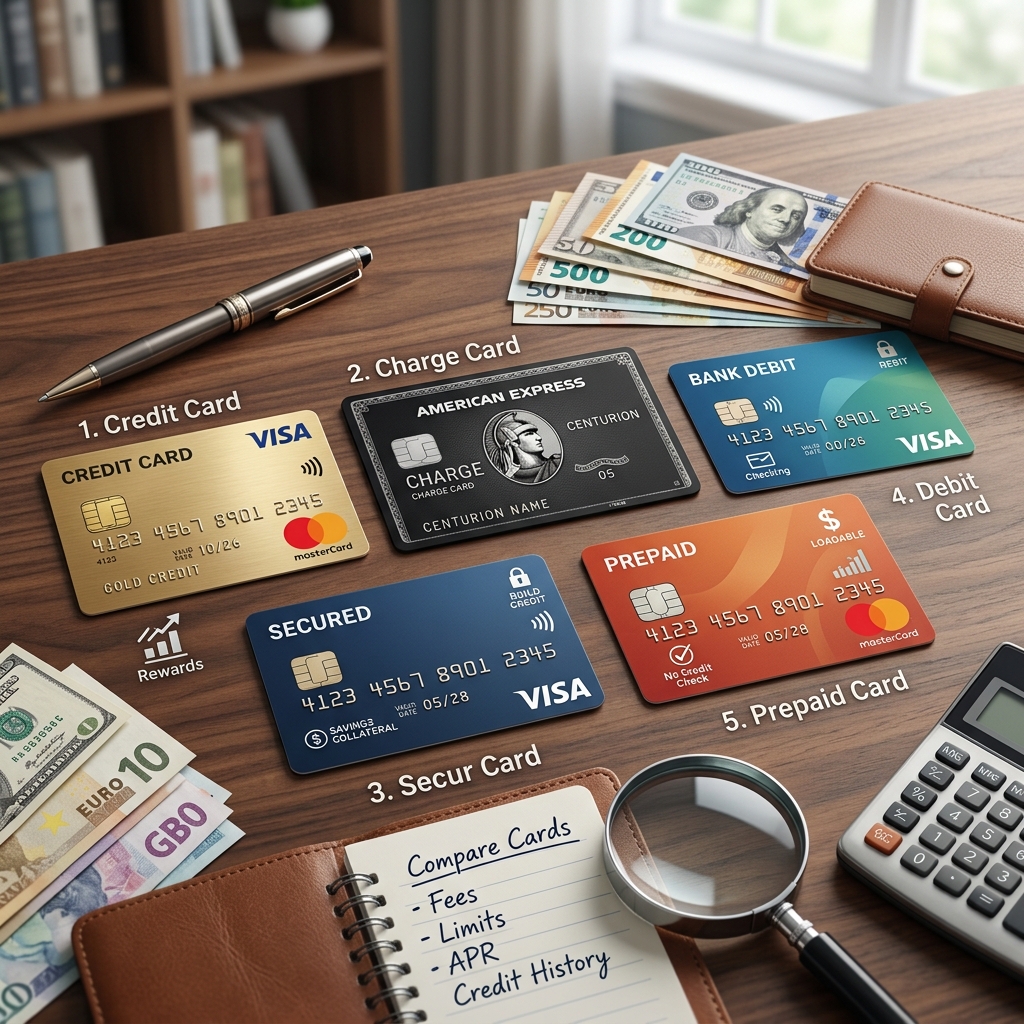
Plastic and digital payment cards may look similar in your wallet, but they do not all behave the same way. Understanding how credit cards, charge cards, secured credit cards, debit cards, and prepaid cards work can help you avoid unexpected fees, manage risk, and build a stronger financial future.
This guide explains what each card type does, how it is regulated, and when it might be the right—or wrong—choice for you.
Big Picture: Two Ways Cards Let You Pay
Most consumer cards fall into one of two broad buckets:
- Borrowing tools – cards that let you spend money now and repay later (credit and charge cards).
- Spending tools – cards that let you use money you already have (debit and prepaid cards).
The key question to ask yourself with any card is: am I borrowing money, or spending money that is already mine?
| Card type | Borrow or spend? | Linked to account? | Can build credit? |
|---|---|---|---|
| Credit card | Borrow | Credit line from issuer | Yes, if used responsibly |
| Charge card | Borrow (short term) | Credit line, must be paid in full | Yes, similar to other credit products |
| Secured credit card | Borrow, backed by deposit | Credit line secured with cash deposit | Yes, common tool for building credit |
| Debit card | Spend own money | Checking account at bank or credit union | No, activity normally not reported |
| Prepaid card | Spend own money | Stored value; not tied to bank account | No, does not affect credit score |
Credit Cards: Flexible Borrowing With Ongoing Balance
A traditional credit card gives you a revolving line of credit from an issuer. You can make purchases up to your limit, and then choose whether to pay in full or carry a balance and pay interest.
Core features of credit cards
- Borrowing power: You spend the issuer’s money and repay later, usually monthly.
- Minimum payments: You are allowed to pay less than the full statement amount, but interest accrues on the remaining balance.
- Credit reporting: Most issuers regularly report your payment history and balances to major credit bureaus, which can help or hurt your credit score.
- Protections: Federal law limits your liability for unauthorized use, often to no more than $50 if your card is used without permission.
Advantages
- Can help build or maintain credit when payments are on time and balances stay low.
- Often come with rewards, such as cash back or travel points.
- Robust dispute rights for billing errors or merchant problems, and strong fraud protections under federal law.
Risks and drawbacks
- High interest costs if you carry large balances over time.
- Late payments can trigger fees and damage your credit score.
- Potential for overspending if you treat your credit limit like extra income.
Charge Cards: Pay in Full Every Month
Charge cards look and work like credit cards at the checkout counter, but they come with one critical difference: you must pay the balance in full every billing cycle.
How charge cards work
- No preset spending limit in many cases, but purchases are still evaluated based on your profile and past behavior.
- Full payment required when your statement is due; carrying a balance is generally not allowed.
- Similar legal protections to credit cards for unauthorized use and disputes.
When charge cards make sense
- For disciplined spenders who always pay in full.
- For people who want robust benefits and rewards but can avoid interest entirely.
- For businesses that need flexibility but are committed to tight cash flow management.
Potential downsides
- Less flexibility if you encounter temporary financial hardship.
- Late or missed payments can lead to serious consequences, including account closure.
- Annual fees can be high on some premium charge cards.
Secured Credit Cards: Credit Building With a Safety Deposit
A secured credit card is a credit card that requires a refundable cash deposit as collateral. The deposit reduces the issuer’s risk and makes it easier for people with limited or damaged credit histories to qualify.
Key mechanics of secured cards
- Security deposit: You provide money upfront (often a few hundred dollars); your credit limit is usually equal to the deposit.
- Borrowing function: Despite the deposit, you are still borrowing from the issuer. You must make payments on time just like with any other credit card.
- Deposit refund: If you close the account or are upgraded to an unsecured card and have paid your balance in full, your deposit is typically returned.
- Credit reporting: Payment history from many secured cards is reported to major credit bureaus, helping you build or rebuild credit.
Benefits of secured credit cards
- Accessible option for consumers with poor or thin credit files who might be denied traditional cards.
- Allows you to demonstrate responsible borrowing behavior over time.
- Generally processed like any other credit card; merchants treat them the same.
Important cautions
- Missed payments can still hurt your credit score, just as with an unsecured card.
- The deposit can be used by the issuer to cover unpaid balances if you default.
- Some secured cards charge high fees; it is important to compare terms carefully.
Debit Cards: Direct Access to Your Bank Account
A debit card lets you spend money directly from your checking account at a bank or credit union. Each transaction immediately or very quickly reduces your available balance.
Characteristics of debit cards
- Linked to deposit account: Purchases and ATM withdrawals pull funds directly from your checking account.
- No borrowing: Unless you opt into overdraft, you are just spending money you already have.
- Limited credit impact: Routine debit card use is not reported as credit activity and does not build a credit history.
Advantages
- Helps with budgeting because you cannot easily spend more than the balance in your account.
- Often lower ongoing costs than many prepaid products, especially with low-fee checking accounts.
- Protected by regulations that apply to bank accounts and debit cards, which can include liability limits for unauthorized transactions.[10]
Limitations and risks
- Overdraft programs can lead to high fees if you spend more than you have.
- Does not help build credit, even with responsible use.
- Using debit instead of credit may mean losing out on some card rewards.
Prepaid Cards: Stored Value Without a Bank Account
Prepaid cards—sometimes called prepaid debit or stored-value cards—allow you to load money onto the card and then spend up to the amount you have loaded. They are typically not tied directly to a checking account.
How prepaid cards work
- Load funds first: You add money to the card through cash reloads, direct deposit, or transfers before you spend.
- No credit check in many cases: Many prepaid cards are available without a credit history review.
- Not credit products: Transactions use your own loaded funds, and activity is usually not reported to credit bureaus.
Benefits
- Useful for people without bank accounts or who prefer not to link a card to their checking account.
- Can support strict budgeting, because you can only spend what you have loaded.
- Accessible at retail stores or online, often with simple sign-up processes.
Drawbacks
- Many prepaid cards carry multiple fees—monthly, activation, reload, or ATM—that can add up quickly.[10]
- Consumer protections may be more limited compared with traditional bank debit cards or credit cards, depending on the product.[10]
- Does not help build credit, regardless of how responsibly you use the card.
Comparing Card Types: Cost, Protections and Credit Impact
Choosing the right card involves weighing several dimensions: fees, legal protections, and how each card interacts with your credit profile.
Cost considerations
- Credit and charge cards: Interest costs are the major risk if you do not pay in full; some cards also charge annual fees.
- Secured credit cards: Require a deposit plus potential annual or monthly fees, but can be less expensive than high-rate subprime credit cards.
- Debit cards: Fees are largely tied to the checking account (maintenance, overdraft), but everyday use can be low-cost with the right account.
- Prepaid cards: Often have layered fee structures, including monthly service fees and reload charges.[10]
Legal protections and liability
- Credit and charge cards: Federal law generally limits your liability for unauthorized use to a small amount if your card or number is misused before you report it, and gives you rights to dispute errors.
- Debit cards: Protected under regulations for bank accounts, but your responsibilities can depend on how quickly you report unauthorized transactions.[10]
- Prepaid cards: Protections can vary. Some products offer strong safeguards, while others may lack the same legal coverage as bank debit cards or credit cards.[10]
Credit score impact
- Credit cards: Affect your credit score through payment history and credit utilization. Responsible use can improve your score.
- Charge cards: Also credit products; late or missed payments can damage your credit.
- Secured credit cards: Designed to help build or rebuild credit; most issuers report to major bureaus.
- Debit and prepaid cards: Do not involve borrowing, so normal activity does not show up on credit reports and does not build credit.
Which Card Type Fits Common Financial Goals?
Different card types align better with different priorities. Consider what you want the card to do for you.
If your goal is to build or rebuild credit
- Favor secured credit cards or responsible use of regular credit cards.
- Avoid relying on prepaid or debit cards for credit-building; they do not contribute to your score.
If your goal is strict budgeting and avoiding debt
- Use debit cards tied to low-fee checking accounts.
- Consider prepaid cards if you want to cap spending or do not have a bank account, but watch fees carefully.[10]
If your goal is maximizing rewards while protecting yourself
- Use credit or charge cards for purchases, but pay the balance in full each month to avoid interest.
- Take advantage of dispute rights and fraud protections offered on these cards.
If your goal is temporary access to credit with limited risk to the issuer
- Consider a secured credit card as a bridge product until your credit improves enough for an unsecured card.
Practical Tips for Choosing and Using Cards Wisely
- Read the terms: Review interest rates, fee schedules, and dispute rules before you apply or load money onto any card.
- Match the card to the job: Use credit or secured cards to build credit; use debit or prepaid cards for tighter budgeting.
- Monitor statements: Regularly check transactions for errors or unauthorized use and report issues quickly to limit your liability.[10]
- Plan for emergencies: Having a strategy for unexpected expenses can prevent you from resorting to high-interest borrowing.
- Review annually: Re-evaluate your cards each year as your financial situation and credit profile change.
Frequently Asked Questions (FAQs)
Does using a prepaid card help my credit score?
No. Prepaid cards use your own loaded funds and generally do not involve borrowing or credit reporting. As a result, they do not raise or lower your credit score.
Is a secured credit card the same as a prepaid card?
No. A secured credit card is a credit product backed by a deposit, and your payments are reported to credit bureaus. A prepaid card is a stored-value card that lets you spend only what you load and normally has no effect on your credit history.
What happens to my secured card deposit?
Your deposit generally remains with the issuer as collateral. If you pay off your balance and close the account or are upgraded to an unsecured card, the deposit is usually returned. If you fail to pay, the issuer may use the deposit to cover what you owe.
Are debit cards safer than prepaid cards?
Many debit cards benefit from strong consumer protections tied to bank accounts, including limits on liability for unauthorized transactions when problems are reported promptly. Some prepaid cards have fewer protections, and fee structures can be more complex.[10]
Should I choose a charge card or a regular credit card?
If you always pay your balance in full and want rewards or premium benefits, a charge card can be attractive. If you prefer the option—though not the obligation—to carry a balance, a traditional credit card offers more flexibility but requires careful management to avoid interest and potential credit damage.
References
- Comparing Credit, Charge, Secured Credit, Debit, or Prepaid Cards — Federal Trade Commission. 2023-08-17. https://consumer.ftc.gov/articles/comparing-credit-charge-secured-credit-debit-or-prepaid-cards
- How are prepaid cards, debit cards, and credit cards different? — Consumer Financial Protection Bureau. 2021-09-01. https://www.consumerfinance.gov/ask-cfpb/how-are-prepaid-cards-debit-cards-and-credit-cards-different-en-433/
- Secured vs. Prepaid Cards: What’s the Difference? — Experian. 2023-04-12. https://www.experian.com/blogs/ask-experian/secured-card-vs-prepaid-card/
- What’s the Difference Between Prepaid Debit and Secured Credit? — NerdWallet. 2023-05-10. https://www.nerdwallet.com/credit-cards/learn/prepaid-debit-cards-secured-credit-cards-difference
- Consumer Card Constructs: Debit, Prepaid, Charge, Credit Card — Lithic. 2022-02-15. https://www.lithic.com/blog/consumer-card
- What’s a Prepaid Card, and Can It Help You Build Credit? — Chime. 2023-07-03. https://www.chime.com/blog/prepaid-card-vs-debit-card-vs-credit-card/
- Prepaid Debit Cards: What Are the Pros, Cons and Alternatives — FoolProofMe. 2022-03-08. https://www.foolproofme.org/gullibility/article_1_3.php
Similar Articles








Read full bio of Sneha Tete




