
Child Support, Wage Garnishment, and Lessons from High‑Profile Cases
How child support orders turn into wage garnishments, what happens when payments stop, and what high‑profile cases teach about legal and financial risks.
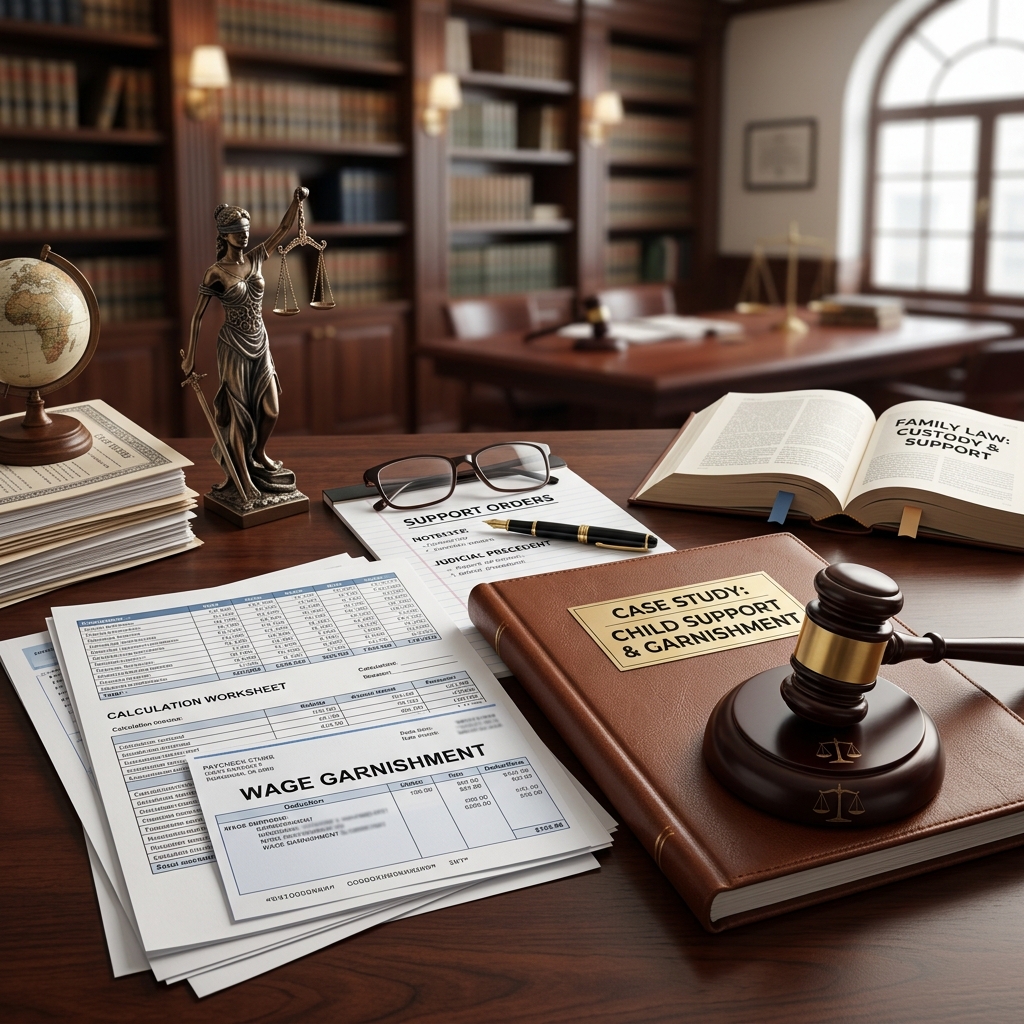
When a famous entertainer or public figure is reported to have wages garnished for unpaid child support, the headlines are eye‑catching—but the legal mechanics behind those stories are the same rules that apply to everyone. Wage garnishment for child support is a standardized enforcement tool rooted in federal and state law, designed to ensure children receive the financial support courts have ordered.
This article uses the idea of a high‑profile wage garnishment case as a starting point to explain, in accessible terms, how child support orders are enforced, how arrears accumulate, what garnishment actually looks like on a paycheck, and how both parents can protect their rights.
Why Child Support Enforcement Matters
Child support obligations arise from the principle that both parents must contribute financially to their children’s needs, regardless of marital status or relationship history. Once a court issues a support order, it has the same force as any other judgment and can be enforced using powerful legal tools.
- Children’s basic needs – housing, food, clothing, healthcare, and education depend, in part, on regular support payments.
- Stability for the custodial household – consistent support can reduce reliance on public assistance and improve financial stability.
- Public policy – federal and state governments have created enforcement systems to keep child support from becoming a public burden when a parent can pay but does not.
When support is unpaid, courts and child support agencies can move quickly, even against well‑known individuals: fame is not a shield from enforcement.
From Court Order to Paycheck: How Support Is Collected
In most cases, the path from a support order to actual payments has several predictable steps. While details differ by state, the core process is similar nationwide.
1. Establishing the Child Support Order
Before anything can be enforced, there must be a valid court or agency order stating:
- Which parent must pay support (often called the obligor).
- The amount of monthly or weekly support owed.
- When payments must begin.
- Where payments should be sent (often a state disbursement unit).
Courts use guidelines that factor in each parent’s income, number of children, and sometimes parenting time and special needs. Once signed, this order is legally binding.
2. Immediate Income Withholding
Federal law requires that, in most cases, child support orders include automatic income withholding. This means that instead of trusting the paying parent to mail or transfer funds, a portion of wages is taken directly from the paycheck.
- Employers receive a written income withholding order.
- They must deduct the specified amount each pay period.
- They send withheld funds to the state agency or disbursement unit, which then forwards them to the custodial parent.
This system exists for everyone—from hourly workers to high‑earning performers—because it reduces missed payments and disputes about whether money was sent.
3. What Counts as Disposable Earnings?
Garnishment is based on disposable earnings, meaning what is left after legally required deductions (such as federal and state taxes, Social Security, and certain mandatory retirement contributions) are subtracted from gross pay.
Voluntary deductions, like optional retirement savings or charitable contributions, usually do not reduce the amount that can be garnished.
Legal Limits on Wage Garnishment for Child Support
Federal law under the Consumer Credit Protection Act (CCPA) sets maximum percentages of wages that can be withheld for support, and states may apply these limits within their own procedures.
| Situation | Maximum % of Disposable Earnings |
|---|---|
| Ordinary consumer debts (credit cards, loans) | Up to 25% in many cases |
| Child support/alimony – supporting another spouse or child | Up to 50% of disposable earnings |
| Child support/alimony – not supporting another spouse or child | Up to 60% of disposable earnings |
| If more than 12 weeks behind on support | These limits can increase by 5 percentage points (to 55–65%) |
Because of these higher caps, child support garnishment can take a much larger portion of a person’s pay than typical consumer debt garnishment, reflecting the priority given to family support obligations.
When Payments Stop: How Arrears Build Up
When a parent stops paying in full and on time, arrears—the unpaid support balance—begin to accumulate immediately. These arrears are not erased simply because income drops, employment changes, or new financial obligations arise.
- No automatic pause – the order remains in effect until changed by a court.
- Interest can accrue – some states, such as California, charge 10% annual interest on unpaid child support, dramatically increasing long‑term cost.
- Administrative tracking – state child support agencies monitor accounts electronically and flag delinquencies without needing the receiving parent to constantly complain.
A high‑earning parent who assumes future income will easily cover a temporary lapse can quickly face a large arrears balance that is difficult to pay down, even with substantial income.
Enforcement Tools Beyond Wage Garnishment
Wage garnishment is often the first and most visible enforcement action, but it is only one of several tools available to collect unpaid support. States may use multiple methods at once to secure payment.
- Tax refund intercepts – state and federal tax refunds can be seized to pay arrears once the unpaid amount meets certain thresholds.
- License suspensions – driver’s licenses, professional licenses, hunting or fishing licenses, and sometimes passports can be restricted or suspended for serious or persistent nonpayment.
- Liens and asset seizure – liens may be placed on real property, vehicles, or other assets; bank accounts can sometimes be levied to satisfy support judgments.
- Interception of other income – unemployment benefits, some pensions, and certain disability benefits may be garnished for support, subject to federal and state rules.
- Contempt of court – if a judge finds that nonpayment is willful—that the person had the ability to pay but chose not to—the court can impose fines or even jail time as a coercive measure.
These enforcement tools apply just as readily to a touring musician or actor as to any other parent. Frequent changes in income or residence can complicate tracking, but interstate cooperation and federal systems help agencies follow obligors across state lines.
High‑Profile Lessons: Visibility Does Not Prevent Enforcement
When a celebrity appears in the news for unpaid child support and wage garnishment, the underlying dynamic is familiar to many families: a court order, missed payments, an accumulating debt, and eventual enforcement. The publicity offers several practical lessons for anyone facing similar issues.
Lesson 1: Court Orders Are Not Optional
Regardless of occupation or income variability, a support order is a binding legal obligation. Ignoring it because of career instability, touring schedules, or disputes with the other parent does not stop the meter from running.
- Arrears continue to grow until a new order is issued.
- Courts rarely forgive past‑due support; at best, they may adjust future payments if justified by evidence.
- Public image or reputation does not influence the legal requirement to pay.
Lesson 2: Income Changes Require Prompt Legal Action
Artists, freelancers, and self‑employed individuals often have fluctuating earnings. Family law systems do recognize genuine changes in circumstances, but they require formal steps.
- Most states allow a parent to file a motion or petition to modify child support when income significantly rises or falls.
- Courts typically make modified orders effective from the date the motion was filed, not the date income changed.
- Waiting months or years to seek modification can result in large arrears for the gap period, even if income was genuinely reduced.
In a high‑profile case, a celebrity who loses a major contract but keeps paying support at the earlier level for a short time may still need to seek modification immediately; otherwise, unpaid amounts will be treated as debt, not an oversight.
Lesson 3: Public Scrutiny Does Not Change Legal Standards
Media coverage often focuses on the size of the debt, perceived lifestyle, or personal conflicts between parents. The court, however, looks at the same core questions in every case:
- Was there a valid support order?
- What was the obligor’s actual income and ability to pay during the relevant period?
- Did the obligor make reasonable efforts to comply or to modify the order when circumstances changed?
In that sense, the law treats a high‑profile obligor much like any other parent on the docket.
Rights and Responsibilities of the Paying Parent
While enforcement tools are strong, paying parents retain important rights. Understanding these can prevent unnecessary hardship and escalation.
Right to Notice and Due Process
Before wages are garnished or certain enforcement actions are taken, laws generally require that the obligor receive notice and an opportunity to contest errors.
- Review any notice promptly to confirm the stated arrears and ongoing payment amount.
- If you believe there is a mistake, you may request a hearing or file the appropriate forms with the court or agency.
- Keep records of all payments made, including receipts and bank statements.
Right to Seek Modification
If income drops significantly due to job loss, health problems, or other substantial changes, most states allow the obligor to file for a modification of support. The key is acting quickly and providing documentation.
- Pay stubs or employer statements showing reduced earnings.
- Termination letters or layoff notices.
- Medical records and bills if health issues limit work.
- Evidence of efforts to find new employment.
Even highly paid performers can face sudden income declines. Without a formal modification, courts will still expect the original order to be paid, and arrears will continue to build.
Responsibility to Pay What You Can
Courts look more favorably on obligors who make consistent partial payments and document their circumstances than on those who simply stop paying.
- Partial payments reduce arrears and demonstrate good faith.
- They can influence a judge’s view when considering contempt or other sanctions.
- They help support the child even before the legal process catches up.
Rights and Options for the Receiving Parent
Parents who are owed support are not powerless when payments stop. State systems and courts provide mechanisms to enforce orders even without hiring a private attorney, though legal advice can be helpful in complex or interstate cases.
- Contact the child support agency – in many states, agencies automatically track payments and can initiate garnishment and other enforcement steps.
- Request a verified judgment of arrears – some jurisdictions require a form or motion to formally establish the amount owed before garnishment.
- File for wage garnishment – if automatic withholding is not already in place, the receiving parent may ask the court to issue a wage garnishment order.
- Enforce out‑of‑state orders – federal law and interstate agreements facilitate the enforcement of support orders across state lines.
High‑profile cases sometimes highlight how persistent enforcement by a receiving parent can, over time, result in substantial arrears being collected through garnishment and other means.
Practical Strategies to Avoid Wage Garnishment Problems
While garnishment is often automatic at the start of a case, problems arise when arrears accumulate and more aggressive enforcement is triggered. Both parents can take practical steps to reduce conflict, protect financial stability, and keep the focus on supporting the child.
For Paying Parents
- Open and read all mail from the court or agency – ignoring notices allows errors to go unchallenged and deadlines to pass.
- Update your address and employer information – failure to update can cause missed notices and delayed modifications.
- Plan for variable income – if your earnings fluctuate (for example, in the entertainment industry), consider budgeting based on a conservative estimate, setting aside funds for support in lower‑income months.
- Document all payments and communications – keep copies of payment confirmations and written exchanges with the other parent and the agency.
- Seek legal or nonprofit advice early – many legal aid organizations and bar associations offer guidance in support matters.
For Receiving Parents
- Use official payment channels – receiving payments through the state disbursement unit creates a reliable record and simplifies enforcement.
- Report nonpayment promptly – child support agencies may already be tracking arrears, but supplying up‑to‑date information can speed enforcement.
- Avoid informal side deals – accepting reduced payments based on a verbal agreement does not change the court order; without a formal modification, arrears may still be calculated at the original amount.
- Keep financial records – retain letters, payment histories, and any evidence relevant to enforcement or future modifications.
Frequently Asked Questions
Can my entire paycheck be taken for child support?
No. Federal law caps how much of your disposable earnings can be garnished for child support—generally between 50% and 65%, depending on whether you support another spouse or child and how far behind you are. Ordinary consumer debts are usually limited to a much lower percentage.
Does wage garnishment mean I am in trouble with the court?
Not necessarily. Many support orders include automatic income withholding from the start, even when the obligor is fully compliant. Garnishment becomes more serious when arrears grow large and additional enforcement actions—like license suspensions or contempt—are added.
What happens if I change jobs or become self‑employed?
You must inform the child support agency or court of the new employer or change in income. A new withholding order may be sent to the new employer, or alternative collection methods may be used for self‑employment income. Failure to report job changes can lead to missed payments and enforcement escalation.
Can child support interest be forgiven?
Rules vary by state. Some jurisdictions allow limited compromises on interest, while others impose mandatory rates (such as 10% per year in California) that are difficult to waive. Even when interest relief is possible, courts rarely forgive the underlying principal support owed.
Does being a public figure change how child support is enforced?
Legally, no. The same statutes and guidelines apply whether the obligor is a celebrity or not. Publicity may highlight the case, but the enforcement tools—wage garnishment, tax intercepts, license actions, and contempt—are the same.
References
- Wage Garnishment for Child Support in Pennsylvania — McIntosh Lawyers. 2023-05-01. https://mcintoshlawyers.com/wage-garnishment-for-child-support-in-pennsylvania/
- Garnishment to Pay Child Support or Maintenance — Colorado Judicial Branch. 2022-09-01. https://www.coloradojudicial.gov/self-help/garnishment-pay-child-support-or-maintenance
- Garnishment for Child Support and Alimony — Maryland People’s Law Library. 2022-03-15. https://www.peoples-law.org/garnishment-child-support-and-alimony
- What Happens If You Don’t Pay Child Support in Pennsylvania — Lebovitz Family Law. 2023-02-10. https://lebovitzlaw.com/family-law-and-divorce/child-support-enforcement-pennsylvania/
- Child Support Collection in Maine: What Can DHHS Do to Make Me Pay? — Pine Tree Legal Assistance. 2021-11-01. https://www.ptla.org/child-support-collection-what-can-dhhs-do-make-me-pay
- Paying Child Support — Judicial Council of California. 2023-06-01. https://selfhelp.courts.ca.gov/child-support/pay
- Child Support Terms — Pennsylvania Department of Human Services. 2022-01-20. https://www.humanservices.dhs.pa.gov/CSWS/csws_controller.aspx
Similar Articles








Read full bio of medha deb


