
Child Support Fraud In Colorado: How To Prove It, Fix Orders
How false financial claims can distort child support cases in Colorado, and what legal remedies may follow.
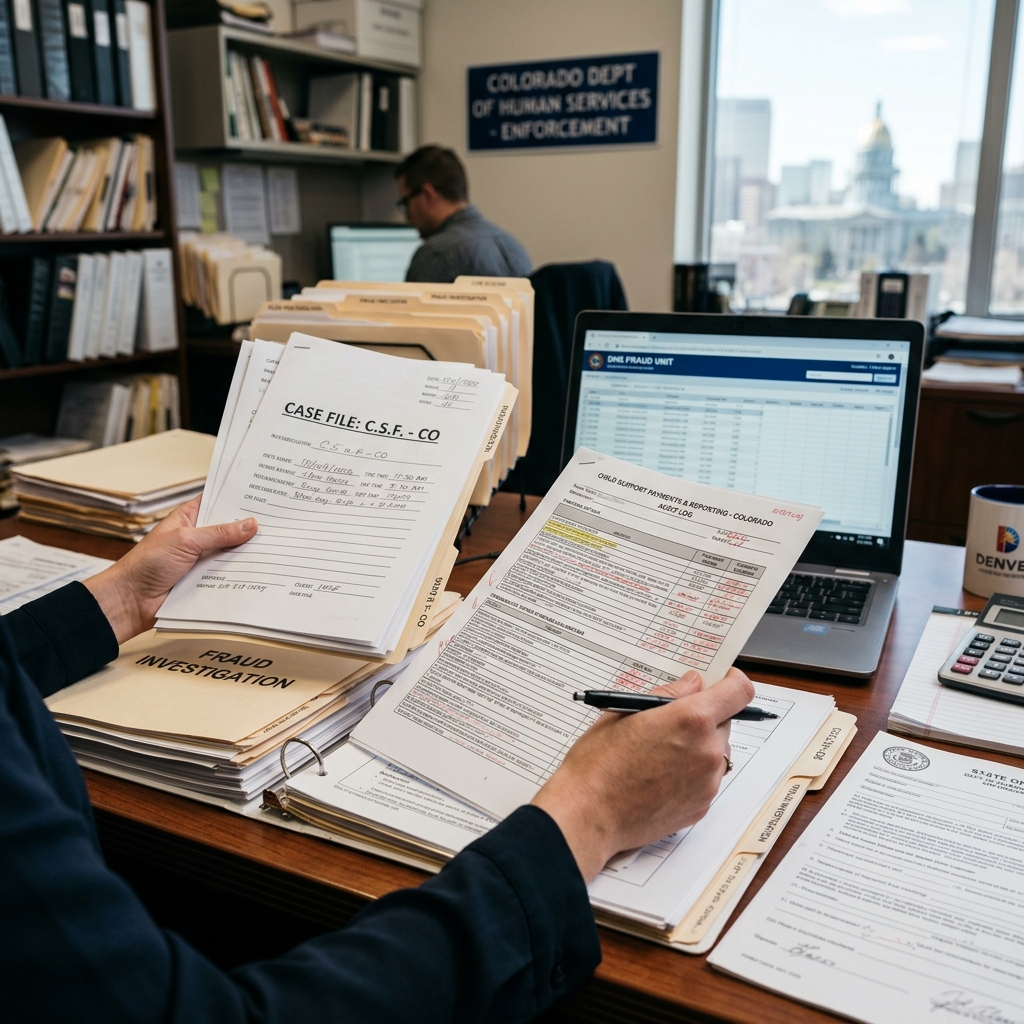
Child support cases depend on accurate financial information. When a parent lies about income, assets, household facts, or expenses to influence the amount of support, the result can be an unfair order that harms both the child and the other parent. In Colorado, courts rely on disclosure rules and documentary evidence to calculate support, so false statements can create serious legal consequences.
This article explains how child support fraud can happen, what courts look for, how it may affect a support case, and what steps a parent can take if deception is suspected.
What child support fraud means
Child support fraud generally refers to intentionally misleading a court or another party during a child support proceeding. The goal is usually to change the amount of support that is ordered. A parent may try to reduce what they pay, or they may try to increase what they receive, depending on their role in the case.
Unlike a simple mistake, fraud involves intent. That means the person knew the information was false or incomplete and used it to obtain an advantage in the support calculation. Because Colorado child support orders are based on income and related financial factors, inaccurate reporting can affect the entire outcome of the case.
Common ways false information appears
Fraud in a child support case can take different forms. Some parents hide income, while others exaggerate costs or misstate family details. Courts pay close attention to these issues because even small distortions can change the final support amount.
- Underreporting wages or salary earned from regular employment
- Failing to disclose bonuses, commissions, tips, or freelance income
- Hiding income from a business, investment account, or side work
- Asking to be paid in cash to avoid leaving a paper trail
- Inflating childcare, housing, medical, or school expenses
- Misstating the number of children or dependents in the household
- Leaving out assets such as vehicles, property, or savings
These tactics can appear in divorce, separation, paternity, or post-judgment modification cases. The court’s concern is not only whether the numbers are inaccurate, but whether the person intentionally used false numbers to affect the order.
Why accurate disclosure matters in Colorado
Colorado child support calculations depend on reliable financial disclosure from both parents. Income information helps the court determine each parent’s share of the child’s needs, and the court may also consider parenting time and certain child-related costs. If one side hides information, the formula can produce a result that does not reflect reality.
That matters because child support is intended to serve the child’s interests, not to reward either parent. When fraud distorts the calculation, the child may receive too little support, or one parent may be burdened with an unfair payment obligation. A dishonest filing can also delay the case, increase litigation costs, and damage trust between the parties.
Signs that fraud may be present
Suspicion of fraud often begins with facts that do not match the financial story being told in court. A parent may claim to have little or no income while maintaining a lifestyle that suggests otherwise. In other cases, tax records, bank activity, or business records may conflict with sworn statements.
- A parent’s spending appears inconsistent with their reported income
- Pay stubs, tax returns, and bank deposits do not match
- A parent owns a business but reports minimal earnings
- Cash deposits, transfers, or unexplained payments appear regularly
- A parent suddenly changes jobs or claims reduced income without proof
- Expense claims seem exaggerated compared with normal market rates
None of these signs proves fraud by itself. However, they may justify a closer review of records, subpoenas for documents, or a request for the court to examine the financial evidence more carefully.
How courts uncover misleading claims
Family courts have several tools for evaluating credibility. Judges may compare testimony with tax returns, pay records, bank statements, business ledgers, and other supporting documents. If a parent refuses to cooperate or gives inconsistent answers, the court may draw negative conclusions about that parent’s reliability.
In some cases, the court may also review employment records, public filings, or evidence of lifestyle spending. If the discrepancy is serious, the court may impute income, which means assigning income based on what the parent could reasonably earn rather than accepting the lower number they reported.
Discovery requests, subpoenas, and sworn financial affidavits are often central to this process. The more complete the paper trail, the easier it becomes to identify whether the reported numbers are genuine or manipulated.
Possible consequences of child support fraud
A finding of fraud can have both civil and, in more serious cases, criminal implications. In the family-law case itself, the court may correct the support amount, order back payments, or modify existing orders. It may also require the dishonest party to pay costs associated with exposing the fraud.
Depending on the facts, a court may:
- Adjust the child support order retroactively or prospectively
- Order reimbursement for underpaid support
- Impose sanctions for false statements or discovery misconduct
- Reject the credibility of the person who made the false claim
- Refer the matter for possible investigation if broader misconduct is suspected
More serious conduct may expose a person to criminal charges if the false statements were made in a context that violates other state laws. Even when a case does not rise to that level, the family court can still impose practical consequences that affect finances and custody-related credibility.
What to do if you suspect fraud
If you believe the other parent lied about income or expenses, the best response is to gather records rather than rely on assumptions. Courts are more persuaded by documentation than by general accusations. Start with materials that show the actual financial picture and identify where the other parent’s story conflicts with the facts.
- Save pay records, tax returns, and bank statements
- Keep copies of messages about work, money, or expenses
- Document business activity, public posts, or spending patterns if relevant
- Compare the reported income with known bills, purchases, or lifestyle facts
- Ask a lawyer whether discovery or modification is appropriate
If the case is already active, a lawyer may help request additional records through formal discovery. If a support order has already been entered, a party may also seek a modification or ask the court to revisit the order if the false information affected the original calculation.
Can a child support order be changed after fraud is found?
Yes, a child support order may be modified if the financial facts used to create it were inaccurate or if there has been a substantial change in circumstances. The process depends on the stage of the case and the evidence available. If the original order was based on false data, the court may correct the amount after reviewing new evidence.
Modification is not automatic. The requesting party must show why the current order is wrong and provide reliable proof. That may include tax records, employment documents, bank records, business documents, or testimony from third parties. The more detailed the evidence, the stronger the case for changing the order.
How to reduce the risk of false claims in your case
The best protection against fraud is thorough documentation. Parents who keep organized records are in a stronger position to challenge false statements or defend their own disclosures. It also helps to provide complete information from the beginning rather than waiting for the other side to raise questions.
| Good practice | Why it helps |
|---|---|
| Keep tax returns and pay stubs | Shows income history and changes over time |
| Track child-related expenses | Helps support accurate cost claims |
| Save bank and account statements | Provides a clear financial trail |
| Report income from all sources | Reduces the risk of a false or incomplete filing |
| Consult a family lawyer early | Helps prevent errors that could affect the order |
People sometimes think informal arrangements are easier than court involvement, but when support is at issue, clarity matters. Written records can prevent misunderstandings and make it easier to prove the truth if a dispute arises later.
When legal help is worth considering
A family law attorney can help identify whether the issue is simple error, poor recordkeeping, or intentional fraud. That distinction matters because the legal strategy may be different in each situation. A lawyer may also help prepare evidence, request financial disclosures, and present the case in a way that is useful to the court.
Legal help is especially useful if the other parent owns a business, earns irregular income, works mainly for cash, or has a pattern of changing jobs. These situations often require deeper financial analysis. A lawyer can also help a parent understand whether the current facts support enforcement, modification, contempt, or another remedy.
Frequently asked questions
Is every mistake on a child support form fraud?
No. Fraud requires intent. A simple typo, misunderstanding, or missing document may be a mistake rather than deliberate deception. The court looks for evidence that the person knowingly provided false information.
Can a parent hide income by working for cash?
They may try, but cash income can still be discovered through bank records, spending patterns, testimony, business records, or other evidence. Courts can consider the full financial picture, not just the amounts reported on a form.
What if my ex exaggerated their expenses?
Inflated expenses may affect the support calculation if the court relies on them. If you have evidence that the figures are false or unsupported, you can present that information in court or through your attorney.
Can child support fraud affect custody?
It can affect credibility. While support and custody are separate issues, a parent who lies about finances may have a harder time persuading the court in other parts of the case if honesty is central to the dispute.
Should I accuse the other parent without proof?
No. Unsupported accusations can distract from the real issues and may weaken your position. It is better to gather documents, identify inconsistencies, and raise the issue with evidence.
Practical takeaways for Colorado parents
Child support fraud usually involves a deliberate attempt to distort financial facts so the court sets the wrong amount. The most common problems are hidden income, inaccurate expense claims, and incomplete disclosures. Because Colorado courts rely on financial evidence to calculate support, false statements can have serious consequences.
If you think deception has occurred, focus on records, not speculation. Organized documentation, formal discovery, and timely legal advice can help correct the problem and protect the child’s interests.
References
- Child Support Services — Colorado Judicial Branch. 2026. https://www.coloradojudicial.gov/court-services/family-law-programs/child-support-services
- Child Support Enforcement — U.S. Department of Health & Human Services, Office of Inspector General. 2026. https://oig.hhs.gov/fraud/child-support-enforcement/
- Report fraud to Colorado Department of Human Services — Colorado Department of Human Services. 2026. https://cdhs.colorado.gov/report-fraud-to-colorado-department-of-human-services
Similar Articles








Read full bio of Sneha Tete


