
West Virginia Child Custody: 50/50 Presumption Guide Explained
A practical guide to legal and physical custody, 50/50 parenting time, and how courts decide what is best for children in West Virginia.
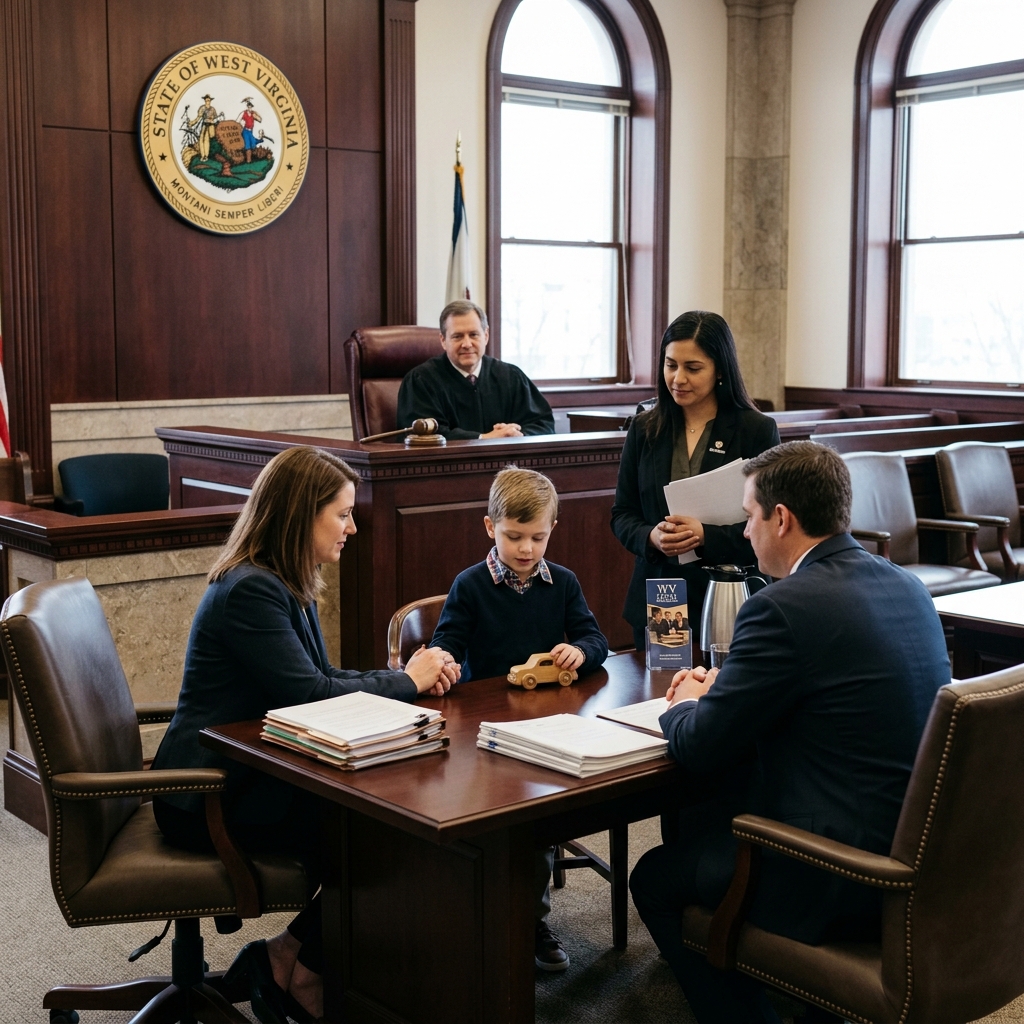
West Virginia family courts handle child custody with one guiding principle: decisions must serve the best interests of the child. In recent years, the state has moved strongly toward shared parenting time, starting many cases with a presumption that a roughly 50/50 schedule is best for children, unless evidence shows otherwise.
This guide explains how custody works in West Virginia, how the 50/50 presumption operates, what judges look at when deciding custody, and what parents can expect throughout the process.
Key Custody Terms in West Virginia
West Virginia law uses several distinct concepts when talking about custody.
Legal vs. physical custody
- Legal custody (often called decision-making responsibility): the right to participate in major decisions about the child’s life, including education, medical care, religious upbringing, and significant activities.
- Physical custody (also called custodial responsibility or parenting time): the time the child actually lives or stays with each parent daily.
Joint vs. sole custody
- Joint legal custody: both parents share decision-making authority. Courts strongly favor some form of joint legal custody when it is safe and workable.
- Sole legal custody: one parent has final authority on major decisions, often ordered when there is serious conflict, abuse, or an inability to cooperate.
- Shared physical custody: the child spends substantial, scheduled time with both parents, often close to 50/50.
- Primary physical custody with visitation: the child lives most of the time with one parent, while the other has scheduled parenting time.
What is a child custody proceeding?
Under West Virginia’s version of the Uniform Child Custody Jurisdiction and Enforcement Act, a child custody proceeding is any case where legal or physical custody, or visitation, is at issue. This can include:
- Divorce cases involving minor children
- Custody and visitation disputes between unmarried parents
- Modifications of existing custody orders
- Relocation disputes
The 50/50 Parenting Time Presumption
West Virginia made a major policy shift with the Best Interests of the Child Protection Act of 2022 (HB 4648), which strengthened a presumption that equal (50/50) parenting time serves children’s best interests.
What the presumption means
- Family courts now start from the assumption that both parents should have roughly equal time with their child.
- This presumption promotes continued involvement of both parents after separation or divorce, where safe.
- The 50/50 presumption applies in new custody cases and generally when courts first craft a parenting plan.
When the presumption can be overcome
The equal-time presumption is rebuttable, not automatic. A parent can challenge 50/50 custody by showing, by a preponderance of the evidence (more likely than not), that equal time is not in the child’s best interest.
Courts may depart from 50/50 when there is credible evidence of:
- Domestic violence, abuse, or neglect involving the child or the other parent
- Substance abuse or serious mental health issues that impair parenting
- Unsafe or unstable housing, such as chronic homelessness or frequent moves
- Criminal activity that endangers the child
- Extreme conflict or inability to cooperate that harms the child
- Logistical barriers (long distance, work schedules) making equal time impractical
- Education disruptions or other harms tied to frequent transitions
- A mature child’s firm and reasonable preference for a different schedule, particularly at age 14 or older
50/50 presumption and changes to existing orders
Importantly, the adoption of a stronger 50/50 presumption by itself does not automatically justify changing an existing custody order. To modify a prior order, a parent typically must show:
- A substantial change in circumstances since the last order, and
- That the proposed change better serves the child’s best interests.
Best-Interest Factors West Virginia Courts Must Consider
Even with a 50/50 starting point, judges must evaluate a range of statutory factors to decide what is truly best for a child. These factors are codified in West Virginia law and guide every custody decision.
Core safety and welfare considerations
Under West Virginia Code, courts must examine whether a parent or someone in the parent’s household has:
- Abused, neglected, or abandoned the child, as defined by state law
- Committed sexual assault or sexual abuse
- A history of domestic violence or threats against the child or other household members
- Substantial problems with substance abuse involving drugs or alcohol
- A serious felony criminal record relevant to child safety
Stability and parenting capacity
Judges also look at the parents’ ability to provide a stable, nurturing environment, including whether a parent:
- Has a stable housing situation that is safe and suitable for the child
- Ensures the child receives appropriate medical care and needed treatment
- Supports the child’s education and avoids disrupting schooling
- Can meet the child’s daily needs for food, clothing, supervision, and routine
- Encourages a positive relationship between the child and the other parent (rather than undermining it)
Child’s preferences
- At age 14 or older, a child’s firm and reasonable preference is a particularly important factor.
- Younger children may also express preferences if sufficiently mature, but the judge decides how much weight to give those views.
Practical schedules and logistics
Courts must take into account whether a proposed schedule:
- Works with each parent’s daily routines and work hours
- Is feasible given the distance between the parents’ homes and the child’s school
- Would cause harmful disruption to schooling or activities
- Is realistic for transportation and exchanges
Shared Parenting Time and Common Schedules
Because West Virginia law favors shared parenting time, courts and parents often work with a range of schedule options. The exact split depends on the child’s age, parents’ locations, and other case-specific factors.
| Schedule Type | Approximate Split | Typical Use |
|---|---|---|
| Alternating weeks | 50/50 | School-age children when parents live relatively close and communication is workable. |
| 2-2-3 rotation | 50/50 | Maintains frequent contact with both parents; can be good for younger children. |
| Extended weekends | Approximately 60/40 or 70/30 | Used when equal time is not feasible due to distance or schedules, but substantial time with both parents is still appropriate. |
| Primary home with holiday visits | Varies, often 80/20 or similar | Used where safety or stability concerns make equal time inappropriate. |
Parenting Plans: The Backbone of Custody Orders
In all cases involving children under 18, West Virginia family courts require a Parenting Plan, which sets out how parents will share time and responsibilities.
Types of parenting plans
- Joint proposed parenting plan: submitted when both parents reach agreement on schedules, decision-making, and other key terms. Judges usually prefer approved joint plans because they reduce conflict.
- Individual proposed parenting plan: filed by each parent when they cannot agree. The court may enter a temporary order based on one or both proposals while the case moves forward.
What a parenting plan should cover
An effective parenting plan generally addresses:
- Regular weekly schedule during the school year
- Summer and school break schedules
- Holidays, birthdays, and special occasions
- Transportation responsibilities and exchange locations
- Decision-making authority for education, health care, religion, and extracurricular activities
- Communication methods between parents (and, when appropriate, with the child)
- How disputes will be handled, such as mediation before filing motions
Mediation and pre-mediation screening
West Virginia courts often encourage or require parents to attempt agreement before a full trial. If parents report that they have not tried to agree on a joint plan, or tried but failed, the law requires referral to a pre-mediation screener who determines whether traditional mediation is safe and appropriate.
How to Start a Custody Case in West Virginia
The process for pursuing custody or visitation in West Virginia depends somewhat on whether the parents are married and whether a divorce is already underway.
Where to file
- Most custody disputes are filed in family court in the county where the child has been living, typically for at least six months.
- Married parents can include custody claims within a divorce case, or they may file a separate custody action if they are not seeking a divorce.
- Unmarried parents can also seek custody and parenting time in family court.
Basic steps in a typical case
- File a petition requesting custody, parenting time, and any temporary orders needed for safety or stability.
- Serve the other parent with the documents, following the rules for service of process and jurisdiction.
- Exchange information and gather evidence, such as school records, medical records, and witness statements that relate to best-interest factors.
- Participate in mediation or settlement discussions if ordered or offered.
- Prepare for hearings or trial if settlement is not possible, presenting testimony and evidence to support your proposed parenting plan.
- Receive a court order setting out custody, parenting time, and decision-making responsibilities.
Safety planning in custody cases
For parents who have experienced domestic violence or fear for their safety, it is crucial to incorporate safety protections in any custody order. Depending on the situation, a judge may order:
- Supervised exchanges at a neutral location
- Supervised visitation for the abusive parent
- Restrictions on communication methods between the parents
- No-contact or restraining conditions consistent with existing protective orders
Changing or Enforcing a Custody Order
Custody orders are not necessarily permanent. As children grow and family circumstances change, parents can ask the court to revisit existing orders, subject to legal requirements.
Modifying custody or parenting time
To modify a final custody order, a parent typically must show:
- A substantial change in circumstances since the order was entered, such as serious housing instability, failure to meet the child’s medical needs, or major educational disruption.
- That the proposed change would better serve the child’s best interests.
In some limited situations, West Virginia law allows modifications even without a substantial change, but the judge will always consider whether the adjustment benefits the child.
Appealing custody decisions
Parents who disagree with a family court’s custody ruling can appeal to the West Virginia Intermediate Court of Appeals, and ultimately to the West Virginia Supreme Court of Appeals, under state appellate procedures. Appeals focus on legal or procedural errors; they do not allow new evidence, only a review of what the lower court considered.
Enforcement tools
If a parent repeatedly ignores a custody order, the other parent can request enforcement. Courts may respond with:
- Clarifying or adjusting the parenting schedule
- Make-up parenting time
- Contempt findings and, in serious cases, fines or other sanctions
Practical Tips for Parents in West Virginia Custody Cases
While every case is different, several practical strategies can help parents navigate custody disputes in a way that aligns with the law and protects their children.
- Document your parenting role: Keep records of time spent with the child, involvement in school and medical care, and communication with the other parent. These details often matter when courts evaluate best-interest factors.
- Focus on the child’s needs: Judges are most persuaded by proposals that emphasize stability, safety, and the child’s emotional well-being rather than parental resentment.
- Be realistic about schedules: Propose parenting plans that work with work hours, school, and transportation. Courts look for schedules that are practical as well as fair.
- Consider legal advice: Because custody law is complex and fact-specific, many parents benefit from consulting a West Virginia family law attorney or qualified legal aid organization.
- Use mediation where safe: When there is no abuse or serious power imbalance, mediation can save time and reduce conflict, leading to more durable parenting plans.
Frequently Asked Questions About West Virginia Child Custody
Does West Virginia automatically give 50/50 custody?
No. West Virginia law creates a presumption favoring equal or shared parenting time, but judges can depart from 50/50 if evidence shows it would not be in the child’s best interest, especially in cases involving abuse, neglect, or serious instability.
Can the custody law alone be used to change my old order?
Generally not. The enactment of the stronger 50/50 presumption does not count by itself as a substantial change in circumstances. To modify an existing order, you usually must show new facts affecting the child’s well-being.
What if there is no court order yet?
Until a custody order is entered, both legal parents have equal rights to physical possession of their child under West Virginia law, subject to any protective or emergency orders. Filing for custody creates a formal structure and enforceable parenting schedule.
Can my child choose which parent to live with?
Children do not have an absolute right to choose, but judges give increasing weight to a child’s wishes as they mature. A child 14 or older can express firm and reasonable preferences that courts must consider alongside other factors.
What if I fear the other parent is dangerous?
Safety is a top priority. If there is domestic violence, substance abuse, or serious neglect, you can request emergency or temporary orders, supervised visitation, or other protections. Courts must evaluate abuse and safety-related factors when determining custody.
Do I need a lawyer for a custody case?
You are not legally required to have a lawyer, but custody disputes are complex and emotionally charged. Consulting with a family law attorney or a legal aid organization can help you understand your rights, gather evidence, and present a clear parenting plan.
References
- West Virginia Code §48-9-209 — West Virginia Legislature. 2022-03-12. https://code.wvlegislature.gov/48-9-209/
- Child Custody and Visitation — Legal Aid of West Virginia. 2023-05-01. https://legalaidwv.org/legal-information/custody-and-visitation/
- Navigating West Virginia’s New Custody Law — Legal Aid of West Virginia. 2022-06-15. https://legalaidwv.org/news/navigating-west-virginias-new-custody-law/
- West Virginia Custody — WomensLaw.org. 2023-04-10. https://www.womenslaw.org/laws/wv/custody/all
- West Virginia Code §48-20-102 — West Virginia Legislature. 2015-07-01. https://code.wvlegislature.gov/48-20-102/
- Breaking Down West Virginia’s New 50-50 Child Custody Law — Klie Law Offices. 2023-02-20. https://klielaw.com/breaking-down-west-virginias-new-50-50-child-custody-law/
- Understanding West Virginia’s 50-50 Child Custody Law — Attorney Raber. 2023-03-05. https://attorneyraber.com/understanding-west-virginias-50-50-child-custody-law/
Similar Articles








Read full bio of Sneha Tete


