
Chicago’s Speed Cameras: Safety Tool or Hidden Tax?
Exploring how Chicago’s speed cameras balance road safety, driver rights, and city revenue in dense urban neighborhoods.
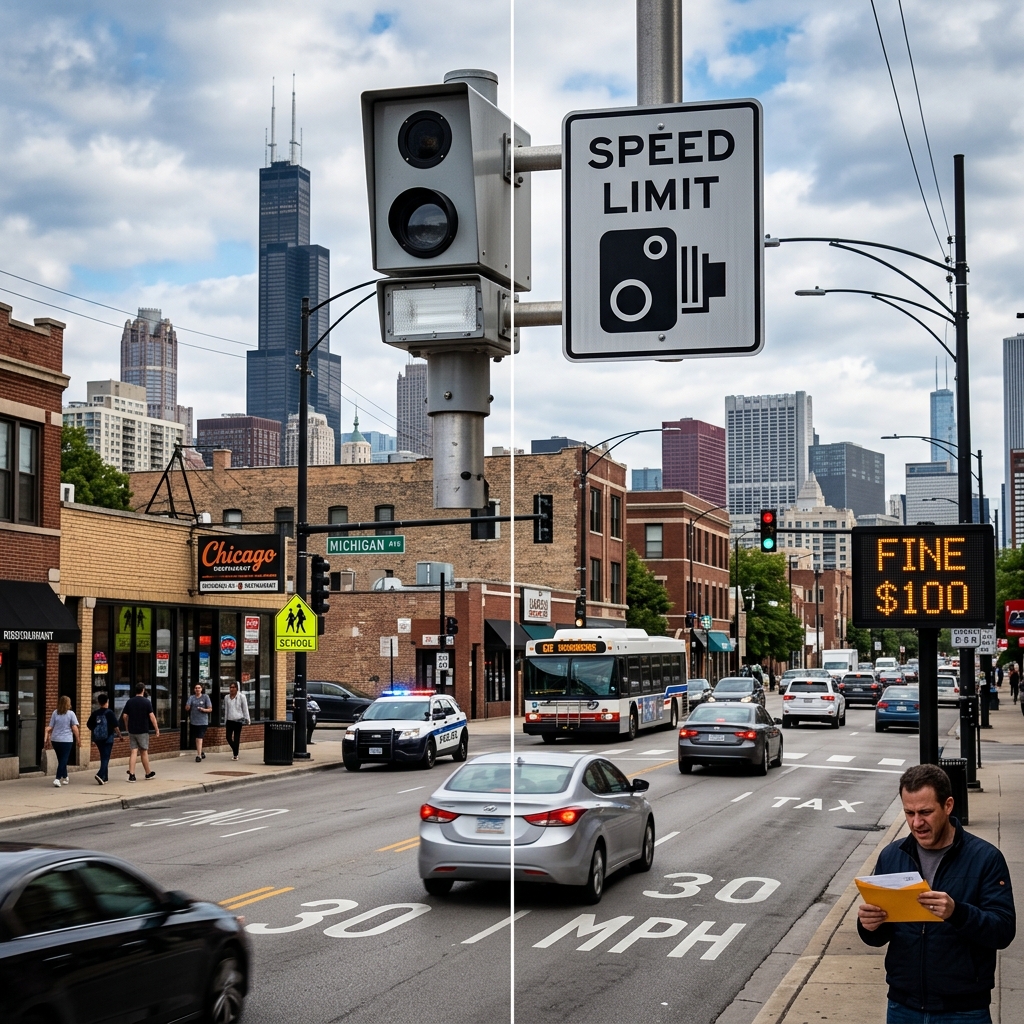
Chicago has become one of the most closely watched cities in the United States when it comes to automated speed enforcement. In school and park zones across the city, fixed cameras track vehicles, record speeds, and generate tickets without a police officer ever pulling a driver over. These devices have produced hundreds of thousands of tickets, millions of dollars in fines, and intense debate over whether they primarily protect the public or function as a form of hidden taxation on residents.
The inspiration for this article is an early report that highlighted how newly installed cameras generated thousands of tickets in their first month of operation. That initial surge set the tone for ongoing controversy: proponents argue the cameras make streets safer, while critics contend the system is confusing, regressive, and sometimes unfair. This article takes a broader look at how Chicago’s speed camera program works, what data says about its impact, and how it affects everyday drivers.
How Chicago’s Speed Camera Program Works
Chicago’s speed cameras are designed to monitor vehicle speeds near schools and parks, where the city has determined that additional protections for pedestrians and children are necessary. The cameras are mounted on poles and continuously monitor traffic in both directions. When a vehicle exceeds the threshold set by municipal ordinance, the system captures an image of the license plate, and a ticket is mailed to the registered owner.
Where the Cameras Are Located
The City of Chicago maintains public data on the location and activation dates of each speed camera. These datasets show:
- Exact locations for each camera, often near schools, parks, or major arterial roads.
- First operational dates, indicating when each device began issuing tickets.
- Approach details, specifying which direction of travel is monitored (for example, eastbound or westbound).
While signage is posted to inform drivers of camera enforcement, unfamiliar motorists or those dealing with complex traffic conditions may not notice the signs until they have already been ticketed.
Speed Thresholds and Fines
Under Chicago’s rules, cameras typically issue tickets based on how far a vehicle exceeds the posted speed limit in a safety zone. Although limits and fine amounts can change over time, the basic model features:
- A base speed limit, often 20 or 30 mph near schools and parks.
- Graduated fines that increase as speeds rise above the limit (for example, a lower fine for modest speeding, and a higher fine for more excessive speed).
- Enforcement windows that may be stricter when children are likely to be present, such as school hours.
Tickets are civil violations rather than criminal offenses, meaning they typically do not result directly in points on a driver’s license but can lead to significant financial costs and, when unpaid, additional penalties.
Ticket Volume and Revenue: How Big Is the Program?
The scale of Chicago’s speed camera program is substantial. Over recent years, cameras have issued hundreds of thousands of tickets annually, generating tens of millions of dollars in fines for the city budget. Early reports about new cameras showed that a cluster of installations could produce thousands of tickets within their first month of operation, highlighting how quickly enforcement activity ramps up.
Recent Ticket Trends
Public reporting and city data reveal notable fluctuations in ticket counts and revenue:
- Between January and September 2024, Chicago’s speed cameras issued over 800,000 tickets, fewer than in the same period of the previous year, leading to a roughly $28 million decrease in fine revenue.
- When new cameras are activated, they can immediately generate high ticket volumes, with some sets of cameras issuing tens of thousands of violations in a single month.
These figures illustrate that automated enforcement is not just a marginal tool—it is a core component of Chicago’s traffic enforcement and municipal finance landscape.
| Measure | Example Value | Context |
|---|---|---|
| Tickets issued (Jan–Sep 2024) | 804,197 tickets | Citywide speed camera activity over nine months. |
| Change in fine revenue | ~$28 million decrease | Compared with the same period in the prior year. |
| Ticket output from newly installed cameras | Tens of thousands in first month | Shows impact when new enforcement corridors come online. |
Even experienced drivers can be caught off guard when enforcement rules or camera placements change, particularly if speed limits are reduced on roads designed for faster travel.
Safety Outcomes: Do Speed Cameras Reduce Crashes?
A key claim used to justify speed cameras is that they improve safety. While ticket totals and revenue numbers attract public attention, researchers focus on crash data, injury rates, and behavior changes. Federal and local studies have examined whether automated enforcement actually makes streets safer.
Evidence from Crash Data
A before-and-after analysis of Chicago’s speed camera program evaluated injury crashes at locations where cameras were installed. The study found:
- Approximately 12% reduction in injury crashes at treated locations after cameras were activated.
- About a 15% decline in crashes involving fatalities or severe injuries, indicating potential life-saving effects.
These findings suggest that, on average, automated speed enforcement has contributed to meaningful improvements in safety at camera sites. Because the study used a before-and-after design with local crash data, it provides a grounded view of the program’s impact in Chicago’s real-world conditions.
Why Speed Matters in Urban Crashes
National transportation safety research consistently shows that speed is a critical factor in crash severity. Higher speeds reduce reaction time, increase stopping distance, and amplify the force of impact, particularly for pedestrians and cyclists. Urban areas like Chicago, where people walk, cycle, and use public transit near busy roads, are especially sensitive to small changes in vehicle speeds.
By nudging drivers toward lower speeds at key locations, cameras can reduce the likelihood that a mistake—or a moment of inattention—turns into a severe injury or fatality.
Public Concerns: Fairness, Design, and Transparency
Despite evidence of safety benefits, the speed camera program remains controversial. Many residents and drivers question whether the system is fair and whether some enforcement zones amount to “speed traps” engineered more for revenue than safety.
Street Design vs. Posted Limits
One common criticism is that certain roads in Chicago are built like high-speed corridors—with multiple wide lanes, limited crosswalks, and long sight lines—but carry comparatively low posted speed limits. When cameras enforce those low limits, drivers may feel they are being punished for reasonable behavior that the roadway design implicitly encourages.
Local discussions highlight this tension: streets engineered for around 40–45 mph where the posted limit is only 25 mph are especially prone to high ticket volumes and perceptions of entrapment. Critics argue that to genuinely promote safety, cities should align street design, speed limits, and enforcement so that all three send consistent signals to drivers.
Impact on Lower-Income Residents
Another concern is the financial burden of repeated tickets on residents with limited income. Even modest fines can accumulate quickly if a driver is unaware of a camera or confused about speed limits in a particular corridor. When multiple tickets arrive by mail weeks after the actual violations, the total amount owed can become overwhelming.
Because Chicago’s camera enforcement is largely concentrated in busy neighborhoods, local drivers and nearby residents may receive more tickets than commuters who only occasionally pass through. This raises questions about equity: who bears the cost of safety improvements, and are there sufficient protections against disproportionate impacts?
Transparency and Accountability
Transparency is another recurring theme in public debate. On one hand, Chicago provides open datasets on camera locations and crash statistics, making it possible for journalists, researchers, and residents to review basic facts. On the other hand, many drivers feel that rule changes, new installations, or reduced speed limits are not communicated clearly enough.
Improving outreach—through public notices, neighborhood meetings, and clear signage—could help the city build trust and reduce the sense that cameras are primarily revenue tools rather than safety measures.
Balancing Safety and Revenue: Policy Challenges
City officials are often caught between two imperatives: reducing serious crashes and securing stable revenue streams. Because automated enforcement generates substantial fines, it can be tempting to rely on cameras as a budget line item. That reliance, however, can undermine public confidence in the program’s primary safety mission.
Using Data to Guide Policy
One way to strike a healthier balance is to rely on objective data when deciding where cameras should be installed or removed. Policymakers can prioritize zones that show:
- High rates of speed-related crashes or near misses.
- Heavy pedestrian activity, particularly children, seniors, and transit users.
- Documented safety improvements after cameras are in operation.
Pairing cameras with engineering changes—such as narrower lanes, pedestrian islands, or raised crosswalks—may further improve safety while gradually reducing reliance on revenue from tickets.
Potential Policy Reforms
Debates around Chicago’s speed camera program have led to proposals for reform. Key ideas often include:
- Clearer signage and advanced warnings before entering camera zones.
- Grace periods when new cameras are installed, providing warnings before issuing monetary fines.
- Income-sensitive penalties or payment plans to reduce the regressive impact of fines on lower-income residents.
- Regular public reporting on crash trends and safety outcomes, not just revenue figures.
These measures aim to ensure that automated enforcement is perceived as a safety intervention first and a revenue source only incidentally.
Practical Tips for Drivers in Camera Zones
Regardless of one’s views on the program, drivers in Chicago need to navigate speed camera zones effectively. A few practical strategies can reduce the risk of tickets and improve safety for everyone on the road.
Recognizing Camera Zones
To avoid unexpected tickets, consider the following steps:
- Pay attention to school and park zone signs, which often indicate camera enforcement.
- Assume that major corridors near schools may have cameras, even if you have not yet noticed them.
- Consult the city’s public camera location data when planning regular commuting routes.
Over time, many drivers learn the locations of nearby cameras, but visitors and occasional motorists may need to be extra cautious in unfamiliar neighborhoods.
Adapting Driving Habits
Driving defensively and at modest speeds in urban areas is not only safer but also reduces the likelihood of enforcement issues. Good habits include:
- Maintaining speeds at or below the posted limit, particularly near schools and parks.
- Leaving additional following distance to allow for smooth braking when you notice a change in speed limit.
- Scanning for pedestrians and cyclists, especially at intersections and crosswalks.
While cameras may be the immediate trigger for tickets, the underlying goal is to encourage driving behaviors that protect vulnerable road users.
Frequently Asked Questions (FAQs)
1. Why did Chicago install speed cameras instead of relying only on police enforcement?
Automated cameras allow continuous enforcement in specific high-risk zones without requiring officers to be present at all times. This can free police resources for other tasks and provide consistent monitoring of vehicle speeds in school and park areas. Supporters argue that cameras complement, rather than replace, traditional traffic enforcement.
2. Are Chicago’s speed cameras proven to improve safety?
Studies using Chicago crash data indicate that injury crashes fell by around 12% and severe or fatal crashes by about 15% at locations with automated speed enforcement. These results suggest that cameras have contributed to safer streets at targeted sites, although they do not eliminate all risks.
3. How can I find out if there is a speed camera on my usual route?
The City of Chicago publishes an official dataset showing each speed camera’s location, activation date, and monitored approaches. By reviewing this information or mapping it through available tools, you can identify where cameras are located along your daily commute or frequent driving routes.
4. Why do some people call certain camera zones “speed traps”?
Drivers use the term “speed trap” when they believe a zone’s design, signage, or speed limit is misleading or inconsistent with how the road encourages people to drive. Wide, straight roads posted at comparatively low speeds—especially when combined with automated enforcement—can give the impression that the main purpose is to generate fines rather than enhance safety.
5. What happens if I receive multiple speed camera tickets before I realize I was being monitored?
If a driver frequently travels through a new or unfamiliar camera zone, several tickets can accumulate before the first notice arrives by mail. This can lead to significant financial obligations. While specific procedures can change, drivers typically have options to contest tickets, request hearings, or explore payment plans; staying informed about city policies is crucial.
6. Could Chicago change or scale back its speed camera program in the future?
Yes. Camera programs are shaped by ongoing political decisions, budget needs, safety data, and public opinion. If residents, advocacy groups, and policymakers push for adjustments—such as relocating cameras, modifying speed limits, or restructuring fines—the program’s scope and rules could evolve over time.
References
- Chicago drivers face lower speed limit, more cameras after $28M fine drop — Illinois Policy Institute. 2024-10-03. https://www.illinoispolicy.org/chicago-drivers-face-lower-speed-limit-more-cameras-after-28m-fine-drop/
- New Chicago speed cameras issued more than 91,000 tickets in one month — ABC7 Chicago (via YouTube). 2021-08-31. https://www.youtube.com/watch?v=gzvRMquoIvY
- Map – Speed Camera Locations — City of Chicago Data Portal. 2024-06-10 (last updated). https://data.cityofchicago.org/Transportation/Map-Speed-Camera-Locations/7ajp-yjhe
- Before-After Study Using Chicago Crash Data Estimated 12 Percent Reduction in Injury Crashes with Automated Speed Camera Enforcement — U.S. Department of Transportation, ITS JPO. 2024-04-15. https://www.itskrs.its.dot.gov/2024-b01908
- As city expands speed camera program, here’s the data — r/chicago discussion summary. 2024-01-12. https://www.reddit.com/r/chicago/comments/1j42np8/as_city_expands_speed_camera_program_heres_the/
Similar Articles








Read full bio of Sneha Tete


