Car buying is stressful enough without police involvement. Yet in one widely reported incident, a Chevrolet dealership’s pricing mistake led to a customer’s arrest, a nightmarish legal ordeal, and a multimillion-dollar lawsuit. This episode offers a vivid case study in how contracts, consumer protection law, and reputational risk collide when a car deal goes wrong.
This article uses that dispute as inspiration to explain what happens when a dealer misprices a vehicle, how a simple disagreement can escalate into criminal allegations, and what practical steps buyers and businesses can take to avoid similar crises.
The Disputed Chevy Deal: What Happened and Why It Matters
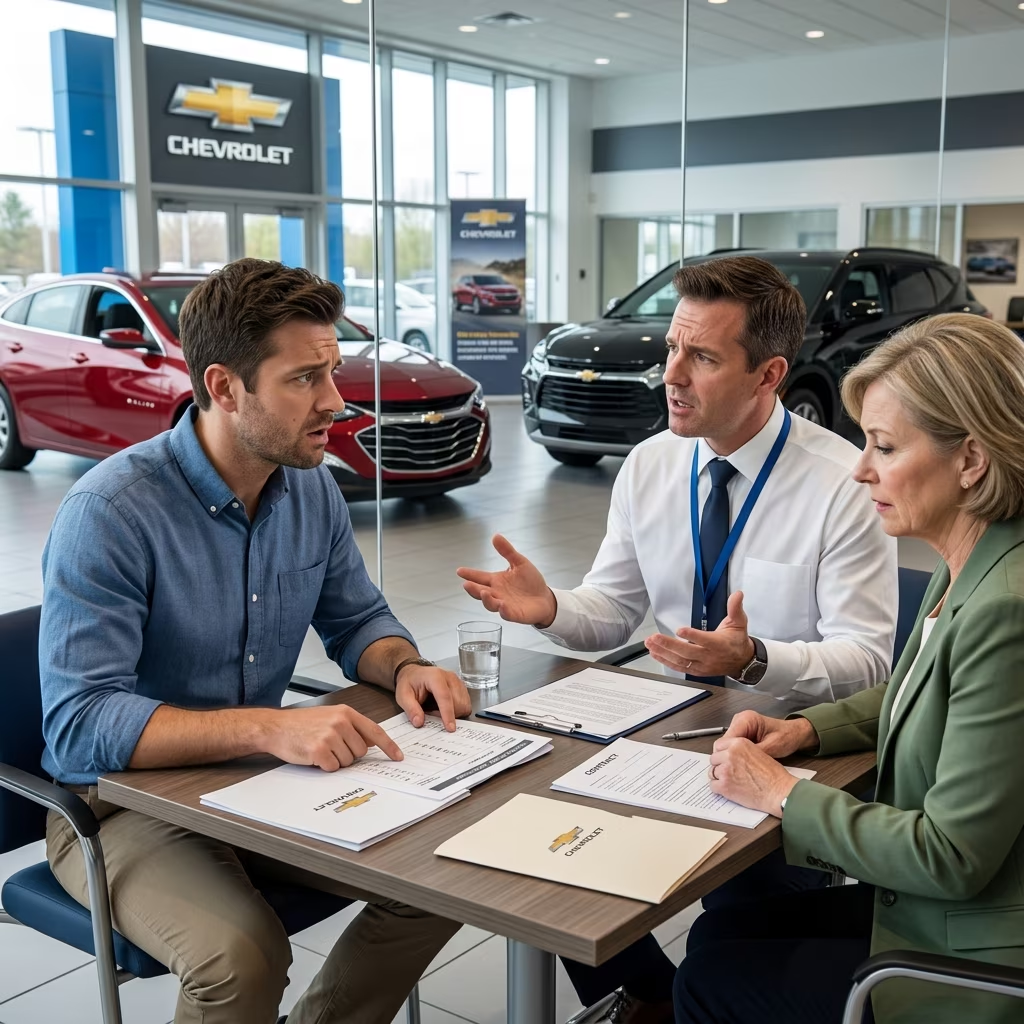
In the underlying case, a buyer drove away in a Chevrolet SUV after signing paperwork and paying based on the price quoted by the dealership. Only later did the dealer claim that the vehicle had been sold for thousands of dollars below its intended price and attempt to unwind the deal. When the buyer refused to return the SUV, the conflict escalated, ultimately leading to his arrest on allegations that he had obtained the vehicle improperly.
Authorities later released the buyer when it became clear there was no solid basis for criminal charges. The buyer then filed a civil lawsuit seeking significant damages, alleging:
- Malicious prosecution – claiming criminal charges were pursued without probable cause and for improper motives.
- Defamation and slander – asserting that statements made about him damaged his reputation.
- Other civil claims related to the dealership’s conduct before and after the arrest.
Regardless of the eventual legal outcome, the case highlights key issues:
- When does a car sale become a binding contract?
- Can a dealer simply undo a deal because it mispriced a vehicle?
- How can criminal allegations arise from what appears to be a business dispute?
- What recourse do consumers have when they believe a dealer has wronged them?
Auto Sales Contracts: When a Price Becomes Binding
Most vehicle purchases in the United States are governed by state contract law and consumer protection statutes. While the rules vary, a few basic principles are widely recognized in U.S. law and practice.
Offer, Acceptance, and Consideration
A sales contract typically requires:
- Offer – the dealer proposes to sell a specific vehicle under certain terms, including price.
- Acceptance – the buyer agrees to those terms, usually by signing the sales documents.
- Consideration – payment or a binding promise to pay in exchange for the vehicle.
Once both sides sign and the buyer pays or commits to financing, there is generally a binding contract, absent fraud or other legal defects. State law typically expects both parties to honor that agreement or face consequences such as breach of contract claims if they do not.
Advertised Price vs. Contract Price
Consumers sometimes assume that an advertised price is always binding. In reality, the crucial number is the price in the signed contract or purchase order. Federal and state law, including rules enforced by the U.S. Federal Trade Commission (FTC), protect consumers from deceptive pricing practices, such as bait-and-switch tactics or hidden fees, but the written contract remains central.
Notably, the FTC has taken enforcement action against dealerships that advertise one price and then charge more by adding undisclosed or bogus fees. In those cases, regulators focus on:
- Misleading or false advertising of vehicle prices.
- Unfair additions of fees for items allegedly already included in the advertised price.
- Discriminatory practices, such as charging higher junk fees to certain demographic groups.
However, when a dealer simply makes a pricing mistake internally and documents the lower price in a signed contract, the situation looks different: the dealer may be stuck with the price unless a specific state-law doctrine allows them to unwind the agreement.
Can a Dealer Undo a Deal After a Pricing Mistake?
From a legal standpoint, a dealer’s remedy for a pricing mistake usually lies in civil law, not criminal enforcement. If a dealer believes it mispriced a vehicle and that the buyer knew or should have known about the error, the dealer might try to argue for:
- Mutual mistake – both parties misunderstood a key term.
- Unilateral mistake – only the dealer made the mistake, but it was so obvious that enforcing the contract would be unconscionable.
Whether those theories succeed depends heavily on state law and the specific facts. Courts generally scrutinize claims that a business simply wants to escape a bad bargain. It is not automatically unlawful for a consumer to benefit from a dealership’s internal pricing error when they relied on the figures presented to them in good faith.
Crucially, such disputes are typically resolved through civil litigation or negotiation, not arrest. Using criminal complaints to force a customer to return a vehicle or accept a new price risks allegations of malicious prosecution if the charges lack probable cause or are pursued for improper reasons.
From Contract Fight to Criminal Case: How Does That Happen?
The arrest in the Chevy dispute illustrates how commercial disagreements can spill into the criminal system. In some situations, businesses report customers to law enforcement alleging:
- Fraud – claiming the customer misrepresented facts to obtain the product.
- Theft or unauthorized retention – asserting the customer refuses to return property that does not legally belong to them.
Law enforcement may initially respond based on what the business reports, especially when paperwork appears confusing. If investigators later determine that the matter is essentially a contract dispute, criminal charges may be dropped or never formally filed. That is what reportedly occurred in the Chevy case, where the buyer spent several hours in jail before being released once police saw there was no solid basis for continuing the case.
Malicious Prosecution and Defamation Risks
When a person believes they were wrongfully subjected to criminal proceedings, they may seek civil damages for malicious prosecution. Although standards vary by state, such claims often require proof that:
- The prior criminal proceeding was initiated or continued by the defendant.
- There was no probable cause for the charges.
- The proceeding ended in the plaintiff’s favor.
- The prosecution was driven by malice or an improper purpose.
Defamation claims may arise if false statements about the person’s alleged criminal conduct are communicated to others and harm the person’s reputation. In the Chevy dispute, the buyer’s lawsuit reportedly included both malicious prosecution and defamation theories, seeking over $2 million in damages.
Consumer Protection Landscape Around Car Sales
Beyond contract law, several regulatory frameworks influence how car deals must be conducted and what remedies consumers may have.
Federal Trade Commission Oversight
The FTC enforces laws against unfair and deceptive acts or practices in commerce, including auto sales. In recent enforcement actions, the FTC has focused on dealerships that:
- Advertise misleading vehicle prices.
- Add hidden junk fees at signing.
- Charge higher fees or markups to certain racial or ethnic groups, which can violate federal law.
In one case involving Passport Auto, a dealership agreed to pay millions in refunds and change its practices after the FTC alleged it charged consumers more than the advertised price and used discriminatory fee practices. While that case did not involve an arrest like the Chevy dispute, it underscores that regulators take deceptive pricing and unfair treatment seriously.
Where and How to Report Problems
Consumers who feel they have been misled or mistreated in a vehicle purchase can pursue several avenues:
- Contact state attorneys general or consumer protection offices.
- File complaints with the FTC through its online portal for reporting fraud and unfair practices.
- Consult private attorneys regarding contract, fraud, or defamation claims.
The FTC explicitly encourages consumers to report dealership misconduct at its ReportFraud website, which can prompt investigations and enforcement actions when patterns of abuse emerge.
Practical Tips for Car Buyers to Avoid Disputes
Cases like the Chevy pricing dispute demonstrate how quickly confusion and mistrust can spiral. Buyers can reduce their risk by being methodical and skeptical during the purchase process.
Key Steps Before You Sign
- Bring the advertisement to the dealer: If you saw a price in an ad, bring a printed or digital copy and confirm that the same price and terms appear in the written offer.
- Demand clear, itemized pricing: Ask for an itemized breakdown of the vehicle price, taxes, and fees. Question vague line items or charges that appear duplicative.
- Compare financing options: Dealership financing may involve interest rate markups. Check banks and credit unions to see if you qualify for better terms.
- Read every page of the contract: Verify that all numbers match what you negotiated, including trade-in values and extra products.
- Walk away if terms change late: If the dealer tries to alter key terms at signing, you are free to leave and shop elsewhere.
What to Do If the Dealer Claims a Pricing Error After the Sale
If a dealership contacts you after you have signed and taken delivery, saying it mispriced the vehicle, consider these steps:
- Document everything: Save copies of the contract, emails, text messages, and any advertisements related to the sale.
- Politely insist on written communication: Ask the dealer to explain its position in writing, including what legal authority it believes allows it to change the price.
- Consult an attorney: A lawyer can evaluate whether the dealer has any valid claim under local contract law.
- Avoid confrontational behavior: Keep interactions calm and professional; do not make threats or take actions that could later be misconstrued as wrongdoing.
- Report suspected misconduct: If the dealer’s conduct seems coercive or deceptive, consider filing complaints with regulators.
Risk Management Lessons for Dealerships
The Chevy case also serves as a cautionary tale for auto dealers. A short-term effort to recover a perceived loss can create far larger legal and reputational costs.
| Risk Area | What Went Wrong | Better Practice |
|---|---|---|
| Pricing Controls | Vehicle allegedly sold well below intended price. | Use robust internal checks and approval processes before finalizing deals. |
| Dispute Handling | Conflict escalated from civil disagreement to criminal complaint. | Keep disputes in the civil realm; avoid using law enforcement as leverage. |
| Reputation Management | Public coverage of arrest damaged dealership image. | Prioritize negotiation and customer service; consider settlements where appropriate. |
| Legal Exposure | Lawsuit alleging malicious prosecution and defamation with multi-million-dollar damages. | Train staff on legal boundaries; involve counsel early in disputes. |
Frequently Asked Questions
1. If a dealer misprices a car and I sign the contract, do I automatically get to keep the car at that price?
Not automatically in every state, but often the signed contract is enforceable if you acted in good faith and relied on the price presented to you. Whether the dealer can unwind the deal depends on state contract doctrines like mistake and unconscionability. A local attorney can give more precise guidance.
2. Can a dealership have me arrested for refusing to return a vehicle after a pricing dispute?
Law enforcement decides whether to pursue criminal charges, not the dealership. A dealer can make a complaint, but if the issue is fundamentally a contract dispute without fraud or theft, criminal charges may be inappropriate. Using criminal processes to pressure a customer can expose the dealer to claims like malicious prosecution if there is no probable cause.
3. What should I do if I feel a car dealer has defamed me during a dispute?
Document any statements you believe are false and harmful to your reputation, including who heard them and when. Consult a lawyer about possible defamation claims. In some cases, defamatory accusations of criminal conduct during a commercial conflict can lead to significant civil liability.
4. How do I report deceptive pricing or junk fees at a dealership?
You can report suspected unfair or deceptive practices to the U.S. Federal Trade Commission using its online tools for reporting fraud and misuse. You may also contact your state attorney general or consumer protection office and consider seeking private legal advice.
5. Are there warning signs that a dealership may be engaging in unfair practices?
Red flags include:
- Prices that change significantly from advertisement to contract without clear explanation.
- Multiple vague fees with generic labels such as “processing” or “reconditioning” that duplicate listed services.
- Pressure to sign quickly without time to read documents.
- Reluctance to provide written itemization or copies of everything you sign.
Balancing Good Deals and Good Faith
The Chevy pricing dispute shows that getting a “too good” deal on a vehicle can create unexpected turbulence if the dealership later regrets the bargain. Yet consumer protection and contract law exist precisely to ensure that agreements are honored and that businesses cannot simply call the police when they dislike the outcome of their own paperwork.
For buyers, the lesson is to be thorough and cautious: insist on written clarity, keep copies, and recognize that a documented deal offers significant legal protection. For dealers, it illustrates the importance of accurate pricing systems, respectful dispute resolution, and careful consideration before involving law enforcement in what may be essentially a civil matter.
References
- After Wrong Sales Price, Chevy Dealer Has Customer Arrested — FindLaw. 2012-12-12. https://archive.findlaw.com/blog/after-wrong-sales-price-chevy-dealer-has-customer-arrested/
- Dealership Has Customer Arrested For Getting Too Good Of A Deal — Jalopnik. 2012-12-11. https://www.jalopnik.com/dealership-has-customer-arrested-for-getting-too-good-o-5949009/
- Dealer Has Man Arrested After Selling Car For Wrong Price — 99.9 KTDY. 2012-12-12. https://999ktdy.com/dealer-has-man-arrested-after-selling-car-for-wrong-price/
- Discriminatory financing and bogus fees at the car dealer? No thank you. — Federal Trade Commission. 2022-10-03. https://consumer.ftc.gov/consumer-alerts/2022/10/discriminatory-financing-bogus-fees-car-dealer-no-thank-you