
Charging Sales and Use Tax on Out‑of‑State Sales
Understand when remote and online sellers must collect sales and use taxes on sales to customers in other states and how economic nexus rules apply.
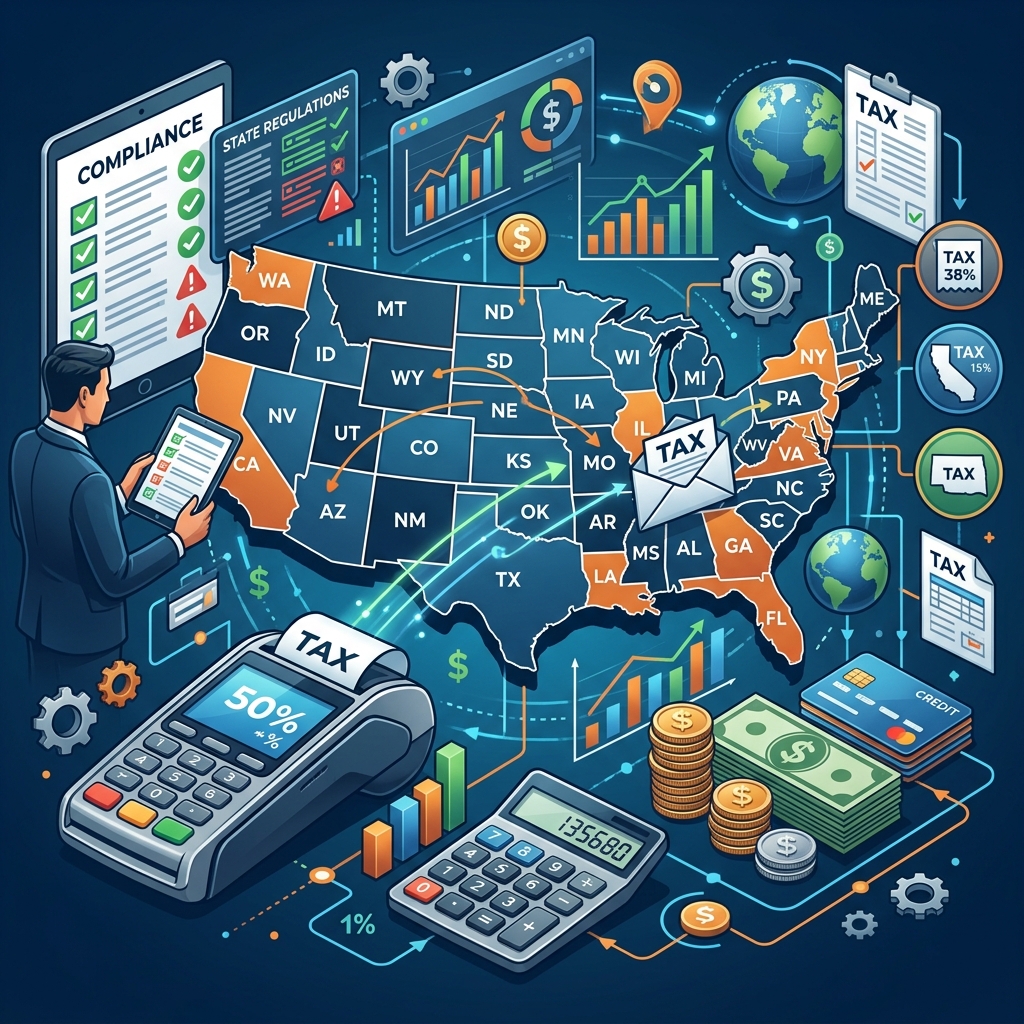
Selling to customers in multiple states can unlock major growth for your business, but it also creates complex sales and use tax obligations. Whether you operate an online store, ship goods across the country, or provide remote services, you need to understand when you are required to collect tax in other states and when the customer is responsible for paying use tax instead.
This guide explains the core concepts behind multistate sales and use tax, including nexus, economic thresholds, and the difference between sales and use tax. It is written for business owners and finance professionals who want a clear, practical overview rather than dense legal commentary.
Sales Tax vs. Use Tax: What Is the Difference?
Most states impose a sales tax on the retail sale of tangible goods and some services. In addition, those same states typically impose a complementary use tax on goods or services that are used, stored, or consumed in the state when no sales tax has been paid at the time of purchase.
- Sales tax is generally collected and remitted by the seller at the point of sale.
- Use tax is typically paid directly by the buyer when the seller did not collect tax but the item is taxable in the buyer’s state.
From the state’s perspective, sales tax and use tax are designed to be two sides of the same coin. A taxable item used in the state should be subject to either sales tax or use tax, but not both. This prevents buyers from avoiding tax simply by purchasing from an out‑of‑state seller.
Why Out‑of‑State Sales Are No Longer Simple
Historically, states could only require a seller to collect sales tax if the seller had a physical presence in the state, such as a store, office, warehouse, or employees. Many remote and catalog sellers did not meet this standard, so they had no obligation to collect tax from customers in other states. The customer might owe use tax, but in practice it was often not paid.
Modern rules—often referred to as economic nexus rules—have fundamentally changed this landscape. Under these rules, a seller can have enough connection to a state based on its economic activity alone, even without physical presence. If a seller exceeds a state’s threshold for sales volume or transaction count, the seller must register, collect, and remit sales or use tax in that state.
Understanding Nexus: Your Connection to a State
The term nexus refers to the level of connection between a business and a state that is sufficient for the state to impose tax obligations on the business. A seller needs nexus in a state before that state can require the seller to collect and remit sales tax.
Types of Nexus Relevant to Remote Sellers
- Physical nexus
Created by having a physical presence in the state, such as:- Office, store, or warehouse
- Employees or agents working in the state
- Inventory stored in a third‑party fulfillment center
Physical nexus traditionally triggered tax obligations long before economic nexus rules existed.
- Economic nexus
Created when your sales into a state exceed specific economic thresholds, often based on:- Total dollar value of sales into the state during a year (for example, $100,000 or more)
- Number of separate transactions or orders shipped into the state (for example, 200 or more transactions)
Once you cross the threshold, you are required to register and collect tax, even without physical presence.
Each state defines its nexus rules and thresholds independently. Many states have adopted similar economic nexus standards, but the details vary, so businesses must review requirements on a state‑by‑state basis.
Typical Economic Nexus Thresholds
Although thresholds differ, a common pattern has emerged. Many states require a remote seller to collect tax once its sales into the state meet or exceed a fixed dollar amount or transaction count within a year.
| State (Example) | Sales Threshold | Physical Presence Required? | Obligation Triggered |
|---|---|---|---|
| Washington (example) | More than $100,000 in gross retail sales into the state | No | Collect and remit retail sales tax on sales to Washington customers. |
| California (example) | Sales exceeding a specified annual amount into California | No | Register and collect California use tax on sales delivered into the state. |
| Colorado (example) | $100,000 or more in annual retail sales into Colorado | No | Obtain a sales tax license and begin collecting Colorado sales tax. |
These examples illustrate how remote sellers can be pulled into a state’s tax system purely based on sales activity, even without local facilities or staff.
When Must You Charge Tax on Out‑of‑State Sales?
The central question for any multistate seller is: Do I need to collect sales or use tax on orders shipped to customers in other states? The answer depends on three key factors:
- Whether the product or service is taxable in the customer’s state
- Whether you have nexus (physical or economic) in that state
- Whether the state treats the transaction as taxable based on where the customer receives the goods or services
General Rules for Remote Transactions
As a practical framework:
- If you have nexus in the customer’s state and you are selling a taxable item, you are generally required to collect that state’s sales or use tax on the transaction and remit it to that state’s tax authority.
- If you do not have nexus in the customer’s state, you typically do not need to collect that state’s tax. However, the customer may be obligated to report and pay use tax on the purchase.
- If you later establish nexus by crossing an economic threshold, your obligation usually begins prospectively, not retroactively. You must start collecting tax from that point forward according to the state’s rules.
Some states are origin‑based (tax determined by the seller’s location) and others are destination‑based (tax determined by the buyer’s location). Remote sellers operating across state lines will generally follow destination‑based rules in the states where they have nexus, computing tax based on the customer’s address.
How Use Tax Applies When Sellers Do Not Collect
Use tax often becomes relevant when a customer buys from an out‑of‑state seller that does not collect the customer’s home state tax. In that case, the buyer is responsible for paying use tax on the purchase if the item is taxable and used in the state.
For example, if a business in one state buys equipment from an out‑of‑state vendor who does not collect tax, and the equipment is later brought into the business’s home state for use, the business may owe use tax in its home state even though no sales tax was charged at the time of sale.
Many states provide specific forms for reporting use tax or allow taxpayers to report it as part of an income or business tax return. Some states also allow a credit against use tax liability for sales tax already paid to another state, subject to reciprocity and rate limitations.
Key Compliance Steps for Multistate Sellers
Businesses that sell across state lines should adopt a structured approach to managing their tax obligations. Below are practical steps to help you stay compliant.
1. Map Where You Have Nexus
- Identify all states where you have physical presence (locations, employees, inventory).
- Track your annual sales volume and transaction counts into each state.
- Compare those figures to published nexus thresholds for each jurisdiction.
Once you determine that you have either physical or economic nexus in a state, you should treat that state as a jurisdiction where you likely must register and collect tax.
2. Register With Tax Authorities Where Required
States generally require sellers with nexus to register before collecting and remitting sales or use tax. Registration typically involves obtaining a sales tax permit or license and agreeing to file periodic tax returns.
- Review registration guidance provided by the state’s department of revenue.
- Complete online registration forms and obtain your sales tax account number.
- Note filing frequencies and deadlines (monthly, quarterly, or annually).
3. Determine Taxability of Products and Services
Taxability rules vary widely by state. Some categories of goods and services may be taxable in one state and exempt in another. Remote sellers should:
- Consult each state’s tax guidance to identify taxable and exempt items.
- Maintain a product taxability matrix to support correct tax computation.
- Update taxability classifications as laws and regulations change.
4. Implement Destination‑Based Tax Calculation
For remote transactions, tax calculation is usually based on the destination where the customer receives the goods or services. When shipping to a state where you have nexus:
- Collect the tax rate applicable to the customer’s delivery address.
- Apply local rate components (state, county, city) as required.
- Ensure invoices separately state the tax amount, as many states require itemized disclosure.
5. Maintain Records and File Returns
Accurate recordkeeping is essential. States expect sellers to maintain detailed documentation of taxable and non‑taxable sales, collected tax amounts, and exemptions claimed.
- Track sales by state and locality.
- Reconcile collected tax to amounts reported on returns.
- Retain invoices, exemption certificates, and supporting documentation for the retention period required by each state.
Failing to file returns or remit collected tax can lead to penalties, interest, and potential exposure during audits.
Special Considerations for Marketplace and Online Sellers
Many remote sellers use online marketplaces or platforms that may have their own tax obligations. Some states treat marketplace facilitators—such as large e‑commerce platforms—as the party responsible for collecting and remitting sales tax on marketplace transactions, rather than the individual sellers.
Remote sellers should review each state’s marketplace rules to determine whether:
- The marketplace is already collecting tax on their behalf.
- They still have separate obligations for direct sales outside the marketplace.
- They must register even if the marketplace handles collection.
Common Pitfalls and Risk Areas
Despite best intentions, businesses frequently run into problems with multistate tax compliance. Awareness of common pitfalls can help you avoid costly mistakes.
- Ignoring economic nexus and assuming that lack of physical presence means no obligation
- Failing to monitor thresholds and therefore missing the point at which registration becomes necessary
- Using a single tax rate for all transactions instead of destination‑based calculations
- Not distinguishing between sales and use tax, leading to misunderstandings about customer obligations
- Poor recordkeeping, making it difficult to respond to state audits or notices
FAQs: Sales and Use Tax on Out‑of‑State Sales
Do I need to charge sales tax on items shipped out of state?
You need to charge tax on items shipped out of state only if the items are taxable in the destination state and you have nexus there. If you have neither physical nor economic nexus, you generally do not collect that state’s tax, though the buyer may owe use tax.
How do I know if I have economic nexus in a state?
Review that state’s revenue guidance to identify its economic thresholds, such as minimum annual sales or transaction counts. Track your sales into the state and compare them to those thresholds. When your activity exceeds the threshold, you have economic nexus and must register and collect tax.
What happens if I do not collect sales tax and I have nexus?
If you are required to collect tax but fail to do so, the state can assess the tax against you, along with penalties and interest. In addition, your customers may still have use tax obligations, creating confusion and potential double exposure.
Do buyers always owe use tax when no sales tax is charged?
Buyers owe use tax only when the item is taxable in their state and is used, stored, or consumed there. If the item is exempt or if sales tax was properly paid to another state under reciprocal arrangements, use tax may not be due.
Can I rely on my marketplace to handle all tax obligations?
Marketplace facilitators often collect and remit tax for marketplace transactions in states that impose such requirements. However, you may have separate obligations for direct sales, and you might still need to register for informational or reporting purposes. Always confirm the scope of the marketplace’s responsibilities and the rules in each state.
How often should I review my multistate tax exposure?
Remote sellers should review their nexus exposure at least annually, and more frequently if sales grow quickly or expand into new regions. Changes in state law can also affect thresholds and obligations, so periodic review of official guidance is advisable.
References
- Out-of-State Sales Tax Requirements — National Federation of Independent Business (NFIB). 2018-07-03. https://www.nfib.com/out-of-state-sales-tax-requirements/
- Do You Charge Sales Tax on Items Shipped Out of State? — Numeral. 2023-05-10. https://www.numeral.com/blog/do-you-charge-sales-tax-on-items-shipped-out-of-state
- Why doesn’t the out-of-state retailer collect the tax? — Sales Tax Institute. 2021-04-15. https://www.salestaxinstitute.com/sales_tax_faqs/out_of_state_retailer_collect_sales_tax
- Tax Guide for Out-of-State Retailers — California Department of Tax and Fee Administration (CDTFA). 2019-04-01. https://cdtfa.ca.gov/industry/out-of-state-retailers/
- Consumers buying from out-of-state sellers — Washington State Department of Revenue. 2018-10-01. https://dor.wa.gov/taxes-rates/retail-sales-tax/marketplace-fairness-leveling-playing-field/consumers-buying-out-state-sellers
- Sales and Use Tax Guide — Massachusetts Department of Revenue. 2022-06-01. https://www.mass.gov/guides/sales-and-use-tax
- Remote Seller State Guidance — Streamlined Sales Tax Governing Board. 2023-01-01. https://www.streamlinedsalestax.org/for-businesses/remote-seller-faqs/remote-seller-state-guidance
- Out-of-State Businesses — Colorado Department of Revenue. 2021-09-01. https://tax.colorado.gov/out-of-state-businesses
Similar Articles








Read full bio of Sneha Tete




