
Changing Your Child’s Last Name After Divorce
A practical legal and emotional guide for divorced parents considering a change to their child’s surname.
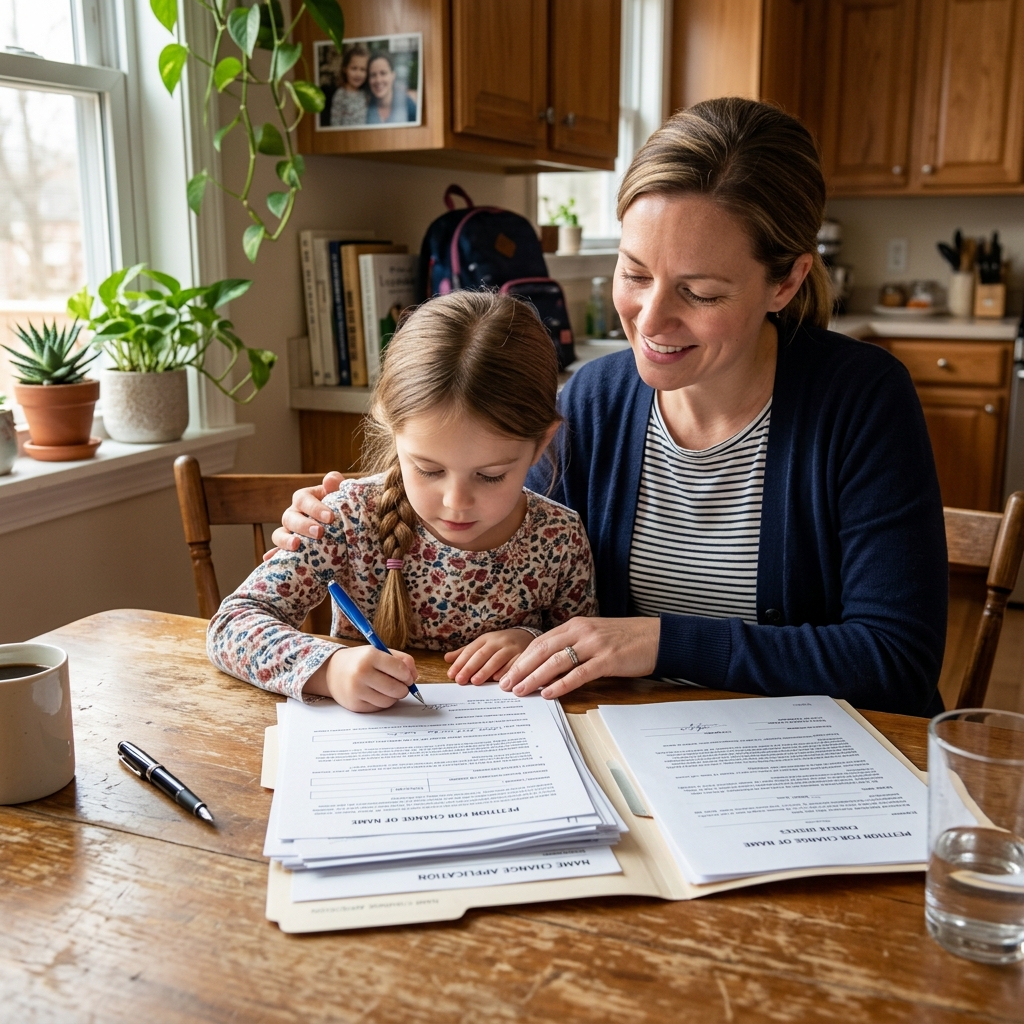
Divorce often reshapes family identities, and one of the most visible changes can be a child’s last name. Some parents wonder whether they can, or should, change their child’s surname after a separation, particularly when custody, remarriage, or safety concerns are involved. This article explains how name changes for children typically work after divorce, what courts look for, and how to approach the decision in a way that protects your child’s well-being.
Why Parents Consider Changing a Child’s Last Name
Parents request surname changes for many different reasons. Understanding these motivations is important, because courts focus on whether the change benefits the child, not just the adults.
- Aligning with custodial parent’s name: A parent who resumes a prior surname or adopts a new one after divorce may want the child’s name to match theirs for everyday convenience and sense of unity.
- Reflecting a new family structure: Children living primarily in a blended family may feel more connected if their last name is consistent with their household or step-parent’s surname.
- Distancing from an absent or unsafe parent: Where a parent has very limited involvement or presents safety concerns, the other parent may seek a name change to reduce association or risk.
- Cultural or personal identity reasons: Sometimes the motivation is rooted in heritage, cultural naming traditions, or a child’s developing sense of identity.
- Practical issues: Mismatched surnames can occasionally cause confusion with schools, healthcare providers, or travel authorities, though this alone rarely justifies a change by itself.
Courts generally do not grant a name change simply because one parent dislikes the other’s surname or wants to “erase” the other parent from the child’s life without strong evidence that the change is in the child’s best interests.
Key Legal Principle: The Child’s Best Interests
Across most jurisdictions, judges apply a central standard: the best interests of the child. A name change will be approved only if the court is persuaded that the child will benefit clearly and significantly from the new surname.
Though factors vary by state or country, courts commonly consider:
- Child’s age and maturity: Older children who understand the implications may have their preferences weighed heavily, especially if they can express them clearly to the court.
- Length of time using the current surname: A child who has used the same name for many years, including in school and social activities, may experience more disruption if it changes.
- Relationship with each parent: Judges look at the strength and stability of the child’s bond with both parents and whether changing the name might strengthen or weaken those relationships.
- Level of involvement of the other parent: If the non-requesting parent is actively involved and supportive, courts are more cautious about removing their surname. Conversely, minimal contact may support a change.
- Potential benefits or harms: Courts weigh emotional benefits, reduction in confusion or stigma, and any risk of alienation from the other parent.
- Motivation for the change: Judges want assurance that the request is not made to evade creditors, interfere with law enforcement, or manipulate custody or support issues.
The outcome is rarely automatic. Even where a parent has primary physical custody, the court still scrutinizes whether the change meaningfully improves the child’s situation.
Do Divorce Proceedings Automatically Change Children’s Names?
In most jurisdictions, divorce itself does not change a child’s surname. Ending a marriage affects the legal relationship between spouses, but children’s names remain unchanged unless a separate request is made and granted.
However, there are two common ways a child’s name may be addressed in connection with a divorce:
- Request included in the divorce case: Some jurisdictions allow a parent to request a child’s name change directly in the divorce petition or related filings. In that situation, the judge may decide both the divorce and the name issue in the same case, still using the best interests standard.
- Post-divorce name change proceeding: Where the divorce decree does not address the child’s surname, or local law does not permit it within the divorce, the parent usually must file a separate name change petition after the divorce is final.
By contrast, a spouse’s own name (for example, reverting to a prior surname) is often easier and can frequently be handled within the divorce decree itself.
Typical Steps to Change a Child’s Last Name
Exact procedures depend on local law, but many areas follow a similar sequence when a parent wants to change a child’s surname after divorce.
1. Filing a Formal Petition
The process usually begins with filing a petition for name change in the court where the child resides. Some jurisdictions require the child to have lived in that county or state for a minimum period (for example, six months) before the petition is accepted.
A petition often must include:
- The child’s current legal name.
- The proposed new surname.
- The reasons for the requested change and how it benefits the child.
- Basic information about custody, parental rights, and any existing court orders.
2. Notifying the Other Parent
In most cases, the other legal parent must be notified of the request and given an opportunity to respond. This is true even when parents are no longer married and have separate households.
Key points about notice and consent:
- If both parents provide written consent, courts often treat the request as straightforward and are more likely to approve it, assuming there is no evidence of fraud or harm.
- If the other parent objects, the case proceeds to a contested hearing where both sides present arguments and evidence.
- Some jurisdictions require formal service of court papers or, in certain cases, publication of a notice in a local newspaper, although publication requirements may be waived for safety reasons such as documented domestic violence.
3. Court Hearing and Judicial Decision
When a name change is contested—or the judge needs additional information even with consent—the court holds a hearing. Both parents may testify, present documents, and in some cases, older children may speak or submit statements.
At the hearing, the judge typically considers:
- Each parent’s explanation for or against the change.
- Evidence of the child’s current environment, schooling, and social identity.
- Any history of abuse, neglect, or non-involvement by either parent.
- The child’s stated preference, if age-appropriate.
After reviewing the evidence, the judge issues a decision. If the request is granted, the court enters an official order authorizing the new surname.
4. Updating Official Records
Receiving a court order is only the beginning of the practical work. To fully implement the name change, parents must update the child’s legal and everyday records.
Common records that may need updating include:
- Birth certificate.
- Social Security records and card.
- School registrations and transcripts.
- Medical and insurance records.
- Travel documents, such as passports.
Depending on jurisdiction, agencies like the Social Security Administration may require a certified copy of the court order and other identity documents before they update their records.
How Courts Treat a Parent’s Own Name vs. a Child’s Name
It is helpful to distinguish between a parent’s name change and a child’s name change, as the rules and expectations differ.
| Aspect | Parent’s Name Change After Divorce | Child’s Name Change After Divorce |
|---|---|---|
| Can it be handled in divorce decree? | Often yes; many divorce courts routinely restore a prior surname in the final order. | Sometimes; depends on local law and whether the request is included in the divorce filings. |
| Primary legal standard | Valid purpose (not for fraud or evasion); usually minimal scrutiny if reverting to a former name. | Best interests of the child, with multiple factors and potential evidence. |
| Other parent’s consent required? | Generally no. | Often yes or strongly preferred; lack of consent can trigger a contested hearing. |
| Impact on official records | Adult must update government and financial records personally. | Parent must update child’s birth, school, medical, and travel records. |
Practical and Emotional Considerations for Families
Beyond legal rules, changing a child’s surname after divorce has emotional and practical consequences. Thoughtful planning can reduce conflict and confusion.
Talking with Your Child
Children experience name changes differently depending on age and personality. Clear, age-appropriate communication is important:
- Explain the reasons for the change in simple terms, avoiding blame or criticism of the other parent.
- Reassure the child that the name change does not alter their relationships or your love for them.
- Invite older children to express their views and concerns, and take their input seriously.
- Be prepared for mixed feelings; some children may feel excited, while others may worry about losing part of their identity.
Managing Co-Parent Conflict
Name changes can become a flashpoint between divorced parents. To reduce conflict:
- Discuss the idea privately and early, if safe to do so, rather than surprising the other parent with court papers.
- Consider mediation or legal counseling to explore options and alternatives.
- Avoid framing the request as “winning” or “punishing” the other parent; focus on child-centered reasons.
- Document discussions and agreements in writing, especially any consent to the change.
Respecting Cultural and Family Traditions
Names often reflect cultural heritage and family history. In some families, sharing a surname with both parents is meaningful, while in others, children may have hyphenated or double last names. Courts are generally open to different naming structures as long as they are clear and not misleading.
Parents might explore:
- Hyphenating surnames to preserve connection with both sides of the family.
- Using one name legally and another informally if a full legal change is not possible or agreed upon.
- Maintaining existing surnames while emphasizing emotional bonds in ways that do not depend on name matching.
Common Misunderstandings About Child Name Changes
Misconceptions can lead to unnecessary disputes or unrealistic expectations. Here are some frequent misunderstandings:
- “I have sole physical custody, so I can change the name whenever I want.”
Custody status does not automatically authorize unilateral name changes. Courts still require a petition and often notice to the other parent, whose legal rights remain unless terminated. - “If I change my own name, my child’s name changes too.”
A parent’s name change does not alter a child’s surname. A separate legal process is required for the child. - “The court will always favor the custodial parent’s preference.”
Judges weigh all factors and may deny a request even from a custodial parent if it does not clearly serve the child’s best interests. - “Changing the name will erase the other parent’s obligations.”
Changing a child’s surname does not affect child support, parental rights, or duties. Legal obligations continue under the new name.
FAQs: Changing a Child’s Last Name After Divorce
Can I change my child’s last name during the divorce case?
In some jurisdictions, you can include a request to change your child’s surname in your divorce paperwork or ask the judge to address it in the final order. In others, you must file a separate name change petition. A family law attorney familiar with local rules can clarify which option applies in your area.
Do I need the other parent’s permission?
Usually, courts either require or strongly prefer notice and an opportunity for the other parent to consent. If both parents agree in writing, judges often treat the request more favorably. Without consent, you must convince the court that the change is clearly in the child’s best interests, and the other parent can present arguments against it.
What if the other parent is absent or cannot be located?
If the other parent is missing or has long been uninvolved, courts may allow alternative methods of notice or, in rare cases, waive certain requirements. You will typically need to demonstrate efforts to locate the parent and explain how the change benefits the child in light of the parent’s absence.
Does my child get a say in the decision?
Older or more mature children often have their views considered, and judges may ask directly about their preferences. The weight given to a child’s opinion depends on age, maturity, and local law, but a well-expressed preference can be influential.
Will changing the surname affect custody or child support?
No. A surname change does not alter custody arrangements, visitation rights, or financial obligations. These issues remain governed by existing orders unless separately modified through appropriate legal procedures.
How long does the process usually take?
Timelines vary by court, but expect several weeks to a few months from filing to final order, especially if the case is contested or publication requirements apply. Afterward, additional time is needed to update government and institutional records.
When to Seek Legal Advice
Because rules differ among jurisdictions and individual circumstances can be complex, many parents benefit from consulting a family law attorney before initiating a child name change. Legal counsel can:
- Explain local requirements and forms.
- Assess the strength of your case under the best interests standard.
- Help you prepare evidence and testimony.
- Advise on how to minimize conflict and protect your child’s emotional well-being.
Some regions also provide informational resources through court self-help centers or legal aid organizations for parents who cannot easily afford private counsel.
References
- Name Changes After Divorce — Justia. 2021-06-15. https://www.justia.com/family/divorce/after-divorce/name-changes-after-divorce/
- Will My Children’s Last Name Change After I Get a Divorce? — WomensLaw.org. 2023-03-10. https://www.womenslaw.org/laws/nd/divorce/basic-info/will-my-childrens-last-name-change-after-i-get-divorce
- Can I Change My Child’s Last Name After My Divorce? — ATC Law. 2022-08-01. https://www.atclaw.com/blog/can-i-change-my-child-s-last-name-after-my-divorce
- Changing Your Name—Or Your Child’s—After Divorce — DivorceNet (Nolo). 2020-11-02. https://www.divorcenet.com/resources/divorce/changing-your-name-or-your-childs-after-divorce.htm
- Changing Children’s Names in a Divorce — Sterling Lawyers, LLC. 2019-05-20. https://www.sterlinglawyers.com/divorce/name-change/
Similar Articles








Read full bio of medha deb


