
Changing Child Support Orders in Massachusetts
A practical guide to when and how parents in Massachusetts can request a change to an existing child support order, and what courts look for.
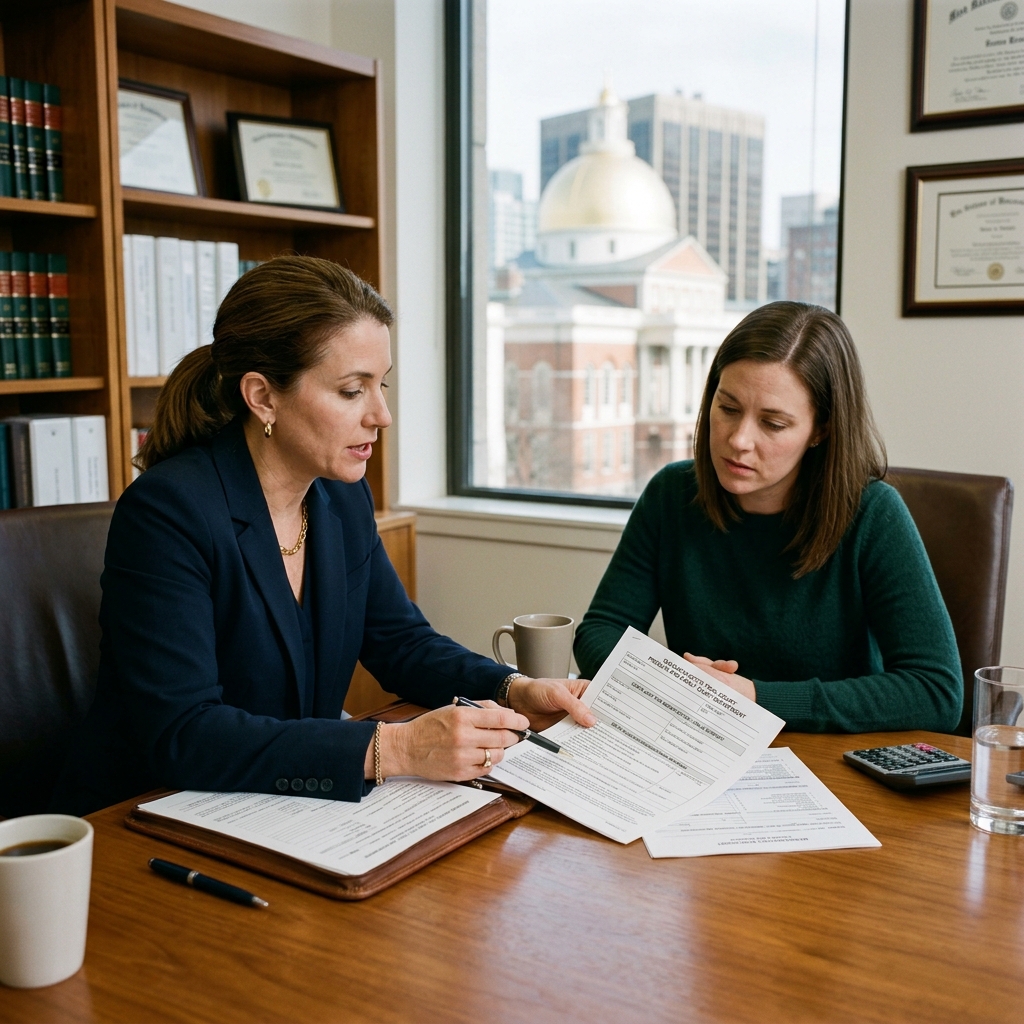
Child support orders in Massachusetts are not set in stone. When income, health coverage, or a child’s needs change in a meaningful way, either parent can ask the court to review and modify the existing order so it remains fair and consistent with the Massachusetts Child Support Guidelines.
This guide explains when a modification is possible, what legal standards apply, how to start the process, and what parents should expect as their case moves through the Probate and Family Court or the Department of Revenue (DOR).
Core Idea: Child Support Orders Are Usually Modifiable
In Massachusetts, child support is understood as a right of the child, not of either parent. Because a child’s needs and a family’s finances can evolve, the law generally allows existing orders to be revisited and changed until the child is emancipated.
- Either parent can seek a change to the order.
- Modifications can result in higher or lower support, depending on circumstances.
- The court’s primary focus remains the best interests of the child and compliance with the Guidelines.
Legal Standard: What Justifies a Modification?
Courts do not change child support simply because a parent wants to pay less or receive more. Instead, Massachusetts uses a legal standard requiring a material and substantial change in circumstances, or one of several specific conditions listed in the Child Support Guidelines.
Material and Substantial Change
A change is considered material and substantial when it is significant enough to make the current order unfair or inconsistent with the Guidelines.
- It must arise after the original judgment or most recent modification.
- It must affect either the child’s financial needs or a parent’s ability to pay.
Specific Grounds Under the Guidelines
The Massachusetts Child Support Guidelines identify situations where modification is explicitly permitted.
- There is an inconsistency between the existing order and the amount that would result from applying the current Guidelines.
- Health care coverage previously ordered is no longer available.
- Health coverage is still available but is no longer affordable without undue hardship.
- New, reasonably priced health care coverage for the child has become available to a parent.
- Any other material and substantial change in circumstances has occurred.
In practice, almost any significant change in income, expenses, health insurance, or parenting arrangements can qualify, as long as it is well documented and affects child support calculations.
Common Life Changes That Lead to Modification
Families in Massachusetts ask to modify child support for a range of reasons, many of which relate to finances or major life events.
- Job loss or reduction in hours: A parent loses employment or suffers a notable cut in income.
- Income increase: One parent’s earnings rise significantly, making the original order inconsistent with the Guidelines.
- Change in parenting time: The child starts living more time with the other parent, impacting support needs and allocations.
- Health or disability: A parent or child develops a serious health condition, increasing medical costs or reducing earning capacity.
- New health insurance options: A parent gains or loses access to coverage for the child, changing the cost structure.
- Emancipation or age-related changes: A child reaches adulthood or finishes school, which may end or reduce the support obligation.
Understanding Emancipation and Duration of Support
Child support usually continues until a child is legally emancipated, but the exact timing depends on education, dependency, and disability.
| Child’s Situation | Typical End Point for Support |
|---|---|
| Child turns 18 and is not in high school | Support often ends at age 18. |
| Child is still in high school after age 18 | Support may continue until graduation or age 21, whichever comes first. |
| Child is a full-time student (post‑secondary) and remains dependent | Support can extend up to age 21 depending on circumstances. |
| Child is mentally or physically incapacitated and cannot self-support | Support may continue indefinitely, regardless of age. |
When one child under an existing order ages out, a parent can ask the court to modify the order so that support reflects only the remaining unemancipated children.
Where to File: Court vs. Department of Revenue
Massachusetts offers two main avenues to change a child support order: filing directly in court or requesting assistance from the Department of Revenue’s Child Support Enforcement Division.
Probate and Family Court
If the child support obligation is part of a judgment (for example, a divorce judgment or a custody‑support judgment), you typically file a Complaint for Modification in the Probate and Family Court.
- You or your attorney prepare the required forms.
- You pay the applicable filing fee, unless you qualify for a fee waiver.
- The other parent must be formally served with notice of the modification action.
Department of Revenue (DOR) Assistance
If DOR is already collecting and enforcing your child support order, it may help you request a change, especially when the issue concerns only support and health coverage, not parenting time.
- DOR can provide request forms and guidance by mail.
- You submit supporting documents, such as paystubs, tax returns, military orders, benefit letters, or insurance records.
- DOR reviews whether a modification appears justified and may help bring the matter before the court.
Even if you receive help from DOR, only the court ultimately has authority to change the existing order.
Key Steps in the Court Modification Process
Although every case is unique, the general path for a court-based modification follows several predictable steps.
- Evaluate your grounds
Review your current order and circumstances to determine whether they meet the legal grounds for modification: inconsistency with the Guidelines, changes in health coverage, or other material changes.
- Prepare a Complaint for Modification
Use the official form (CJ‑D 104) to tell the court what has changed and what new order you are requesting. The complaint identifies the prior judgment, describes the change, and asks the court to adjust child support accordingly.
- Gather financial and supporting documents
Courts and DOR expect detailed documentation, which may include:
- Recent paystubs or employer statements showing current income.
- Tax returns and bank statements.
- Proof of public assistance, unemployment, Social Security, or Veterans’ benefits.
- Insurance cards, policy documents, or letters confirming health coverage.
- Orders or letters showing changes in custody or parenting time.
- File and serve the complaint
After completing the forms, file them with the appropriate Probate and Family Court, pay the filing fee, and ensure that the other parent is served with copies in accordance with court rules.
- Attend hearings or conferences
The court may schedule a hearing or case management conference to review the evidence. Both parents can present testimony, documents, and arguments about why the order should or should not change.
- Receive the new order
If the judge finds that legal standards for modification are met, the court issues a new child support order or judgment. This updated order replaces the prior one as of its effective date.
How Courts Apply the Massachusetts Child Support Guidelines
When deciding whether to modify support, judges rely heavily on the Child Support Guidelines. These guidelines are revised periodically—Massachusetts must review them at least every four years to stay consistent with federal requirements.
The guidelines consider factors such as income, parenting time, health insurance costs, childcare expenses, and other children not covered by the case.
- Income calculations reflect both parents’ earnings and certain benefits.
- Health and dental expenses are treated with presumptions, such as the first portion of uninsured costs being paid by the recipient.
- Educational costs may be addressed, including limits on undergraduate expenses in some cases.
- Children from other relationships may be considered to adjust calculations.
If the existing order differs from what the Guidelines now require, and that difference is not justified by a valid deviation, this inconsistency alone can support a modification.
Agreements Between Parents vs. Court Orders
Parents sometimes reach their own agreements to change child support. While cooperation is encouraged, informal arrangements do not automatically alter the court’s order.
- Parents may agree to a new amount and ask the court to approve it, often simplifying the process.
- A judge must still verify that the proposed amount complies with the Guidelines or is supported by legitimate reasons for deviation.
- Without court approval, the original order generally remains enforceable even if parents informally pay a different amount.
Practical Tips for a Strong Modification Request
Parents who plan ahead and organize evidence typically have a clearer, more efficient experience with child support modification.
- Act promptly: File for modification soon after a major change occurs, rather than waiting until arrears accumulate.
- Keep records: Maintain copies of judgments, prior orders, paystubs, tax returns, and communications about employment or benefits.
- Document health insurance: If coverage changes, collect official letters or policy statements.
- Be accurate and honest: Courts rely on truthful, complete financial statements; inaccuracies can damage credibility.
- Consider legal advice: Family law attorneys or legal aid organizations may help you understand the Guidelines and present your case effectively.
FAQs About Child Support Modification in Massachusetts
Can either parent ask to change child support?
Yes. In Massachusetts, one or both parents may seek modification of a Probate and Family Court child support judgment or order. The requesting parent must show that legal grounds for a change exist.
Do I need a lawyer to file for modification?
A lawyer is not required. Many parents file a Complaint for Modification on their own using court forms. However, legal counsel can be helpful for complex financial situations or when the other parent disputes the change.
Can support be reduced if I lose my job?
Loss of employment or a substantial drop in income can support a request for reduced child support, as long as you provide documentation and the change is not voluntary or temporary in a way that the court finds inconsistent with the child’s interests.
What if we both agree to a new amount?
If parents agree on a revised amount, they can present a joint proposal to the court. Judges often approve well‑supported agreements that follow or reasonably deviate from the Guidelines, but a formal court order is still necessary to legally change the obligation.
How long does the modification process take?
The timeline varies by court schedule, complexity of the case, and whether parents agree or litigate. Some cases resolve in a few months, while contested matters may take longer, especially if hearings are needed and extensive evidence must be reviewed.
Can I request help from the Department of Revenue?
Yes, if DOR is actively enforcing your child support order and your request concerns child support or health coverage but not parenting time, you may ask DOR to help pursue a change. You must supply documentation showing why the order should be modified.
References
- Learn about changing a child support order — Commonwealth of Massachusetts, Probate and Family Court. 2023-09-01. https://www.mass.gov/info-details/learn-about-changing-a-child-support-order
- Request a change to your child support court order — Massachusetts Department of Revenue, Child Support Enforcement. 2024-05-20. https://www.mass.gov/how-to/request-a-change-to-your-child-support-court-order
- Massachusetts Child Support Guidelines — 2025 — Turco Legal, P.C. 2024-10-01. https://turcolegal.com/blog/new-massachusetts-child-support-guidelines/
- Modifying Child Support Orders in Massachusetts — Lynch & Owens, P.C. 2019-10-15. https://www.lynchowens.com/blog/2019/october/modifying-child-support-orders-in-massachusetts/
- Massachusetts Modifications Attorneys — Socci & Nieves Family Law Group. 2022-03-10. https://snfamilylawgroup.com/practice-areas/modifications/
- Child Support Modification Lawyers in Danvers — Baker & Mitchell, P.C. 2021-06-01. https://www.bmattorneys.com/divorce/child-support-modification/
- Complaint for Modification (CJ-D 104) — Massachusetts Trial Court Forms. 2020-01-01. https://courtforms.jud.state.ma.us/publicforms/PFC0030
Similar Articles








Read full bio of Sneha Tete


