
Changing a Child Support Order: Practical Guide for Parents
Understand when, why, and how child support orders can be legally changed, and what courts look for before approving a modification.
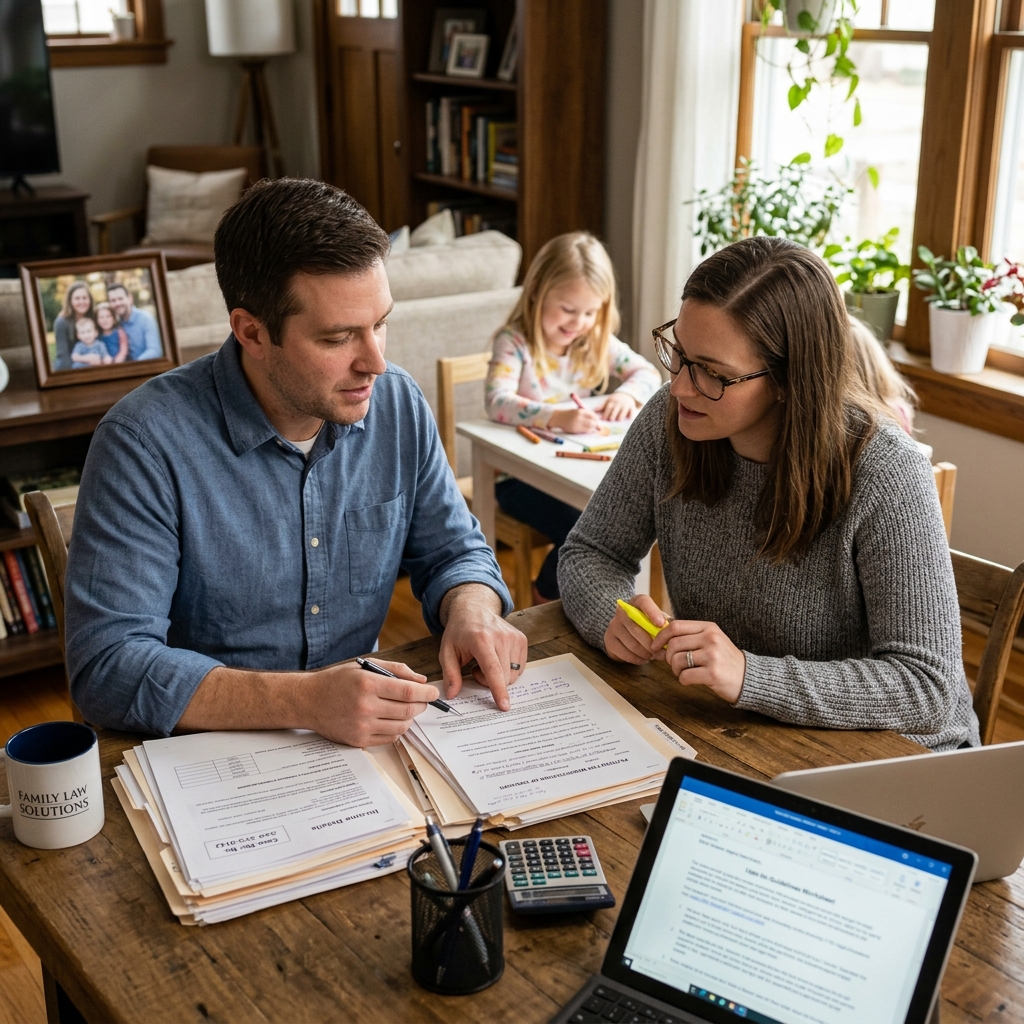
Child support orders are not frozen in time. As incomes change, children grow, or emergencies arise, parents often need to adjust the amount of support being paid. The only lawful way to change a court-ordered child support amount is through a formal modification approved by a court or child support agency.
This guide explains when a modification may be appropriate, what courts look for before changing an order, and how parents can prepare and file a request effectively. Although details vary by state, the overall principles discussed here are widely used in child support systems across the United States.
What Is a Child Support Modification?
A child support modification is an official change to an existing child support order, made by a judge or authorized child support agency. The modification can increase, decrease, or sometimes terminate the obligation, depending on the situation.
Key points about modifications:
- They change the amount or sometimes the duration of support going forward, not usually past-due amounts.
- They require a formal legal step: motion, petition, or agency review; informal side agreements are not enough.
- They are typically based on a proven change in circumstances since the last order was made.
In many states, either parent—the one paying support or the one receiving it—can request a modification at any time before the child reaches adulthood, provided legal requirements are met.
Core Requirement: Substantial Change in Circumstances
The most common legal standard used by courts is a substantial change in circumstances since the last child support order. This means the situation has changed in a way that is significant, relevant, and not temporary.
Typical Examples of Substantial Changes
- Major income changes for either parent (job loss, promotion, disability, or reduced work hours).
- Changes in custody or parenting time, such as a child moving in full-time with the other parent.
- Significant changes in the child’s needs, including illness, disability, or increased educational expenses.
- Incarceration or military deployment affecting the paying parent’s ability to earn and pay.
- Cost-of-living and age-related changes, as older children often have higher day-to-day expenses.
Many states give numerical guidance. For example, some jurisdictions consider an income change of 15% or more, or a guideline calculation that differs from the current order by at least 20% or $50 per month, sufficient to justify review.
Scheduled Review vs. Change-Based Review
In addition to change-based modifications, a number of child support programs allow review after a certain period of time:
- Periodic review: Commonly every 3 years, parents may request a review even if there is no dramatic change, to ensure the order still fits current guidelines.
- Event-driven review: Parents can request modification whenever there is a substantial change, regardless of how long it has been.
How Courts Decide Whether to Change an Order
While procedures differ, courts and agencies generally follow a similar decision process. The table below summarizes common factors they consider.
| Factor | What the Court Looks For | Possible Impact on Order |
|---|---|---|
| Change in income | Proof of increased or decreased earnings, loss of job, disability benefits, or new employment. | Support may be raised or lowered based on guideline calculations. |
| Custody arrangements | Evidence of who has primary physical custody and actual parenting time. | Support may shift to reflect the household providing more day-to-day care. |
| Child’s needs | Medical records, school documents, or receipts for care, therapy, or special education. | Orders may be increased for higher needs or decreased if costs fall. |
| Public benefits | Information on SSI, veteran’s benefits, or other income sources. | Can change how support is calculated or paid, depending on the program. |
| Best interests of the child | Overall impact of the modification on the child’s well-being. | Courts avoid changes that would harm a child’s basic support or stability. |
Courts rarely modify support for minor or short-term changes. The change must be clearly documented and substantial enough to affect the fairness or adequacy of the existing order.
Formal vs. Informal Changes: Why Paper Agreements Are Not Enough
Parents sometimes agree privately to reduce or delay payments when circumstances change. While cooperation is positive, informal agreements are not legally binding unless the court or agency approves them.
Risks of relying on informal arrangements include:
- Unpaid amounts may still be treated as arrears (past-due support) despite verbal agreements.
- Interest and enforcement actions (such as wage garnishment or tax refund intercepts) can continue based on the original order.
- Disputes later can become “your word against mine” without a formal record.
To avoid these issues, any change in child support should be reflected in a new or amended court order, even if both parents agree.
Options for Requesting a Modification
Parents generally have two main pathways to seek a change in support: working through a child support agency or going directly to court. In some states, both routes are available; in others, the process runs primarily through the courts.
1. Agency Review Through a Child Support Program
Many states operate child support services that can review existing orders and, when justified, ask the court to modify them.
Typical steps include:
- Contacting the child support office by phone, online form, or in writing to request a review.
- Completing financial forms, such as an income and expense declaration or affidavit.
- Submitting supporting documents (pay stubs, tax returns, benefit letters, proof of custody changes).
- Allowing the agency to use a guideline calculator to determine whether the difference between the current order and the calculated amount is large enough to justify a court modification.
If the review shows the order is significantly out of line with current guidelines, the agency may file a petition or motion with the court on behalf of the child or parents.
2. Filing Directly with the Court
Parents can also file a motion, petition, or similar pleading directly in court to change support. This is often done when the child support office declines to pursue a modification, or when the parent wants to proceed independently.
Common features of a court-based modification request:
- Use of standard forms provided by the court (often available online or at self-help centers).
- A formal written explanation of the changed circumstances and why the order should be modified.
- Service of the motion and supporting documents on the other parent, following local rules.
- Payment of a filing fee in some jurisdictions, unless waived by the court.
- Attendance at a hearing where the judge reviews evidence and may ask questions before making a decision.
Preparing a Strong Modification Request
The strength of your request depends largely on the clarity and credibility of your evidence. Courts and agencies expect detailed, well-documented information about your finances and the child’s needs.
Essential Documentation
Parents should be prepared to provide:
- Recent pay stubs, W-2 forms, or other proof of income.
- Tax returns (often for the last one to three years).
- Proof of unemployment or reduced hours, such as employer letters or benefit statements.
- Records of child-related expenses: medical bills, school fees, daycare invoices.
- Custody evidence: school enrollment forms, lease agreements, or affidavits showing where the child lives.
- Documentation of public benefits such as SSI or veterans’ benefits, if relevant.
Practical Tips
- Act promptly when a major change occurs. Most courts will not retroactively adjust support before the date you file your request.
- Keep copies of all forms, letters, and supporting documents you submit.
- Be specific about dates, amounts, and how the change affects your ability to pay or the child’s needs.
- Stay honest. Misreporting income or hiding assets can damage your credibility and lead to legal consequences.
- Consider legal advice from a family law attorney or legal aid, especially for complex cases.
Special Situations: Incarceration, Disability, and Deployment
Some changes are particularly disruptive, such as incarceration, serious disability, or military deployment. Many child support programs address these circumstances explicitly.
Incarcerated Parents
When a parent under a support order is imprisoned, they may be unable to earn income comparable to their prior employment. Guidance from several child support agencies emphasizes that imprisoned parents should notify the court or child support office and request a modification rather than simply stopping payments.
Failing to seek modification can lead to large arrears that accumulate during incarceration, making it harder to re-enter the community after release.
Parents with Disabilities
Parents who become disabled often shift from wages to disability or public benefits. Documentation of disability and new income sources is critical to show a substantial change and to adjust support to a realistic level.
Military Deployment
Military deployment can affect where a parent lives, their expenses, and sometimes their pay structure. Some child support agencies specifically list deployment as a circumstance that may justify review and modification, especially when it changes parenting time or income.
Common Misunderstandings and Pitfalls
Child support modification is often misunderstood. Avoiding these common mistakes can save time and prevent legal trouble.
- Assuming support changes automatically when income or custody changes. In reality, you must file and obtain a new order.
- Stopping payments without filing. This can create arrears and trigger enforcement measures such as wage garnishment or license suspension.
- Relying on verbal agreements to reduce support. Without court approval, these do not protect you legally.
- Underestimating living costs of older children. Courts recognize that expenses often rise as children age.
- Failing to update records after a change. If you move, change jobs, or alter custody arrangements, inform the court or agency promptly.
Frequently Asked Questions (FAQs)
Can either parent request a child support modification?
Yes. In most jurisdictions, both the parent who pays support and the parent who receives it can ask for a modification, as long as the child is still a minor and there is a substantial change in circumstances or the order qualifies for periodic review.
How often can I request a modification?
There is usually no strict limit on the number of times you may request a modification based on a substantial change, but many states allow routine reviews at specific intervals, such as every three years. Courts may deny repeated requests if circumstances have not changed.
Will the court reduce support if I lose my job?
The court may reduce support if you can show genuine loss of employment and a good-faith effort to find work, but it will consider your earning capacity and job prospects. Filing promptly and providing clear evidence improves your chances of appropriate adjustment.
What if we both agree to change the amount?
Mutual agreement is helpful, but it is not enough on its own. You still need to submit the agreement to the court or child support agency and obtain an official modification order so that the new amount is legally enforceable and recorded.
Can a modification affect past-due child support?
Generally, modifications apply to support going forward from the date of filing or the date of the new order. Past-due amounts owed under the prior order usually remain enforceable, although courts in some situations may adjust payment plans or enforcement methods.
Do I need a lawyer to request a modification?
A lawyer is not always required. Many courts and child support agencies provide forms, instructions, and sometimes self-help centers for parents representing themselves. However, legal advice can be valuable in complex cases involving high incomes, multiple children, or disputes over custody.
References
- Modify Order | Child Support Services — New York State Division of Child Support Enforcement. 2023-05-01. https://childsupport.ny.gov/order/modify
- Modifying Child Support — Maryland People’s Law Library (Maryland Judiciary). 2022-04-15. https://www.peoples-law.org/modifying-child-support
- Modify My Order — Los Angeles County Child Support Services Department. 2023-02-10. https://cssd.lacounty.gov/modify-my-order/
- Modification Orders: Child Support — The Law Office of Weitzman & Weitzman. 2021-09-30. https://www.wefight4u.com/practice-areas/family-law/modification-orders/
- Request a Modification — Illinois Department of Healthcare and Family Services, Child Support Services. 2022-11-01. https://hfs.illinois.gov/childsupport/parents/modifications.html
- Modify Child Support — Office of the Attorney General of Texas, Child Support Division. 2023-06-12. https://www.texasattorneygeneral.gov/child-support/paying-and-receiving-child-support/get-back-track/modify-child-support
- Modifying a Child Support Order — Office of the Attorney General for the District of Columbia. 2022-08-18. https://oag.dc.gov/child-support-services/services/modifying-child-support-order
Similar Articles








Read full bio of Sneha Tete


