
Change A Child’s Last Name After Divorce: 6 Steps For Parents
A practical legal and emotional guide for parents considering a child’s name change after separation or divorce.
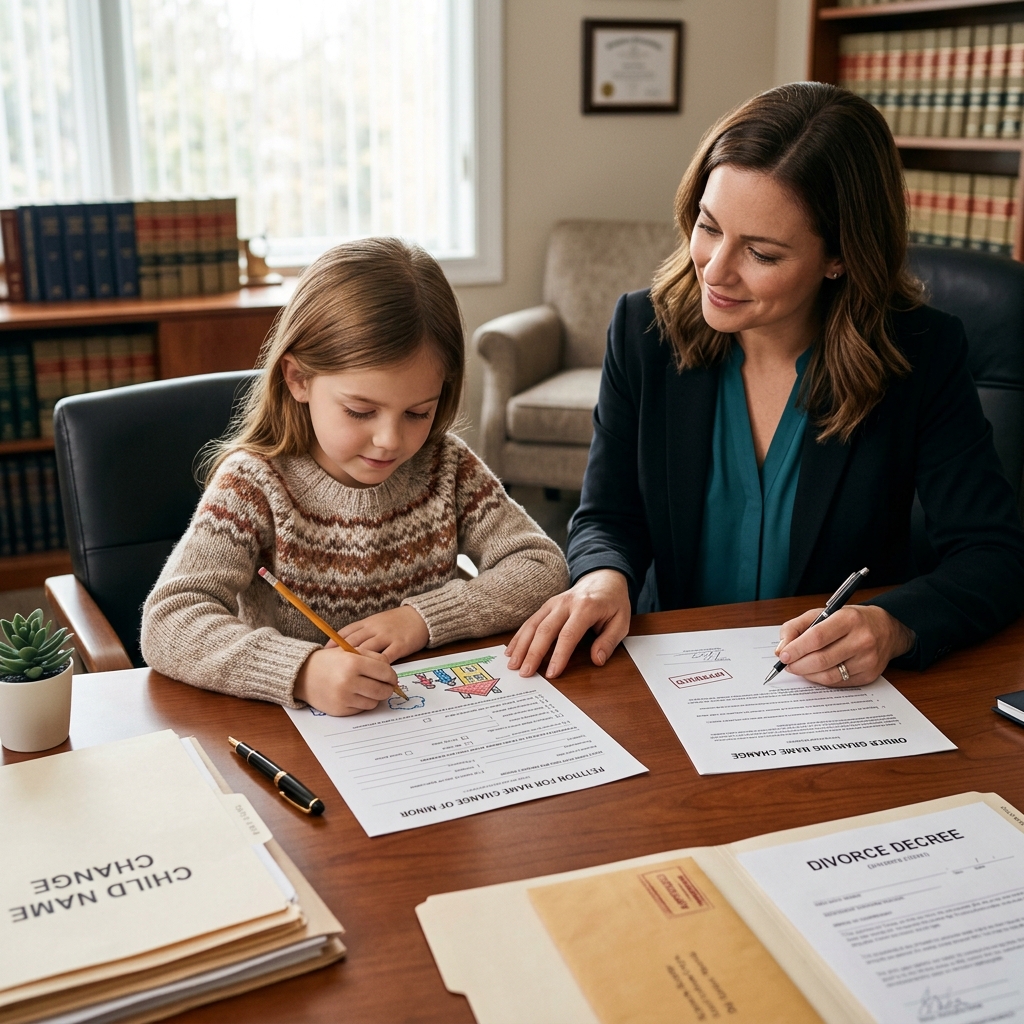
Changing a child’s last name after a divorce is a major decision that blends legal rules with deeply personal and emotional considerations. Parents often explore a name change to reflect a new family structure, strengthen a child’s connection with a particular parent, or distance the child from past conflict. Whatever the motivation, courts focus on one core question: Is the name change in the child’s best interests?
This article explains how the process usually works in the United States, what judges look at when deciding these cases, and how parents can plan for both the legal and practical implications of a child’s name change.
Why Parents Consider Changing a Child’s Name After Divorce
Following a divorce or separation, a child’s last name can take on new meaning. Parents may feel that the existing surname no longer reflects the child’s reality or may worry that the name creates confusion or emotional distress.
Common reasons for requesting a name change
- Alignment with the custodial household: A parent with primary custody may want the child to share the same surname used in the household to foster a sense of unity.
- Distancing from conflict or harm: If one parent has a history of abuse, neglect, or has abandoned the child, the other parent may request a name change to remove that association.
- Reflecting a new family structure: Remarriage, blended families, or adoption can prompt a desire to adopt a hyphenated name or a step-parent’s surname.
- Clarifying identity in school or community: Parents sometimes report confusion when school records, medical files, or community organizations use different last names for parent and child.
- Honoring cultural or religious traditions: A name change can be part of affirming a particular cultural or religious identity.
While these reasons may feel compelling to adults, courts will evaluate them through the lens of the child’s long-term interests rather than either parent’s wishes.
Legal Framework: Best Interests of the Child
In most U.S. jurisdictions, changing a child’s name requires court approval. Judges apply a “best interests of the child” standard that is similar to the standard used in custody and visitation disputes.
Typical factors judges consider
While specific criteria vary by state, courts commonly review a combination of legal, social, and psychological factors:
- Child’s relationship with each parent: A strong, ongoing relationship with the parent whose surname is at issue may weigh against changing the name.
- Child’s age and preference: Older children may be asked what they want, and their expressed preference can be influential, especially for teenagers.
- Length of time the current name has been used: If a child has used a surname for many years, courts may be cautious about changing it without clear benefits.
- Potential impact on emotional well-being: Judges assess whether the change will help or harm the child’s sense of identity and stability.
- Risk of confusion: Courts consider whether the change will cause confusion in school, medical records, or legal documents, or whether it will reduce existing confusion.
- History of parental cooperation or conflict: High-conflict situations may prompt extra scrutiny to ensure the request is not primarily a tool to undermine the other parent.
| Factor | How Courts Typically Evaluate It |
|---|---|
| Child’s relationship with each parent | Stronger ongoing relationship with the surname parent often weighs against change; limited contact may support change. |
| Child’s age and maturity | Younger children: focus on stability. Older children: preference may be considered, sometimes heavily. |
| Length of use of current name | Long-term use can support keeping the name; recent changes in family structure may support a new name. |
| Emotional impact | Court considers testimony and evidence (e.g., counseling records) about identity, self-esteem, and safety. |
| Practical confusion | Courts look at schools, health providers, and official records to balance clarity vs. disruption. |
Consent and Opposition: When Parents Disagree
The easiest path to a child’s name change is when both parents agree and sign the necessary documents. Many state procedures explicitly require or strongly favor joint consent for minor name changes.
When both parents consent
- The parent(s) file a joint or supported petition with the court.
- Written consent forms may be attached to the petition.
- Courts usually approve the request unless there is a clear reason to believe the change harms the child.
When one parent objects or cannot be located
If the other parent does not consent, the requesting parent must typically file a contested petition and show evidence that the change serves the child’s best interests.
- Formal notice: The non-consenting parent is served with legal notice and has an opportunity to appear and object.
- Court hearing: Both sides may present testimony and documents. The judge weighs the competing evidence.
- Extra burden of proof: Some states expect the requesting parent to demonstrate not only that the change is beneficial but also that current circumstances are significant enough to justify modifying the child’s existing legal identity.
- If a parent cannot be found: Many procedures require evidence of diligent efforts to locate the parent and may also require published notice in a local newspaper.
Courts are generally reluctant to sever a child’s connection to an involved parent through a name change alone. Active, loving involvement by the other parent can be a strong argument against modifying the name.
General Steps to Change a Child’s Name Through Court
Each state has its own forms and rules, but the process to change a minor’s name usually follows a similar pattern. Some steps can be handled during an existing divorce or custody case, while others require a separate name-change action.
1. Confirm the Proper Court and Procedure
In most states, the petition is filed in the trial court (often a family or circuit court) in the county where the child lives. Some states allow a request as part of a divorce or paternity case, while others require a separate name-change petition for minors.
2. Gather Required Information and Documents
- Child’s full current legal name and proposed new name.
- Child’s date and place of birth.
- Names and addresses of each parent, guardian, or legal custodian.
- Certified copy of the child’s birth certificate or equivalent document.
- Written consent from each parent or guardian, if available.
- Explanation of why the change is in the child’s best interests.
- If the child is older (often around 10 or above), written consent or statement from the child, where required by local rules.
3. File a Petition for Name Change
The petition formally asks the court to approve the new name and explains the reasons supporting the request. Many jurisdictions provide standardized forms for minor name changes, and some states specify particular form numbers for children.
4. Provide Notice to Interested Parties
Proper notice is essential to protect everyone’s legal rights. Typically, the non-petitioning parent and any legal guardian must receive notice. In some states, additional publication requirements apply when dealing with absent or unknown parents.
5. Attend the Court Hearing
Courts may schedule a hearing where the judge reviews the petition, hears from both parents, and may ask the child questions if age-appropriate. The judge uses the best-interest factors and any state-specific rules to decide whether to grant the requested change.
6. Obtain and Use the Court Order
If the judge approves the name change, the court issues an order officially establishing the new legal name. This order is the key document used to update records and identification.
Updating Records After a Child’s Name Change
Once the court order is obtained, parents must systematically update the child’s records to avoid confusion. Legal authority to change the name does not automatically update existing documents; parents must follow through with each agency and institution.
Important records to update
- Birth certificate: Typically updated through the state’s vital records office using the court order.
- Social Security records: The Social Security Administration requires proof of identity and the court order to issue a new card.
- School records: Parents should notify the school district, provide a copy of the order, and confirm that attendance, transcripts, and ID cards reflect the new name.
- Medical records: Pediatricians, specialists, hospitals, and insurance providers must align the name for billing and care continuity.
- Government identification: State-issued ID cards or passports should be updated to prevent travel or verification issues.
- Financial and other accounts: Any savings accounts, trust accounts, or extracurricular registrations should be brought up to date.
Emotional and Practical Considerations for Families
Beyond the legal steps, changing a child’s name can carry substantial emotional weight. Children may feel pride, confusion, relief, or sadness about a new surname. Parents who plan the process thoughtfully and communicate clearly can reduce stress and promote a healthier transition.
Talking to your child about the name change
- Use age-appropriate language: Explain what a surname is and why you are considering changing it in simple, honest terms.
- Emphasize stability and love: Reassure the child that a new or old name does not change who their parents are or how much they are loved.
- Invite questions: Allow the child to ask what the change means for school, friendships, and family relationships.
- Respect the child’s feelings: Even if the court ultimately decides differently, acknowledging the child’s emotions can foster trust.
Co-parenting strategies around name changes
- Separate legal disagreements from parenting: Try to keep court disputes from spilling over into daily interactions with the child.
- Avoid using the name as a weapon: Courts look unfavorably on attempts to erase a parent’s role through name changes.
- Consider compromise solutions: Hyphenated names or adding a second surname may balance the interests of both parents and the child.
- Seek professional guidance: Family therapists can help children navigate identity questions that arise during divorce and name changes.
Frequently Asked Questions (FAQs)
Does a parent need consent from the other parent to change a child’s name?
In many states, consent from both parents is strongly preferred and sometimes required. When one parent does not consent, the other may still petition the court, but must show that the change is in the child’s best interests and provide formal notice of the request.
Can a child’s name be changed as part of the divorce itself?
Some jurisdictions allow a child’s surname to be addressed within the divorce proceedings, while others require a separate name-change case. Parents should review their state’s family law rules or consult a local attorney to determine the appropriate approach.
What if the child wants the change but one parent objects?
Older children’s preferences may carry significant weight, but the court still makes the final decision based on best-interest factors. Even a strong preference from the child is not automatically decisive if the judge believes the change would harm the child’s relationship with an involved parent or cause other problems.
Is it possible to reverse a child’s name change later?
In principle, yes. However, reversing a name change requires another court petition and justification. Courts consider repeated changes destabilizing and may be reluctant to alter a child’s name multiple times without compelling reasons.
Do states treat abuse or abandonment differently in name change cases?
Evidence of abuse, neglect, or long-term abandonment can strongly influence the court’s view of the child’s best interests. In extreme circumstances, courts may be more willing to approve a name change to support the child’s safety and emotional recovery, especially when contact with the parent is limited or legally restricted.
How to Prepare for a Child Name Change Case
Parents thinking about changing a child’s name after divorce can benefit from careful preparation before filing any paperwork. Legal advice and documentation can significantly impact the outcome.
Practical preparation checklist
- Clarify your reasons for the change and how they relate to the child’s well-being.
- Gather documents showing your primary caregiving role, if applicable (school communications, medical records, etc.).
- Consult an experienced family law attorney or legal aid organization to understand local rules and forms.
- Consider counseling for your child and yourself to process the emotional aspects of the name change.
- Prepare to explain to the judge how the change will affect the child at school, in the community, and in relation to each parent.
Because name-change laws vary significantly by state, parents should always review current local statutes and court instructions or seek qualified legal advice before filing.
References
- Name Change Laws & Procedures After Divorce — Justia. 2024-01-10. https://www.justia.com/family/divorce/after-divorce/name-changes-after-divorce/
- What Are the Steps for Changing a Child’s Last Name After Divorce? — Pearson Butler. 2026-03-15. https://www.pearsonbutler.com/blog/2026/march/what-are-the-steps-for-changing-a-child-s-last-n/
- Can I Change My Child’s Last Name after My Divorce? — A.T. Collaborative Law. 2023-09-05. https://www.atclaw.com/blog/can-i-change-my-child-s-last-name-after-my-divorce
- Name Change for a Child — Maryland People’s Law Library. 2024-02-20. https://www.peoples-law.org/name-change-child
- Name Change — Florida Law Help. 2023-11-30. https://www.floridalawhelp.org/families-children/name-change
- Name Changes in Texas: Children — Texas State Law Library. 2024-05-01. https://guides.sll.texas.gov/name-changes/children
Similar Articles








Read full bio of Sneha Tete


