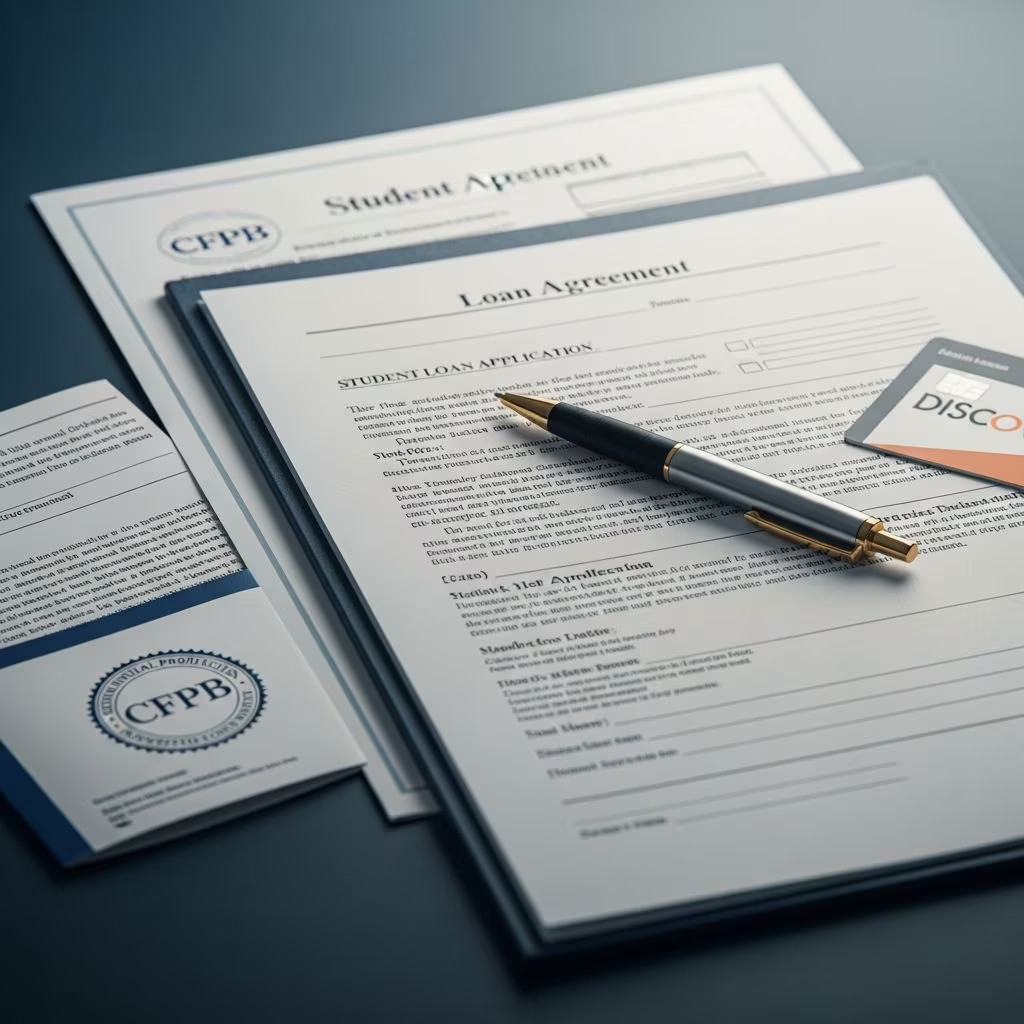
The Consumer Financial Protection Bureau (CFPB) has repeatedly taken enforcement action against Discover Bank, The Student Loan Corporation, and Discover Products, Inc. for violating federal consumer financial laws in their private student loan servicing operations. These cases highlight serious risks borrowers may face when servicers misstate bills, mishandle payments, or engage in unlawful collection tactics.
This article explains what regulators found, what penalties Discover faced, and what practical steps private student loan borrowers can take to protect themselves.
Overview of the Enforcement Actions
The CFPB has issued multiple consent orders involving Discover’s private student loan servicing, including a major action requiring $16 million in refunds and a $2.5 million civil penalty, and a later order imposing at least $10 million in consumer redress and a $25 million penalty for additional violations.
- Institutions involved: Discover Bank, The Student Loan Corporation, Discover Products, Inc.
- Loan type: Primarily private student loans acquired and serviced by Discover, including over 800,000 accounts transferred from Citibank beginning in 2010.
- Primary regulators: Consumer Financial Protection Bureau, enforcing the Consumer Financial Protection Act, the Electronic Fund Transfer Act, Regulation E, and other laws.
Regulators concluded that Discover engaged in unfair and deceptive practices, including misrepresenting minimum payments, mishandling automatic debits, and using illegal collection tactics.
Key Misconduct Identified by Regulators
The CFPB’s findings cover several core servicing failures that directly harmed borrowers’ finances and credit profiles.
1. Inflated Minimum Payments on Billing Statements
One of the most serious violations was overstating the minimum amount due on billing statements for certain borrowers who were starting to repay their loans.
- Discover included interest on loans that were still in deferment, inflating the bills many borrowers saw.
- Some borrowers paid more than they actually owed, straining already tight budgets.
- Others could not afford the overstated amount, became late or delinquent, and were hit with additional fees and negative credit reporting.
According to the CFPB, this conduct violated federal prohibitions on unfair and deceptive acts and practices.
2. Misstated Student Loan Interest and Tax Information
Accurate reporting of interest paid on student loans allows borrowers to claim certain federal income tax benefits, such as the student loan interest deduction, when they qualify under Internal Revenue Service rules.
- Discover failed to provide some borrowers with accurate year-end interest information, sometimes showing $0.00 interest paid even when borrowers had paid interest.
- Borrowers who relied on those statements may have missed out on potential tax benefits or filed incorrect tax returns.
- On its website, Discover also misrepresented how much interest borrowers had paid, further compounding the confusion.
Regulators concluded these misstatements were deceptive and harmed borrowers’ ability to make informed financial and tax decisions.
3. Unauthorized or Mishandled Electronic Payments
The later consent order detailed serious problems with Discover’s handling of electronic fund transfers for student loan payments, subject to the Electronic Fund Transfer Act and Regulation E.
- Discover withdrew payments from more than 17,000 consumers’ bank accounts without valid authorization.
- It also cancelled or failed to execute scheduled payments for more than 14,000 consumers without notifying them.
- Some borrowers were surprised by withdrawals they had not authorized, while others missed payments they believed would be processed automatically.
This conduct was found to be unfair and in violation of EFTA and Regulation E because it exposed consumers to unauthorized debits, late fees, and possible account overdrafts.
4. Illegal Debt Collection Practices
Discover’s collection activities also drew scrutiny under the Consumer Financial Protection Act and the Fair Debt Collection Practices Act.
- Discover’s collectors called borrowers early in the morning and late at night, outside generally accepted permissible hours, more than 150,000 times.
- In many cases, the company did not provide required information about the amount and source of the debt or borrowers’ right to dispute it.
- These practices increased stress and confusion for borrowers already struggling to stay current.
The CFPB concluded these tactics were unlawful and contributed to what it called “student debt stress” for affected borrowers.
Financial Remedies and Corrective Measures
The enforcement actions resulted in substantial financial penalties and mandated changes in Discover’s servicing practices.
| Type of Remedy | Amount / Requirement | Purpose |
|---|---|---|
| Consumer redress (earlier order) | At least $16 million in refunds to affected borrowers | Repay borrowers for inflated minimum payments and related harms |
| Civil money penalty (earlier order) | $2.5 million penalty to the CFPB’s Civil Penalty Fund | Punish violations and deter future misconduct |
| Consumer redress (later order) | At least $10 million in additional redress | Compensate borrowers harmed by misrepresentations and payment errors |
| Civil money penalty (later order) | $25 million penalty | Address violations of the prior order, CFPA, and EFTA |
| Servicing reforms | Improvements to billing, interest reporting, and collections | Require accurate disclosures and lawful collection and payment practices |
In addition to financial penalties, the CFPB’s consent orders prohibit Discover from misrepresenting key servicing terms, including minimum payments, amounts of interest paid, due dates, and rewards availability, and from making unauthorized withdrawals from consumers’ accounts.
Why This Matters for Private Student Loan Borrowers
Although the CFPB’s actions focus on Discover, the issues identified are common risks across the broader private student loan market.
Borrowers with private loans often face:
- Fewer flexible repayment options than federal student loans
- Limited opportunities for income-based repayment or forgiveness
- Greater reliance on the servicer’s accuracy and transparency
Misstatements about minimum payments or interest, or mishandled automatic debits, can quickly lead to late fees, damaged credit, and lost tax benefits. The Discover case illustrates how small errors in servicing can compound into significant long-term harm.
How to Check If You Might Have Been Affected
Borrowers who have or had private student loans serviced by Discover or its affiliates can take a few practical steps to assess potential impact.
1. Review Past Billing Statements
- Compare the minimum payment due on older statements to your loan balance and interest rate at the time.
- Look for sudden, unexplained increases in the minimum payment, especially when loans were just coming out of deferment or grace periods.
- Check whether any payments appeared to include interest on loans that were still supposed to be in deferment.
2. Examine Year-End Interest Summaries
- Review the annual interest figures Discover reported for prior years.
- If you received statements showing $0.00 interest paid despite making payments, that could be a red flag.
- Compare these figures, if possible, to your own bank records or cancelled checks.
3. Audit Automatic Payments and Bank Records
- Check your bank statements for any unexpected withdrawals by Discover or its affiliates, particularly around the dates you set for automatic payments.
- Identify any months where you scheduled an automatic debit but no payment was taken, leading to a late fee or delinquency.
4. Evaluate Collection Contacts
- Think back to whether you received repeated calls before 8 a.m. or after 9 p.m., or persistent contacts at inconvenient times.
- Note whether collectors provided clear information about the total amount owed, the identity of the creditor, and your right to dispute the debt.
Steps Borrowers Can Take Now
Whether or not you believe you were directly affected by the Discover enforcement actions, the following steps can help you safeguard your rights with any private student loan servicer.
1. Keep Organized Records
- Save digital or paper copies of all billing statements, payment confirmations, and correspondence.
- Maintain a simple spreadsheet or notebook tracking payment dates, amounts, and interest rates.
- Document phone calls by noting the date, time, representative’s name, and what was discussed.
2. Regularly Reconcile Servicer Data with Your Own
- Periodically compare your records with the information on your servicer’s website or statements.
- Confirm that the minimum payment and interest rate match your loan documents.
- Check that your principal balance is declining at a pace consistent with your payments and interest rate.
3. Act Quickly When You Spot an Error
- Contact the servicer in writing to dispute any suspected error and request a detailed explanation.
- Include copies (not originals) of supporting documents such as bank statements or prior bills.
- Keep a copy of your dispute letter and proof of delivery.
4. File Complaints with Regulators if Needed
- If the servicer does not resolve your issue, you can submit a complaint to the CFPB or your state attorney general’s office.
- Provide as much documentation as possible so regulators can evaluate your claim.
5. Seek Independent Advice
- Consider consulting a nonprofit credit counselor, legal aid office, or student loan ombudsman for guidance tailored to your situation.
- Be cautious of fee-based “debt relief” companies that promise quick fixes or guaranteed results.
Frequently Asked Questions (FAQs)
Q: What laws did Discover allegedly violate?
A: The CFPB found that Discover and its affiliates violated the Consumer Financial Protection Act by engaging in unfair and deceptive practices, and in later actions, the Electronic Fund Transfer Act and Regulation E by making unauthorized withdrawals and mishandling electronic payments.
Q: Does this enforcement action cancel my Discover student loans?
A: No. The consent orders require Discover to provide refunds and pay penalties, and to change its practices, but they do not automatically erase borrowers’ underlying loan obligations. Borrowers must continue to repay their loans unless they receive specific notice of loan forgiveness or discharge.
Q: How do I know if I am eligible for a refund?
A: In CFPB enforcement actions, affected borrowers generally receive notice and, in some cases, automatic credits or checks based on data held by the servicer. If you believe you were harmed but have not been contacted, you can review CFPB public documents and reach out to Discover or the Bureau with your concerns.
Q: Are federal student loans affected by this case?
A: The CFPB’s orders in this matter center on private student loans serviced by Discover and its affiliates. Federal student loans are governed by separate statutes, regulations, and servicing contracts, although some of the same consumer protection principles apply across both markets.
Q: What should I watch for on my future loan statements?
A: Carefully review the minimum payment due, interest rate, amount of interest paid year-to-date, and due date each month. If anything appears inconsistent with your records or loan terms, contact the servicer promptly and request a written explanation.
Key Takeaways for Borrowers
- Even large financial institutions can commit serious servicing violations that harm borrowers.
- Inflated minimum payments, inaccurate interest reporting, and mishandled automatic debits can create long-term financial and credit damage.
- Maintaining thorough records and monitoring your accounts closely are critical defenses against servicing errors.
- Regulators such as the CFPB and state authorities can help address systemic problems and individual complaints, but borrowers still need to be proactive.
References
- Consumer Financial Protection Bureau settles with student loan servicers Discover Bank, The Student Loan Corporation, and Discover Products, Inc. for violating a Bureau consent order and other unlawful practices — Consumer Financial Protection Bureau. 2020-07-09. https://www.consumerfinance.gov/about-us/newsroom/consumer-financial-protection-bureau-settles-with-student-loan-servicers-discover-bank-the-student-loan-corporation-and-discover-products-inc-for-violating-a-bureau-consent-order-and-other-unlawful-practices/
- CFPB Orders Discover Bank to Pay $18.5 Million for Illegal Student Loan Servicing Practices — Consumer Financial Protection Bureau. 2015-07-22. https://files.consumerfinance.gov/f/201507_cfpb_consent-order-discover-bank-the-student-loan-corporation-and-discover-products-inc.pdf
- CFPB Fines Discover Bank for Illegal Loan Servicing Practices — National Association of Student Financial Aid Administrators (NASFAA). 2015-07-23. https://www.nasfaa.org/news-item/5129/CFPB_Fines_Discover_Bank_for_Illegal_Loan_Servicing_Practices
- CFPB Orders Discover Bank to Pay $18.5 Million for Illegal Student Loan Servicing Practices — Consumer Financial Protection Bureau (press release reproduced by Wolters Kluwer). 2015-07-22. https://business.cch.com/bfld/cfpb-orders-discover-bank-to-pay-18-5-million.pdf
- Discover Bank, the Student Loan Corporation, and Discover Products, Inc. — Consumer Financial Protection Bureau (enforcement action summary). 2015. https://www.consumerfinance.gov/enforcement/actions/discover-bank-student-loan-corporation-discover-products/
- Discover Bank’s Illegal Student Loan Servicing Practices Show Need for New Rules — Center for Responsible Lending. 2015-07-23. https://www.responsiblelending.org/media/discover-bank-s-illegal-student-loan-servicing-practices-show-need-new-rules
- Selected Federal and State Claims Against Student Loan Servicers — Student Borrower Protection Center. 2019-12-01. https://protectborrowers.org/wp-content/uploads/2019/12/Claims-Against-Student-Loan-Servicers_12.19.pdf