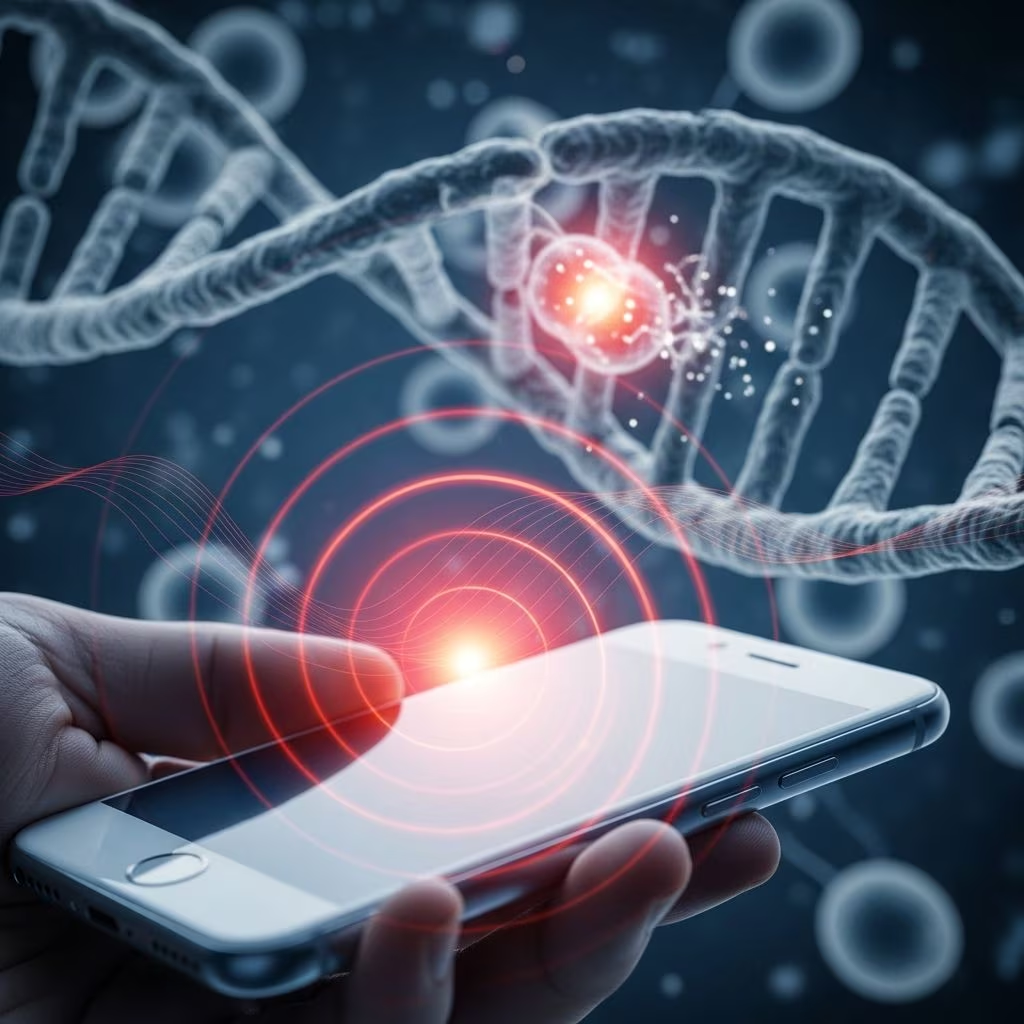
Radiofrequency (RF) radiation from cell phones has sparked intense debate over decades, with public concern focusing on potential cancer risks from prolonged exposure. While RF waves are non-ionizing and lack the energy to directly damage DNA, some animal studies suggest possible links to tumors under extreme conditions. Major health organizations conclude there is no consistent evidence of harm in humans from typical use, though classification as ‘possibly carcinogenic’ persists due to limited data.
Understanding RF Radiation from Mobile Devices
Cell phones emit RF radiation, a type of non-ionizing electromagnetic energy operating at frequencies from 0.7 to 2.7 GHz for 2G-4G networks, extending up to 80 GHz for 5G. Unlike ionizing radiation such as X-rays or UV rays, which can break DNA bonds, RF waves primarily cause thermal effects by vibrating molecules, potentially heating tissues. The antenna, often near the head during calls, is the strongest emission source, with exposure decreasing rapidly with distance.
Human exposure depends on factors like signal strength, call duration, and proximity. Tissues closest to the phone absorb the most energy, raising questions about brain, salivary gland, and other head/neck cancers. Regulatory limits, set by bodies like the FCC, cap specific absorption rates (SAR) at 1.6 W/kg in the US to prevent excessive heating.
Key Findings from Animal Toxicology Research
The National Toxicology Program (NTP) conducted landmark two-year studies on rats and mice exposed to RF levels simulating high cell phone use (900 MHz). Results, published in 2018, showed ‘clear evidence’ of heart schwannomas in male rats, ‘some evidence’ of brain gliomas and adrenal pheochromocytomas in males, but no consistent effects in females or mice. DNA damage was observed in the brains and blood cells of exposed animals, though the mechanism linking this to tumors remains unclear.
These exposures were far higher than human norms—up to four times the maximum allowed—occurring in only 2-6% of animals. Heart tumors appeared rare even at peak levels. The studies highlight potential risks under extreme conditions but do not directly translate to people due to species differences and dosing.
| Study Aspect | Male Rats | Female Rats/Mice | Human Relevance |
|---|---|---|---|
| Heart Tumors | Clear evidence (schwannomas) | No clear link | Rare; higher doses than typical use |
| Brain Tumors | Some evidence (gliomas) | Limited | Similar to some human reports |
| DNA Damage | Hippocampus | Blood cells (mice) | Unclear progression to cancer |
| Overall | Positive associations | Inconclusive | Not causal for humans |
Epidemiological Evidence in Human Populations
Large-scale human studies, including INTERPHONE and Danish cohort analyses, have not found consistent increases in brain or head/neck cancers linked to cell phone use. Despite billions of users since the 1990s, overall glioma rates have not risen, even as usage exploded. Some research notes slight elevations in tumors among heaviest users (over 30 minutes daily for 10+ years), but confounding factors like recall bias weaken these findings.
The International Agency for Research on Cancer (IARC) classified RF as ‘possibly carcinogenic’ (Group 2B) in 2011, based on limited glioma evidence and inadequate data for others. This mirrors classifications for coffee or pickled vegetables—indicating possible but unproven risk. Recent FDA reviews (up to 2018) affirm no causal link, citing stable cancer trends.
Debunking Myths: 5G, Wi-Fi, and Emerging Tech
Concerns about 5G often cite higher frequencies, but these millimeter waves have lower penetration and energy insufficient for DNA damage. Phone masts and Wi-Fi use similar non-ionizing RF, with no reliable cancer links. Cancer Research UK states unequivocally that such radiation lacks the power to cause cellular mutations.
- 5G Frequencies: Up to 80 GHz, but still non-ionizing and tightly regulated.
- Wi-Fi/Base Stations: Comparable power to phones; no population-level cancer spikes.
- Children: Theoretical higher vulnerability due to thinner skulls and longer lifetime exposure, but no confirmatory data exists.
Regulatory Standards and Safety Measures
Global bodies like WHO, FCC, and ICNIRP set exposure limits based on thermal effects, with a 50-fold safety margin. Devices must undergo SAR testing. The FDA and NCI emphasize that current evidence does not justify stricter rules, though ongoing surveillance continues.
Harvard’s cancer prevention expert notes no established connection, distinguishing RF from proven carcinogens like ionizing rays. Despite this, public anxiety fuels lawsuits and calls for precaution.
Practical Steps to Minimize RF Exposure
While risks appear low, precautionary measures can reduce exposure:
- Use speakerphone or wired earbuds to keep the phone away from your head.
- Text instead of calling when possible.
- Avoid calls in low-signal areas, where phones boost power.
- Limit children’s use and supervise.
- Carry phones in bags, not pockets, against the body.
These habits align with guidelines from health authorities and cost nothing.
Legal Landscape: Litigation and Liability
Hundreds of lawsuits claim manufacturers concealed RF risks, citing NTP data. Most have been dismissed or settled without admitting fault, as courts require proving causation beyond animal studies. Future verdicts may hinge on new human data or reanalyses. Plaintiffs often argue for stricter warnings, echoing tobacco litigation precedents.
Future Research Directions
Ongoing NTP studies probe DNA mechanisms, while COSMOS and million-women cohorts track long-term users. 5G-specific research is ramping up. Until definitive answers, scientists urge balanced messaging: no proven danger, but vigilance warranted for heavy users.
Frequently Asked Questions
Do cell phones definitely cause cancer?
No, major reviews find insufficient evidence for causation in humans from typical use.
Are children at higher risk?
Their developing brains may absorb more RF proportionally, but no studies confirm elevated cancer rates.
Is 5G more dangerous than 4G?
No, it uses non-ionizing waves with no proven cancer link; energy levels remain safe.
What do heart tumors in rats mean for me?
They occurred at exposures 4x human limits and are rare; direct human translation is uncertain.
Should I stop using my cell phone?
Not necessary based on evidence, but use hands-free options to minimize exposure.
References
- Cell Phone Radio Frequency Radiation — National Toxicology Program (NTP), NIEHS. 2018-11-01. https://ntp.niehs.nih.gov/research/topics/cellphones
- Do Cell Phones Cause Cancer? — American Cancer Society. 2023-06-01. https://www.cancer.org/cancer/risk-prevention/radiation-exposure/cellular-phones.html
- Do mobile phones or Wi-Fi cause cancer? — Cancer Research UK. 2024-01-15. https://www.cancerresearchuk.org/about-cancer/causes-of-cancer/cancer-myths-questions/do-mobile-phones-cause-cancer
- Does RF Radiation Cause Cancer? — American Cancer Society. 2023-06-01. https://www.cancer.org/cancer/risk-prevention/radiation-exposure/radiofrequency-radiation.html
- Cell Phones and Cancer Risk Fact Sheet — National Cancer Institute (NCI). 2023-08-23. https://www.cancer.gov/about-cancer/causes-prevention/risk/radiation/cell-phones-fact-sheet
- No evidence that cell phone radiation causes cancer, says expert — Harvard T.H. Chan School of Public Health. 2024-12-10. https://hsph.harvard.edu/news/no-evidence-that-cell-phone-radiation-causes-cancer-says-expert/