
Cease and Desist Letters for Debt Collectors
Learn how to use a clear, legally grounded cease and desist letter to stop abusive debt collection contact and protect your rights.
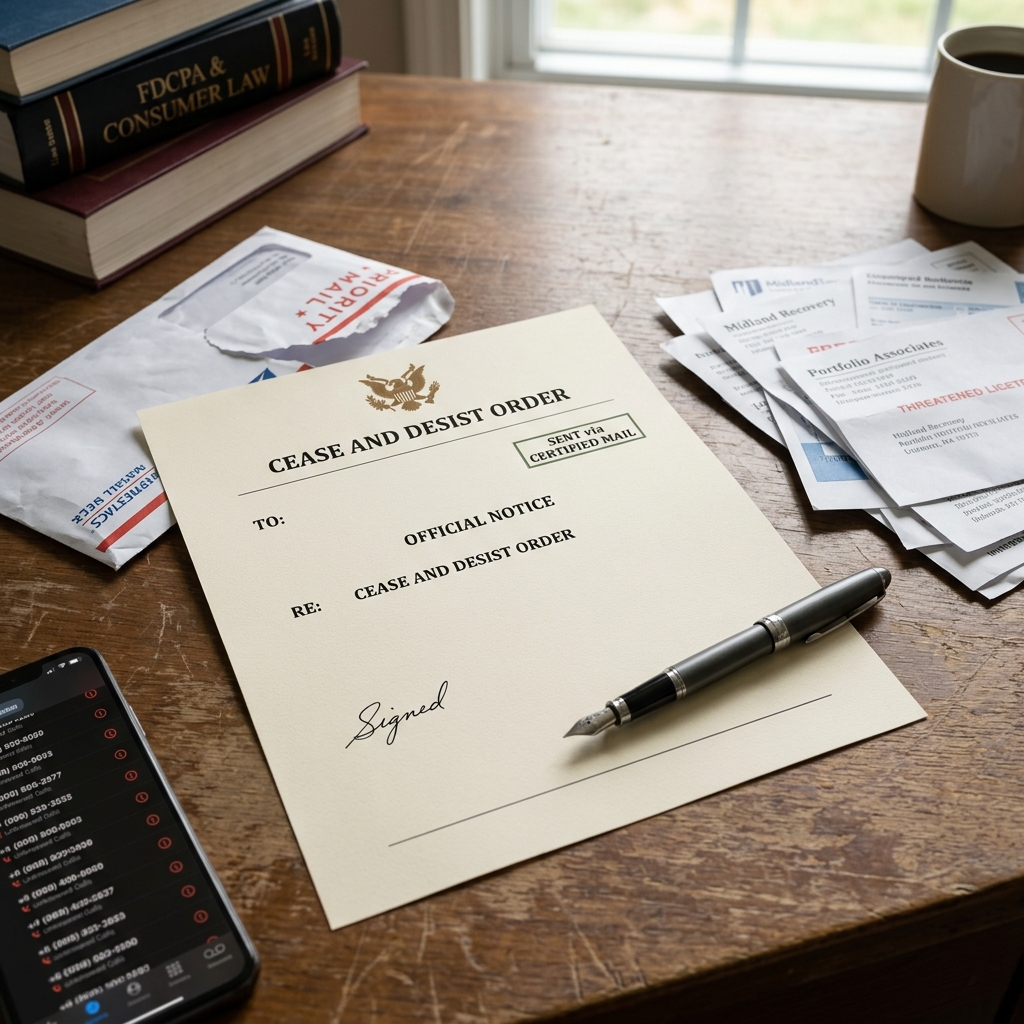
Debt collection can be stressful, but repeated calls, threatening messages, or contact at inconvenient places may cross the line from routine collection into harassment. A cease and desist letter to a debt collector is one of the most effective tools you have to control this contact and assert your rights under federal law.
This guide explains how cease and desist letters work, what the law says about debt collector communications, how to draft and send a letter, and what to expect afterward. It also includes frequently asked questions and practical tips for documenting any violations.
1. What Is a Cease and Desist Letter for Debt Collection?
A debt collection cease and desist letter is a formal written notice telling a debt collector to stop contacting you about a debt. It is not a lawsuit and it does not erase the underlying debt. Instead, it invokes your legal right to limit or end communications from third‑party debt collectors in most circumstances.
Under the Fair Debt Collection Practices Act (FDCPA), you can send a written letter directing a debt collector to stop contacting you, and once they receive it, they must generally stop future communications except for very limited purposes.
1.1 What a Cease and Desist Letter Can Do
- Stop most collection calls and messages once the collector receives your written request.
- Limit contact to required notices, such as confirming they will stop contacting you or informing you of a specific legal action they plan to take.
- Create a paper trail showing you asserted your rights, which can be useful if the collector violates the law and you later file a complaint or lawsuit.
- Reduce stress and pressure by cutting off frequent calls, texts, and emails.
1.2 What a Cease and Desist Letter Cannot Do
- It does not cancel or eliminate the debt. The FDCPA focuses on collection conduct, not whether the debt is valid or must be paid.
- It does not prevent lawful collection activity. After you send the letter, a collector may still sue you or report the debt to credit bureaus if the law otherwise allows.
- It does not resolve disputes about the debt itself. If you believe the debt is incorrect or not yours, you should also use a separate dispute letter or validation request.
2. Your Legal Rights Under the FDCPA
The FDCPA is a federal law that regulates the behavior of third‑party debt collectors, including collection agencies and certain collection law firms, when they attempt to collect consumer debts. The law sets clear limits on when, where, and how they can contact you, and provides remedies when they cross these boundaries.
2.1 Limits on Debt Collector Communications
According to federal guidance, debt collectors:
- May not contact you at unusual or clearly inconvenient times or places, such as very early morning or late at night in your time zone.
- Generally cannot contact you at work if they know your employer prohibits such calls.
- Must stop contacting you if you send a written notice telling them to cease communication.
- Are prohibited from using threats, obscene language, or repeated phone calls intended to annoy, abuse, or harass.
These restrictions exist to protect consumers from harassment and to ensure that collection efforts are conducted in a fair, transparent, and lawful way.
2.2 The Effect of a Written “Stop Contact” Request
Federal consumer protection authorities explain that if you do not want a debt collector to contact you again, you should send a letter stating that request. Once the collector receives the letter:
- They must stop most future contact with you about the debt.
- They may contact you only to confirm that they will stop contacting you, or to notify you of a specific legal action they plan to take, such as filing a lawsuit.
This rule is what makes a well‑drafted cease and desist letter so powerful in managing and limiting communication.
3. When Should You Consider Sending a Cease and Desist Letter?
A cease and desist letter is not always the first step in dealing with debt, but it can be appropriate in several common situations.
3.1 Signs of Harassing or Abusive Collection Conduct
Indicators that a debt collector’s behavior may be abusive or harassing include:
- Frequent or repeated calls, especially multiple times per day.
- Calls at inconvenient times, such as early morning or late at night.
- Contact at your workplace after you have said that such calls are not allowed.
- Threatening statements, profanity, or aggressive language.
- Contacting friends, relatives, or neighbors about your debt (beyond verifying your address or phone number, which is subject to strict limits).
If any of these behaviors occur, documenting them and asserting your rights in writing may be appropriate.
3.2 Situations Where Limiting Contact May Help
- You are already working on a plan to address your debts and want to reduce phone pressure.
- You prefer all communication to be in writing so you have a clear record.
- You are considering legal options, such as bankruptcy or negotiation, and want time to consult a professional without frequent interruptions.
- You believe the collector’s conduct violates the law and want to formally demand that the behavior stop.
4. Key Elements of an Effective Cease and Desist Letter
To be effective and clear, a cease and desist letter should include enough information to identify you, the collector, and the debt, along with a direct statement that you want communication to stop. You do not need to share personal financial details beyond what is necessary for identification.
| Component | Purpose | Example |
|---|---|---|
| Your identifying information | Helps the collector match your letter to the correct account. | Full name, mailing address, phone number (optional). |
| Collector’s information | Ensures the letter is directed to the right agency or collector. | Collector name, address, and phone number (optional). |
| Account details | Shows which debt the letter concerns. | Account number or reference number listed in collector’s letters. |
| Clear cease and desist statement | Formally tells the collector to stop contacting you about the debt. | “I am requesting that you cease all communication with me regarding this debt.” |
| Legal reference (optional but helpful) | Shows you are invoking rights under federal law. | Mention the Fair Debt Collection Practices Act. |
| Preferred contact limitations | Allows you to specify if you will accept certain written notices only. | Statement that you only consent to legally required written notices. |
| Signature and date | Finalizes the letter and helps document when it was sent. | Your signature and the date you sign the letter. |
4.1 Tips for Drafting a Clear Letter
- Be direct and simple. Avoid emotional language; focus on clearly stating that you want contact to stop.
- Use information from the collector’s own correspondence. For account numbers or file references, rely on details from their letters or statements, not from third parties.
- Do not admit liability if you dispute the debt. If you are unsure whether the debt is valid, you can state that you dispute the debt and still request that contact stop, but avoid language that could be interpreted as confirming the debt.
- Keep the tone professional. The goal is to assert your rights, not argue about the debt’s merits in this letter.
5. How to Send Your Cease and Desist Letter
How you deliver the letter is important, because you want proof that the collector received it. Simply dropping a letter in the mail without tracking may not give you the documentation you need if problems arise later.
5.1 Recommended Delivery Methods
- Certified mail with return receipt. This method provides confirmation that the letter was delivered, and the return receipt (often a green card) shows the date it was received.
- Keep a copy of the signed letter. Store a copy of what you sent, together with the postal receipts and any tracking information.
- Digital records for electronic delivery. If you use an electronic signature platform or send a PDF by secure means, ensure you can show when it was sent and received, such as through a delivery confirmation.
5.2 Record‑Keeping After Sending the Letter
Once you have sent the letter, organize your documentation in case you need it later.
- Store copies of the letter, mailing receipt, and return receipt together in a safe place.
- Create a log of any contacts from the collector after the date they received your letter, including dates, times, methods of contact, and what was said.
- Keep copies of any new letters or notices from the collector, as these may be relevant if you file a complaint or seek legal advice.
6. What Happens After You Send a Cease and Desist Letter?
In most cases, once a debt collector receives a valid cease and desist letter, they should stop contacting you except for very limited reasons. Understanding what is allowed and what might indicate a violation can help you respond appropriately.
6.1 Expected Changes in Communication
- Calls and messages should stop. Regular phone calls, texts, and emails about the debt should end after the letter is received.
- You may receive a final confirmation letter. The collector may send a written notice acknowledging your request and stating that they will no longer contact you.
- You may receive notice of legal steps. If the collector plans to file a lawsuit or take another lawful action, they may notify you even after receiving your cease and desist letter.
6.2 If the Collector Ignores Your Letter
If a debt collector continues to contact you after receiving your letter, this may be a violation of the FDCPA. Steps you can consider include:
- Document each contact. Note dates, times, and descriptions of calls or messages, and save any voicemails or written communications.
- Submit a complaint to the Consumer Financial Protection Bureau (CFPB). The CFPB accepts complaints about debt collection practices and may help address the issue.
- Consult a consumer law attorney. You may have the right to sue the collector for violating the FDCPA and recover damages, including potential statutory damages and attorney’s fees.
7. Balancing Communication Control and Debt Resolution
Stopping harassing contact is important, but it is also useful to consider how a cease and desist letter fits into your broader debt‑management strategy. Controlling communication does not solve the debt itself, so you may also want to explore options for resolving or challenging the debt.
7.1 Considering Other Tools Alongside a Cease and Desist Letter
- Dispute letters. If you believe the debt is not yours or the amount is wrong, you can send a dispute letter asking the collector to verify the debt. During the verification process, collection contact may pause until the collector provides required information.
- Negotiation or settlement. You may attempt to negotiate payment arrangements, reduced balances, or more time to pay with creditors or collectors. Written agreements are essential before making payments.
- Legal advice regarding bankruptcy. In some situations, consumer bankruptcy may offer a broader solution. Filing can trigger an automatic stay that temporarily stops most collection activity.
- Budgeting and debt counseling. Financial counseling can help you prioritize debts and understand options for repayment or relief.
8. Practical Example: Common Mistakes to Avoid
While every situation is unique, consumers often make similar mistakes when attempting to stop debt collector harassment. Being aware of these pitfalls can help you avoid problems.
- Relying only on verbal requests. Asking a collector over the phone to stop calling is not enough; your request must be in writing to trigger FDCPA protections.
- Failing to keep proof of delivery. If you cannot show that the collector received your letter, it is harder to demonstrate a violation later.
- Including unnecessary personal or financial details. Limit the information you share to what is needed for identification. There is no need to explain your full financial situation in the cease and desist letter.
- Assuming the debt is gone. Remember that stopping communication does not erase the debt or prevent lawful collection measures, such as lawsuits or credit reporting.
9. Frequently Asked Questions (FAQs)
9.1 Do I have to use the exact phrase “cease and desist” in my letter?
No. The law does not require specific wording. What matters is that your letter clearly instructs the collector to stop contacting you about the debt. Phrases such as “I request that you stop all communication with me regarding this debt” are typically sufficient.
9.2 Can I still receive required legal notices after sending the letter?
Yes. Even after you send a cease and desist letter, a debt collector may contact you to confirm they will stop contacting you, or to inform you of specific legal actions they intend to take, such as filing a lawsuit. These limited communications are permitted under federal law.
9.3 Does a cease and desist letter affect my credit report?
Sending a cease and desist letter does not directly change your credit report. The FDCPA focuses on how collectors communicate, not on credit reporting. A collector may still report a debt to credit bureaus if otherwise allowed, even after you have asked them to stop contacting you.
9.4 Should I send separate letters for each debt collector?
Yes. Your rights apply to each debt collector individually. If multiple agencies are contacting you about different debts, you should send a separate cease and desist letter to each agency, using the account information and contact details specific to that collector.
9.5 Can I both dispute the debt and ask the collector to stop contacting me?
In many cases, yes. You can send a letter that both disputes the debt and requests that the collector stop contacting you, or you can send separate letters for each purpose. If you dispute the debt within certain timeframes after initial notice, collectors often must pause collection activity until they verify the debt.
9.6 What should I do if a collector keeps calling after my letter?
If contact continues after the collector has received your letter, you should document every instance and consider filing a complaint with the CFPB or consulting a consumer law attorney. Persisting in contact after a valid written request to stop may be an FDCPA violation.
References
- How do I get a debt collector to stop calling or contacting me? — Consumer Financial Protection Bureau. 2023-05-01. https://www.consumerfinance.gov/ask-cfpb/how-do-i-get-a-debt-collector-to-stop-contacting-me-en-1411/
- Learn How To Send A Cease and Desist Letter To Creditors — National Debt Relief. 2023-03-15. https://www.nationaldebtrelief.com/blog/debt-guide/debt-relief/cease-desist-letter-creditors/
- Cease and desist letter: Your weapon against unwanted contact — Achieve. 2022-11-10. https://www.achieve.com/learn/debt-basics/cease-and-desist-letter
- Sample Debt Collection Cease and Desist Letter — Consumer Help Central. 2021-08-05. https://www.consumerhelpcentral.com/debt-collection-harassment-abuse/sample-debt-collection-cease-and-desist-letter/
- Stopping Debt Collection Harassment — National Consumer Law Center Digital Library. 2020-09-18. https://library.nclc.org/article/stopping-debt-collection-harassment-consumer-debt-advice-nclc
- Cease and Desist Letter to Debt Collector Template — LegalTemplates. 2023-06-22. https://legaltemplates.net/form/cease-and-desist-letter/debt-collection/
- FDCPA Cease And Desist Fair Debt Collection Practices Act — The Credit People. 2022-04-30. https://www.thecreditpeople.com/debt-collection/fdcpa-cease-and-desist-fair-debt-collection-practices-act
Similar Articles








Read full bio of medha deb




