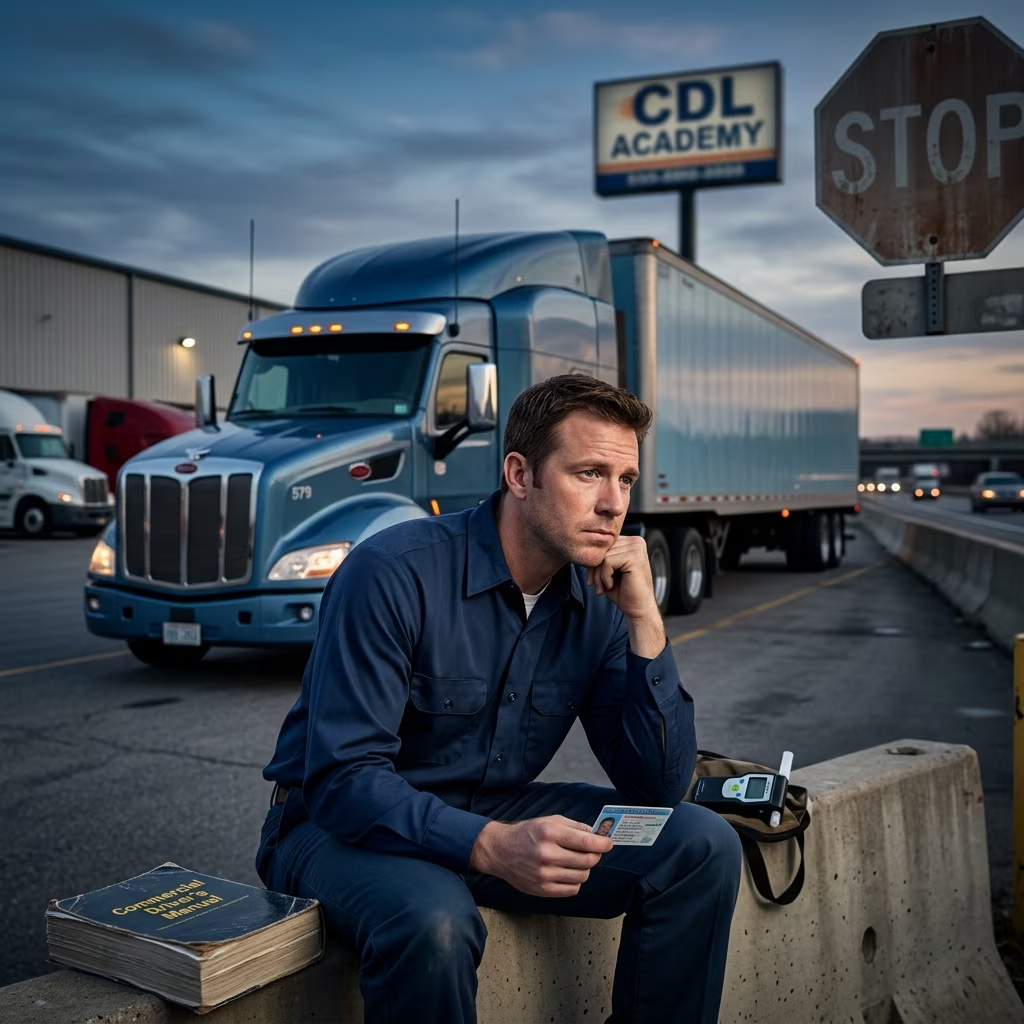
A conviction for driving under the influence (DUI) can change the course of a commercial driver’s career. While a single DUI does not always end the possibility of holding a commercial driver’s license (CDL), federal and state rules impose stricter standards, longer suspensions, and more complex reinstatement procedures than for ordinary drivers.
This guide explains how a DUI affects both current CDL holders and people who hope to become commercial drivers, and outlines practical steps for evaluating your options and planning a path forward.
Core Question: Can You Hold a CDL With a DUI on Your Record?
In many situations, you can obtain or regain a CDL after a DUI, but your eligibility depends on:
- Whether the DUI was a first or subsequent offense
- When the DUI occurred and whether suspensions are still in effect
- Whether the DUI involved a commercial vehicle or your personal vehicle
- Whether hazardous materials were involved
- Your state’s specific CDL disqualification and reinstatement rules
For most drivers, a first DUI leads to a mandatory CDL disqualification period, often at least one year, after which reinstatement may be possible. A second DUI frequently triggers a lifetime disqualification, although some states provide limited opportunities for reinstatement after a long waiting period and completion of treatment programs.
Why DUI Rules Are Stricter for Commercial Drivers
Commercial drivers operate large, heavy vehicles and may transport passengers or hazardous materials. Because crashes involving commercial motor vehicles (CMVs) can be catastrophic, federal law and state statutes impose stricter alcohol limits and harsher penalties for impaired driving in a CMV.
Federal BAC Standard for CMV Drivers
The Federal Motor Carrier Safety Administration (FMCSA) sets the legal blood alcohol concentration (BAC) limit for commercial drivers at 0.04% while operating a commercial vehicle, which is half the typical legal limit of 0.08% for non-commercial drivers.
- Non-commercial drivers: Most states use 0.08% BAC as the threshold for a standard DUI.
- Commercial drivers in a CMV: A BAC of 0.04% or higher is sufficient for a commercial DUI.
- Measurable alcohol in some states: Certain states, such as South Dakota, prohibit operating a CMV with any detectable amount of alcohol and impose out-of-service orders or disqualification for BAC at or above 0.04%.
Because the BAC threshold is lower, even modest alcohol consumption can endanger a commercial driver’s license.
How a DUI Impacts an Existing CDL
When a CDL holder is arrested or convicted for DUI, administrative and criminal processes typically occur in parallel. The administrative side, usually handled by the state’s motor vehicle agency or DMV, can disqualify the CDL based on federal and state rules independent of the criminal court’s judgment.
Typical Disqualification Periods
| Scenario | Common Consequence |
|---|---|
| First DUI (commercial or non-commercial vehicle) | At least 1-year CDL disqualification |
| First DUI while transporting hazardous materials | Often a 3-year disqualification |
| Second DUI conviction | Commonly a lifetime disqualification from operating CMVs |
These periods reflect minimum standards found in many states; individual statutes and regulations can be more severe.
Impact on Non-Commercial Driving Privileges
Disqualification from commercial driving does not always mean your personal driver’s license is suspended for the same period. Some states allow you to keep or reinstate a non-commercial license while your CDL remains disqualified.
For example, Nebraska’s DMV explains that during a CDL disqualification, residents may be able to obtain a standard Class O (operator) or Class M (motorcycle) license if their non-commercial driving privileges otherwise remain valid. However, no “limited CDL” is available just to drive to and from work; you are barred from operating CMVs until CDL privileges are reinstated.
Applying for a CDL When You Already Have a DUI
Individuals who have never held a CDL but have a DUI on their personal driving record face additional scrutiny when applying for commercial privileges. States must obtain complete driving histories from prior licensing jurisdictions, and DUI convictions will appear on those records.
Basic Eligibility Considerations
Where state law permits, you may be able to apply for a CDL with a prior DUI if you meet all of the following:
- Your current non-commercial driver’s license is valid (no active suspension or revocation).
- Any mandatory waiting period after the DUI has passed (commonly at least one year for a DUI affecting CDL eligibility).
- All fines, fees, and court-ordered requirements (such as DUI school or treatment) are completed.
- You satisfy age, residency, and testing requirements for a commercial learner’s permit and CDL.
Even if you meet legal requirements, employers may still be reluctant to hire drivers with recent drunk driving convictions, especially for positions involving hazardous materials or passenger transport.
DUI in a Personal Vehicle vs. Commercial Vehicle
One common misconception is that a DUI in a personal car does not affect a commercial license. In reality, federal rules and most state laws treat any DUI conviction as grounds for CDL disqualification, regardless of whether you were driving a CMV or a private vehicle at the time.
Key Differences
- DUI in a personal vehicle: Typically triggers CDL disqualification for at least one year upon conviction, even though the offense occurred outside a commercial vehicle.
- DUI in a CMV: Leads to the same or stricter disqualification periods and may involve a lower BAC threshold of 0.04%.
- DUI with hazardous materials: Commonly results in longer disqualification (such as three years for a first offense).
From a licensing perspective, simply holding a CDL subjects you to elevated consequences when any impaired-driving conviction appears in your record.
Expungement, Record Sealing, and CDL Eligibility
Some states offer expungement or record-sealing procedures that can remove or limit public access to certain criminal convictions, including a DUI. However, the effect of expungement on CDL eligibility is limited.
- Expungement may allow you to say you do not have a criminal conviction for many employment purposes.
- Administrative driving records, maintained by DMVs, often continue to show the DUI as a licensing-related offense.
- Because CDL qualification depends on the driving record, the DUI can still affect your commercial driving eligibility even after criminal expungement.
- Federal rules require states to request and review an applicant’s complete driving record from all licensing jurisdictions.
In practice, you must be prepared to disclose DUI convictions honestly on CDL applications and employment forms, even if the criminal case was later expunged.
Steps to Regain a CDL After a First-Time DUI
If you lost your CDL due to a first DUI, reinstatement is often possible after meeting specific requirements. While procedures vary by state, common steps include:
- Wait out the full disqualification period
Most states require at least a one-year suspension for a first DUI affecting CDL privileges. - Complete court-ordered obligations
This may include payment of fines, probation requirements, and completion of alcohol education or treatment programs. - Resolve non-commercial license issues
If your standard driver’s license is suspended, you must reinstate it before seeking CDL reinstatement. - File an application with the DMV
Most states require a formal reinstatement request and proof that all obligations are satisfied. - Pay reinstatement fees
Fees may apply to both the non-commercial license and the CDL. - Retake knowledge and skills tests
Some states require drivers to obtain a commercial learner’s permit and then pass written and road tests again. - Undergo evaluation or treatment
Substance abuse assessments or treatment programs may be mandated as a condition of reinstatement.
Because these requirements can be complex and time-sensitive, consulting a lawyer familiar with commercial driving regulations may be useful when planning for reinstatement.
Multiple DUIs: Lifetime Disqualification and Limited Second Chances
In contrast to first-time offenses, repeat DUI convictions are treated severely in the commercial driving context. Many states impose lifetime disqualification from operating CMVs after a second DUI or certain other serious violations.
However, some jurisdictions provide narrow opportunities for reinstatement after a long period and completion of intensive alcohol treatment. For instance, sources note that in some states, a driver disqualified for life may be eligible to reapply for commercial privileges after 10 or more years, often only if they complete approved alcohol programs.
These exceptions are rare, and eligibility depends entirely on the specific law of the state where you are licensed. Drivers with multiple DUIs should not assume reinstatement will be possible.
Employment Challenges After a DUI
Regaining a CDL is only part of the challenge. A DUI on your record can significantly limit job opportunities:
- Employers may exclude applicants with any DUI in the last several years.
- Insurance carriers sometimes refuse to cover drivers with impaired-driving histories.
- Passenger or hazardous-material routes often have stricter hiring standards.
- Companies that hire drivers with prior DUIs may require proof of treatment, ongoing monitoring, or longer probationary periods.
For some individuals, a history of drunk driving may make long-term employment in commercial trucking or bus driving very difficult, especially after multiple offenses.
Practical Strategies If You Have a DUI and Want a CDL
While the law sets hard limits, you can take specific steps to improve your chances of qualifying for a CDL and securing employment:
- Maintain a clean record after the DUI
A long period with no further violations, including avoiding speeding and distracted driving, can demonstrate improved responsibility. - Complete recommended treatment voluntarily
Finishing alcohol education or counseling beyond court requirements may reassure licensing authorities and employers. - Gather documentation
Keep records showing completion of programs, fee payments, and any certificates from treatment providers or driving schools. - Be honest with prospective employers
Most commercial carriers perform background checks; failing to disclose a DUI can be more damaging than the conviction itself. - Consult legal counsel
A lawyer familiar with CDL and DUI law can help you understand local rules and any available relief options.
Frequently Asked Questions About CDL and DUI
1. Is it possible to get a CDL after a DUI?
Yes, many states allow drivers to obtain or reinstate a CDL after a first DUI, if the disqualification period has ended and all court and DMV requirements are satisfied. A second DUI often leads to lifetime disqualification.
2. Does a DUI from years ago still matter?
Yes. Older DUI convictions often remain on your driving record, which states must review when you apply for a CDL. The age of the conviction may reduce its impact on employment decisions, but licensing authorities still consider it in eligibility determinations.
3. What BAC level can get a commercial driver a DUI?
In a commercial vehicle, the federal standard is 0.04% BAC or greater for a commercial DUI. Some states also impose penalties for any detectable amount of alcohol in a CMV driver’s system.
4. Does expunging my DUI erase it for CDL purposes?
Not completely. Even if the criminal record is expunged, DMV driving records typically retain the DUI as an administrative offense, which can still affect CDL eligibility and must be disclosed in CDL applications.
5. Are CDL holders treated differently than regular drivers after a DUI?
Yes. Commercial drivers face stricter BAC thresholds, longer suspensions, and more severe consequences—including potential lifetime disqualification—because they operate larger vehicles and may carry passengers or hazardous materials.
References
- Can You Get a Commercial Driver’s License With a DUI Record? — FindLaw. 2024-03-18. https://www.findlaw.com/dui/cases/can-you-get-a-commercial-drivers-license-with-a-dui-record.html
- How Will a DUI Affect My Commercial Driver’s License? — LawInfo. 2023-06-01. https://www.lawinfo.com/resources/dui/dui-legal-impact-on-commercial-driving-licenses.html
- How Will a DUI Impact My Commercial Driver’s License? — Super Lawyers. 2022-11-10. https://www.superlawyers.com/resources/dui-dwi/dui-life-impacts-and-other-areas/how-will-a-dui-impact-my-commercial-drivers-license/
- Commercial Drivers License Disqualification — Nebraska Department of Motor Vehicles. 2023-04-05. https://dmv.nebraska.gov/fr/commercial-drivers-license-disqualification
- States – Commercial Driver’s License — Federal Motor Carrier Safety Administration. 2023-01-12. https://www.fmcsa.dot.gov/registration/commercial-drivers-license/states
- Codified Law 32-12A (Commercial Licensing and Alcohol Offenses) — South Dakota Legislature. 2021-07-01. https://sdlegislature.gov/Statutes/32-12A
- Commercial Driver’s License Resources — National District Attorneys Association. 2022-06-15. https://www.ndaa.org/commercial-drivers-license-resources