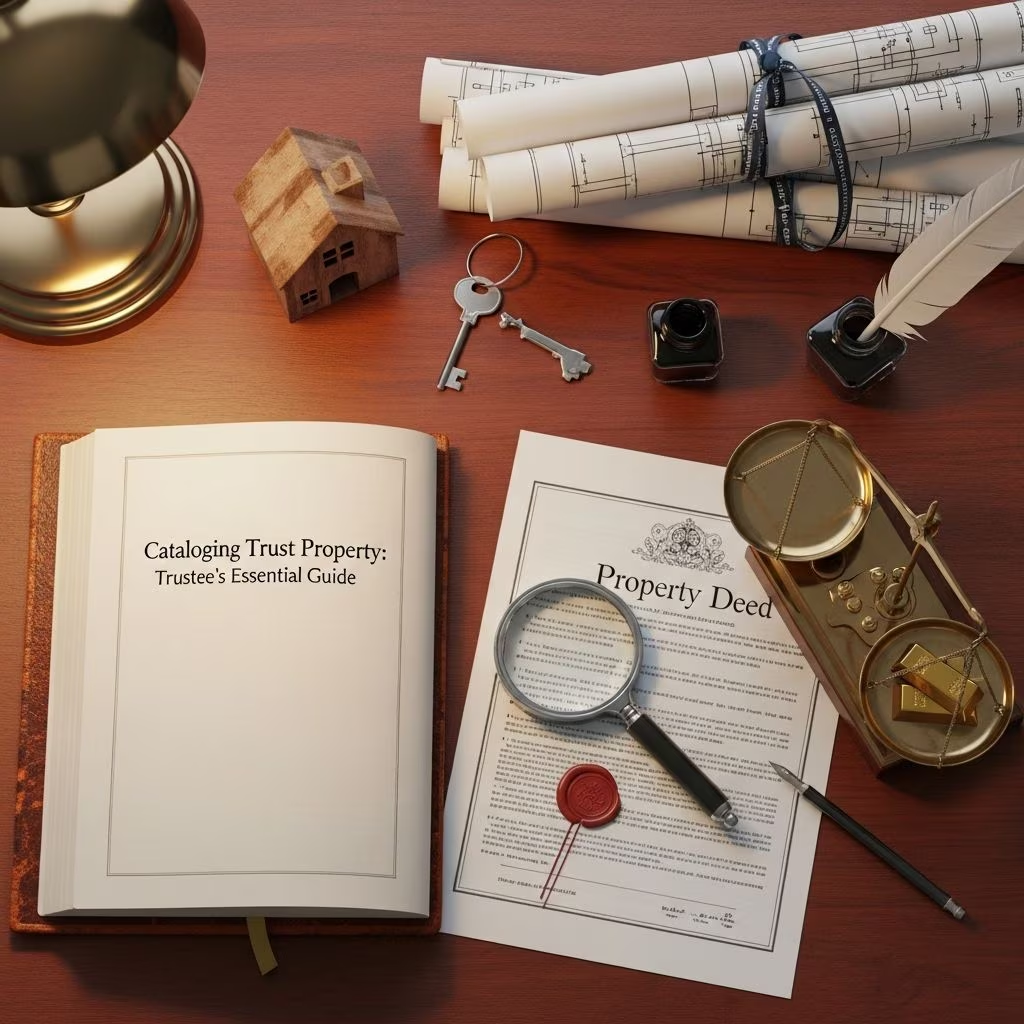
Assuming the role of trustee for a revocable living trust demands immediate action to identify and secure all assets intended for the trust. This initial cataloging phase establishes the foundation for efficient administration, tax compliance, and fair distribution to beneficiaries. Without a precise record, trustees risk mismanaging property, facing legal challenges, or delaying payouts.
Understanding Your Role in Asset Management
As trustee, your authority is strictly limited to assets legally transferred into the trust prior to the settlor’s passing. This distinction is critical because only funded trust property falls under your control, distinguishing it from probate estate items. Begin by grasping the trust instrument’s scope, which outlines the settlor’s intentions and lists potential holdings via attached schedules.
Trustees must exercise fiduciary diligence, acting prudently to protect and value these assets accurately. This involves not just listing items but confirming ownership through legal documentation, a step that prevents disputes and supports transparent reporting to beneficiaries. In states like California, trustees often compile formal inventories to meet probate code requirements, ensuring all stakeholders receive clear accountings.
Locating the Trust Document and Initial Schedules
The trust instrument serves as your primary roadmap. Often titled something like ‘John Doe Revocable Living Trust,’ it typically concludes with a ‘Schedule A’ or property exhibit enumerating assets such as real estate, accounts, and vehicles. Review this meticulously to form a preliminary asset roster.
However, inclusion on a schedule does not confirm transfer. Trustees must hunt for title-changing documents: deeds for homes, account retitling forms for banks, or stock certificates reassigned to the trust. For instance, brokerage statements should reflect phrasing like ‘Trustee Name, Trust Name UTD [date],’ where UTD denotes ‘under trust dated’.
- Scan safe deposit boxes, file cabinets, and attorney safes for originals.
- Contact prior advisors or financial institutions mentioned in the document.
- Consult the settlor’s will for pour-over provisions directing probate assets into the trust.
Verifying Ownership Across Asset Categories
Different property types require specific proofs of trust ownership. Real estate demands recorded deeds naming the trustee; absent this, the property may necessitate court intervention for transfer. Financial accounts hinge on registration statements, while vehicles need state-issued titles listing the trust.
| Asset Type | Verification Document | Common Indicators |
|---|---|---|
| Real Estate | Recorded Deed | Trustee as grantee; legal description matches schedule |
| Bank/Brokerage Accounts | Recent Statements | ‘Trustee, Trust UTD date’ titling |
| Vehicles | DMV Title | Trustee/Trust named owner |
| Stocks/Bonds | Certificates or Statements | Reissued in trust name |
| Personal Property | Schedule or Assignment | Listed; some states require separate memo |
Personal items like furniture or jewelry often lack formal titles, relying on schedule listings. Note that jurisdictions like New York mandate an explicit ‘assignment of property’ document. Business interests, IRAs, or life insurance may involve beneficiary designations pointing to the trust, requiring coordination with custodians.
Addressing Unfunded or Overlooked Assets
Not all scheduled assets reach the trust. Trustees encounter ‘unfunded’ property through oversight or procrastination. Pour-over wills capture these via probate, where the executor transfers them post-probate. In California, a Heggstad petition allows probate courts to deem high-value unfunded assets as trust-held if intent is proven, though this demands legal counsel.
Proactive trustees notify institutions of the settlor’s death, requesting retitling where possible. Document every outreach and response to build an audit trail, safeguarding against beneficiary claims of concealment.
Appraising Assets for Accurate Valuation
Beyond identification, trustees must assign fair market values as of the settlor’s death date. This informs tax filings, creditor claims, and distributions. Simple assets like bank accounts use balance statements, but complex ones—real estate, collectibles, businesses—warrant professional appraisers.
California trustees often secure court-appointed or neutral appraisers for probate-like precision. Compile inventories with descriptions: property addresses, account numbers, VINs for vehicles, aiding appraisers. Values drive statutory fees in probate contexts and ensure equitable beneficiary shares.
Maintaining Detailed Records and Notifications
Every inventory step merits documentation. Create a master spreadsheet tracking assets, values, locations, and supporting docs. Notify beneficiaries promptly of your findings, fulfilling ‘reasonable information’ duties under probate codes.
Periodic accountings—annual or upon request—detail holdings, transactions, and gains/losses, fostering trust and preempting litigation. Digital tools or administration software streamline this, but paper trails remain essential for court scrutiny.
Common Challenges and Solutions
Trustees face hurdles like missing titles, disputed ownership, or inaccessible foreign accounts. Solutions include:
- Hiring trust attorneys for petitions or negotiations.
- Using probate referee services for valuations.
- Conducting diligent searches via public records or skip-tracing for hidden assets.
Time pressures loom; California mandates creditor notices within months, underscoring swift inventory completion.
Frequently Asked Questions
What if an asset is listed but not titled to the trust?
Verify intent via schedules or will; pursue probate transfer or state-specific petitions like California’s Heggstad. Consult an attorney for valuable items.
Do I need appraisals for all assets?
Not always—cash values are straightforward—but real property, art, or businesses typically require certified appraisers for tax and fairness.
How soon must I notify beneficiaries of the inventory?
Provide reasonable updates; statutes often require formal notices within 60 days of trust activation, with accountings yearly.
What about jointly owned or beneficiary-designated assets?
These bypass the trust unless titled accordingly; review survivorship rights or designations separately.
Can I distribute before full inventory?
No—complete cataloging, pay debts/taxes first, then allocate per trust terms after accountings.
Streamlining with Professional Help
Inherited trusts vary in complexity; professionals—attorneys, accountants, appraisers—alleviate burdens. They navigate state nuances, like California’s probate code, ensuring compliance. Early engagement prevents errors compounding into costly disputes.
Ultimately, meticulous cataloging honors the settlor’s legacy, securing beneficiaries’ futures while upholding your fiduciary mantle. Trustees who methodically verify, value, and record assets position the trust for seamless resolution.
References
- Steps in Trust Administration: Ensuring Proper Distribution of Assets — BTrust Law. 2023-05-15. https://btrustlaw.com/blog/steps-in-trust-administration-ensuring-proper-distribution-of-assets/
- Taking Inventory of Trust Assets — Nolo. 2024-02-10. https://www.nolo.com/legal-encyclopedia/taking-inventory-trust-assets.html
- How Do I Handle Trust Assets Properly in California? — Estate and Trust Lawyer. 2023-11-20. https://www.estateandtrustlawyer.com/how-do-i-handle-trust-assets-properly-in-california/
- Trust Administration Checklist and Guide — Keystone Law Group. 2024-01-05. https://keystone-law.com/trust-administration-checklist-and-guide
- How to Prepare Inventory for Probate — Trust & Will. 2023-08-12. https://trustandwill.com/learn/probate-inventory
- Trust Administration In California — Antonyan Miranda LLP. 2024-03-18. https://antonyanmiranda.com/trust-administration-in-california/