
Secure Your Feline Friend: The Essential Cat Bill of Sale
Learn how a cat bill of sale protects buyers and sellers, ensures legal ownership transfer, and safeguards your pet's future.
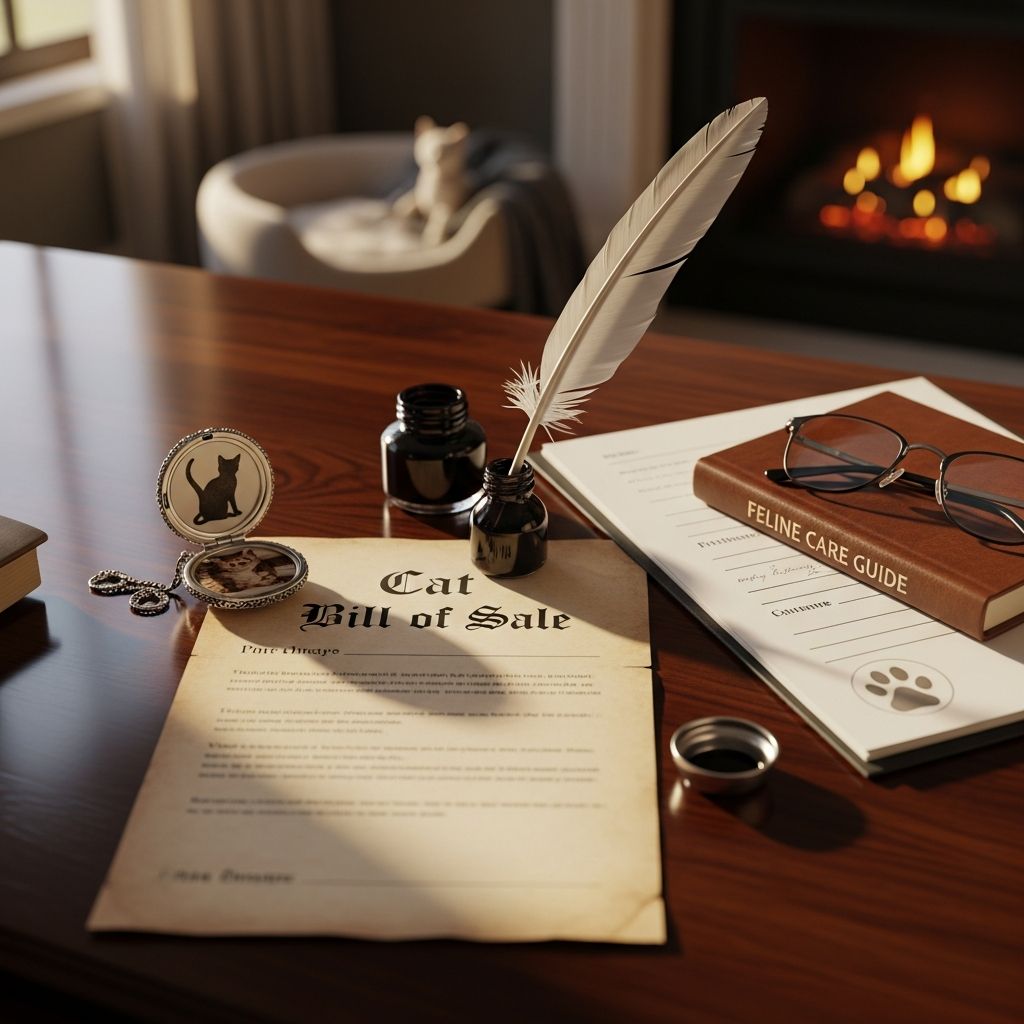
Transferring ownership of a cat or kitten requires more than a handshake agreement. A properly drafted cat bill of sale acts as a legal safeguard, documenting the transaction and clarifying rights for both parties. This comprehensive guide explores its purpose, components, and creation process to ensure smooth, dispute-free pet sales.
Understanding the Role of a Cat Bill of Sale in Pet Transactions
A cat bill of sale serves as a formal receipt proving the exchange of ownership from seller to buyer. It details the cat’s description, sale price, and terms, making it indispensable for private sales, breeding operations, or rehoming scenarios. Unlike verbal agreements, this document provides tangible evidence that can resolve disputes over payment, health disclosures, or ownership claims.
In scenarios involving kittens from breeders, the form is particularly crucial. It can specify future transfer dates if the kitten is too young to leave its mother, typically under 8-12 weeks, protecting sellers from premature demands while assuring buyers of their investment.
Key Benefits for Sellers and Buyers
For sellers, the bill of sale minimizes liability by outlining disclosures about the cat’s health and history. Buyers gain proof of purchase, essential for registering pedigreed cats or microchipping. Both parties benefit from reduced fraud risks, as the signed document records identities, payment, and conditions.
- Proof of Ownership: Establishes legal transfer, vital for veterinary records or disputes.
- Health Transparency: Requires seller warranties on the cat’s condition at sale.
- Financial Record: Documents purchase price, deposits, or payment plans.
- Custom Terms: Allows clauses like return rights or spay/neuter requirements.
Even in gift situations or low-cost rehoming, including this form prevents misunderstandings, especially if the cat has registration papers.
Essential Elements to Include in Every Cat Bill of Sale
A robust cat bill of sale must capture specific details to be enforceable. Omitting key information can weaken its legal standing. Here’s a breakdown of must-have components:
| Element | Description | Purpose |
|---|---|---|
| Date of Sale | Exact date of transaction | Timestamps the agreement for legal reference |
| Seller and Buyer Details | Full names, addresses, contacts | Identifies parties clearly |
| Cat Description | Breed, age, sex, color, weight, DOB | Precisely identifies the animal |
| Pedigree Info | Sire/dam names, registration numbers | Supports purebred value and authenticity |
| Purchase Price | Total amount, deposits, payment method | Records financial exchange |
| Health Disclosures | Vaccinations, spay/neuter status, conditions | Protects buyer from hidden issues |
| Signatures | Seller, buyer, witnesses | Makes document binding |
Additional clauses can enhance protection, such as a health guarantee allowing veterinary checks within days of sale or a ‘first right of refusal’ for breeders if the buyer can’t keep the cat.
Step-by-Step Guide to Creating and Using a Cat Bill of Sale
Drafting a cat bill of sale is straightforward with preparation. Follow these steps for a professional document:
- Research Local Pricing: Compare similar cats in your area based on breed, age, and health to set a fair price.
- Document Cat Details: Compile breed, age, sex, color, microchip/registration numbers, and medical history. Include photos if possible.
- Screen Potential Buyers: Ask about their home, experience with cats, and other pets to ensure a good fit.
- Negotiate Terms: Agree on price, payment, and any contingencies like future spaying.
- Fill the Form: Use a template to input all info, then have both parties sign. Notarize for high-value purebreds.
- Transfer Possession: Hand over the cat only after full payment and signed document.
- Keep Copies: Provide copies to both parties and retain one for records.
For breeders, include litter details or guarantees against genetic defects observable within a set period.
Legal Considerations and State-Specific Regulations
While not always legally mandated for private sales, a cat bill of sale strengthens any transaction. Some states regulate pet sales more stringently, especially for breeders. For instance, Illinois law requires pet stores to microchip cats before sale and provide USDA breeder inspection reports, indirectly influencing private sales by setting transparency standards.
Check local laws via state agriculture departments; some mandate health certificates or disclosures for commercial sellers. In all cases, the bill of sale should specify governing law, often the seller’s state.
Warranties vary: ‘As-is’ sales disclaim health guarantees, while others offer vet exam periods. Clearly state these to avoid liability.
Common Pitfalls to Avoid in Cat Sales
Many transactions falter due to oversights. Steer clear of these errors:
- Vague descriptions leading to ‘wrong cat’ disputes.
- No health vetting, resulting in post-sale illness claims.
- Verbal payment promises without records.
- Ignoring age restrictions for weaning kittens.
- Failing to transfer registrations for pedigreed cats.
Always disclose known issues upfront to build trust and comply ethically.
Advanced Clauses for Breeders and Purebred Sales
Breeders of show-quality or rare breeds should incorporate protective terms:
- Spay/Neuter Mandate: Require alteration for non-breeding cats to preserve bloodlines.
- Health Guarantee: Refund or replacement if congenital issues appear within 1-2 years.
- Return Policy: Buyer must offer cat back to seller first.
- Breach Penalties: Liquidated damages for contract violations.
These clauses, when mutual, foster long-term relationships in the breeding community.
Alternatives to Traditional Bills of Sale
Adoption contracts from rescues often mirror bills of sale but emphasize welfare over commerce. They include no-sale clauses and care standards. For informal rehoming, a simple notarized letter suffices, but a full form is preferable for any monetary exchange.
Frequently Asked Questions About Cat Bills of Sale
Is a cat bill of sale legally required?
No, for most private sales, but it’s highly recommended for proof of ownership and dispute prevention.
Should I notarize the document?
Yes, for valuable purebreds or legal foreseeability; it adds authenticity.
What if the kitten is not yet weaned?
Specify a future transfer date and hold deposits securely.
Can I include a warranty?
Absolutely; define vet exam periods and remedies clearly.
How do I handle payments?
Document full amount, method, and receipt; use secure transfers for large sums.
References
- Free Cat/Kitten Bill of Sale Form – PDF | Word — eForms. 2023. https://eforms.com/bill-of-sale/cat/
- Free Cat/Kitten Bill of Sale Form | PDF & Word — Legal Templates. 2023. https://legaltemplates.net/form/bill-of-sale/cat/
- CAT BILL OF SALE — Justia Forms. 2023. https://formfiles.justia.com/pdf/legal-forms/0750/64.pdf
- Illinois Passes Law Transforming How Cats and Dogs are Sold — Alley Cat Allies. 2023. https://www.alleycat.org/illinois-passes-law-transforming-how-cats-and-dogs-are-sold/
- Free Cat/Kitten Bill of Sale Form | PDF | Word — eSign. 2023. https://esign.com/bill-of-sale/cat/
- How to Read, Write and Understand Animal Sales Contracts — Elysian Bengals. 2023. https://www.elysianbengals.com/post/don-t-skip-and-submit-how-to-read-write-and-understand-animal-sales-contracts
Similar Articles








Read full bio of Sneha Tete


