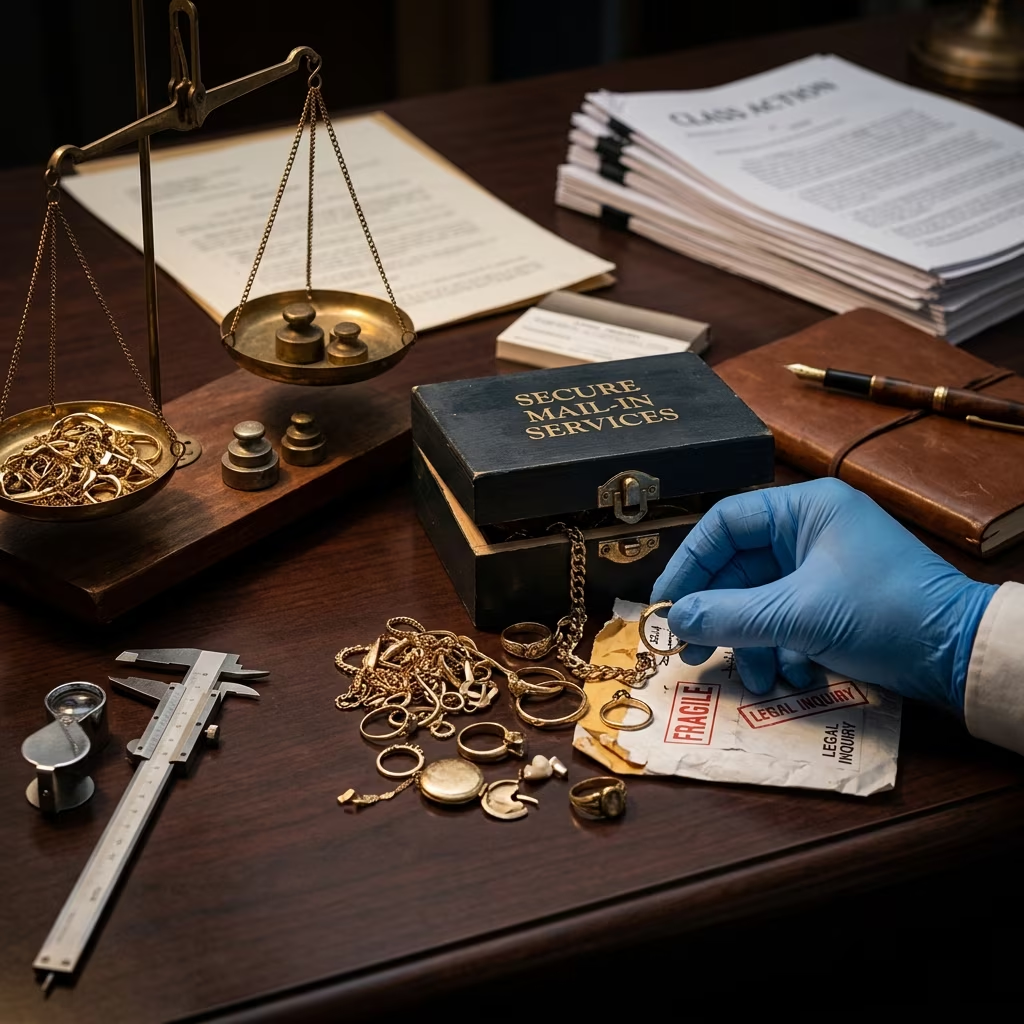
Mail-in gold services promised quick cash for unwanted jewelry, but the Cash4Gold class-action lawsuit raised serious questions about how some companies treated their customers. Understanding what happened in that case, and how mail-in gold offers can go wrong, is essential for anyone thinking of turning gold into cash.
From Super Bowl Fame to Courtroom Scrutiny
Cash4Gold grew rapidly in the late 2000s as a prominent mail-in gold buyer, famously advertising during the Super Bowl and in late-night infomercials. The company’s business model was simple: consumers mailed in gold, silver, or platinum jewelry, and Cash4Gold sent back payment based on the items’ melt value. The convenience and aggressive marketing made the brand a household name in the gold-buying industry.
However, as the housing crisis and economic downturn pushed more people to sell valuables, complaints began to surface. Consumers alleged that the company paid far less than the value of their items, misrepresented what had been received, and made it difficult to contest low offers. These concerns eventually culminated in a class-action lawsuit filed in U.S. federal court.
What the Class-Action Lawsuit Alleged
The class-action complaint against Cash4Gold’s parent company, Green Bullion Financial Services LLC, was filed in the Central District of California in October 2009. The suit was brought on behalf of former customers and sought to represent all individuals who had allegedly been harmed by the company’s practices over a defined period.
According to court filings and coverage by trade press and news outlets, the plaintiffs claimed that Cash4Gold engaged in several forms of deceptive conduct:
- Underpayment for mailed-in gold: Customers alleged they received checks representing a fraction of what their gold was worth based on prevailing gold prices.
- Misrepresentation of items received: In some cases, Cash4Gold’s internal records showed fewer or lower-quality items than customers said they had sent.
- Opaque and unfair dispute process: The complaint argued that it was difficult for consumers to challenge valuations, reject offers, or retrieve their jewelry in its original form once mailed.
In one widely reported example, a customer claimed to have mailed more than a dozen gold pieces appraised around $200 but received a check for only a few cents, while company documents indicated only a single earring was present in the package. Allegations like these supported broader claims that the firm’s practices were systematically unfair to senders.
How Mail-In Gold Services Typically Operate
To understand why consumers were vulnerable, it helps to examine how mail-in gold programs generally work. Though details vary by company, the basic steps are similar:
- You request a prepaid mailing kit or shipping label from the buyer.
- You send your jewelry and other precious-metal items through the mail.
- The company receives the items, weighs them, and tests their purity.
- You are issued a payment, often by check or direct deposit, based on an internal formula.
- In some programs, you may have a brief window to reject the offer and ask for items to be returned.
At every step, the company controls the process: transport, appraisal, pricing, and the timeline for objections. The sender, by contrast, loses direct physical control of the goods and must rely on the buyer’s representations. When transparency is limited and communication is poor, the opportunity for misunderstanding or abuse increases.
Why Mail-In Gold Deals Can Become Risky
Mail-in gold services are not inherently fraudulent; reputable buyers exist and some consumers have positive experiences. However, several structural risks make these arrangements more fragile than in-person transactions.
Information Asymmetry and Pricing
Most consumers do not know the weight and purity of their jewelry or how to calculate melt value. That imbalance of knowledge can be exploited if a buyer provides little detail about how an offer was determined. Reports around Cash4Gold noted that while the company claimed to pay 20–80% of melt value, independent assessments suggested that payments below 20% were common.
If a seller cannot verify weight, karat, or current market prices, it is easy for a low offer to appear reasonable even when it is far below what a more transparent buyer might pay.
Loss of Control Once Items Are Shipped
As soon as jewelry enters the mail system, control shifts to the buyer. Disputes about what was sent versus what was received can be difficult to resolve, especially if the company’s internal records conflict with the customer’s account. Insurance and tracking can mitigate this, but many promotional kits historically offered limited coverage, leaving senders exposed if items were lost or mishandled.
Limited Time to Object or Reverse a Transaction
Some programs give consumers a narrow window to reject a payment and request that goods be returned. If the seller does not respond quickly, cashing or depositing the check may be treated as acceptance of the offer. Complaints around Cash4Gold described short objection periods and a complicated path to recovering jewelry, reinforcing the impression that undervalued transactions were hard to undo.
Marketing that Targets Financial Vulnerability
Economic stresses can drive people to seek quick cash solutions. The U.S. Federal Trade Commission has warned that deceptive financial offers often target individuals experiencing hardship, making them more likely to accept unfavorable terms. When mail-in gold companies emphasize speed and simplicity over clear pricing and rights, vulnerable consumers may agree to deals they would reject under less pressure.
Typical Mail-In Gold Scams and Red Flags
Beyond the specific Cash4Gold allegations, consumer protection agencies and precious-metal refiners have described common patterns seen in problematic mail-in gold operations. Recognizing these red flags can help sellers protect themselves before sending items.
- Inflated preliminary estimates: Some buyers suggest high possible payouts in advertising, but actual offers are dramatically lower once items are processed.
- Vague or hidden fee structures: If shipping, handling, refining, or “service” fees are not clearly spelled out, they may substantially reduce your final payment.
- Pressure to accept quickly: Deadlines and warnings that offers will expire can discourage consumers from seeking independent appraisals.
- Poor documentation of items: Limited item descriptions and no photos make it harder to dispute claims about what was received or its condition.
- Difficulty retrieving jewelry: Complicated or slow return processes may effectively trap consumers in a bad deal.
Comparing Mail-In Gold Buyers and Local Options
People considering selling gold often choose between mail-in buyers, local jewelers, pawn shops, and dedicated gold refiners. Each option has advantages and trade-offs.
| Option | Pros | Cons |
|---|---|---|
| Mail-in gold buyer |
|
|
| Local jeweler or gold buyer |
|
|
| Pawn shop |
|
|
| Refiner or bullion dealer |
|
|
Protecting Yourself When Selling Gold
Consumer advocates recommend a number of practical steps to avoid being shortchanged when selling gold or jewelry. These measures apply whether you are considering a mail-in service or a local buyer.
Know the Basics of Gold Value
- Check current gold prices: Look up the spot price of gold per ounce or gram from a reputable financial source before you solicit offers.
- Understand karat ratings: Higher karat numbers indicate greater gold purity; 24 karat is pure gold, while 10–18 karat are common in jewelry.
- Estimate weight: If possible, weigh your items at home, excluding stones or non-metal parts, so you have a baseline.
Get Multiple Offers and Written Terms
- Compare at least two buyers: Identical items can receive very different offers; comparing helps you identify extreme underpayments.
- Insist on written explanations: Ask for a breakdown of weight, karat, and per-gram pricing so you can evaluate the math.
- Read fine print carefully: Pay close attention to return policies, insurance coverage, fees, and objection deadlines.
Use Secure Shipping and Documentation
- Photograph your items: Take clear photos of all jewelry, including any markings, before mailing them.
- Use insured and trackable shipping: Consider using a carrier and service that provide detailed tracking and adequate insurance coverage.
- Keep copies of all correspondence: Save emails, receipts, and any descriptive forms filled out for the package.
Know Your Rights as a Consumer
In the United States, deceptive practices related to advertising and sales can fall under federal and state consumer protection laws. The Federal Trade Commission enforces laws against unfair and deceptive acts and provides guidance on recognizing fraud. State attorneys general may also take action against companies that systematically mislead consumers, and private lawsuits—like the Cash4Gold case—can seek damages for affected individuals.
Consumers who suspect they have been defrauded should consider:
- Contacting the company with a written complaint and request for documentation.
- Filing a complaint with the FTC or relevant state agencies.
- Consulting an attorney, especially if significant value is involved or many consumers appear affected.
Frequently Asked Questions (FAQs)
Is every mail-in gold service a scam?
No. There are reputable mail-in gold buyers that communicate clearly, insure shipments, and pay competitive rates, and some have positive reviews over many years. Problems arise when companies obscure their pricing, limit dispute options, or make retrieval of items difficult.
How can I tell if an offer is fair?
Start by checking the current spot price of gold and estimating the intrinsic metal value of your items. Then compare this to the buyer’s offer, taking into account that buyers normally pay a percentage of melt value to cover refining and business costs. If the offer is drastically below this adjusted amount and the company cannot explain the calculation, it may be unfair.
What should I do if I receive a very low check?
Before cashing or depositing the check, review the terms of your agreement to see if accepting payment constitutes final consent. If you are still within the objection window, contact the company immediately in writing and request either a detailed accounting or return of your items. If the company is unresponsive or refuses, consider reporting the incident to consumer protection authorities and seeking legal advice.
Can I recover my jewelry after I mail it?
Policies vary. Some mail-in buyers allow you to reject an offer and have items returned, while others treat all shipments as final sales subject to their internal valuation. Always confirm return options in writing before sending anything, and keep copies of the terms.
What did the Cash4Gold case change for the industry?
The lawsuit and subsequent media attention brought greater scrutiny to mail-in gold operations, encouraging consumers to be more cautious and regulators to watch the sector more closely. While not eliminating risk, this scrutiny increased expectations for transparency, fair dealing, and clear documentation.
References
- Cash4Gold Faces Class-Action Lawsuit — Adweek. 2009-10-22. https://www.adweek.com/brand-marketing/cash4gold-faces-class-action-lawsuit-100661/
- Class Action Launched Against Cash4Gold — JCK Magazine. 2009-10-16. https://www.jckonline.com/magazine-article/class-action-launched-against-cash4gold/
- Cash4Gold — Cash4Gold article, general background via JCK and industry coverage. 2012. https://www.jckonline.com/magazine-article/class-action-launched-against-cash4gold/
- Cash4Gold — Sellyourgold.com (industry overview). 2020-06-01. https://www.sellyourgold.com/cash4gold
- Cash4Gold lawsuit — WOOD-TV / YouTube report on customer allegations. 2010-01-12. https://www.youtube.com/watch?v=EHa_5ol2tic
- Don’t Fall Victim to “Cash for Gold” Scams — Mid-States Recycling and Refining. 2015-06-26. http://www.goldrefiners.com/blog/2015/6/26/dont-fall-victim-to-cash-for-gold-scams
- Federal Trade Commission Guidance on Gold and Precious Metals Offers — FTC Consumer Advice (general guidance on scams and unfair practices). 2023-05-10. https://www.consumer.ftc.gov/articles