
Car Hacking Risks: How Connected Vehicles Are Becoming Cyber Targets
Modern cars are computers on wheels, and that means hackers can target your vehicle’s systems, data, and even its controls if cybersecurity is ignored.
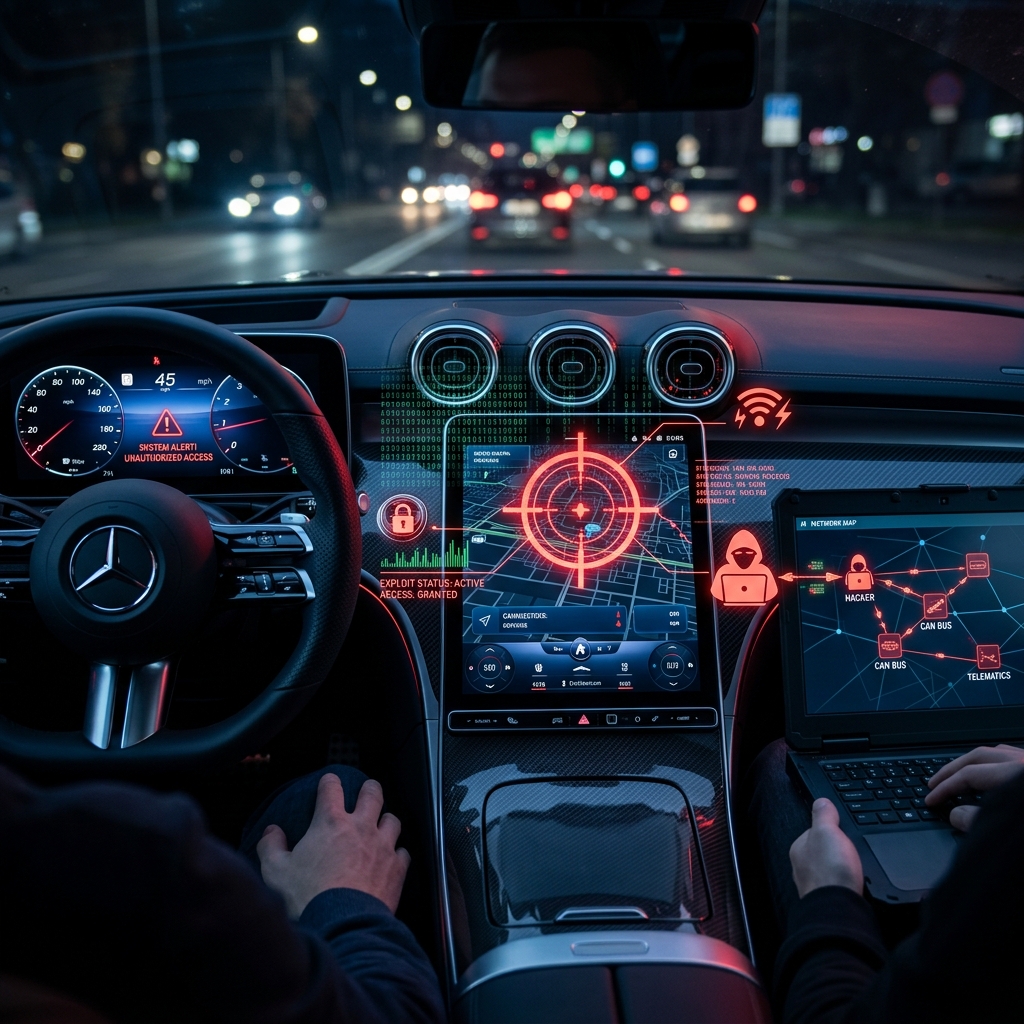
Modern vehicles now rely on software, wireless connections, and cloud services just as much as mechanical parts. That connectivity brings convenience, but it also opens the door for car hacking—the use of cyberattacks to gain unauthorized access to a vehicle’s systems, data, or controls.
This article explains how car hacking works, why it matters for everyday drivers, which systems are most at risk, and concrete steps you can take to reduce the chances of your vehicle becoming a target.
From Machines to Networks: Why Cars Are Now Hackable
For most of automotive history, cars were largely mechanical. Electrical systems existed, but they were isolated and simple. Today’s vehicles, by contrast, are connected digital platforms:
- Dozens of electronic control units (ECUs) manage engine performance, braking, steering assist, infotainment, and more.
- A high-speed internal network, often a CAN bus, allows those ECUs to communicate in real time.
- External connectivity—Bluetooth, Wi‑Fi, cellular, satellite radio, and telematics—links the car to phones, cloud services, and manufacturer backends.
According to automotive cybersecurity research, cyber incidents targeting vehicles have increased sharply over the past decade, with one analysis reporting a 225% rise in car-related cyberattacks between 2018 and 2021. As cars become more connected, they begin to resemble laptops or smartphones on wheels, and attackers adapt accordingly.
What Is Car Hacking?
Car hacking refers to exploiting weaknesses in a vehicle’s software, hardware, or communication systems to gain unauthorized control or access. This can range from relatively simple attacks, such as unlocking doors remotely, to complex operations affecting steering, braking, or engine behavior.
Car hacking can be grouped into several broad categories:
- Remote attacks: Carried out via wireless interfaces (cellular, Wi‑Fi, Bluetooth, satellite radio, or backend APIs).
- Proximity attacks: Require the attacker to be near the vehicle, often to exploit keyless entry or local wireless signals.
- Physical attacks: Involve direct access to the car’s ports (such as OBD‑II), cables, or components like the headlight module connecting to the CAN bus.
Not all attacks aim to take control of the vehicle on the road. Many focus on theft, fraud, or data harvesting—stealing the car, what is inside it, or sensitive information about the driver.
Key Cyber Threats Facing Connected Vehicles
Security agencies and researchers have identified a growing list of threats affecting modern vehicles as connectivity expands. The table below summarizes several notable risks.
| Threat Type | How It Works | Potential Impact |
|---|---|---|
| Keyless entry relay attacks | Attackers relay or amplify the key fob signal from inside a home to the car, tricking the car into believing the key is nearby. | Silent vehicle theft, unauthorized entry, loss of property. |
| Wireless network exploits | Vulnerabilities in Bluetooth, Wi‑Fi, cellular, or telematics interfaces allow remote access to in‑vehicle systems. | Access to controls, location tracking, data theft, malicious commands. |
| Backend and API attacks | Flaws in manufacturer cloud APIs or mobile apps enable attackers to access multiple vehicles’ data or control features. | Mass data exposure, remote start/unlock, tampering with settings at scale. |
| Headlight CAN injection | Thieves access the CAN bus through external components like headlights and send spoofed signals that mimic a legitimate key. | Bypassing key systems, starting and driving away with the car. |
| Malicious firmware or software updates | Compromised update channels or unauthorized devices push altered firmware to critical ECUs. | Persistent control over vehicle functions, hidden backdoors, safety hazards. |
| Ransomware on automotive systems | Attackers target backend systems, fleet management platforms, or dealer networks, encrypting data until a ransom is paid. | Operational disruption, inability to service vehicles, risk to consumers if updates or diagnostics are delayed. |
Common Attack Vectors: How Hackers Reach Your Car
Understanding how attackers typically approach a vehicle helps drivers make more informed security decisions. Research and government guidance highlight several recurring entry points.
1. Keyless Entry and Key Fob Systems
Keyless entry relay attacks have become one of the most prevalent real-world car hacking techniques globally. In these attacks, criminals use handheld devices to capture and boost the radio signal from a key fob inside a building. Another device near the vehicle relays that signal, causing the car to unlock and start as if the key were close by.
Because this method does not require breaking windows or triggering alarms, it is particularly attractive to organized theft groups.
2. Wireless Interfaces: Bluetooth, Wi‑Fi, and Cellular
Wireless features make driving more convenient: hands‑free calls via Bluetooth, in‑car Wi‑Fi hotspots, and cellular connections for navigation, entertainment, and remote control apps. Each of these creates a potential surface for attack.
- Weak Bluetooth pairing mechanisms can allow unauthorized connections.
- Poorly secured Wi‑Fi networks used by the vehicle can expose traffic or allow rogue access points.
- Cellular-based telematics modules, if not properly hardened, may be reachable from the broader internet.
In some research demonstrations, remote attackers have leveraged such vulnerabilities to send commands that affect steering or braking in specific models.
3. Mobile Apps and Cloud Services
Many manufacturers now provide companion apps that can locate a vehicle, lock or unlock doors, start the engine, or change climate settings. These apps interact with backend APIs and authentication systems. Security flaws in those components can be particularly dangerous because they allow remote, large-scale access.
Investigations into automotive APIs have uncovered cases where inadequate authentication or input validation exposed user data or enabled unauthorized commands across fleets of vehicles. Strong identity and access management on these platforms is crucial.
4. Physical Access: OBD Ports, USB, and CAN Bus
Physical attacks require the attacker to be close to the vehicle, but they can be highly effective, especially for theft:
- OBD‑II port misuse: The diagnostic port provides deep access to vehicle data and controls. Unauthorized devices can reprogram keys or ECUs if security controls are weak.
- Malicious USB devices: Plugging untrusted USB drives into the infotainment system can introduce malware or exploit software vulnerabilities.
- Headlight CAN injection: By tapping into wires leading to the headlight module, criminals may reach the internal network and send fake messages that imitate the vehicle’s key verification process.
Safety, Privacy, and Financial Impacts of Car Hacking
Car hacking is not just a technical curiosity. It carries real-world consequences for drivers, manufacturers, and public safety.
- Physical safety risks: In high-severity attacks, control over brakes, steering assist, or acceleration could be altered, risking collisions or loss of control.
- Vehicle theft and property loss: Keyless relay and CAN injection techniques enable quiet theft without physical damage, which can affect insurance costs and crime trends.
- Privacy breaches: Location history, driving behavior, contacts synced to infotainment systems, and payment data for subscription services may be exposed.
- Fraud and reputational damage: Manufacturers and service providers face legal and reputational consequences if widespread vulnerabilities affect customers.
How Manufacturers and Regulators Are Responding
Recognizing the growing threat, industry stakeholders and government agencies are developing frameworks and guidance to strengthen vehicle cybersecurity.
- The National Highway Traffic Safety Administration (NHTSA) emphasizes secure design, risk management, and rapid response to vulnerabilities in its vehicle cybersecurity guidance.
- NHTSA recommends that automotive organizations align with the NIST Cybersecurity Framework, focusing on identifying, protecting, detecting, responding to, and recovering from cyber incidents.
- Manufacturers are increasingly using encryption, secure boot mechanisms, over‑the‑air update authentication, and intrusion detection systems within vehicles.
While these efforts help, security remains an evolving challenge. New features and connectivity options introduce fresh attack surfaces, and adversaries constantly search for misconfigurations or overlooked weaknesses.
Practical Steps Drivers Can Take to Protect Their Vehicles
Not every driver can evaluate firmware or cryptography, but there are pragmatic actions individuals can take to lower their risk profile substantially.
1. Harden Your Key Fobs and Entry Habits
- Store key fobs in signal‑blocking pouches or metal containers at home to reduce relay attack risk.
- Avoid leaving keys close to doors or windows where signals are easier to capture.
- Disable passive keyless entry if your vehicle allows it and you do not need the feature daily.
2. Secure Vehicle Apps and Online Accounts
- Use strong, unique passwords for car-related apps and online portals, and enable multi‑factor authentication if available.
- Review app permissions and connected devices regularly, removing any you do not recognize.
- Keep mobile apps and phone operating systems updated to benefit from security patches.
3. Manage Wireless Features Thoughtfully
- Turn off Bluetooth, Wi‑Fi hotspots, and other wireless features when not in use, especially in high‑risk environments such as public parking lots.
- Connect only to trusted networks; avoid pairing the vehicle with unfamiliar devices or third‑party dongles without understanding their security posture.
- Review the owner’s manual to identify and disable wireless systems you do not need.
4. Treat Your Car Like a Connected Computer
- Apply software and firmware updates promptly; these often fix newly discovered vulnerabilities.
- Do not plug unknown USB drives or adapters into the car’s ports; use trusted cables and devices only.
- Consider physical security additions like steering wheel locks or OBD port covers to deter quick theft attempts.
5. Watch for Signs of Compromise
There is rarely a single definitive sign that a car has been hacked, but suspicious behavior should prompt attention.
- Unexpected activation or deactivation of vehicle features.
- Rapid battery drain without clear explanation.
- Strange notifications or log‑ins in the vehicle’s companion app.
- Unfamiliar devices listed in Bluetooth or Wi‑Fi connection histories.
If you notice unusual activity, seek professional help:
- Contact an authorized dealer or service department for diagnostics and share detailed observations.
- Inform the manufacturer’s support team, especially if you suspect a systemic issue.
- Consider reporting potential data theft or fraud to law enforcement when personal information or payments may be involved.
FAQs About Car Hacking and Vehicle Cybersecurity
Do all modern cars face the same level of hacking risk?
No. Vehicles that rely heavily on networked ECUs and external connectivity (such as telematics, apps, and Wi‑Fi) present more opportunities for attackers than older cars with minimal electronics. However, even relatively simple keyless entry systems can be vulnerable to relay attacks.
Can hackers really control steering or braking remotely?
Security researchers have demonstrated controlled experiments where remote attacks affected steering and braking functions in specific models by exploiting software flaws in internal communication systems. These proof-of-concept attacks are complex, but they show that such scenarios are technically possible under certain conditions.
Is turning off wireless features enough to stay safe?
Disabling unnecessary wireless features reduces the attack surface but does not eliminate all risk. Physical attacks, keyless entry relay methods, and vulnerabilities in mandatory connectivity (such as legally required emergency call systems) can still be exploited. Wireless hygiene should be part of a broader security approach.
How do I know if my car’s software is up to date?
Many vehicles now show update notifications on the dashboard or infotainment screen and may perform over‑the‑air updates automatically. If you are unsure, consult your owner’s manual or ask your dealer to check for pending firmware, security patches, or recalls during routine service.
What role does government regulation play in car cybersecurity?
Agencies such as NHTSA issue recommendations, conduct research, and encourage adoption of recognized cybersecurity frameworks in the automotive sector. While specific legal requirements vary by jurisdiction, these guidelines help push manufacturers toward more secure designs and more transparent vulnerability management.
References
- Vehicle Cybersecurity — National Highway Traffic Safety Administration (NHTSA). 2023-02-01. https://www.nhtsa.gov/research/vehicle-cybersecurity
- 2023’s Top Automotive Cyber Threats: Stay Ahead & Secure — LevelBlue. 2022-12-15. https://www.levelblue.com/blogs/levelblue-blog/the-top-8-cybersecurity-threats-facing-the-automotive-industry-heading-into-2023
- Car Hacking Is Real. Here’s How Manufacturers Can Combat It — Auth0. 2021-06-30. https://auth0.com/blog/car-hacking-and-cybersecurity-in-automotive-industry
- How to Protect Your Car from Hacking — Kaspersky Official Blog. 2025-01-10. https://www.kaspersky.com/blog/automotive-security-2025/54562/
- Is Your Car Hackable? Cybersecurity Risks Every Driver Should Know — Romano Security Consulting. 2024-05-01. https://www.romanosecurityconsulting.com/blog/the-cyber-security-threat-inside-cars
- Under the Hood: The Modern Reality of Car Hacking — SLNT. 2023-08-10. https://slnt.com/blogs/insights/under-the-hood-the-modern-reality-of-car-hacking
- Car Hacking—The Risks and Implications — Police Chief Magazine. 2016-01-01. https://www.policechiefmagazine.org/car-hackingthe-risks-and-implications/
Similar Articles








Read full bio of medha deb


