
Cannabis Vending Machines: Legal Status and Regulatory Framework
Understanding the complex legal landscape of automated cannabis retail across U.S. jurisdictions.
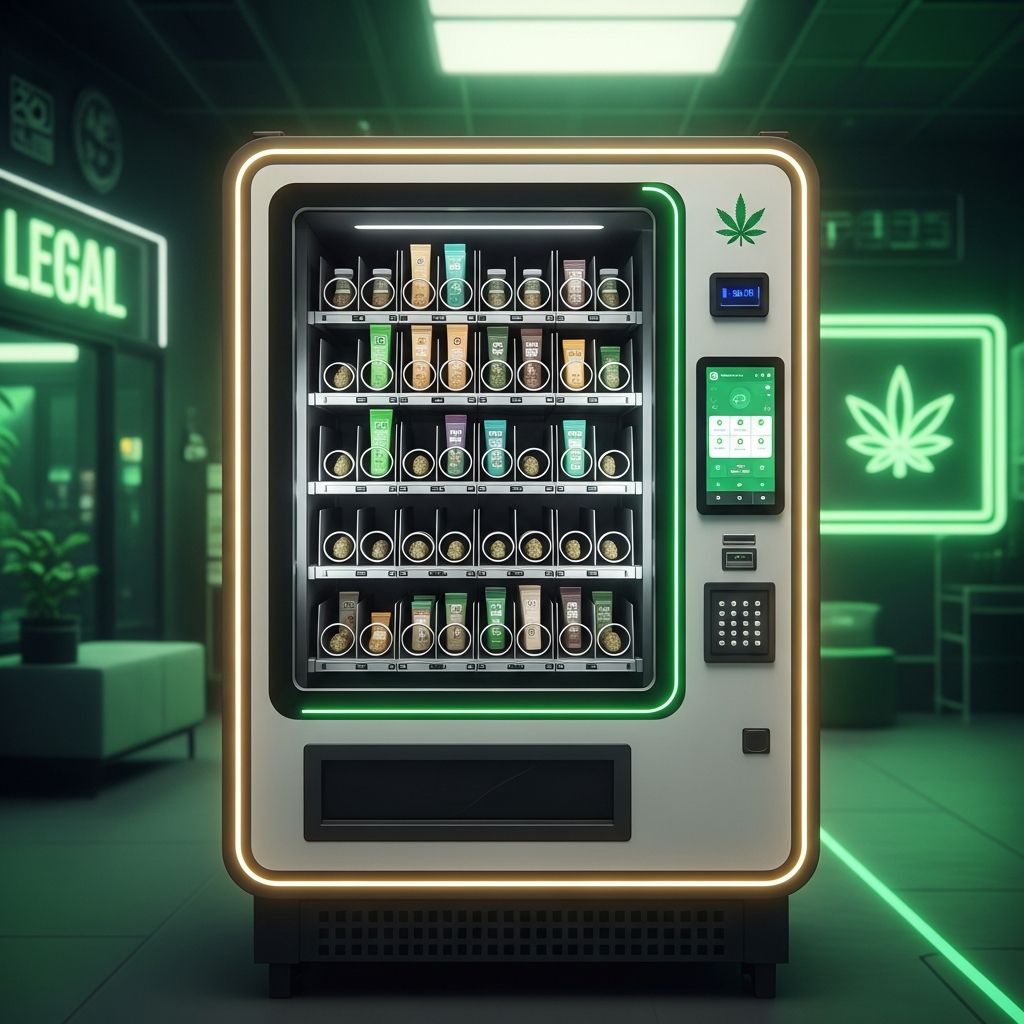
Automated Cannabis Distribution: The Modern Frontier of Retail Compliance
The emergence of cannabis vending machines represents one of the most innovative yet legally complex developments in the evolving cannabis industry. As more states legalize cannabis for recreational and medical purposes, entrepreneurs and businesses have begun exploring automated distribution methods to streamline sales, reduce staffing costs, and improve customer convenience. However, the legality of these machines varies dramatically across jurisdictions, creating a patchwork of regulations that business operators must navigate carefully. Unlike traditional retail operations with staff oversight, vending machines introduce unique challenges related to age verification, product security, regulatory compliance, and consumer protection. Understanding whether cannabis vending machines are legally permissible requires a detailed examination of state-specific laws, local ordinances, and the evolving regulatory landscape that continues to shape this emerging sector.
Which States Permit Cannabis Vending Machine Operations
The legal landscape for cannabis vending machines is highly restrictive, with only a limited number of states having explicitly authorized their use. Currently, five states have established legal frameworks allowing cannabis vending machine ownership and operation: California, Colorado, Florida, Massachusetts, and Oregon. These jurisdictions have developed specific licensing requirements and operational guidelines for businesses seeking to implement automated cannabis distribution systems. The restrictive nature of cannabis vending machine authorization reflects ongoing concerns among state regulators regarding product security, age verification accuracy, and consumer protection standards. Each permitting state has crafted its own regulatory requirements, meaning that operators cannot simply replicate a successful model from one jurisdiction to another without substantial legal and operational modifications.
States That Have Explicitly Banned Vending Machine Distribution
Conversely, several states have implemented specific statutory language designed to prevent cannabis vending machine businesses from operating within their borders. States such as Minnesota, Virginia, and Washington have enacted explicit prohibitions against cannabis vending machines, reflecting their own regulatory preferences and concerns about automated distribution. Beyond these states, many additional jurisdictions have simply not authorized vending machines, effectively preventing their legal operation. Notably, Tennessee has recently taken an aggressive stance against cannabis vending machines, implementing sweeping prohibitions on vending machine sales of hemp-derived cannabinoid products, along with bans on delivery, direct-to-consumer shipping, and self-checkout sales methods. This restriction applies broadly to all hemp-derived cannabinoid products that are subject to the state’s new regulatory framework. The proliferation of state-level bans suggests that regulatory skepticism toward automated cannabis retail remains considerable, even in jurisdictions that have otherwise liberalized cannabis access.
Understanding Age Verification and Identity Authentication Challenges
One of the most significant legal and practical obstacles facing cannabis vending machines is the challenge of reliably verifying customer age and identity. All cannabis products—whether recreational or medical—are restricted to consumers who meet specific age requirements, typically 21 years or older for recreational products and 18 or older for medical-only products. Vending machines present inherent vulnerabilities in age verification systems compared to traditional point-of-sale transactions conducted by trained staff members. Many existing vending machines lack sophisticated technology to definitively distinguish between legitimate identification documents and fraudulent ones, creating potential liability exposure for machine owners. When a vending machine fails to detect a fake identification card, responsibility for the resulting violation may fall directly on the machine owner rather than on the customer who used false documentation. This liability concern has prompted many states to require advanced identity verification systems, though the technology to accomplish this reliably remains imperfect and continually evolving.
The Automated Cannabis Experience: Colorado’s Technological Innovation
Colorado has emerged as a leader in cannabis vending machine technology, hosting what has been marketed as the first fully automated cannabis kiosk available for commercial use. Known as the Automated Cannabis Experience (ACE), this advanced machine represents a significant technological step forward in automated cannabis retail. The ACE operates through a sophisticated touchscreen interface that allows customers to browse and select products, which are then automatically retrieved, bagged, sealed, and labeled before dispensing. The machine incorporates important compliance features, including age verification checks before access is granted to the product selection interface. Like other cannabis retail operations, the ACE exclusively accepts cash payments, maintaining consistency with broader industry practices. The machine’s refrigeration capabilities allow it to maintain proper storage conditions while holding up to 1,152 different products, including flower, concentrates, edibles, vape cartridges, and other cannabis preparations. Despite these technological advances, the ACE remains limited to jurisdictions where cannabis vending machines are explicitly authorized, and its implementation requires compliance with all applicable state and local regulations.
Operational Considerations and Practical Implementation Requirements
Beyond the fundamental question of legality, operators considering cannabis vending machines must address numerous practical and operational challenges:
- Payment Processing and Cash Management: Cannabis vending machines typically operate exclusively on a cash basis, requiring operators to implement robust cash collection and secure storage procedures to prevent theft or diversion.
- Product Maintenance and Freshness: Cannabis products require appropriate storage conditions to maintain potency and prevent degradation. Refrigeration and climate control systems must be properly maintained to preserve product quality.
- Regular Machine Servicing: Mechanical and electronic components require routine maintenance and occasional repairs. Operators should establish relationships with qualified technicians capable of promptly addressing equipment failures that could interrupt sales and create customer frustration.
- Inventory Management and Tracking: Many vending machine systems do not automatically integrate with inventory management systems or regulatory reporting platforms, requiring manual tracking and documentation of product movement and stock levels.
- Purchase Limit Monitoring: Unlike staff-operated dispensaries that can manually track individual customer purchases, vending machines lack automatic mechanisms for monitoring daily or weekly purchase limits that many states require. Operators must establish alternative verification methods to ensure compliance.
- Regulatory Compliance and License Maintenance: Cannabis vending machine businesses must continuously monitor evolving state and local regulations, maintain proper licensing, submit required reports, and pay applicable taxes. Failure to maintain compliance can result in fines, penalties, and license revocation.
Financial Considerations: Acquisition and Operating Costs
The financial structure of cannabis vending machine operations offers both advantages and considerations for potential operators. Vending machines can be acquired through various arrangements, including outright purchase of new equipment, refurbished machines, or rental agreements that distribute costs over time. The acquisition method selected significantly impacts initial capital requirements and ongoing operational expenses. Rental arrangements allow operators to minimize upfront investment and transfer certain maintenance responsibilities to the equipment provider, though these benefits come at the cost of reduced control and long-term rental payments. Outright purchase provides greater flexibility and may offer superior long-term economics for operators planning extended operations, but requires substantial initial capital investment. Beyond equipment acquisition, operators must account for ongoing expenses including location rental, electricity costs, equipment maintenance, regulatory compliance expenses, licensing fees, and potentially compensation to location owners for allowing machine installation on their property.
Advantages of Automated Cannabis Distribution Systems
Cannabis vending machines offer several distinct advantages for consumers and retailers compared to traditional dispensary operations:
- Enhanced Customer Privacy: Customers can browse, select, and purchase cannabis products with minimal human interaction, appealing to consumers who value discretion in their cannabis purchases.
- Operational Efficiency: Machines eliminate the need for staffing multiple shifts, reducing labor costs and enabling round-the-clock availability without paying employee wages.
- Consistent Cleanliness Standards: Automated machines maintain consistent sanitation standards without the variability associated with human staff.
- Expanded Product Variety: The ACE and similar machines can display and dispense hundreds of distinct products, offering consumers greater selection than many small dispensaries could feasibly maintain.
- Reduced Startup Costs: In jurisdictions where vending machines are permitted, they can represent a lower-cost entry point into cannabis retail compared to constructing and staffing a full-service dispensary location.
- Product Testing and Innovation: Vending machines provide an inexpensive mechanism for retailers to test market demand for new products before committing to full inventory purchases for traditional retail locations.
- Consistent Availability: Unlike staff-dependent operations, machines operate continuously without limitations based on employee scheduling or availability.
Product Categories and Distribution Limitations
Cannabis vending machines can technically dispense multiple product categories, but availability depends on both state regulations and product type. Machines dispensing CBD products without intoxicating effects are generally accessible in public spaces including shopping centers, convenience stores, and retail establishments, as CBD remains largely unregulated in many jurisdictions. Conversely, vending machines offering tetrahydrocannabinol (THC) products face far more restrictive placement requirements. These machines are typically confined to licensed dispensaries, dispensary-adjacent businesses such as consumption lounges, or other locations explicitly authorized by state law. The distinction reflects regulatory approaches that accept lesser-regulated hemp-derived cannabinoids while maintaining stricter oversight of psychoactive THC products. Importantly, some states have implemented blanket prohibitions on certain distribution methods that supersede product-specific considerations—Tennessee’s prohibition on vending machine sales of any hemp-derived cannabinoid product demonstrates this approach.
Quality Control and Product Safety Standards
Maintaining product quality and safety standards within vending machine environments presents unique challenges absent in traditional retail settings. Cannabis products must originate from certified sources and meet established quality and safety standards before being loaded into vending machines. However, the lack of human oversight in automated distribution creates opportunities for quality degradation between product certification and customer purchase. Environmental conditions, storage duration, handling procedures, and temperature fluctuations can all impact product integrity. Operators must implement rigorous quality assurance procedures, including regular product inspections, proper environmental controls, and systematic rotation of inventory to ensure that customers receive products in acceptable condition. Additionally, machines must be designed to prevent contamination and maintain separation between different products, particularly important when distributing edibles alongside other product categories.
Integration with Regulatory Reporting and Tax Compliance
Cannabis remains subject to substantial federal regulation despite state-level legalization, and vending machine operators must navigate complex reporting requirements established by state cannabis control boards and tax authorities. Many vending machine systems do not automatically connect to state inventory tracking systems, regulatory databases, or tax reporting platforms. This disconnect creates compliance burdens for operators who must manually monitor and report product sales, maintain detailed transaction records, reconcile inventory, and file required tax reports. State cannabis regulatory agencies have increasingly implemented sophisticated track-and-trace systems requiring detailed documentation of product movement from cultivation through retail sale. Vending machine operators must ensure that their equipment and procedures align with these regulatory requirements, potentially requiring supplementary manual documentation and reporting to compensate for technological limitations in their machines.
Unregulated Products and Industry Reputation Concerns
The cannabis industry faces ongoing challenges related to unregulated products that circumvent established quality and safety standards. Vending machines discovered dispensing unregulated or substandard products generate negative attention directed toward both individual machine operators and the broader cannabis vending machine industry. This reputational damage undermines regulatory confidence in automated distribution methods and strengthens arguments for continued restrictions or bans. Responsible operators must implement strict sourcing procedures to ensure that all products loaded into their machines originate from properly licensed and compliant suppliers. Third-party laboratory testing, certification verification, and periodic product audits help ensure that vending machines distribute only compliant, high-quality products that meet established standards.
Location Selection and Licensing Agreements
Successful vending machine placement requires securing agreements with property owners willing to host machines on their premises. Property owners typically expect compensation for allowing machine installation, creating ongoing negotiation around revenue sharing, location fees, or utilities cost allocation. Operators must select locations strategically to maximize consumer accessibility while maintaining compliance with local zoning regulations and state restrictions on machine placement. Some jurisdictions prohibit cannabis vending machines in neighborhoods with schools, parks, or other sensitive locations. Operators should secure written agreements clearly delineating rights and responsibilities between operators and property owners, including maintenance obligations, revenue sharing, liability allocation, and termination procedures.
Future Regulatory Trends and Industry Outlook
The regulatory trajectory for cannabis vending machines appears mixed, with recent state actions suggesting increasing restriction rather than expansion of automated distribution methods. The Tennessee regulatory overhaul exemplifies this trend, implementing comprehensive prohibitions on vending machine sales alongside restrictions on delivery and self-checkout methods. This approach prioritizes face-to-face transactions at licensed retail locations as the sole legal distribution method for certain cannabis products. These restrictions reflect ongoing regulatory concerns about age verification reliability, product security, consumer protection, and enforcement effectiveness. However, technological advancements in age verification, inventory tracking, and regulatory integration may eventually address some regulatory concerns. Future legalization or regulatory changes in currently prohibitive states could expand opportunities for cannabis vending machines, particularly if technological improvements and industry maturation address historical concerns about safety and compliance.
Frequently Asked Questions
Q: Are cannabis vending machines legal everywhere cannabis is legalized?
A: No. While cannabis may be legal in many states, vending machines are only explicitly authorized in California, Colorado, Florida, Massachusetts, and Oregon. Many other states have implemented specific prohibitions against cannabis vending machines despite legalizing cannabis generally.
Q: How do cannabis vending machines verify customer age?
A: Most cannabis vending machines require customers to scan a government-issued identification document before accessing products. However, many machines struggle to reliably detect fraudulent or fake identification cards, creating liability concerns for operators.
Q: Can cannabis vending machines accept credit or debit card payments?
A: Cannabis vending machines typically operate exclusively on a cash basis, consistent with broader industry practices related to federal banking restrictions on cannabis businesses.
Q: What products can be dispensed through cannabis vending machines?
A: Permitted products vary by state but may include flower, concentrates, edibles, vape cartridges, and other cannabis preparations. CBD products are more widely available in vending machines, while THC products face stricter restrictions on machine placement.
Q: What happens if a vending machine sells cannabis to someone underage?
A: Liability for age verification failures typically falls on the machine owner rather than the customer who provided false identification. This creates significant legal and financial exposure for operators.
References
- Cannabis Vending for Recreational and Medical Licensed Vendors — Cannabis Vending Association. 2024. https://cannacon.org/cannabis-vending-machines/
- Tennessee Hemp Cannabinoid Licensing: Key Updates for 2026 — Adams and Reese. 2026-01-15. https://www.adamsandreese.com/last-call/what-you-need-to-know-about-hemp-derived-cannabinoid-licensing-in-tennessee
- Tennessee Overhauls Hemp Cannabinoid Laws in 2025 — Dickinson Wright. 2025-12-20. https://www.dickinson-wright.com/news-alerts/hemp-derived-cannabinoids-under-abc-authority
- THC Laws in Tennessee 2026: What Consumers and Businesses Need to Know — Nashville Attorney Now. 2026-01-10. https://nashvilleattorneynow.com/2026-thc-laws-tn/
- How to Get (and Keep) Your Hemp Business License in 2026 — Hemp Law Group. 2026-01-05. https://www.hemplawgroup.com/presses/hemp-business-license-guide-2026
- Marijuana Vending Machines: All You Need To Know — IndicaOnline. 2024-08-15. https://indicaonline.com/blog/marijuana-vending-machines-all-you-need-to-know/
Similar Articles








Read full bio of medha deb


