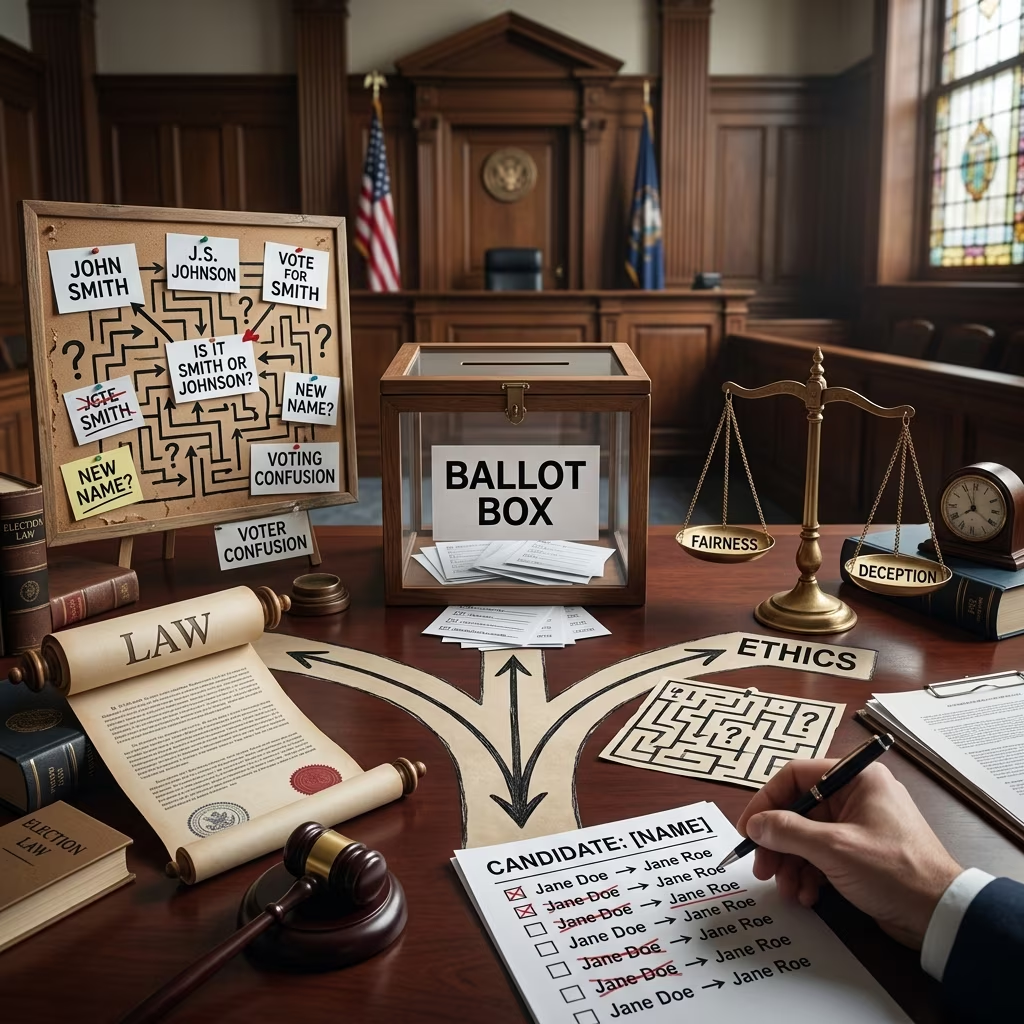
In modern elections, a candidate’s name on the ballot can be almost as powerful as their policy platform. In a striking example from Arizona, one candidate legally adopted the name Cesar Chavez shortly before running for Congress in a heavily Latino district, prompting accusations of deception and legal scrutiny. This case illustrates broader questions: how far can candidates go in rebranding themselves, what do election laws allow, and how are voters protected from misleading use of famous names?
From Obscure Contender to Famous Name: What Happened in Arizona?
The Arizona case involved a candidate originally named Scott Fistler, who had previously run as a Republican before switching parties and changing his name to Cesar Chavez ahead of a 2014 Democratic primary for the state’s 7th congressional district. The district had a large Latino electorate and deep historical connections to the real farm labor leader César Chávez, making the choice of name especially sensitive.
Several key developments followed:
- The candidate completed a legal name change and registered for the Democratic primary using his new name.
- Community members, labor leaders, and the actual Chávez family objected, arguing that the new name could mislead voters into believing the candidate was related to, or endorsed by, the civil rights icon.
- Alejandro Chávez, the grandson of César Chávez, went to court seeking to disqualify the candidate and alleging voter deception.
The controversy quickly expanded beyond Arizona, raising national questions about whether election laws adequately address deliberate efforts to exploit famous names.
Legal Name Changes vs. Election Rules
Under U.S. law, adults generally have broad freedom to change their names, subject to state procedures and limited restrictions such as avoiding fraud or evasion of legal obligations. Once a name change is legally recognized, that name typically becomes valid for documents, contracts, and, importantly, ballots. Election statutes in many states focus on whether a candidate’s name on the ballot reflects their legal name, not whether it evokes a famous person.
However, election law intersects with name changes in several ways:
- Ballot access – States usually require candidates to file with their legal name, sometimes permitting nicknames or commonly used names if documented.
- Anti-fraud provisions – Some jurisdictions allow removal of candidates or changes to ballots if there is evidence of intentional misrepresentation or fraud toward voters.
- Timing rules – Ballots often cannot be altered after certain deadlines, meaning disputes over names may arise when it is practically difficult to make changes without disrupting an election.
The Arizona case tested how far these rules can stretch when a candidate’s new legal name is identical to that of a historically significant figure. Courts had to consider not just the legality of the name change, but its impact on voter understanding and the integrity of the ballot.
Why Famous Names Matter So Much on Ballots
Political science research shows that name recognition significantly influences voter choices, particularly in low-information elections where many voters know little about lesser-known candidates. In such settings, a famous name can function almost like a brand.
Several factors amplify this effect:
- Historical associations – Names like César Chávez carry powerful links to labor rights, civil rights, and Latino political identity.
- Cognitive shortcuts – Voters may use a familiar name as a mental shortcut, assuming shared values or family connections without verifying the candidate’s background.
- Language and ethnicity cues – In districts with large minority populations, names can signal cultural affiliation and may influence perceptions of representation.
In the Arizona district, these dynamics were particularly salient. The name Cesar Chavez was not simply familiar; it was deeply embedded in the community’s political history. That context made the candidate’s decision appear, to many residents, like an attempt to harness past struggles for present electoral gain.
Ethical Fault Lines: Deception, Representation, and Respect
Even when a name change is technically legal, the ethical questions can be sharp. Critics of the Arizona candidate argued that adopting the Chavez surname in that specific district crossed moral lines, effectively borrowing the legacy of a revered leader to secure votes.
Key ethical concerns included:
- Voter deception – Opponents claimed average voters seeing “Cesar Chavez” on the ballot might assume the candidate was related to the farm worker leader or endorsed by his movement.
- Exploitation of cultural identity – Labor and Latino advocacy groups argued that the name change trivialized a hard-won legacy, reducing it to electoral marketing.
- Lack of transparency – A sudden name change—especially from a non-Latino name associated with a different party—raised questions about authenticity and long-term commitment to the community’s issues.
Supporters of broad name-change rights might counter that individuals are entitled to redefine themselves, including politically. But the Arizona dispute shows that when a name is shared with a historical figure, the boundary between personal reinvention and public misrepresentation becomes contested.
Community and Family Pushback: The Role of Civil Society
One striking aspect of the Arizona controversy was the active involvement of the real César Chávez’s family and labor leaders. Alejandro Chávez and allied organizations framed the issue as a defense of both voters and the integrity of the Chávez legacy.
Their responses illustrate how civil society can shape the outcome of such disputes:
- Public education campaigns – Labor groups and family members spoke to media outlets, warning voters that the candidate was not related to the late union leader.
- Litigation – Alejandro Chávez filed suit in state court, arguing that the name change and candidacy misled voters and should be blocked or corrected.
- Symbolic defense of legacy – Challenges emphasized the moral weight of iconic names, arguing they should not be appropriated for short-term political advantage.
This activism helped transform a local ballot question into a national discussion about respect for civil rights history and the responsibilities of candidates who invoke that history.
How Election Officials Respond to Name-Based Controversies
Election administrators must balance several obligations: upholding legal rights, preserving ballot integrity, and maintaining trust in the electoral process. In name-change controversies, officials may face tight deadlines, incomplete information, and intense public scrutiny.
Common tools and constraints include:
- Verification of legal documents – Officials confirm whether a candidate’s name change has been legally recognized and whether filings comply with statutory requirements.
- Reliance on courts – When allegations of deception emerge, election offices often defer to judicial rulings before making changes to ballots.
- Administrative deadlines – Practical limitations on reprinting ballots or reprogramming voting machines may restrict options for altering names shortly before elections.
The Arizona case underscored how quickly controversies can escalate. Even if officials have limited direct authority to stop a candidate from using a legally adopted name, they may face long-term questions from voters about whether the system adequately prevented confusion.
Key Legal and Ethical Issues in Candidate Name Changes
| Issue | Legal Dimension | Ethical Dimension |
|---|---|---|
| Freedom to change name | Generally allowed if state procedures are followed and there is no clear fraud or evasion of obligations. | Raises questions about authenticity, motives, and transparency toward voters. |
| Using famous names | Often legally permissible if it is the candidate’s official name, absent specific anti-deception rules. | May exploit public trust in historical figures and mislead voters about connections or endorsements. |
| Ballot design | Must display candidates’ names consistently and fairly under state law; changes after deadlines can be difficult. | Poorly handled controversies can erode confidence in electoral fairness and clarity. |
| Voter protection | Anti-fraud statutes and court oversight provide mechanisms to challenge misleading practices. | Advocacy and media play roles in informing voters and defending community legacies. |
Practical Implications for Voters
For voters, the main risk in name-based controversies is casting a ballot under mistaken assumptions. When a candidate’s name closely matches a well-known figure, voters may believe they are supporting a familiar cause or family, even when the candidate’s background and positions differ sharply.
To reduce this risk, voters can:
- Research candidates beyond the ballot – Look up official candidate statements, biographies, and news coverage, rather than relying solely on name recognition.
- Pay attention to party history – Sudden switches in party affiliation or ideology alongside a name change may signal strategic rebranding rather than long-term commitment.
- Listen to community organizations – Labor groups, civil rights organizations, and trusted local leaders may issue clarifications when famous names are invoked.
In the Arizona case, voter education efforts were essential in making sure residents understood that the candidate using the Chavez name was not the labor icon’s relative and had a distinct political history.
Frequently Asked Questions About Candidate Name Changes
Can a political candidate legally change their name right before an election?
In most states, a candidate may legally change their name at any time, including before or during an election cycle, as long as they comply with state civil name-change procedures. Once the name change is officially recognized, election officials typically must use that legal name on the ballot absent specific statutory restrictions.
Are there rules preventing candidates from using the name of a famous person?
U.S. election law does not uniformly prohibit candidates from using the same name as a famous figure. Many frameworks focus on whether the name is legally adopted, not whether it resembles someone else’s. However, remedies may be available if courts find evidence of intent to defraud or mislead voters, and some jurisdictions have more explicit anti-deception rules.
What can communities do if they feel a famous legacy is being misused on the ballot?
Communities can respond through public statements, media engagement, and, where appropriate, litigation. In the Arizona controversy, the Chávez family and labor organizations used all three strategies to challenge the candidate and warn voters about potential confusion.
Do election administrators have the power to remove misleading names from ballots?
Election officials operate within statutory limits. They may request clarification, consult with legal counsel, or seek court orders, but they often cannot unilaterally change a candidate’s name on the ballot once it meets formal requirements. Judicial decisions and state law determine how far they can go to address alleged deception.
How can voters protect themselves from being misled by name-only recognition?
Voters can safeguard themselves by verifying candidate biographies, reviewing nonpartisan voter guides, and paying attention to local reporting. Recognizing that famous names may be strategically used is an important part of navigating elections in a media-saturated environment.
Looking Ahead: Balancing Identity, Strategy, and Integrity
The Arizona Cesar Chavez name-change episode highlights tensions that are likely to persist as political communication becomes more saturated and symbolic. On one hand, democratic societies value personal freedom, including the right to adopt new names and identities. On the other, elections depend on clarity, honesty, and respect for the histories that have shaped civic life.
Key takeaways include:
- Legal name changes can interact unpredictably with ballot rules when famous names are involved.
- Communities and families of historical figures can play a crucial role in defending legacies and informing voters.
- Election law may need periodic review to ensure it addresses modern forms of symbolic campaigning, including strategic name adoption.
- Voters benefit from treating ballot names as a starting point for research, not a substitute for understanding a candidate’s record.
As more cases emerge, policymakers, advocates, and scholars will continue debating how best to balance the legitimate use of names in political self-presentation with the imperative to prevent confusion and safeguard electoral integrity.
References
- Arizona Candidate Changes Name to Cesar Chavez Before Election — NBC News. 2014-06-01. https://www.nbcnews.com/news/latino/arizona-candidate-changes-name-cesar-chavez-election-n120921
- Arizona candidate ‘Cesar Chavez’ faces challenge from labor leaders, family — PBS NewsHour. 2014-06-04. https://www.pbs.org/newshour/politics/arizona-candidate-cesar-chavez-faces-challenge-labor-leaders-family
- Cesar Chavez (formerly Scott Fistler) — Ballotpedia. 2014-07-01. https://ballotpedia.org/Cesar_Chavez_(formerly_Scott_Fistler)
- Cesar Chavez’s grandson is outraged — Courthouse News Service. 2014-06-11. https://www.courthousenews.com/cesar-chavezsgrandson-is-outraged/
- City of Phoenix begins implementation of Council direction on César Chávez — City of Phoenix. 2024-04-17. https://www.phoenix.gov/newsroom/city-manager-news/city-of-phoenix-begins-implementation-of-council-direction-on-ce.html