
Pet Estate Planning: Essential Guide To Protect Your Pet Now
Explore how far you can go in a will when planning for your pets, from care provisions to controversial euthanasia requests.
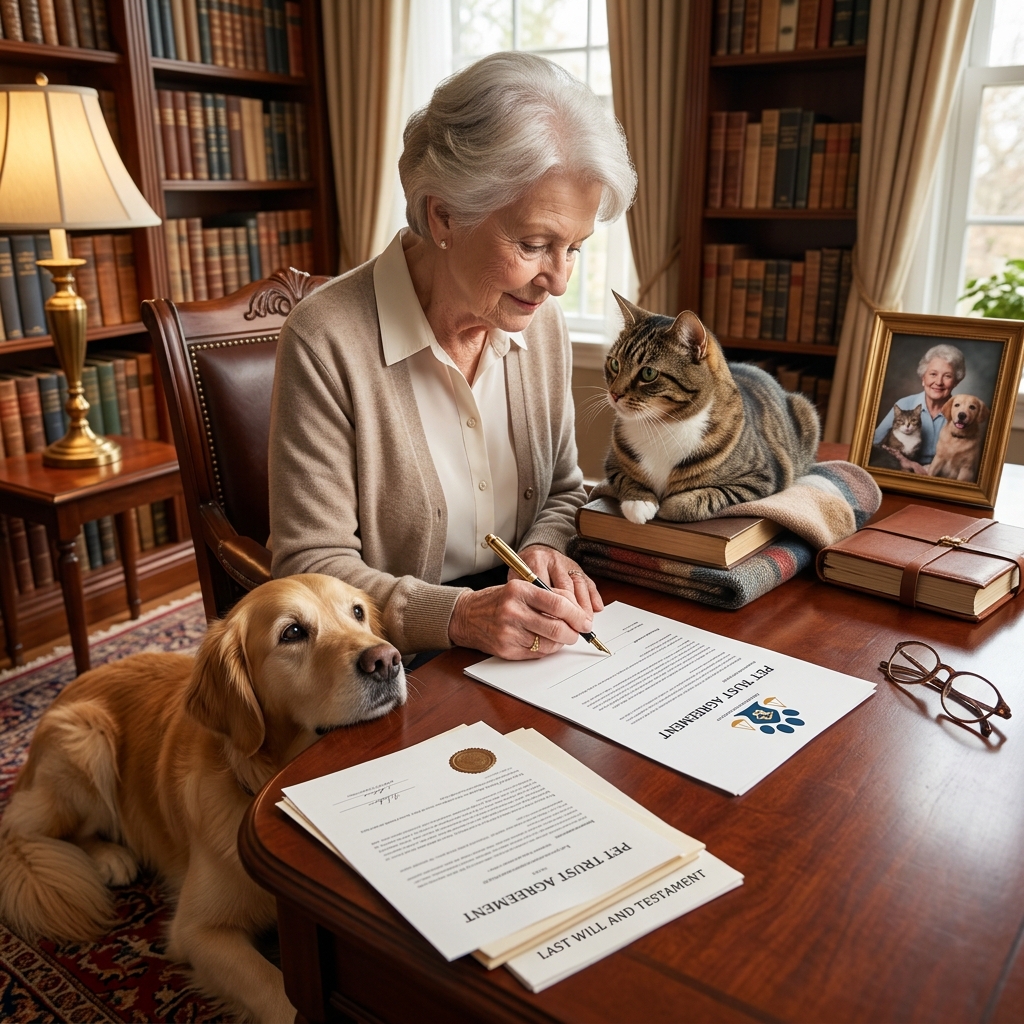
For many people, pets are closer to family than to property, yet the law usually treats animals as personal belongings rather than legal persons. This creates difficult questions about what you can and cannot direct in a will regarding your pet’s future, especially when it comes to controversial instructions like euthanasia or burial with the owner.
This article explains how the law generally views pets in estate planning, the tools available to protect them, and the ethical and legal limits surrounding end-of-life directions for companion animals.
How the Law Sees Pets in Estate Planning
In most jurisdictions, pets are classified as personal property, similar to furniture or vehicles, rather than as beneficiaries with independent legal rights. This foundational rule shapes what you can do for your animals through wills and trusts.
- Pets cannot inherit directly: A dog or cat cannot legally receive money or assets in its own name.
- Humans hold legal control: Any resources intended for a pet must be managed by a person or organization.
- Wills govern ownership: A will can transfer ownership of the pet to a chosen caregiver, just like giving a car or painting to a beneficiary.
Because animals cannot sue or enforce rights in court, arrangements for their care need structures that rely on human duty, trust, or carefully drafted legal mechanisms.
Key Tools to Provide for Your Pet
Several estate planning tools can provide real protection and stability for your pet after your death. Each offers different levels of security and formality.
1. Pet Provisions in a Traditional Will
A basic will can include instructions about your pet, commonly called a pet clause. While the pet itself is treated as property, your clause can address who gets the animal and how funds should be used for its support.
- Designate a caregiver: Name the person who will become the new owner of your pet, and confirm they are willing to take responsibility.
- Provide care instructions: Add nonbinding guidance about diet, medical needs, routines, and preferred living arrangements.
- Leave funds to the caregiver: Instead of giving money to the pet, you gift money to the human caregiver with a request that it be used for the animal’s expenses.
These provisions are often honored as a matter of trust and conscience, but in many cases they do not create legally enforceable rights for the animal itself.
2. Honorary Trusts for Pets
Some jurisdictions recognize an older concept called an honorary trust, where funds are set aside for the care of a specific animal but no beneficiary exists who can enforce the trust.
Characteristics of honorary pet arrangements include:
- The trust is meant to support humane treatment of designated animals.
- The trustee holds the funds and is morally bound, but not necessarily legally compelled, to follow the donor’s wishes.
- Courts may limit duration or amount if the trust appears excessive or conflicts with public policy.
While more structured than simple will instructions, honorary trusts still leave enforcement largely to the goodwill of the trustee and, potentially, oversight by courts.
3. Statutory Pet Trusts
Modern law has evolved to create statutory pet trusts in many U.S. states. These trusts give firmer legal protection by recognizing animals as valid trust beneficiaries for limited purposes.
| Feature | Honorary Pet Arrangement | Statutory Pet Trust |
|---|---|---|
| Legal basis | Common law or specific will language | Statute explicitly authorizing pet trusts |
| Enforcement | Depends on trustee’s conscience | Trustee must follow terms; courts can intervene |
| Duration | May be limited by general trust rules | Usually lasts for the life of the animal |
| Security for the pet | Moderate | High, if adequately funded and monitored |
In states that have adopted these statutes, a pet trust can hold funds, appoint a trustee, describe the animal beneficiaries, and specify what happens to any remaining assets when the animal dies.
Choosing and Equipping a Pet Caregiver
Whatever legal tool you use, the most practical decision is choosing the right human caregiver and making sure they are fully prepared to assume responsibility.
- Select someone stable and animal-friendly: Ideally, pick a person who already knows your pet and understands its temperament and needs.
- Discuss expectations in advance: Have a direct conversation about housing, lifestyle, medical treatment, and financial realities.
- Name alternates: Because circumstances change, many experts recommend naming a backup caregiver and, if needed, a shelter or rescue organization as a final option.
Clear documentation—both in your will or trust and in separate written instructions—helps the caregiver act promptly and confidently if you become incapacitated or die.
Controversial Directions: Euthanasia and Burial Requests
Some pet owners worry their animals will suffer neglect or distress once they are gone, and contemplate extreme measures such as ordering the animal’s euthanasia or burial with the owner. These requests raise difficult legal and ethical questions.
Can You Order Your Pet to Be Euthanized in Your Will?
Whether a will can validly require euthanasia depends heavily on local law, veterinary standards, and public policy. Animal protection laws in many places prohibit killing an animal without a legitimate medical reason, and veterinarians are bound by professional ethics to decline inappropriate euthanasia.
Typical constraints include:
- Animal cruelty laws: Statutes generally forbid needless killing or suffering, which may conflict with instructions to euthanize a healthy animal purely for convenience or symbolic reasons.
- Professional ethics: Veterinary guidelines encourage euthanasia only when it is in the animal’s interest, such as relief from serious, incurable suffering.
- Judicial reluctance: Courts may refuse to enforce will provisions that contradict public policy on humane treatment.
Because of these constraints, many legal commentators view automatic euthanasia clauses as risky and often unenforceable, especially when viable placement options exist.
Burial with the Owner: Symbolic but Legally Complex
Requests to have a pet killed and buried with its deceased owner are particularly controversial. Cemeteries and cremation rules vary widely; some allow animal remains in certain sections or urns, while others bar animals entirely.
Key considerations include:
- Cemetery regulations: Private and religious cemeteries may have strict rules prohibiting animals from being interred with human remains.
- State and local law: Health codes and burial regulations can limit how and where animal bodies are disposed.
- Alternative memorials: Many people choose symbolic options instead, such as memorial markers or joint inscriptions, without requiring euthanasia.
Because these issues intersect with public health, ethics, and local regulations, a simple command in a will often cannot guarantee that a pet will be buried with its owner, and any attempt that involves killing a healthy animal is especially fraught.
More Humane Planning Alternatives
Rather than directing euthanasia, most legal and animal welfare authorities encourage planning that prioritizes continued life and well-being.
Rehoming and Shelter-Based Plans
One practical approach is to direct the executor or caregiver to make diligent efforts to find a suitable home for your pet, with euthanasia considered only as a last resort if no placement can be found within a reasonable period.
- Step-by-step rehoming instructions: Ask your executor to care for the animal temporarily, seek a private adopter, and then work with shelters or rescue groups if personal contacts fail.
- Time limits: You may specify a time frame for rehoming efforts before other measures are considered, balancing practicality with the pet’s welfare.
- Funding for interim care: Your will can authorize the executor to use estate funds for food, veterinary care, and transport while rehoming is underway.
This kind of tiered plan gives your pet multiple chances to find a good home and aligns more closely with humane treatment standards and animal protection laws.
Funding Veterinary Care and Insurance
Proper financial planning can greatly improve your pet’s prospects. Estate planning resources often suggest leaving money specifically to support medical care and routine expenses.
- Direct gifts to caregivers: Gift a reasonable amount to the new owner to cover food, grooming, and veterinary bills, with written guidance on how you hope it will be used.
- Pet health insurance: Some planners recommend leaving funds earmarked for purchasing or maintaining pet insurance, helping ensure ongoing medical care.
- Contracts with veterinarians: In certain cases, owners may arrange contracts with a veterinarian to provide services funded from an estate contribution.
These strategies avoid the ethical pitfalls of euthanasia directives by focusing on support and continuity of care.
Practical Steps to Include Your Pet in Your Will
If you want your estate plan to protect your pet while staying within legal and ethical boundaries, consider the following steps.
Drafting Your Pet Clause
- Identify each animal clearly: Use descriptions, names, and any unique identifiers so there is no confusion about which pets are covered.
- Designate ownership after your death: State who receives each pet, and confirm they have agreed to serve as caregiver.
- Specify funds and their purpose: Describe how much money is set aside and ask that it be used for the animals’ food, medical care, and other needs.
- Include interim authority for the executor: Authorize your executor to spend estate funds on pet care until formal transfer occurs.
Deciding Whether to Create a Pet Trust
In jurisdictions that recognize pet trusts, you may want a more robust arrangement than a simple will clause.
- Assess the animal’s lifespan and needs: Long-lived species or pets with chronic medical conditions may benefit from a dedicated trust.
- Choose a reliable trustee: The trustee does not have to be the same person as the daily caregiver; separating these roles can create checks and balances.
- Plan for remaining funds: Decide whether leftover assets should go to relatives, charities, or other beneficiaries once the pet dies.
Because pet trust laws differ by state, working with an attorney familiar with local statutes is important to ensure that the trust will be recognized and enforceable.
Ethical and Emotional Dimensions
Decisions about a pet’s fate after your death are not purely legal. They also involve emotional bonds and ethical questions about how humans ought to treat animals.
- Respect for animal life: Many animal welfare advocates argue that pets should not be treated as mere objects to be disposed of according to the owner’s emotional wishes.
- Balancing grief with responsibility: While it may feel comforting to imagine a pet accompanying you in death, planners encourage owners to focus instead on the animal’s ongoing quality of life.
- Shared decision-making: Discussing your plans with family, caregivers, and professionals can reveal perspectives you might not have considered and help avoid instructions that others find distressing or unethical.
Ultimately, an estate plan for a pet should aim to honor the bond between human and animal by maximizing the animal’s welfare rather than symbolizing the owner’s wishes in a way that harms the pet.
FAQs: Pets, Wills, and End-of-Life Instructions
Can I leave money directly to my dog or cat?
No. In most legal systems, pets are classified as property and cannot legally inherit money or property themselves. You can, however, leave money to a human caregiver or a trust for the pet’s benefit.
Is a pet trust better than just naming a caregiver in my will?
Often yes. A statutory pet trust can legally oblige the trustee to spend funds for the animal’s benefit and may last for the animal’s lifetime, providing more enforceable protection than a simple request in a will.
Can I require my pet to be euthanized when I die?
This is legally and ethically problematic. Animal cruelty laws and veterinary ethics generally oppose euthanizing healthy animals solely to comply with an owner’s wishes. Courts may refuse to enforce such instructions, and veterinarians may decline to carry them out.
What if no one can take my pet after I die?
You can direct your executor or trustee to work with shelters or rescue organizations to find a suitable home and authorize estate funds to pay for care during this process. Some plans allow euthanasia only as a last resort if all reasonable placement efforts fail.
Do I need a lawyer to include my pet in my estate plan?
While it is possible to write simple instructions on your own, consulting an attorney familiar with pet trusts and state-specific laws helps ensure that your plan is valid, enforceable, and aligned with animal welfare standards.
References
- Providing for Your Pet After You Die — Commonwealth of Virginia Employee Assistance Program. 2019-05-01. https://www.anthemeap.com/cova/find-legal-support/resources/estate-law/legal-assist/providing-for-your-pet-after-you-die
- Can You Make a Last Will and Testament for Your Dog? (Yes, you can) — FindLaw. 2021-03-10. https://www.findlaw.com/forms/resources/estate-planning/last-will-and-testament/can-you-make-a-last-will-and-testament-for-your-dog-yes-you-can.html
- Estate planning for your pet’s care and comfort — Garvey, Schubert & Barer (GGW Law). 2017-06-15. https://www.ggw-law.com/news/pet-estate-planning
- An Introduction to Pet Wills and Pet Euthanasia — Michigan State University College of Law, Animal Legal & Historical Center. 2003-01-01. https://www.animallaw.info/article/introduction-pet-wills-and-pet-euthanasia
- Providing for Your Pets in the Event of Your Death or Hospitalization — New York City Bar Association. 2012-09-10. https://www.nycbar.org/providing-for-your-pets-in-the-event-of-your-death-or-hospitalization/
- Estate Planning for Pets: Secure Their Future — LegalShield. 2022-08-18. https://www.legalshield.com/blog/estate-planning-for-pets
- Including Animals in Your Will — Animal Legal Defense Fund. 2020-07-06. https://aldf.org/article/including-animals-in-your-will/
Similar Articles








Read full bio of medha deb


