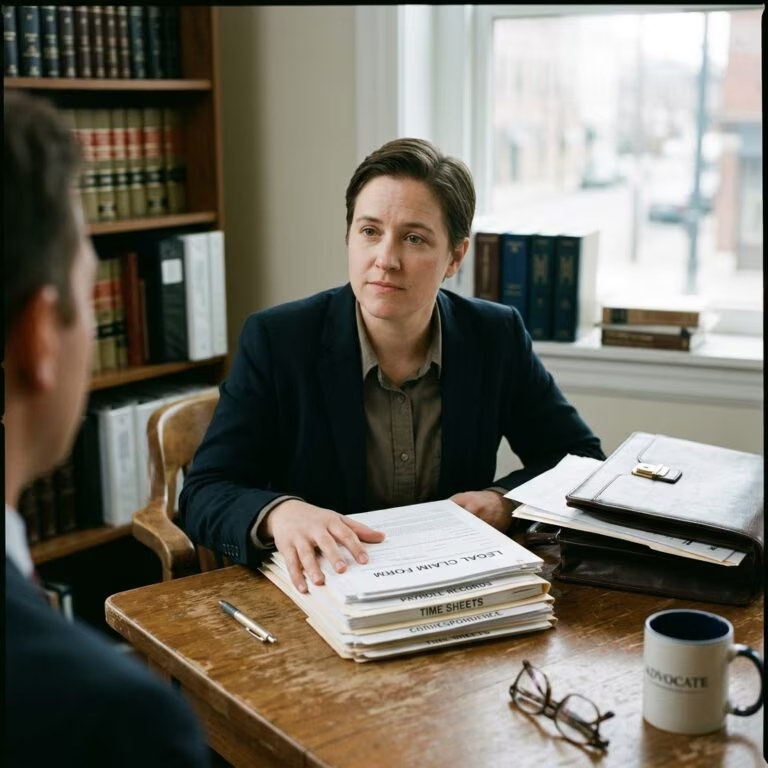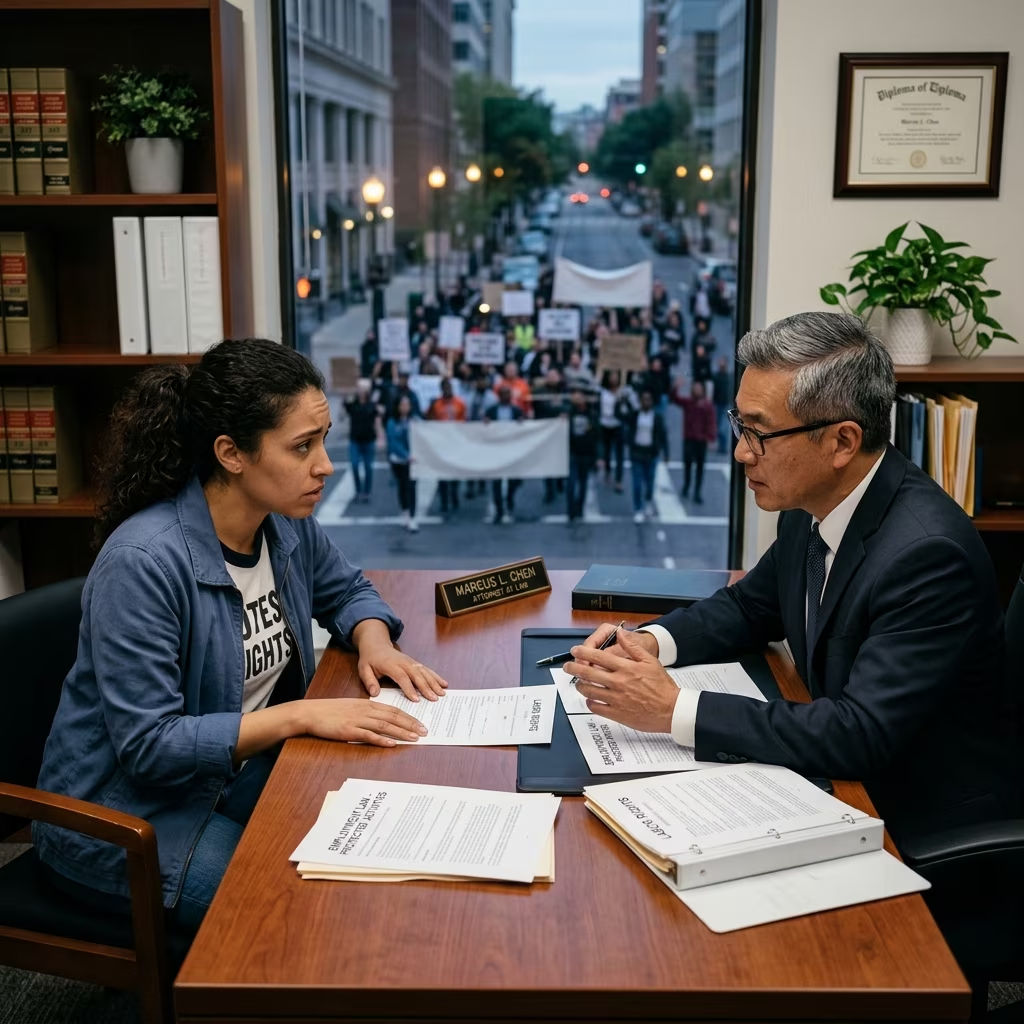
Large public protests and social movements often raise a practical question for workers: can you lose your job for showing up? The answer depends on where you live, what kind of job you have, what you did at the protest, and whether your activities are treated as protected political speech or concerted activity under U.S. labor law.
This article explains the main legal frameworks that affect your job security when you participate in protests, using U.S. law as a reference point and highlighting key differences between political activity and workplace organizing.
Key Legal Frameworks That Shape Protest-Related Job Risks
Several overlapping bodies of law govern when employers may and may not retaliate against employees who take part in protests or related advocacy:
- Employment-at-will rules in most states, which generally allow private employers to fire employees for almost any reason, unless a specific legal protection applies.
- Political activity protections in certain states, which restrict how employers can respond to employees’ lawful political conduct away from work.
- Labor law protections, especially the National Labor Relations Act (NLRA), for concerted activity about wages, hours, and working conditions.
- Constitutional free speech rights, which apply strongly to government actions but only indirectly to private employers.
Understanding where you fit in these frameworks is critical before assuming you are legally safe—or unprotected—when you join a protest.
Political Activity Versus Workplace Organizing
Not every protest is treated the same under the law. The legal consequences for your job often hinge on whether your participation is considered political activity or
| Type of Activity | Main Focus | Typical Legal Protection | Key Limitations |
|---|---|---|---|
| Political protest | Social policies, public issues, elections, government action | State political activity statutes (in some states); general off-duty conduct protections | Limited or no protection in many states; misbehavior, violence, or work disruption may remove protection |
| Workplace protest or strike | Wages, hours, safety, terms and conditions of employment | NLRA Section 7 rights for concerted activity among covered private-sector employees | Does not cover supervisors or some categories; unlawful or violent conduct can forfeit protection |
Protests linked directly to workplace issues are more likely to be protected under federal labor law, while protests framed primarily as general political expression may depend on state-level protections or employer policies.
State-Level Protections for Political Protest by Employees
Some states give employees specific rights to engage in political activity away from work without employer interference. For example, California law:
- Prohibits employers from controlling or directing employees’ political activities or affiliations.
- Bars employers from threatening to discharge workers to force them to adopt or avoid a particular political position.
- Protects employees from retaliation for lawful conduct during non-working hours away from the employer’s premises, which can include peaceful protest participation.
Under these kinds of statutes, going to a political rally or march outside your shifts and off company property—without violating the law or causing serious harm to the employer’s business—may be protected conduct.
However, such laws do not give a blank check. You can still face discipline if you:
- Miss scheduled work without permission to attend a protest.
- Engage in illegal acts such as vandalism, trespassing, or violence while protesting.
- Seriously damage your employer’s reputation or business in ways that fall outside the statute’s protections.
Because not all states have robust political activity protections, workers should check the laws in their jurisdiction or consult a legal aid organization before assuming they are shielded.
NLRA Protection for Concerted Activity and Workplace Protests
Separate from political activity statutes, the National Labor Relations Act (NLRA) protects many private-sector employees when they act together to improve their working conditions.
Under Section 7 of the NLRA, employees covered by the Act have the right to:
- Engage in other concerted activities for mutual aid or protection regarding wages, hours, and conditions of employment.
- Discuss workplace issues among themselves, in person or online, without employer retaliation.
- Join, form, or assist labor unions and take part in lawful strikes and picketing.
The U.S. Supreme Court has confirmed that even workers in non-union workplaces can be protected when they act collectively around working conditions. In one landmark case, the Court upheld the rights of employees who walked out of a cold factory due to unsafe temperatures, finding their actions to be protected concerted activity.
When Protests Count as Concerted Activity
For a protest to be treated as concerted activity under the NLRA, it generally must meet three conditions:
- Involves more than one employee or is directed at encouraging group action.
- Relates to employment issues such as pay, scheduling, safety, harassment, or other terms and conditions of work.
- Aims at mutual aid or protection, rather than solely individual or unrelated political goals.
Examples that may be protected include:
- A coordinated walkout over unsafe conditions.
- Group participation in a demonstration about workplace health and safety standards.
- Collective social media posts criticizing wages or working hours at a particular employer.
When these conditions are met, employers who fire or discipline workers for such actions may violate federal labor law, triggering possible reinstatement and back pay remedies.
Limits: Misconduct and Unprotected Strikes
NLRA protections are not limitless. Workers can lose legal protection if their conduct crosses certain lines.
- Serious misconduct during a protest—such as violence, property destruction, or threats—may justify employer discipline without violating the NLRA.
- “Sitdown” strikes, where employees occupy the workplace and refuse to leave or work, have been held unprotected by the Supreme Court.
- Strikers who fail to take reasonable steps to avoid foreseeable harm to employer property can be denied reinstatement.
The NLRA also excludes certain categories of workers, including many public-sector employees, agricultural workers, and supervisors, who must rely on other laws or contracts for protection.
Constitutional Rights and Their Limits in the Workplace
The First Amendment of the U.S. Constitution protects freedom of speech and assembly against government interference, including peaceful protests in public spaces.
However, constitutional rights operate differently for workers:
- Public employees may have more robust speech protections when they speak as citizens on matters of public concern, though these rights are balanced against the government’s interest in efficient operations.
- Private employers are not normally bound by the First Amendment in the same way; they can set workplace rules and discipline employees, subject to labor and anti-discrimination laws.
- Police are generally expected to respect peaceful protest and intervene only to prevent violence, trespass, or property destruction, consistent with First Amendment principles.
Because of this distinction, you cannot rely solely on constitutional rights to protect your employment, especially in the private sector. Instead, you must look to labor statutes, state laws, and your own employment agreement.
Off-Duty Conduct: When Your Free Time Still Affects Your Job
Many employees assume that what they do off the clock is fully separated from their employment. In reality, off-duty conduct can still have workplace consequences, unless specifically protected by law.
Some state laws protect lawful off-duty activity, including peaceful protest participation, from employer retaliation. These laws often require that the conduct:
- Occurs outside working hours.
- Happens away from the employer’s premises.
- Does not violate any law.
Even in these states, you generally remain responsible for:
- Maintaining attendance and complying with workplace schedules.
- Avoiding conflicts of interest or breaches of confidentiality.
- Acting lawfully and avoiding violent or destructive behavior.
In jurisdictions without explicit off-duty protections, employers may have broader leeway to react to public conduct that they believe harms their business, including high-profile participation in controversial protests.
Practical Steps Before You Join a Protest
Workers can reduce their legal risk by planning ahead and understanding how protest participation might interact with their employment obligations.
Checklist to Protect Yourself
- Review your contract and policies: Check employee handbooks, social media policies, and codes of conduct for rules that might apply.
- Avoid unexcused absences: Request time off instead of simply skipping work to attend a protest.
- Stay lawful and peaceful: Avoid trespassing, vandalism, or violence—such acts can remove legal protections and expose you to criminal charges.
- Consider anonymity: If you fear retaliation, be mindful of how easily you can be identified in photos or live streams.
- Document events: Keep records of your schedule, communications with supervisors, and what occurred at the protest in case of future disputes.
Connecting Protest to Workplace Rights
When protests relate directly to working conditions—such as rallies about occupational safety, wage standards, or benefits—workers may find additional leverage by framing participation as part of a broader workplace-organizing strategy.
In such cases, employees can:
- Coordinate with co-workers to make the protest clearly collective and workplace-related.
- Use protected channels, such as union meetings or recognized bargaining processes, in parallel with public demonstrations.
- Seek advice from worker organizations or legal advocates on how to present their actions as concerted activity.
What to Do If You Are Disciplined for Protest Participation
If your employer fires you, demotes you, or disciplines you after you attend a protest or speak out about workplace issues, several avenues may be available, depending on the nature of your activity and your jurisdiction.
- Labor Board Complaints: If your protest involved concerted activity over working conditions and you are covered by the NLRA, you may file a charge with the National Labor Relations Board alleging retaliation.
- State Agency Complaints: In states with explicit political activity or off-duty conduct protections, workers can often file complaints with labor commissioners or similar agencies.
- Civil Lawsuits: Some statutes allow employees to sue in court for damages and reinstatement when their protected rights are violated.
- Union Grievances: Unionized workers may challenge discipline through grievance procedures or arbitration under their collective bargaining agreements.
Because deadlines to file complaints or suits can be short, it is important to seek legal advice promptly after any adverse action.
Frequently Asked Questions
Can I be fired simply for attending a peaceful political protest on my day off?
In some states, laws protecting political activity or lawful off-duty conduct could limit an employer’s ability to fire you for attending a peaceful protest away from work. In many other places, employment-at-will rules may allow termination unless another protection applies, so the specific legal context matters.
What if I join a protest about unsafe conditions at my workplace?
If the protest is clearly tied to your wages, hours, or working conditions and involves concerted activity with co-workers, it may be protected under the NLRA for covered private-sector employees. Misconduct or illegal behavior during the protest can still undermine those protections.
Are my social media posts about protests treated differently from in-person participation?
Posts that encourage co-workers to address workplace issues, or that form part of collective discussion about working conditions, can be protected concerted activity under labor law. Posts that are purely political or violate employer policies might not be protected, depending on the content and context.
Do public employees have the same rights as private employees?
Public employees’ rights are shaped by constitutional doctrines and specific public-sector labor laws, which differ from the NLRA regime that governs most private employees. Many public workers have meaningful protections, but the rules vary widely by jurisdiction and employer.
Does carrying my employer’s logo or uniform at a protest change anything?
Visible employer branding at a protest can make it easier for employers to argue that your actions affect their business or reputation. Even where off-duty conduct or political activity is protected, visible association with the employer may complicate the legal analysis and practical outcomes.
References
- Your Right as an Employee to Engage in Political Activity — Legal Aid at Work. 2021-06-01. https://legalaidatwork.org/factsheet/your-rights-as-protester-political-protests-by-employees/
- The Right to Strike — National Labor Relations Board. 2023-02-15. https://www.nlrb.gov/strikes
- “Occupy” at the Workplace — Daily Journal. 2011-11-02. https://dailyjournal.com/articles/309750-occupy-at-the-workplace
- Labor Law as a Shield — Emergency Workplace Organizing Committee. 2022-07-01. https://workerorganizing.org/labor-law-as-a-shield-8407/
- Law Enforcement Officer’s Guide to Labor Disputes and Protests — Office of the Illinois Attorney General. 2015-01-01. https://illinoisattorneygeneral.gov/Page-Attachments/LawEnforcementOfficersGuidetoLaborDisputesandProtests.pdf
- Protecting Our Rights Together — Legal Momentum. 2011-09-01. https://www.legalmomentum.org/sites/default/files/Protecting%20our%20Rights%20Together.pdf
- Know Your Rights: Protesters’ Rights — American Civil Liberties Union. 2023-04-10. https://www.aclu.org/know-your-rights