
Can You Sue a Texas Landlord for Unsafe Rental Conditions?
Understand when bad property conditions violate Texas law, how to demand repairs, and what legal options tenants have when landlords refuse to fix serious problems.
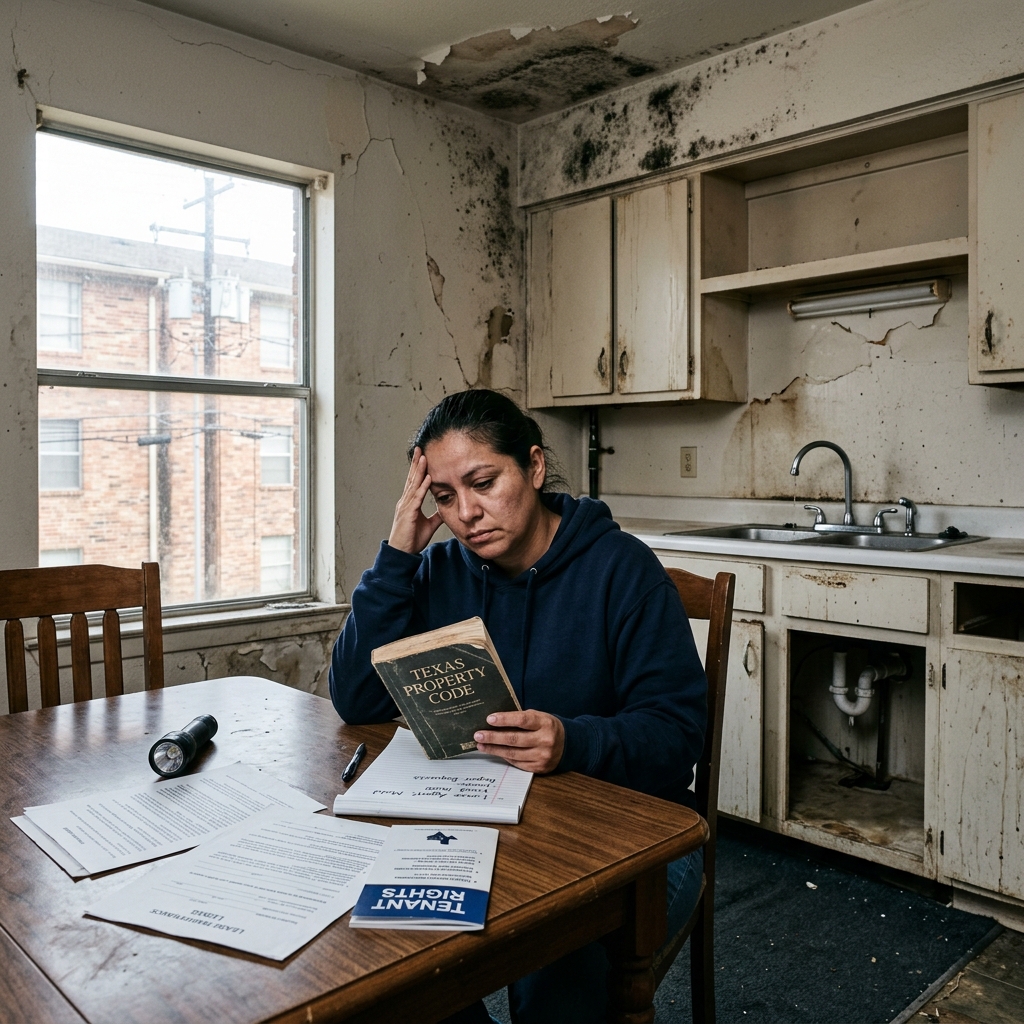
In Texas, landlords are legally obligated to repair rental conditions that materially affect a tenant’s physical health or safety, but they are not required to fix every minor problem in a unit. When serious hazards go unaddressed—even after proper notice—tenants may be able to terminate the lease, repair and deduct, or sue the landlord in court.
This article explains how Texas law treats bad property conditions, when you can sue your landlord, and what steps you must follow to protect your rights and avoid mistakes that could lead to eviction or loss of legal remedies.
1. What Counts as a Serious Repair Issue Under Texas Law?
Texas law distinguishes between everyday maintenance problems and conditions that are so serious they affect an ordinary tenant’s health or safety. Only the latter trigger the special legal remedies discussed in this guide.
1.1 Health and Safety Standard
Under the Texas Property Code, landlords must make a diligent effort to repair any condition that materially affects the physical health or safety of an ordinary tenant. That means the focus is not on minor inconvenience, but on danger, risk of illness, or significant loss of basic services.
1.2 Examples of Conditions That Often Qualify
Situations that typically meet the health and safety standard include:
- Lack of essential utilities, such as no hot water, no heat in cold weather, or unsafe electrical systems.
- Serious plumbing issues, including sewage back-ups, major leaks, or flooding inside the unit.
- Mold caused by leaks or moisture that may pose health risks, especially when extensive or accompanied by structural damage.
- Structural problems like collapsing ceilings, loose stair railings, or unsafe flooring.
- Broken or missing smoke detectors, which Texas law treats as a specific enforcement issue, including civil penalties.
- Infestations of rodents or insects when they are severe and related to building conditions rather than tenant housekeeping.
By contrast, minor cosmetic issues—such as chipped paint, worn carpet, or a small crack in a wall—generally do not qualify for health and safety remedies under state law.
1.3 The “Ordinary Tenant” Perspective
The law uses an “ordinary tenant” standard, meaning the problem is assessed based on how it would affect a typical renter, not someone with unusual sensitivities. However, documented medical vulnerabilities can be relevant when arguing that a condition has health impacts, especially if supported by medical evidence.
2. Basic Repair Rights of Tenants in Texas
Texas tenants do not have a blanket right to a perfect rental, but they do have a clear right to demand repairs of dangerous or unhealthy conditions. Several key principles shape those rights.
2.1 Landlord’s Duty to Repair
In most residential leases, the landlord has a legal duty to repair conditions that threaten health or safety once properly notified, even if the lease includes some tenant responsibility for maintenance. While some repairs can be allocated to tenants by agreement, landlords cannot contract away responsibility for conditions caused by their own negligence.
2.2 No Rent Withholding Without Following the Statute
Texas law is strict about rent payment: tenants generally cannot legally withhold rent just because repairs have not been made. Failing to pay rent can allow the landlord to pursue eviction, even when the repair complaint is valid. Instead, tenants must follow statutory procedures to access remedies such as repair-and-deduct or rent reduction.
2.3 Being Current on Rent
To use the strongest legal remedies, tenants must be current on rent when the landlord receives the written notice requesting repairs. Delinquent rent can limit or defeat the right to terminate the lease, repair and deduct, or obtain certain damages.
3. Step-by-Step: How to Properly Request Repairs
Before you can sue a landlord or terminate a lease, you must prove that you followed Texas procedures for requesting repairs. The law is technical and requires specific steps.
3.1 Document the Problem
Start by gathering evidence that the condition exists and is serious:
- Take clear photos and videos of the problem from multiple angles.
- Record dates and times when the issue appears (for example, repeated leaks or outages).
- Keep copies of any texts, emails, or portal messages sent to the landlord or property manager.
Good documentation can make the difference between winning and losing if the dispute goes to court.
3.2 Give Written Notice to the Landlord
Texas law requires written notice to the landlord before a tenant can seek judicial remedies. While you should also follow your landlord’s usual repair request system, a formal written notice is essential if the issue affects health or safety.
Your written notice should:
- Be dated and clearly identify you and the rental address.
- Describe the condition in detail and explain why it affects health or safety.
- Request that the landlord make necessary repairs promptly.
3.3 Choose a Delivery Method That Protects Your Rights
How you deliver your notice affects what you must do later:
- Certified or registered mail with return receipt: If you use this method, you typically only need to send one written notice to access statutory remedies.
- Regular mail or personal delivery: If you use these, you will usually need to send a second written notice if repairs are not made within a reasonable time.
Keep copies of everything, including the letter, receipts, and tracking information.
3.4 Allow a Reasonable Time for Repairs
After receiving proper notice, the landlord must make a diligent effort to repair within a reasonable time. Texas law presumes that seven days is a reasonable time in many cases, but this can vary depending on the urgency and complexity of the problem.
For highly urgent issues—such as sewage backflow or a total loss of electrical power—a shorter response time may be reasonable. For less urgent but still serious issues, a week or more might be acceptable if the landlord is actively arranging repairs.
3.5 Sending a Second Notice (If Required)
If you did not use certified or registered mail for your first notice, and the landlord fails to make diligent repair efforts within a reasonable time, you will usually need to send a second written notice. This notice should:
- Refer to the first notice and state that the condition still exists.
- Explain that you may exercise remedies under Texas law if repairs are not completed.
Once proper notice steps are satisfied and repairs remain undone, you can consider stronger options.
4. Legal Options When Your Landlord Still Won’t Repair
When landlords fail to repair dangerous conditions after proper notice, tenants may have several legal remedies available. These remedies are found in Texas statutes and supplemented by court rules.
4.1 Terminating the Lease
Texas tenants may be able to terminate their lease if the landlord does not repair conditions affecting health or safety after proper notice and a reasonable time. To do this safely:
- Ensure your rent is paid in full through the date you intend to move out.
- Provide written notice stating you are terminating the lease because of specific uncorrected conditions.
- Give the date by which you will vacate and return keys.
When termination is lawful, you can often claim a refund of prepaid rent for days you will not occupy the unit and the return of your security deposit, minus lawful deductions.
4.2 Repair and Deduct
“Repair and deduct” allows a tenant to pay for repairs out of pocket and then subtract the cost from a future rent payment. This remedy is tightly regulated and should be used only when statutory conditions are clearly met.
Key limits often include:
- The condition must materially affect health or safety.
- Proper written notice and reasonable time for the landlord to repair must have passed.
- The amount deducted must fall within legal caps and be used only for qualifying repairs.
Because misuse of repair-and-deduct can lead to alleged non-payment of rent and potential eviction, many tenants consult an attorney or legal aid before using this option.
4.3 Suing the Landlord in Court
Texas tenants can file suit against their landlord after proper notice if dangerous conditions are not repaired. Lawsuits are commonly brought in justice court, which offers a simplified process and does not require a lawyer.
In such a lawsuit, the court may:
- Order the landlord to make the repairs.
- Reduce the tenant’s rent from the date of the first proper written request.
- Award a civil penalty—often one month’s rent plus an additional statutory amount, such as $500—depending on the violation.
- Grant actual damages, court costs, and attorney’s fees.
Justice courts in Texas must typically hold trials in repair disputes within a short window of time (commonly between 10 and 21 days after the petition is filed), allowing relatively quick resolution.
4.4 Seeking Help From Public Agencies
In addition to private lawsuits, tenants may file complaints with local building or housing code authorities when conditions appear to violate safety regulations. The Texas Attorney General also provides consumer guidance on renters’ rights and recommends consulting an attorney before taking major steps like terminating a lease or repairing and deducting.
| Remedy | When Available | Main Benefits | Main Risks |
|---|---|---|---|
| Terminate Lease | After proper notice and failure to repair serious conditions | Leave unsafe housing; potential refund of rent and deposit | Must vacate; disputes over what counts as “serious” |
| Repair and Deduct | Statutory conditions met; health/safety issues only | Fix urgent problems without waiting indefinitely | Risk of eviction if landlord claims improper deduction |
| Sue in Justice Court | After proper written notice and reasonable time | Court order for repairs, rent reduction, penalties, damages | Time, effort, and possible need for legal guidance |
5. Protection Against Landlord Retaliation
Many tenants worry that complaining about bad conditions will cause their landlord to retaliate by raising rent, cutting services, or starting eviction proceedings. Texas law includes specific protections against retaliation.
5.1 What Retaliation Means
Retaliation generally occurs when a landlord punishes a tenant for exercising legal rights, such as requesting repairs, reporting code violations, or participating in a tenant organization.[10] Examples include sudden rent increases, service cuts, or attempts to terminate the lease without legitimate grounds.[10]
5.2 Legal Protections for Tenants
Texas statutes prohibit landlords from retaliating against tenants who, in good faith, do things like:
- Give notice to repair or exercise a legal remedy.
- Complain to a governmental entity about code violations or utility problems.
- Participate in tenant organizations.
Tenants who are victims of retaliation may have claims for damages, and courts will subtract any delinquent rent or other debts from recovery in these suits.
6. Practical Tips to Strengthen Your Case
Whether you plan to sue, terminate your lease, or simply push harder for repairs, careful planning can make your position stronger and reduce risk.
6.1 Keep Everything in Writing
- Follow your landlord’s normal repair procedures and send formal written notices as required by law.
- Save copies of every communication, including emails, texts, portal messages, letters, and receipts.
6.2 Stay Current on Rent
- Pay rent on time, even when repairs are pending, unless an attorney specifically advises otherwise.
- Do not withhold rent without understanding the legal consequences; Texas does not have a broad rent withholding statute.
6.3 Consult Legal Help Early
- Contact legal aid organizations, tenant advocacy groups, or private attorneys for advice before using powerful remedies like repair-and-deduct or lease termination.
- Ask about options in justice court, including self-representation and help with forms.
6.4 Evaluate the Severity Before Taking Extreme Measures
Not every problem justifies moving out or filing a lawsuit. Consider:
- Is the condition truly dangerous or likely to cause illness or injury?
- Has the landlord made any effort to repair since receiving notice?
- Would a negotiated solution, such as a short-term rent credit or temporary relocation, resolve the issue more efficiently?
7. Frequently Asked Questions (FAQs)
Q1. Can I stop paying rent until my landlord fixes the problem?
Generally, no. Texas law does not allow tenants to simply stop paying rent because repairs are needed. Withholding rent can expose you to eviction, even when the landlord is at fault. Instead, follow the repair procedures and consider lawful remedies such as suing, repair-and-deduct, or termination when conditions are met.
Q2. Do I need a lawyer to sue my landlord for failing to make repairs?
You are not required to hire a lawyer to file a lawsuit in Texas justice court, and many tenants proceed without one. However, consulting an attorney can help you understand deadlines, evidence, and potential remedies, especially for complex cases or large damage claims.
Q3. How quickly will the court hear my case?
Texas justice courts are required by procedural rules to hold trials in certain repair cases within a relatively short period, often between 10 and 21 days after filing the petition. This timetable helps ensure that tenants and landlords obtain prompt decisions regarding critical living conditions.
Q4. What if my landlord tries to evict me after I complain?
If you are up to date on rent and have complained in good faith about legitimate issues, Texas law prohibits certain forms of landlord retaliation.[10] You may be able to raise retaliation as a defense in an eviction case or file your own claim for damages if the landlord punishes you for asserting your rights.
Q5. Does Texas law protect only written complaints?
While informal complaints (like verbal or text messages) may help show you tried to get repairs, Texas statutes specifically require written notice before courts can award key remedies for dangerous conditions. Always follow up with a formal written notice and keep a copy for your records.
Q6. Are small problems like cosmetic damage covered by these laws?
Minor cosmetic issues typically do not qualify for health and safety remedies under the Texas Property Code. The law focuses on conditions that materially affect physical health or safety, such as serious leaks, electrical dangers, lack of essential utilities, mold, or structural hazards.
References
- Renter’s Rights — Office of the Texas Attorney General. 2023-05-10. https://www.texasattorneygeneral.gov/consumer-protection/home-real-estate-and-travel/renters-rights
- Right to Repairs as a Tenant — Texas Law Help (Texas Legal Services Center). 2023-02-15. https://texaslawhelp.org/article/right-to-repairs-as-a-tenant
- Repairs — Texas Tenant Advisor (Austin Tenants Council). 2022-08-01. https://www.texastenant.org/while-you-are-renting/repairs
- Landlord and Tenant Rights in General — The People’s Lawyer, University of Houston Law Center. 2021-09-30. http://www.peopleslawyer.net/legal-topics/landlord-tenant-law-general.html
- Texas Property Code, Chapter 92 – Residential Tenancies — Texas Legislature. 2024-01-01. https://statutes.capitol.texas.gov/docs/PR/htm/PR.92.htm
- Landlord Retaliation – Landlord/Tenant Law Guide — Texas State Law Library. 2022-11-18. https://guides.sll.texas.gov/landlord-tenant-law/problems-retaliation
- What a Landlord Cannot Do in Texas: Tenant Rights — C.E. Smith Law Firm. 2023-04-05. https://celawoffice.com/blog/landlord-cannot-do-texas/
Similar Articles








Read full bio of Sneha Tete


