
Can You Sue Tech and Electronics Retailers?
Understanding when you can hold TV, gaming, and technology retailers legally responsible for faulty products and unfair practices.
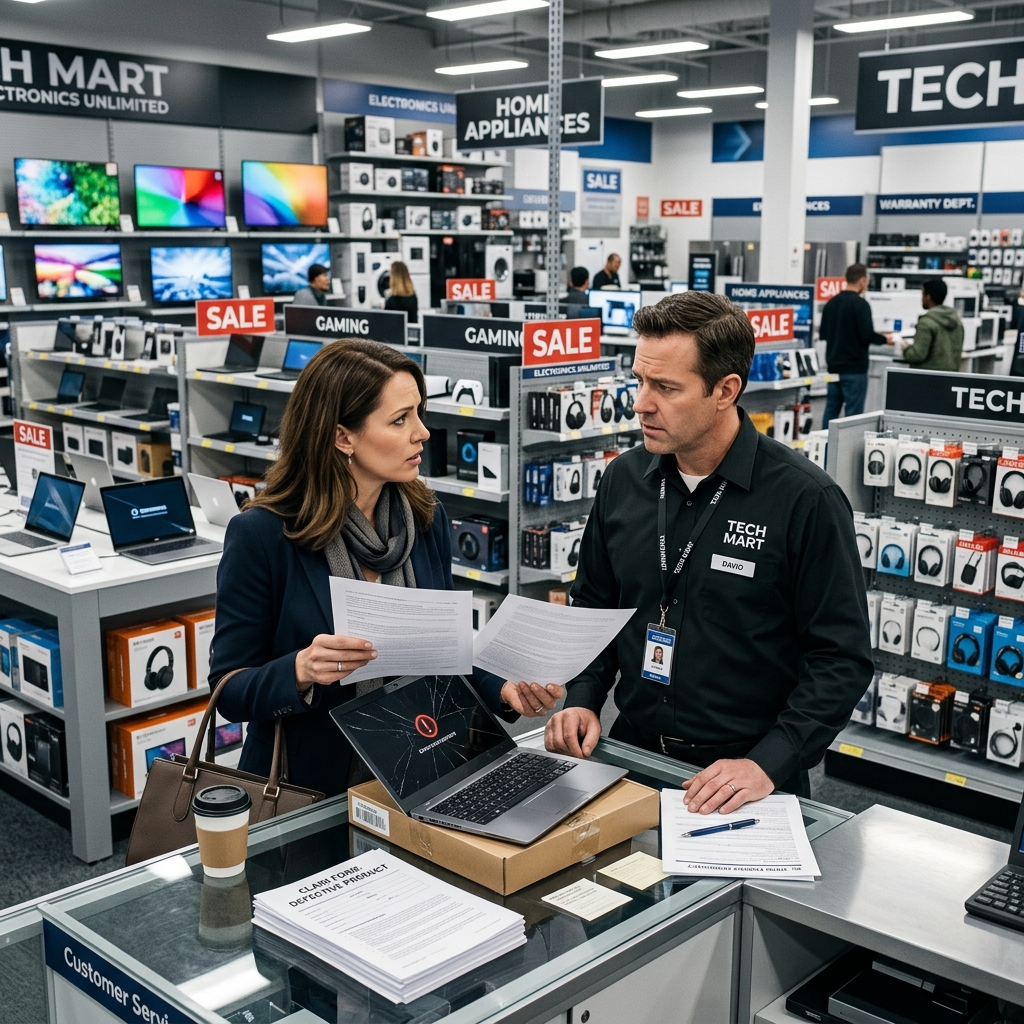
Buying a new television, gaming console, smartphone, or other tech device is supposed to be exciting. But when the product arrives broken, the retailer refuses to help, or you discover hidden fees and privacy risks, the situation can quickly become stressful. In some cases, you may wonder whether you can take legal action against the retailer.
This guide explains when tech and electronics retailers can be legally responsible, what laws protect you as a consumer, and how to decide whether a lawsuit, complaint, or negotiation is the right path.
Key Situations When Retailers May Be Liable
Retailers are not automatically responsible for every problem, but they can face legal liability in several common scenarios involving consumer electronics.
- Defective or unsafe products that cause property damage or personal injury.
- Misleading advertising or sales practices that cause you to buy something under false impressions.
- Refusal to honor warranties or legal refund rights.
- Unauthorized use, sharing, or loss of your personal data.
- Failure to deliver what you paid for, such as wrong items or missing components.
Whether you can successfully sue will depend on the specific facts, the contracts and policies involved, and the consumer protection laws that apply where you live.
Understanding the Legal Foundations of Consumer Electronics Claims
Laws that protect electronics buyers fall under several broad categories. Knowing the basics can help you evaluate your options before considering a lawsuit.
Product Liability and Defective Electronics
When a TV, console, or other device is dangerously defective, product liability law may come into play. In many jurisdictions, you can potentially hold the manufacturer, and sometimes the retailer, responsible for injuries or damage caused by a defective product.
- Design defects: The product line has an unsafe design (for example, a device prone to overheating and fire).
- Manufacturing defects: Something went wrong in production so your individual unit is flawed.
- Failure to warn: The product lacks adequate safety warnings or instructions.
Product liability rules vary by jurisdiction but are often based on statutory schemes or common law doctrines. In the UK, for example, the Consumer Rights Act 2015 and related legislation give consumers clear rights to repair or replacement of faulty goods and certain digital content.[10]
Contract Law and Sales Agreements
A retail purchase is a contract: you pay money, and the retailer agrees to deliver a product that matches its description and basic expectations. If the product you receive is substantially different (wrong model, missing specifications, or not working as described), that may be a breach of contract.
Contract-related claims often focus on:
- Whether the retailer delivered what was promised.
- Whether terms such as return policies were clearly communicated.
- Whether fine-print clauses (like arbitration requirements) limit your ability to sue.
Consumer Protection and Unfair or Deceptive Practices
Consumer protection agencies and laws target unfair, deceptive, or fraudulent business practices. In the United States, the Federal Trade Commission (FTC) enforces laws against unfair and deceptive acts, and its Bureau of Consumer Protection investigates reports from consumers and takes action against violators.
Examples of practices that may violate consumer protection laws include:
- Advertising a low price but charging hidden mandatory fees at checkout.
- Promoting a “limited-time deal” that is not actually limited.
- Failing to disclose important product limitations or compatibility issues.
- Misrepresenting warranty coverage or refund options.
Data Privacy Obligations for Tech Retailers
Modern electronics purchases often involve collection of personal data: online accounts, loyalty programs, app-based receipts, and digital warranties. Retailers increasingly must comply with privacy and data protection laws.
Industry organizations emphasize that retailers should provide consumers with control over their data, including rights to access, correction, and deletion, and that privacy rules should be clearly defined and consistently enforced. National retail groups also highlight privacy as a top priority, particularly as technology moves from catalog sales to mobile apps and digital platforms.
If a retailer misuses your personal information, exposes it through poor security, or ignores legally mandated privacy rights, you may have grounds to complain to regulators and, in some cases, bring civil claims.
Common Problems with TV, Gaming, and Tech Purchases
Tech purchases often involve complex products, long-term service relationships, and digital features. These characteristics make certain types of disputes especially common.
Defective Hardware and Reliability Issues
Common hardware problems include:
- Televisions that develop dead pixels or fail shortly after purchase.
- Gaming consoles that overheat, crash, or cannot read game media.
- Laptops and smartphones with battery, storage, or connectivity failures.
In many jurisdictions, consumers have specific statutory rights when goods are faulty. For example, UK law provides a right to repair or replacement for defective goods and digital content, including downloadable games and apps.[10] Other countries have comparable laws, sometimes with different deadlines or remedies.
Digital Content, Software, and Licensing Disputes
Modern electronics often come with software, digital games, streaming apps, and subscriptions. Disputes may arise when:
- Digital games or apps do not work on the advertised hardware.
- Required updates render older devices unusable.
- Digital licenses are revoked or altered in ways that significantly reduce value.
Some legal regimes now expressly cover digital content as “goods,” giving consumers rights similar to those they have for physical products.[10]
Warranty Confusion and Denied Repairs
Electronics often include manufacturer warranties, extended protection plans, or retailer-specific guarantees. Problems arise when:
- Retailers refuse to facilitate warranty service promised at the time of sale.
- Warranties contain unclear exclusions not properly explained.
- Consumers are told repairs must be done only by authorized centers, even when laws grant broader repair options.
Recent right to repair laws in some U.S. states require manufacturers to provide tools, documentation, and parts to consumers and independent repair shops on fair and reasonable terms. While these laws primarily target manufacturers, they can influence how retailers represent repair options and warranty limitations.
Data Privacy and Security Concerns
When purchasing tech, retailers may gather your name, address, phone number, email, purchase history, and device identifiers. Privacy disputes may involve:
- Data breaches exposing payment card details or account credentials.
- Sharing personal data with third parties without proper notice or consent.
- Failure to honor legal rights regarding data access or deletion.
Policy frameworks stress the importance of clear consumer control and enforcement mechanisms for privacy, as well as accountability across the entire data ecosystem. In practice, this means retailers can face regulatory investigations and civil suits if they seriously mishandle your data.
When Is Suing a Retailer a Realistic Option?
A lawsuit can be time-consuming and costly. Before you decide to sue an electronics retailer, consider whether your situation aligns with typical legal claims.
Potential Legal Grounds
| Type of Problem | Possible Legal Basis | Typical Remedies |
|---|---|---|
| Dangerously defective device causing injury or fire | Product liability, negligence | Medical costs, property damage, sometimes punitive damages |
| Misleading pricing, hidden fees, false specifications | Consumer protection laws, misrepresentation, breach of contract | Refunds, damages, regulatory penalties against retailer |
| Refusal to honor legal refund or repair rights | Statutory consumer rights, contract law | Repair, replacement, refund, possible compensation |
| Privacy breach or misuse of personal data | Data protection laws, negligence, statutory privacy rights | Regulatory action, damages, mandated changes to data practices |
Factors That Affect the Strength of Your Case
Your likelihood of success depends on several factors:
- Evidence: Receipts, emails, warranties, photos of damage, chat logs with customer service, and repair reports.
- Timing: Many consumer rights are time-limited. For example, right to repair obligations for certain products may only apply for specific periods after manufacture.
- Contractual limitations: Some retailers require arbitration or limit liability through terms and conditions.
- Cost-benefit analysis: Attorney fees and court costs versus the value of the product and potential damages.
Alternatives to Filing a Lawsuit
In many cases, you can resolve disputes with tech retailers without going to court. Exploring these options first is often faster and cheaper.
Use Internal Complaint and Escalation Channels
Start with the retailer’s own processes:
- Contact customer service and clearly explain the problem.
- Ask to escalate to a supervisor if initial responses are inadequate.
- Document all communications, including dates, names, and outcomes.
Contact the Manufacturer
Because manufacturers are key players in product quality and repair, they may offer solutions even if the retailer is uncooperative. Some states and countries require manufacturers to provide documentation and parts for repair, which can indirectly benefit you as a consumer.
Use Regulatory and Ombudsman Channels
Public agencies exist to address consumer complaints. In the United States, you can report unfair or deceptive practices to the FTC’s Bureau of Consumer Protection. Other jurisdictions offer comparable consumer protection bodies or ombudsmen.
- File a written complaint explaining the issue and providing evidence.
- Request that authorities investigate systemic problems, not just your case.
Pursue Mediation or Small Claims Court
If the dispute is primarily about money (for example, a refund or repair cost) and the amount is modest, small claims court or informal mediation may be suitable. These processes are typically less complex and less expensive than full civil litigation.
Special Topics: Right to Repair and Digital Fairness
As electronics become more complex, laws are evolving to address the balance between manufacturer control and consumer autonomy.
Right to Repair Laws and Their Impact
Several U.S. states have enacted or proposed right to repair laws covering consumer electronics. These laws aim to give consumers more freedom to fix their devices, rather than being locked into manufacturer-approved channels.
Key features often include:
- Manufacturers must make repair documentation available.
- Tools and spare parts must be offered on fair and reasonable terms.
- Restrictions like parts pairing may be limited or banned for covered devices.
While these laws focus on manufacturers, they can influence retailer representations and warranties. If a retailer tells you that independent repair will void protections or is unlawful, that statement may conflict with applicable right to repair rules in some jurisdictions.
Digital Content and Ongoing Support
Legal frameworks increasingly recognize that digital content and services are integral to consumer electronics. When laws require repair or replacement rights for faulty digital content, consumers gain clearer remedies for problems such as broken apps, incompatible updates, or non-functioning downloads.[10]
Practical Steps If You’re Considering Action Against a Retailer
If you think you may have a legal claim, whether for a defective device, misleading sale, or privacy breach, systematic preparation will help you evaluate your options and communicate effectively with lawyers or regulators.
Step-by-Step Checklist
- Gather documentation
Collect receipts, order confirmations, product packaging, warranty information, and screenshots of online listings. - Record the problem
Take photos or videos showing defects, error messages, or physical damage. Note dates and any steps you have taken to fix the issue. - Review policies and laws
Read the retailer’s return and warranty policies carefully. Consult trusted sources on consumer rights in your jurisdiction, such as official parliamentary briefings or government consumer webpages.[10] - Communicate clearly with the retailer
Write a brief, factual description of the issue, what you want (refund, repair, replacement), and what legal rights you believe apply. - Seek legal advice for complex or high-value claims
If the dispute involves significant financial loss, physical injury, or complex data protection issues, consider consulting a lawyer experienced in consumer or technology law.
Frequently Asked Questions
Can I sue a retailer if my TV or console simply stops working?
In many cases, your rights will depend on warranty terms and consumer laws where you live. If the device fails within a reasonable time and is not due to misuse, you may have a right to repair, replacement, or refund under statutory consumer rights, particularly in jurisdictions that treat faulty goods as a clear legal issue.[10] Whether it makes sense to sue, rather than pursue a warranty claim or small claims action, will depend on the cost and impact of the failure.
Is the retailer always responsible for defective electronics, or only the manufacturer?
Responsibility can be shared. Product liability frameworks often allow claims against manufacturers, but retailers may also be liable when they sell unsafe products, misrepresent features, or breach contractual obligations. The exact allocation of liability depends on your jurisdiction’s laws and how courts interpret the roles of sellers and producers.
What if the retailer refuses to honor the extended warranty I bought?
If the retailer or a third-party warranty provider fails to deliver promised coverage, you may have claims based on contract law and consumer protection rules. Extended warranties are legally enforceable agreements, and misleading or non-performance may constitute breach of contract or unfair business practices.
Can I sue over my data being leaked or misused by a tech retailer?
Possibly. Data protection and privacy laws increasingly give consumers rights to complain and, in some circumstances, seek compensation. Retailers are expected to safeguard personal data and provide mechanisms for control and deletion. Serious breaches, especially those causing financial or reputational harm, may lead to regulatory investigations and legal claims.
Is suing worthwhile if the product cost is relatively low?
For low-cost products, full-scale litigation is rarely economical. Alternatives such as small claims court, mediation, regulatory complaints, or direct negotiation are typically more practical. Lawsuits are more common when problems involve significant injury, major financial losses, or systemic misconduct affecting many consumers.
References
- Bureau of Consumer Protection — Federal Trade Commission. 2023-05-01. https://www.ftc.gov/about-ftc/bureaus-offices/bureau-consumer-protection
- Retail Privacy and Consumer Data Protection Policy — Retail Industry Leaders Association (RILA). 2022-08-15. https://www.rila.org/focus-area/public-policy/retail-policy-framework/supporting-free-markets-and-fair-trade/retail-privacy
- Protecting Consumer Privacy — National Retail Federation. 2023-03-10. https://nrf.com/advocacy/policy-issues/privacy
- Faulty Goods, Digital Content and Services — House of Commons Library. 2023-07-17. https://commonslibrary.parliament.uk/research-briefings/cbp-10761/
- A Tough Consumer Electronics Right to Repair Law Goes Live in the US — H2 Compliance. 2024-07-02. https://h2compliance.com/a-tough-consumer-electronics-right-to-repair-law-goes-live-in-the-us/
- Big Tech Guide for State Lawmakers: Adopt a “Right to Repair” Law — American Economic Liberties Project. 2023-02-20. https://www.economicliberties.us/our-work/big-tech-toolkit-pt6/
Similar Articles








Read full bio of medha deb


