
Appliance Lawsuit Guide: What To Do When A Defect Hurts You?
Learn when a defective appliance may justify a lawsuit, warranty claim, or small claims case.
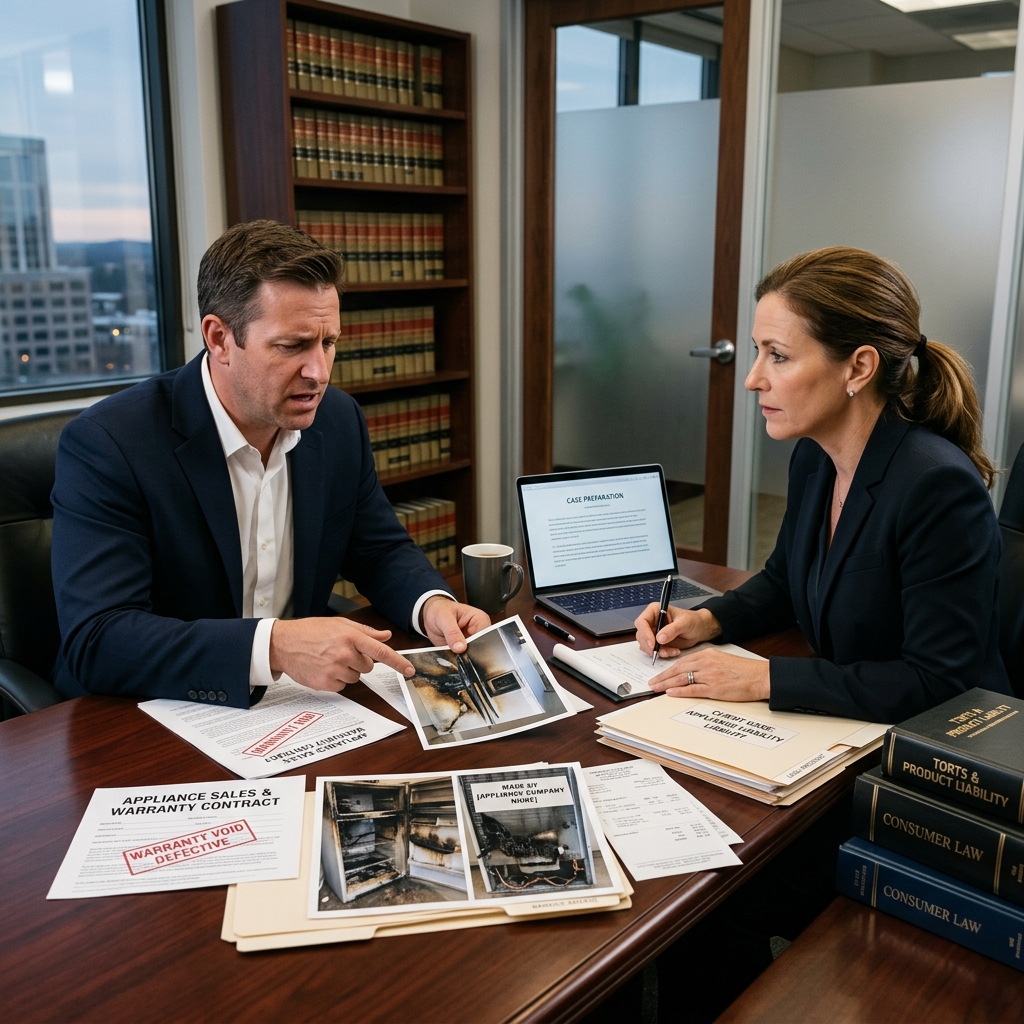
When a Faulty Appliance Becomes a Legal Problem
Buying a major appliance is supposed to bring convenience, not repeated repair bills, safety risks, or months of frustration. When a refrigerator stops cooling, a washer floods the laundry room, or a dryer overheats, the first question is usually whether the seller or manufacturer will fix the problem. If that does not happen, the next question is whether legal action makes sense.
In many situations, a consumer can pursue a claim against an appliance company. The strongest cases usually fall into one of three categories: a warranty dispute, a contract dispute, or a product liability claim. The right path depends on what went wrong, how much money is at stake, and whether the appliance caused only financial loss or also physical injury or property damage.
- Warranty disputes often involve a promise to repair, replace, or refund.
- Contract disputes can arise when the company does not honor the terms of the sale.
- Product liability claims may apply when a defective appliance causes injury or significant damage.
Start by Identifying the Type of Problem
Not every malfunction supports a lawsuit. Some disputes are simple inconvenience issues, while others involve a dangerous defect or a broken promise in the warranty paperwork. The legal theory you use should match the harm you suffered.
If the appliance merely does not work as promised, the issue may involve a breach of warranty or breach of contract. If the machine created a fire, electrical shock, flood, or other unsafe condition, a product liability claim may be more appropriate. The difference matters because injury cases and money-loss cases are handled differently in court.
| Problem type | Possible legal theory | Typical remedy |
|---|---|---|
| Appliance breaks early or never works properly | Warranty or contract claim | Repair, replacement, refund, or damages |
| Seller refuses to honor written promises | Breach of warranty or breach of contract | Enforcement of sale terms |
| Appliance causes fire, shock, or injury | Product liability | Compensation for injuries and losses |
Review the Warranty Before Taking Action
Most appliances come with some kind of warranty, and that document should be read carefully before making a legal decision. A warranty is a promise by the manufacturer or seller about what the product will do, how long coverage lasts, and what remedy will be offered if something goes wrong. The details matter because some warranties are limited to certain parts, specific defects, or short time periods.
Consumers should check whether the warranty requires the buyer to contact the manufacturer directly, return the product to the seller, or submit paperwork in a particular way. A warranty may also say whether the company will repair the item, replace it, or issue a refund. If the company does not follow the written terms, that failure can support a claim for breach of warranty.
- Look for the time period covered by the warranty.
- Check whether the defect is included or excluded.
- Confirm whether the remedy is repair, replacement, or refund.
- Save the warranty document and any registration materials.
Implied Warranties May Help Even Without a Written Promise
Many consumers assume they have no rights if the written warranty expires. That is not always true. In many transactions, the law recognizes implied warranties, which are basic protections built into the sale of goods. One common protection is the expectation that a product will be fit for ordinary use and will work for a reasonable time.
This matters when an expensive appliance fails far earlier than a consumer would reasonably expect. A dishwasher that leaks after a short period or a refrigerator that cannot maintain safe temperatures may raise implied warranty issues even if the manufacturer points to an expired limited warranty. State law controls many of these claims, so the exact rules vary by location.
When Small Claims Court May Be Enough
If the main loss is the price of the appliance itself, small claims court may be a practical option. These courts are designed for relatively modest disputes and are usually less formal than regular civil court. That can make them a good fit for consumers who want a refund, replacement value, or reimbursement for repair costs.
A small claims case is usually simpler than a full lawsuit. The consumer files a complaint, pays the filing fee, serves the company, and attends a hearing where each side presents evidence. In many places, a lawyer is not required. Still, even a small claims case works best when the buyer has clear records showing the problem and the attempts made to resolve it.
- Keep the purchase receipt.
- Save the warranty and user manual.
- Take photos or video of the defect.
- Write down dates, names, and conversation notes.
When Product Liability Becomes the Better Claim
Some appliance failures do more than waste money. A defective component can start a fire, leak toxic smoke, cause burns, or damage a home. When that happens, the case may move beyond warranty law and into product liability. These claims are designed to address unsafe products that should not have reached consumers in their dangerous condition.
Product liability claims may be based on strict liability, negligence, or a related legal theory. A strict liability case focuses on the defect itself rather than the company’s intent. Negligence focuses on whether the company failed to act with reasonable care in design, testing, warning, or manufacturing. Either way, the injured consumer must connect the defect to the harm suffered.
What You Must Prove in a Dangerous-Product Case
In a product liability case involving an appliance, the proof usually centers on three core points. First, the appliance must have been defective. Second, the defect must have made the appliance unreasonably dangerous. Third, the defect must have caused the injury or damage.
That means a consumer typically needs more than a broken appliance. There must be evidence that the product was unsafe in a legally meaningful way and that the unsafe condition led to the loss. For example, if a faulty oven thermostat causes a fire, the cause-and-effect chain may be stronger than if the oven simply stops heating.
- The appliance was defective.
- The defect created an unreasonable danger.
- The defect caused injury or property damage.
Documentation Can Make or Break the Claim
Documentation is one of the most important parts of any consumer case. Courts and manufacturers respond better to organized records than to vague complaints. A consumer who can show when the problem began, how often it happened, what was reported, and how the company responded is in a much better position to negotiate or litigate.
Useful records include receipts, order confirmations, warranty papers, service tickets, repair estimates, photographs, videos, and written communication with the seller or manufacturer. If a technician inspected the appliance, keep a copy of the report. If the problem caused property damage, save insurance records and repair invoices as well.
- Photograph the appliance and the damage it caused.
- Keep all emails and text messages.
- Record the date and time of every call.
- Write down the name and job title of each representative.
Trying to Fix the Problem Before Filing Suit
Before filing a lawsuit, it usually makes sense to try a direct resolution. Contact the seller first, then the manufacturer if necessary. Many companies have formal complaint channels and may offer a repair, a replacement, or a refund if the consumer clearly explains the defect and provides proof.
If customer service does not solve the issue, sending a written demand can help. A clear letter describing the purchase, the defect, the prior attempts to resolve the matter, and the requested remedy may prompt action. In some cases, the consumer may also be able to dispute a credit card charge if the purchase was made by card and the merchandise was defective or not delivered as promised.
How Deadlines Can Limit Your Options
Every claim has a deadline, and those time limits vary by state and by claim type. A warranty claim may have one deadline, a contract claim another, and a personal injury claim yet another. Waiting too long can end a case even if the underlying facts are strong.
Because the clock can start running at different times depending on the claim, it is important to act quickly after discovering the defect. That is especially true if the appliance caused an injury, a fire, or water damage. A consumer law attorney can help determine which deadline applies and whether an exception is available.
When a Lawyer May Be Worth Contacting
Not every appliance dispute needs a lawyer, but legal advice can be valuable when the case involves major damage, injury, or a company that refuses to respond. An attorney can help identify the best legal theory, preserve evidence, calculate damages, and determine whether arbitration, small claims court, or a civil lawsuit is the best path.
Lawyers are especially helpful when a defect affected multiple people, when a recall may be involved, or when the company disputes responsibility. They can also help a consumer avoid missing a filing deadline or sending the wrong paperwork to the wrong business entity.
Practical Steps to Take Right Now
If your appliance failed and the company is not helping, a methodical approach will usually produce the best result. Start with the paperwork, move to the seller, then escalate if needed. The goal is to build a record that shows both the defect and your effort to resolve it.
- Read the warranty and sales documents carefully.
- Save every receipt, email, and repair note.
- Document the defect with photos or video.
- Ask the seller for a repair, replacement, or refund.
- Escalate in writing if the first response is unsatisfactory.
- Consider chargeback, small claims court, or legal counsel if needed.
Frequently Asked Questions
Can I sue if the appliance simply stopped working?
Yes, possibly. If the appliance failed much earlier than expected or the seller or manufacturer refused to honor a warranty, you may have a breach of warranty or contract claim.
Can I sue if the appliance caused a fire or injury?
Yes. A dangerous defect that causes injury or property damage may support a product liability claim, especially if the defect made the product unreasonably dangerous.
Do I need a written warranty to bring a claim?
No. Even without a written warranty, implied warranty protections may still apply, depending on state law and the facts of the sale.
Is small claims court a good option?
It often is when the dispute is mainly about the purchase price, repair costs, or replacement value and the amount involved is relatively modest.
What if the company ignores my complaint?
If the seller and manufacturer both refuse to help, you may need to escalate through a formal demand, chargeback, small claims court, or a lawsuit with the help of an attorney.
Why Early Action Usually Helps
The sooner a consumer documents the defect and begins the complaint process, the easier it is to preserve evidence and protect legal rights. Appliances are expensive, and when they fail, the financial impact can spread quickly through repair bills, temporary replacements, and damage to flooring, cabinetry, food, or clothing. Prompt action improves the chances of a fair resolution and reduces the risk that a deadline will pass unnoticed.
References
- Can I Sue an Appliance Company? — FindLaw. 2026-07-09. https://www.findlaw.com/consumer/consumer-transactions/can-i-sue-an-appliance-company.html
- Warranties — Federal Trade Commission. 2026-07-09. https://consumer.ftc.gov/node/77441
- Complaints about consumer products and services — USA.gov. 2026-07-09. https://www.usa.gov/consumer-complaints
- Consumer rights in disputes with retailers — Consumer Reports. 2010-09-01. https://www.consumerreports.org/cro/2010/09/your-rights-as-a-consumer/index.htm
- Breach of Warranty Legal Claims Based on Defective Consumer Products — Justia. 2026-07-09. https://www.justia.com/consumer/consumer-protection-law/dangerous-or-defective-products-recalls/breach-of-warranty/
Similar Articles








Read full bio of Sneha Tete


