
Can I Sue My Tax Preparer: Legal Options And How To Proceed Now
Learn when tax preparer mistakes cross the line into legal negligence and what options you have to seek compensation.
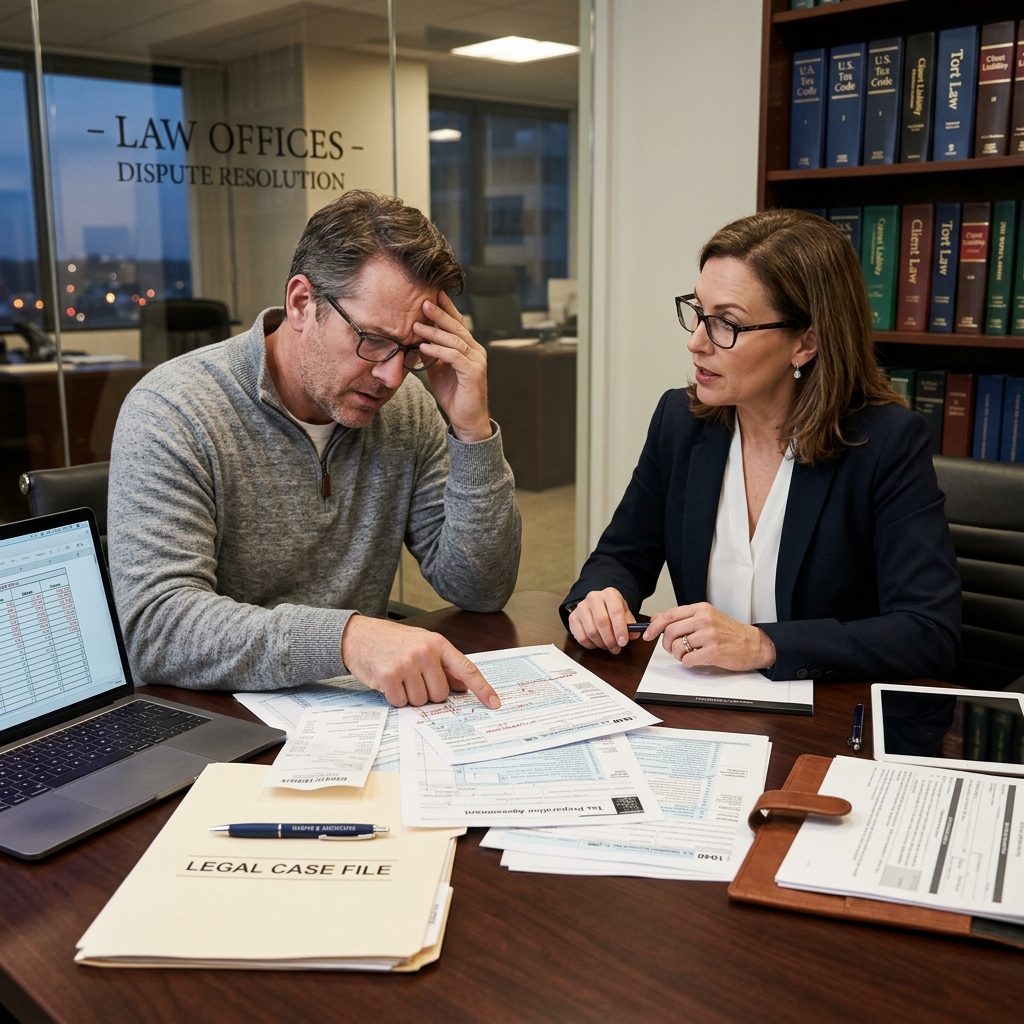
Hiring a professional tax preparation company is supposed to reduce stress, limit errors, and help you comply with complex tax rules. But when a preparer makes serious mistakes or engages in misconduct, the consequences can be costly: IRS audits, penalties, interest, and even criminal investigations. In those situations, many taxpayers ask a critical question: can I sue the tax preparation company for what went wrong?
This guide explains when legal action may be appropriate, what types of claims are possible, how to gather evidence, and what to consider before filing a lawsuit. It also highlights your rights as a client and alternative paths to relief, such as complaints to government agencies and professional regulators.
Understanding the Legal Relationship With Your Tax Preparer
When you hire a tax preparation company, you typically enter into a professional services relationship. Even if you never sign a formal contract, the preparer usually owes you a legal duty to perform the work with reasonable care and in compliance with applicable laws and professional standards.
- Duty of care: Tax preparers must follow tax laws, IRS rules, and accepted accounting or tax preparation standards when working on your return.
- Competence and honesty: They must use accurate information, avoid misrepresenting your income or deductions, and refrain from fraud or intentional misconduct.
- Disclosure obligations: In many jurisdictions, preparers must give you information about fees, refund options, and key consumer rights before they start the work.
- Recordkeeping and access: You generally have the right to a copy of your completed return, relevant records, and itemized receipts.
If the tax preparation company fails to meet these obligations and you suffer financial harm as a result, you may have grounds for a civil claim such as negligence, malpractice, breach of contract, or fraud.
Common Tax Preparer Mistakes That Lead to Lawsuits
Not every error justifies a lawsuit. Minor typos or harmless miscalculations can often be fixed through amended returns without going to court. However, serious errors or misconduct that lead to significant losses may support legal claims.
Examples of Negligent or Improper Conduct
- Failure to file on time: The preparer misses filing deadlines, causing late-filing penalties, interest, or loss of certain tax benefits.
- Incorrect income reporting: Misreporting or omitting sources of income, resulting in underpayment and later IRS assessments.
- Improper deductions or credits: Claiming deductions or credits without adequate support, exposing you to disallowance and penalties.
- Wrong filing status: Selecting an improper filing status, such as filing as head of household when requirements are not met.
- Using the wrong preparer identification: Failing to include or misusing the Preparer Tax Identification Number (PTIN) required by the IRS.
- Failure to sign the return: Not signing the return as the paid preparer, which can be a violation of IRS rules and state law.
- Refusing to provide a copy of the return: Withholding your own tax return or records without lawful justification.
- Misrepresentation of qualifications: Claiming credentials or licenses they do not actually possess.
In addition to tax-specific issues, some problems involve general business liability, such as bodily injury on the preparer’s premises or damage to your property during an in-home consultation.
Misconduct and Fraud by Tax Preparers
Beyond negligence, some preparers engage in outright fraud, such as fabricating deductions, inventing dependents, or manipulating forms to inflate refunds. The IRS expressly encourages taxpayers to report suspected preparer fraud or misconduct so that it can investigate and take enforcement action.
Fraudulent activities can lead to:
- IRS audits or criminal investigations targeting both you and the preparer
- Revocation of the preparer’s license or registration by regulatory authorities
- Potential civil lawsuits for damages, restitution, or punitive relief
Legal Theories for Suing a Tax Preparation Company
When you consider suing a tax preparation company, your lawyer will look for specific legal theories that fit the facts of your case. Several common causes of action may apply.
Professional Negligence or Malpractice
Professional negligence (often called malpractice in the context of accountants or tax professionals) is one of the most frequent claims. To succeed, you generally must show four elements:
- Duty: The preparer owed you a professional duty of care.
- Breach: They failed to meet the required standard, such as by making avoidable errors or ignoring clear tax rules.
- Causation: Their breach directly caused your financial harm, not some unrelated factor.
- Damages: You incurred concrete financial losses like penalties, interest, legal fees, or overpaid taxes.
Courts often rely on expert testimony to define the proper standard of care for tax preparers and to demonstrate how the company’s conduct fell short.
Breach of Contract
If you have a written engagement letter or service agreement, you may also assert a breach of contract claim. This focuses on whether the preparer failed to do what the contract promised, such as preparing accurate returns, meeting deadlines, or providing agreed documentation.
Even an oral agreement or advertised guarantee can form the basis of a contractual obligation, depending on the facts and local law.
Fraud and Misrepresentation
Fraud claims require proof that the preparer knowingly made false statements or concealed critical information with the intent that you rely on it, and that you suffered harm as a result. Examples include:
- Fabricating numbers on your return without telling you
- Promising unrealistic tax savings based on strategies they know are illegal
- Advertising non-existent licenses or certifications to gain your trust
These claims can be complex and often involve higher burdens of proof than negligence, but they may allow for additional remedies, such as punitive damages in some jurisdictions.
Violations of Consumer Protection Laws
Many states and cities have consumer bills of rights or similar regulations specifically governing tax preparers. These rules may address:
- Required disclosures about fees, refund options, and timing
- Prohibitions on deceptive marketing and unfair practices
- Registration or licensing requirements for tax preparers
- Rights to receive copies of returns and itemized receipts
Violations of these laws can support civil claims, regulatory complaints, or both. Some consumer protection statutes also provide for statutory damages, attorney fees, or class actions.
Who Is Really Responsible for a Faulty Tax Return?
One important complication is that, under federal law, you are ultimately responsible for the accuracy of your own tax return. You sign the return, verifying that the information is true and correct to the best of your knowledge. That does not absolve the preparer from their obligations, but it means you cannot simply shift all responsibility to the company.
| Party | Primary Responsibilities | Potential Consequences |
|---|---|---|
| Taxpayer | Provide accurate information, review return before signing, retain records. | Liable for taxes owed, possible penalties and interest if return is wrong. |
| Tax Preparation Company | Apply laws correctly, use provided data accurately, follow professional standards. | Subject to civil lawsuits, IRS sanctions, professional discipline, or loss of license. |
Even though you remain liable for any underpaid tax, you may pursue the preparer for compensation covering penalties, interest, extra legal or accounting fees, and other losses caused by their misconduct.
Assessing Whether You Have a Viable Case
Before deciding to sue, it is essential to evaluate whether your situation justifies the time, expense, and risk of litigation. Key questions include:
- What went wrong? Identify the specific error or misconduct. Was it a missed deadline, incorrect deduction, or something more serious like fraud?
- How serious is the impact? Calculate the financial consequences, including penalties, interest, additional taxes, and professional fees needed to fix the problem.
- Did you contribute to the issue? Consider whether you withheld information, ignored advice, or failed to review the return carefully.
- Is there clear evidence? Gather documents, correspondence, and any written guarantees or marketing materials that support your claim.
A consultation with an attorney experienced in tax-related litigation can help you understand the strength of your case and alternative options.
Steps to Take If You Suspect Tax Preparer Misconduct
If you believe your tax preparation company made a serious mistake or acted improperly, you should move quickly. Certain deadlines apply to amended returns, appeals, and legal claims.
Immediate Actions
- Obtain your documents: Request copies of your tax return, engagement agreement, and any communications. You have a right to see what was filed in your name.
- Clarify the problem: Ask the preparer to explain what happened, why, and what they are willing to do to fix it.
- Seek independent tax advice: Consult another tax professional to assess the error and recommend corrective steps, such as filing an amended return.
- Document financial harm: Keep notices from the IRS or state tax agency, and track any penalties, interest, or extra fees.
Reporting the Tax Preparer to Authorities
In cases of suspected fraud or serious misconduct, reporting the preparer can protect both you and other taxpayers. The IRS offers specific channels to report problematic tax return preparers, and many states have complaint mechanisms.
- IRS complaint: The IRS encourages use of detailed, factual information when reporting paid preparer misconduct, and will investigate credible reports.
- State tax department: Some states, such as New York, require tax preparers to register and give consumers a bill of rights. These agencies accept complaints when rights are violated.
- Local consumer protection offices: City or county consumer affairs departments may handle complaints about deceptive practices and fee disclosures.
- Professional licensing boards: Certified public accountants (CPAs) and other licensed professionals can be reported to state boards for discipline.
Reporting does not automatically lead to compensation for your losses, but it can support your legal case and may result in sanctions or corrective action against the company.
Alternatives to a Full Lawsuit
Not every dispute needs to go through a court trial. Depending on your contract and local law, other avenues may be faster and less expensive.
- Negotiation with the preparer: Some companies will voluntarily reimburse penalties and interest if they acknowledge making a mistake. They may also pay for additional professional help to fix the issue.
- Mediation or arbitration: Engagement contracts sometimes require disputes to be resolved through private mediation or arbitration rather than court, which can be quicker.
- Small claims court: For relatively modest losses, you may be able to pursue the company in small claims court without hiring a lawyer.
- Regulatory remedies: Complaints to tax departments or consumer agencies may lead to refunds or other relief, depending on the program.
An attorney can help you weigh these options against the potential benefits of a formal lawsuit.
Protecting Yourself Before Hiring a Tax Preparation Company
The best way to avoid litigation is to carefully choose and manage your relationship with a tax preparer from the start.
Smart Selection Tips
- Verify registration or licensing: Check whether the preparer is properly registered with the state tax department or licensed as a CPA where required.
- Ask about qualifications: Understand their training, experience with your type of return, and whether they are familiar with IRS rules for preparers.
- Review fee disclosures: Request written information on pricing, additional charges, and refund-related products before agreeing to services.
- Avoid refund-based incentives: Be cautious if the preparer’s fee depends on your refund amount, which can tempt aggressive or improper tactics.
Best Practices During Preparation
- Provide complete and accurate information, including income documents, receipts, and prior-year returns.
- Ask questions about major deductions, credits, and strategies used.
- Review the entire return before signing, checking names, Social Security numbers, income, and deduction figures.
- Keep copies of all submitted forms and correspondence for future reference.
Following these steps helps reduce risk and strengthens your position if something goes wrong.
FAQs About Suing Tax Preparation Companies
Can I sue my tax preparer if I get audited?
An audit alone is not necessarily grounds for a lawsuit. You may have a claim if the audit reveals that the preparer made negligent or fraudulent errors that caused you to incur penalties, interest, or other financial losses.
Am I still responsible for the tax owed if my preparer made the mistake?
Yes. As the taxpayer who signs the return, you remain responsible for any taxes due. However, you may be able to recover penalties, interest, and related damages from the preparer if you prove negligence or misconduct.
What evidence do I need to sue a tax preparation company?
Useful evidence includes engagement agreements, copies of the filed returns, IRS or state notices, emails or letters from the preparer, itemized receipts, and any advertising claims or guarantees. Expert testimony is often needed to show that the preparer’s work fell below professional standards.
How long do I have to file a lawsuit?
Deadlines, known as statutes of limitations, vary by jurisdiction and type of claim. They may depend on when the error was discovered or when the tax authority issued an assessment. Consult a lawyer promptly to avoid missing critical deadlines.
Should I report the preparer to the IRS before suing?
Reporting suspected fraud or serious misconduct to the IRS and state agencies is often advisable. It can help protect other taxpayers and may provide supporting documentation for your case, but it does not replace seeking legal advice about your own financial losses.
References
- When Can I Sue My Tax Preparer for Negligence? — StangerLaw LLC. 2022-05-04. https://www.stangerlaw.com/blog/when-can-i-sue-my-tax-preparer-for-negligence/
- Guide to Tax Preparer Liability — NOW Insurance. 2021-08-16. https://nowinsurance.com/blog/what-can-a-tax-preparer-be-held-liable-for/
- Consumer Bill of Rights Regarding Tax Preparers — New York State Department of Taxation and Finance. 2023-01-01. https://www.tax.ny.gov/tp/cbr/
- Consumer Bill of Rights Regarding Tax Preparers — NYC Department of Consumer and Worker Protection. 2022-02-10. https://www.nyc.gov/site/dca/talk-money/file-your-taxes-rights.page
- Report a Tax Return Preparer — Internal Revenue Service. 2024-01-10. https://www.irs.gov/help/report-fraud/report-a-tax-return-preparer
- CPA and Tax Preparers Enforcement Information — McLaughlin Legal, APC. 2020-06-15. https://mclaughlinlegal.com/cpa-and-tax-preparers-1
Similar Articles








Read full bio of Sneha Tete




