
Can I Sue A Dog Kennel Or Pet Boarding Facility: Legal Guide
Understand when a kennel or dog day care may be legally responsible for pet injuries or loss.
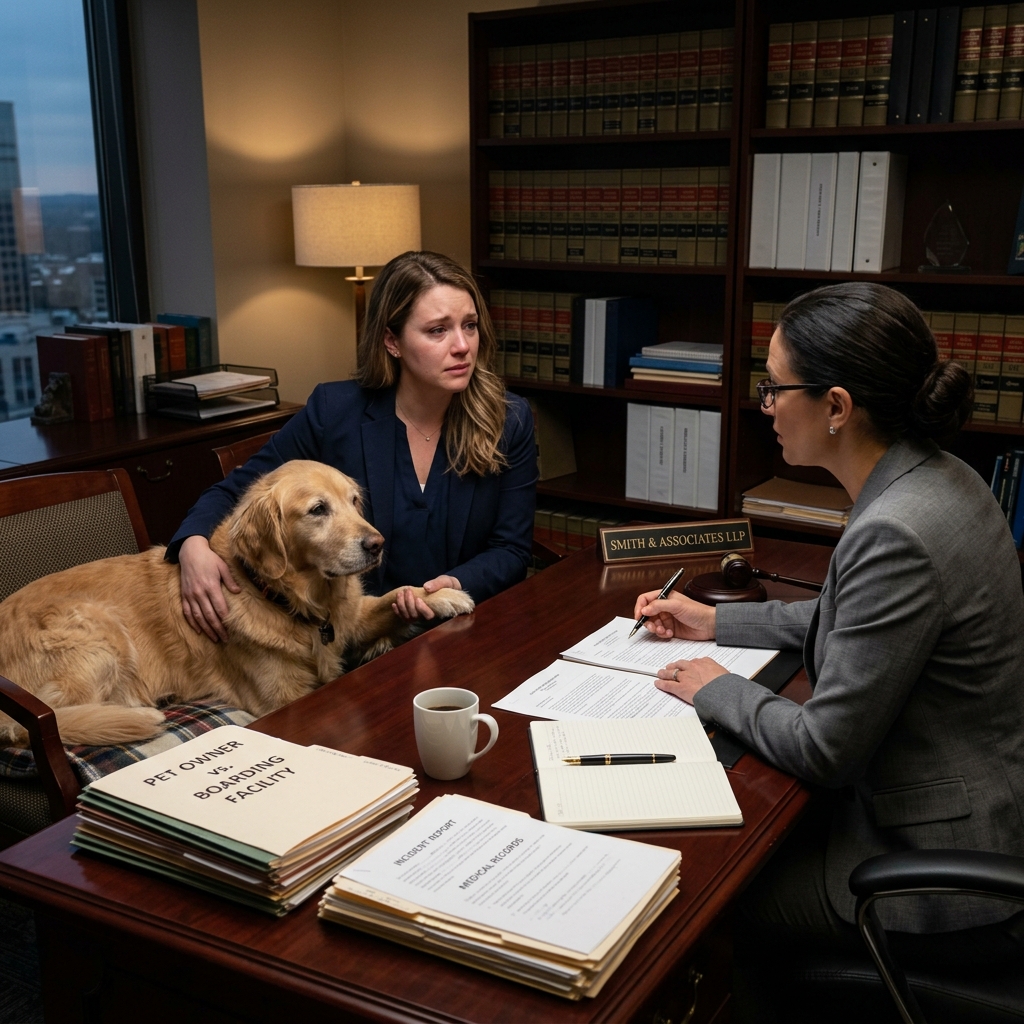
When you leave a pet with a kennel, boarding facility, or dog day care, you expect basic care, supervision, and safe handling. If your animal comes home injured, ill, or does not come home at all, the law may give you a path to seek compensation. In many situations, a lawsuit is possible, but success depends on proving what happened, who was responsible, and what your state allows you to recover.
When a boarding facility may be legally responsible
A pet care business can be liable when it fails to act with reasonable care and that failure causes harm. The exact legal theory depends on the facts, but the most common claim is negligence. That usually means the facility owed your pet a duty of care, breached that duty, and caused damages that can be proven with evidence.
Examples of possible failures include:
- leaving dogs unsupervised during playtime
- mixing incompatible animals without proper precautions
- failing to provide water, food, or necessary medication
- allowing escape through broken gates, doors, or fencing
- ignoring signs of illness, injury, heat stress, or distress
- violating licensing or safety rules that are meant to protect animals
Some disputes arise from direct injuries, while others involve lost pets, pregnancy, disease transmission, or behavioral harm caused by poor handling. In each case, the core question is whether the business acted reasonably under the circumstances.
What you must prove in a negligence claim
To succeed, you generally need more than proof that your pet was harmed while in the facility’s care. You need evidence connecting the harm to the facility’s conduct. Courts often look for four elements in a negligence case.
| Element | What it means | Example |
|---|---|---|
| Duty | The facility had a responsibility to care for your pet in a safe and reasonable way. | The kennel agreed to board your dog for a fee. |
| Breach | The facility failed to meet that standard. | Staff left multiple dogs together without proper supervision. |
| Causation | The breach caused the harm. | Your dog was injured during the unsupervised group play session. |
| Damages | You suffered a measurable loss. | Veterinary bills, replacement value, or other recoverable losses. |
Evidence can include intake forms, vaccination records, photos of your pet before boarding, discharge notes from a veterinarian, witness statements, surveillance footage, and written communications with the facility. The stronger your proof, the easier it is to show that the injury happened because of the facility’s conduct rather than an unrelated cause.
Why contracts and waivers matter
Many boarding businesses use contracts that limit liability or require customers to sign a waiver. These provisions can make a case harder, but they do not always eliminate responsibility. A waiver may not protect a business from gross negligence, intentional misconduct, or violations of mandatory safety laws, depending on state law and the wording of the agreement.
You should review the entire contract carefully, including any fine print about:
- health requirements and vaccination rules
- emergency veterinary treatment authorization
- behavioral disclosures and aggressive dog policies
- limitations of liability or damage caps
- notice deadlines for reporting claims
- arbitration or forum-selection clauses
If the facility says it is not responsible for almost anything, that language does not necessarily end the dispute. Courts often examine whether the contract is clear, whether it was fairly presented, and whether the business is trying to waive duties it cannot legally avoid.
Other legal theories that may apply
Negligence is the most familiar claim, but it is not the only one. Depending on the facts, a pet owner may also have claims based on property law or contract law. Because many states classify pets as personal property, some damages rules are narrower than people expect.
- Conversion: This may apply if the facility wrongfully kept, transferred, or refused to return your pet.
- Breach of contract: This may apply if the business promised a specific service and failed to perform it.
- Negligence per se: This may apply when a facility breaks a law or regulation designed to protect animals, and that violation leads to injury.
Negligence per se can be especially important if the business violated local licensing, housing, sanitation, or animal care requirements. In that situation, a legal violation may help establish the breach element more quickly, although you still usually need to prove causation and damages.
What damages are usually available
Recovery often depends on how your state treats pets under the law. In many states, animals are considered personal property, which means damages may be limited to market value or replacement value rather than emotional distress. That can feel unfair to owners who view their pets as family members, but it remains the common rule in many courts.
Potential damages may include:
- veterinary expenses
- medication and follow-up treatment
- the fair market value of the pet if it died
- the cost of breeding losses, in some cases
- reasonable costs tied to recovering a lost animal
- contract-based losses if the service was not delivered
Some jurisdictions allow limited additional recovery in special situations, especially where the pet had unique training, working-animal status, or proven economic value. Service animals may receive different treatment in some states because they are closely tied to disability rights and can be analyzed differently from ordinary household pets.
How to build your case quickly
Time matters. If you think a boarding facility injured your pet, start documenting everything as soon as possible. The facility may have records, but you should not rely on it to preserve evidence for you.
Strong early steps include:
- take dated photos or videos of your pet before and after boarding
- request written records from the kennel or day care
- seek veterinary care immediately and ask for detailed notes
- save texts, emails, invoices, and social media messages
- identify witnesses who saw your pet drop-off, pick-up, or condition
- write down a timeline while events are fresh
You should also ask the veterinarian to document whether the injury appears recent, severe, accidental, or consistent with neglect. If a disease, bite wound, or escape incident is involved, the medical record can become one of the most important pieces of evidence in the case.
Deadlines and where to file
The time limit for filing depends on your state’s statute of limitations. Because pets are often treated as property, the claim may follow the deadline for property damage. In some cases involving service animals or other special claims, a different deadline may apply. Missing the filing deadline can end the case even if your evidence is strong.
For smaller losses, small claims court may be the most practical option. These courts are designed for simpler disputes and lower dollar amounts. In some states, lawyers are not allowed in small claims court, while in others the rules are more flexible. Before filing, confirm the filing fee, maximum recovery limit, and local procedure.
Practical obstacles pet owners often face
Even when a claim has merit, several issues can make it hard to win. The facility may argue that the pet had a preexisting condition, that the animal behaved unpredictably, or that the owner failed to disclose medical or behavioral issues. It may also contend that the injury was accidental and unavoidable despite reasonable care.
Common defense arguments include:
- the pet was already sick or injured before drop-off
- the owner concealed aggression, anxiety, or medical risk
- the contract limits liability
- the incident was caused by another animal or a third party
- the owner cannot prove when or how the injury happened
That is why pre-boarding records are so important. If you can show your dog was healthy, alert, and properly documented at intake, it becomes harder for the business to blame a preexisting problem.
Questions to ask before you hire a kennel or day care
Careful screening can prevent disputes later. A responsible facility should be able to explain its policies clearly and provide written information about safety procedures, staffing, supervision, and emergency response.
- How are dogs grouped by size, temperament, and play style?
- What happens if a pet becomes ill, injured, or aggressive?
- Is there overnight supervision, and if so, by whom?
- What vaccinations or medical records are required?
- How are escapes, fights, and bite incidents reported?
- Does the business carry insurance for animal injuries?
If the answers are vague, inconsistent, or overly dismissive, that may be a warning sign. A quality operation should be willing to explain how it protects the animals in its custody.
Frequently asked questions
Can I sue if my dog died at a boarding facility?
Yes, if you can prove the facility’s negligence, breach of contract, or another legal wrong caused the death. Your damages may still be limited by state law, but a claim is often possible.
What if I signed a waiver?
A waiver may limit or complicate your claim, but it does not automatically erase liability. Courts often look at the exact language and whether the business was grossly negligent or violated the law.
Can I recover emotional distress damages for my pet?
Usually not in ordinary pet property cases. Some states allow broader damages in narrow circumstances, but many limit recovery to economic losses.
Should I go to small claims court?
Small claims court can be a practical choice when the amount at issue is modest. It is often faster and less expensive than a full civil lawsuit.
What if the kennel lost my pet instead of injuring it?
A lost pet claim may still be actionable if the facility failed to supervise, secure, or return the animal properly. The available damages depend on your state’s law and the evidence you can gather.
How a lawyer can help
A lawyer can evaluate whether the facts support negligence, contract claims, or another theory, and can also help interpret the boarding contract and local animal-care rules. If the case involves severe injury, a death, a missing pet, or a business that denies responsibility, legal help can be especially valuable.
Even if you decide not to file a lawsuit, an attorney may help you send a demand letter, preserve evidence, and estimate the value of the claim. In some cases, that is enough to produce a settlement without going to court.
References
- Can I Sue a Dog Kennel, Pet Boarding Facility, or Dog Day Care? — FindLaw. N/A. https://www.findlaw.com/litigation/filing-a-lawsuit/can-i-sue-a-dog-kennel-pet-boarding-facility-or-dog-day-care.html
- Small Animal Boarding Establishment Permit — NYC.gov / Department of Consumer and Worker Protection. N/A. https://nyc-business.nyc.gov/nycbusiness/description/small-animal-boarding-establishment-permit
- Subchapter 8 – Boarding Kennel Regulation Act — New York City Administrative Code. N/A. https://codelibrary.amlegal.com/codes/newyorkcity/latest/NYCadmin/0-0-0-215681
- Guidance for Municipalities — New York State Department of Agriculture and Markets. N/A. https://agriculture.ny.gov/animals/guidance-municipalities
- FAQ – Humane Society Of New York — Humane Society of New York. N/A. https://humanesocietyny.org/humane-education/frequently-asked-questions/
Similar Articles








Read full bio of Sneha Tete


