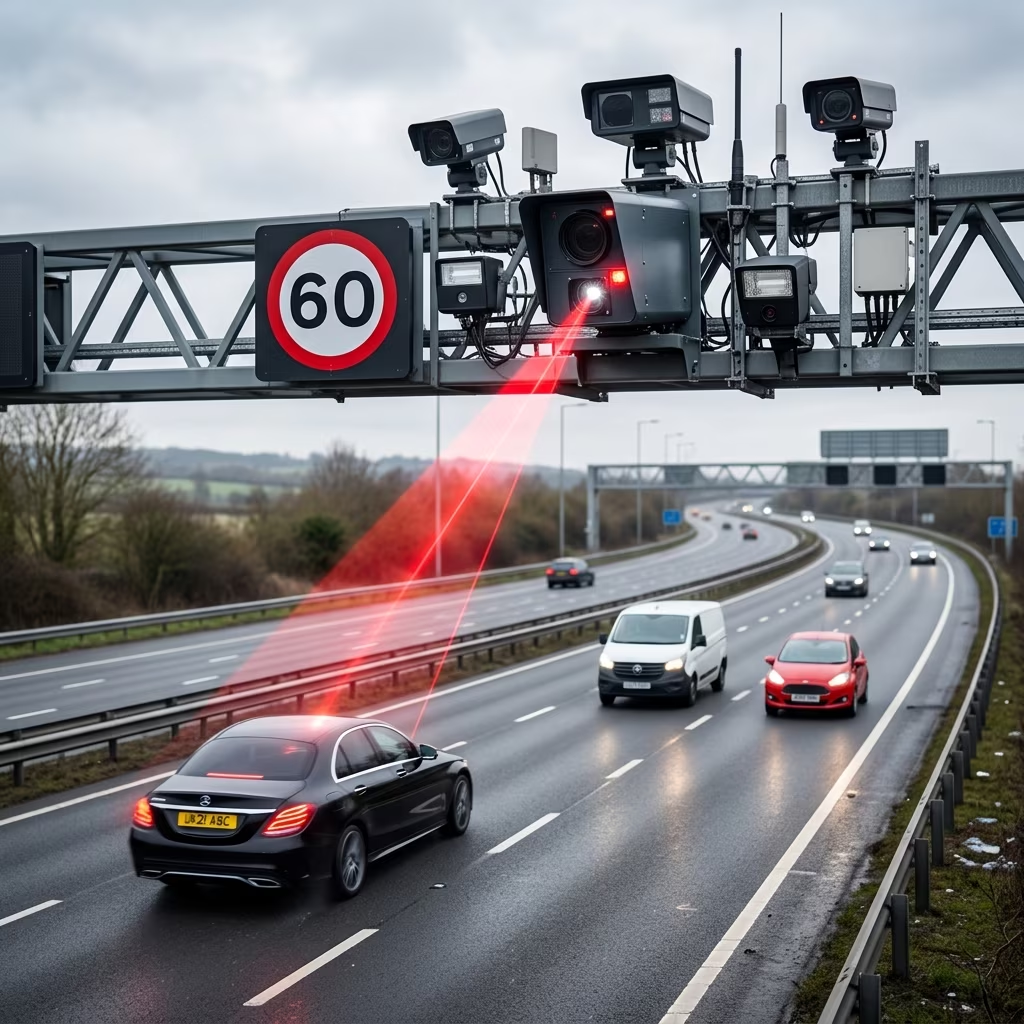
A speeding ticket does not always require a police officer to pull a driver over at the roadside. In some situations, a citation can be issued later by mail or generated from automated enforcement systems, although the process and legal effect can differ from a standard traffic stop citation.
For most drivers, the familiar version of a speeding ticket still begins with flashing lights and a roadside stop. But modern traffic enforcement also includes cameras, license plate readers, and other tools that can document a violation without an officer making a direct stop. Whether that citation is enforceable, and what defenses may exist, often depends on the state, the type of camera or notice used, and whether the government can identify the actual driver.
How a speeding citation can happen without a stop
The classic traffic ticket is issued after an officer observes an alleged violation and stops the vehicle. In contrast, a no-stop citation usually comes from one of a few different enforcement methods. These methods can create evidence of speeding even when no officer ever speaks to the driver in person.
- Automated speed cameras can record a vehicle traveling above the posted limit and trigger a citation process.
- Red-light or intersection cameras may capture combined traffic violations, including speed-related offenses in some jurisdictions.
- School zone or work zone systems may issue mailed notices when vehicle speed exceeds the enforced limit.
- Officer-observed violations may sometimes be documented later if the identity of the driver is already known from another investigation, though this is less common.
In the United States, automated traffic enforcement is controlled mainly by state and local law, so the exact process varies widely. A notice received in one state may be handled like a civil penalty, while in another state it may function more like a traditional traffic citation.
Why automated enforcement matters
Automated enforcement has changed the way many traffic violations are detected. Instead of relying only on an officer watching the road in real time, municipalities may use fixed equipment to monitor high-risk locations such as school zones, toll roads, or dangerous intersections. Transportation agencies often justify these systems as a way to reduce crashes and improve compliance where speed risks are greatest.
From the driver’s perspective, the biggest difference is that no roadside conversation takes place. That means there may be no immediate chance to explain the situation, identify the driver, or contest the officer’s observations on the spot. It also means the evidence is often machine-based, such as a photograph, time stamp, vehicle speed calculation, or license plate image.
| Type of enforcement | How it is issued | Typical issue for drivers |
|---|---|---|
| Roadside stop | Officer pulls vehicle over and hands driver a ticket | Immediate notice and direct interaction with officer |
| Camera citation | Notice is mailed after an automated system records the violation | Driver may not know about the ticket until later |
| Plate-based notice | Vehicle owner is identified through registration records | Owner may need to address who was actually driving |
What makes a no-stop ticket harder to prove
One of the most important legal questions in a no-stop case is who was driving. When an officer personally stops a car, the officer can testify about what was observed and can often identify the driver. With a mailed citation or camera-based notice, that personal identification may be weaker or missing entirely.
That gap matters because traffic cases still require proof. If the government cannot connect the alleged speed to a particular driver under the applicable law, the citation may be vulnerable. In some jurisdictions, the registered owner is presumed responsible unless the owner proves otherwise. In others, the agency may need stronger evidence before the citation can stand.
Common defense issues include:
- the photo does not clearly show the driver
- the vehicle registration information is outdated or incorrect
- the speed-reading device was not properly calibrated
- signage or notice requirements were not followed
- the law only authorizes civil penalties, not a criminal or moving violation
These issues do not automatically defeat a ticket, but they can affect whether the citation is enforceable and what consequences follow.
How camera tickets can differ from ordinary speeding tickets
Not every speeding-related notice is treated the same way. In some places, automated citations are civil penalties rather than criminal charges or moving violations. That distinction can affect the size of the fine, whether insurance rates are impacted, and whether points are added to the driver’s license record.
A civil camera ticket may work more like a parking notice: the vehicle owner receives the notice and can respond through an administrative process. A traditional speeding ticket, by contrast, may require a court appearance or a formal plea and can carry points, surcharges, and higher insurance costs if the driver is convicted.
This difference matters because drivers sometimes assume every speed-related notice is the same. It is not. The legal label on the paperwork, the local ordinance, and the state’s traffic code all help determine the consequences.
What to check if you receive a ticket in the mail
If a speeding notice arrives without a traffic stop, the first step is to read it carefully. The document may reveal whether it is a civil infraction, a moving violation, or a request to identify the driver. It may also list deadlines for payment, contesting the citation, or requesting a hearing.
Before responding, review the following details:
- Date, time, and location of the alleged violation
- Vehicle information such as plate number and make
- Posted speed limit and alleged recorded speed
- Instructions for contesting the notice
- Deadlines for response or hearing requests
If the notice appears incomplete or inconsistent, that may be important. Errors in the vehicle description, location, or time of day can sometimes be relevant in a challenge.
Possible defenses to a no-stop speeding citation
The best defense depends on the state’s law and the type of citation. Still, several arguments come up often in no-stop cases.
- Identity challenge: the government cannot prove you were the driver.
- Equipment challenge: the camera or radar system was unreliable, uncalibrated, or improperly maintained.
- Notice challenge: required signs warning of automated enforcement were missing or inadequate.
- Procedural challenge: the issuing agency missed a deadline or failed to follow the required mailing process.
- Ownership mismatch: someone else used the vehicle, and the law does not automatically assign liability to the owner.
Some drivers try to defend a mailed citation by saying they were not driving. Whether that argument works depends heavily on the jurisdiction. In some places, the law permits the registered owner to rebut the presumption of responsibility with evidence such as travel records, witness statements, or lease documents.
What happens if you ignore the notice
Ignoring a speeding citation is rarely a good idea. Depending on the jurisdiction, failing to respond can lead to additional fines, late fees, default judgments, a suspended registration, or even a license hold. In states that treat the notice as a formal traffic charge, missing the deadline can also remove the chance to contest the allegation.
Some drivers ignore mailed notices because they assume no officer stopped them, so nothing serious will happen. That assumption can be costly. Even where the penalty is civil, unpaid tickets can still escalate into collection actions or vehicle registration problems.
If the notice is unclear, the safest step is to verify the deadline and determine whether the jurisdiction offers a hearing or administrative review.
When it may be worth fighting the citation
Not every speeding notice deserves the same response. If the citation is tied to a camera and the image does not clearly identify the driver, or if the alleged speed seems inconsistent with the road conditions or equipment data, it may be worth contesting. The same is true if the stakes are high because of prior traffic points, a commercial driver’s license, or a work zone enhancement.
A driver may also want to evaluate the cost of the ticket against the possible insurance impact. A conviction for a moving violation can be more expensive over time than the initial fine suggests. That is especially true where the state uses points, surcharges, or repeat-offender penalties.
When to consider legal help
Not every no-stop speeding citation requires a lawyer, but legal advice can be useful when the consequences are significant or the process is confusing. An attorney can help interpret whether the notice is civil or criminal, whether the government has enough proof, and whether a hearing strategy makes sense.
Legal help may be especially useful if:
- the notice threatens license points or suspension
- the citation comes from a high-dollar work zone or school zone penalty
- you were not the vehicle owner at the time of the offense
- you believe the camera system was defective
- the ticket includes multiple alleged violations
In many cases, a short consultation can clarify whether a challenge is realistic or whether a safer option is to resolve the matter quickly and avoid extra penalties.
Frequently asked questions
Can a speeding ticket be issued if no officer stops me?
Yes. In some jurisdictions, automated enforcement systems can generate a citation or notice without a roadside stop. The exact legal effect depends on state and local law.
Does a camera speeding ticket always add points to my license?
No. Some camera-based violations are civil penalties and do not carry points, while others are treated more like ordinary traffic offenses. The notice and local law control the outcome.
Can the owner of the car be ticketed even if someone else was driving?
Sometimes. Some jurisdictions place responsibility on the vehicle owner unless the owner can show another person was driving or the law assigns liability differently.
Is a mailed speeding notice automatically valid?
No. A notice can still be challenged for proof problems, equipment issues, procedural defects, or failure to identify the driver under the applicable law.
Should I pay the ticket right away?
Not before confirming what the notice is and what consequences it carries. Payment may count as an admission in some systems and can waive the chance to contest the allegation.
Practical next steps after receiving a no-stop speeding notice
If you receive a citation without being pulled over, begin by identifying whether it is a civil notice, a traffic summons, or a request for driver information. Then check the deadline, preserve the paperwork, and review any photos or video provided by the issuing agency. If the charge could affect your license or insurance, it may be worth comparing the likely fine with the long-term cost of a conviction.
Ultimately, the key point is simple: a traffic stop is common, but it is not the only way a speeding allegation can reach a driver. Automated systems and mailed notices can create real legal consequences, and the best response depends on the law in the specific jurisdiction.
References
- Penalties for Speeding — New York Governor’s Traffic Safety Committee. 2026. https://trafficsafety.ny.gov/penalties-speeding
- Can I get a ticket without getting pulled over? — Avvo Legal Answers. 2026. https://www.avvo.com/legal-answers/can-i-get-a-ticket-without-getting-pulled-over–5988038.html
- Can I be issued a speeding ticket without being pulled over? — Lawyers.com. 2026. https://ask-a-lawyer.lawyers.com/criminal/can-i-be-issued-a-speeding-ticket-without-being-pulled-over-1587716.html
- Speeding Tickets in New York State — Rosenblum Law. 2026. https://traffictickets.com/new-york/traffic-tickets/speeding-tickets/
- Tips on Avoiding a Speeding Ticket in NY — Villanueva & Castellano, LLP. 2026. https://www.villanuevalaw.com/tips-on-avoiding-a-speeding-ticket-in-ny.html