
Fining Customers For Negative Reviews: Legal Risks Explained
Understand why punishing customers for negative reviews can violate federal law, damage your reputation, and what to do instead.
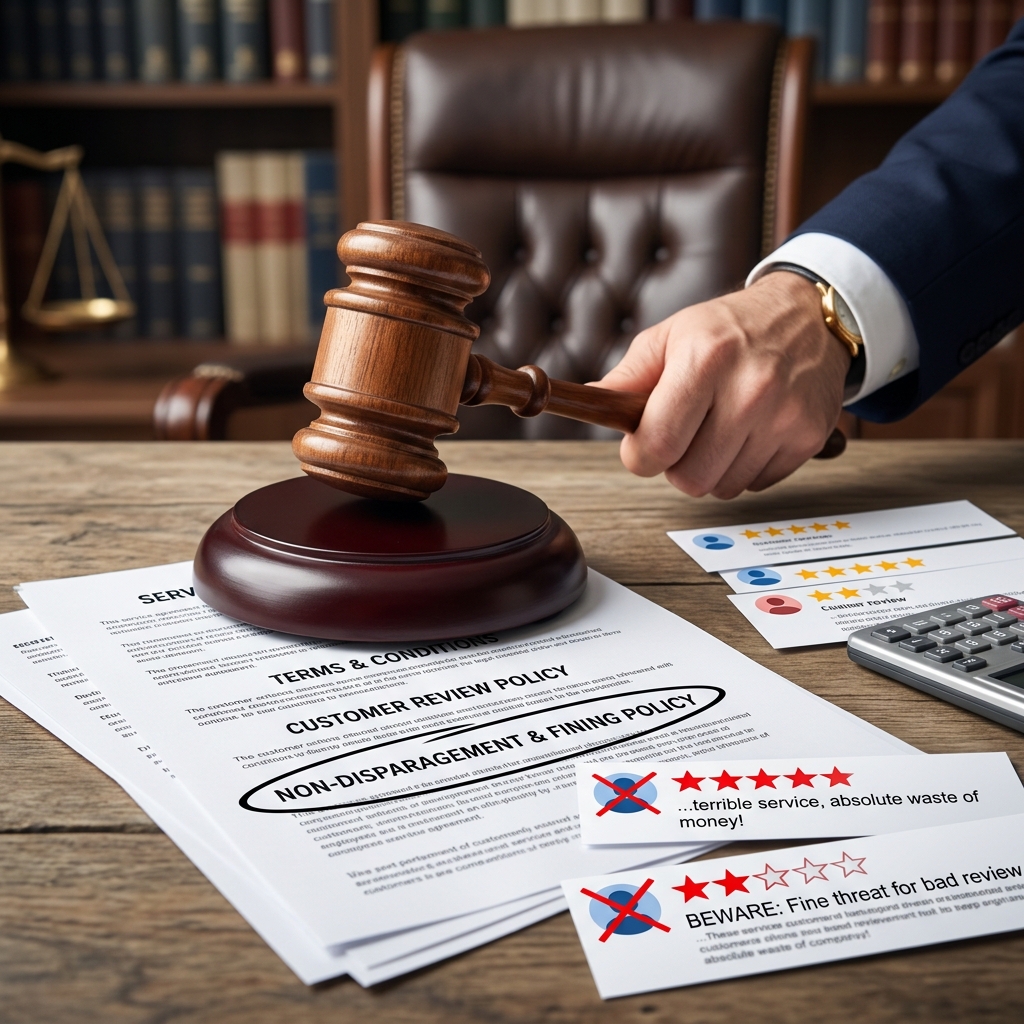
Negative online reviews can sting, especially for small businesses that rely heavily on word of mouth and digital reputation. Some owners consider charging a fee or imposing penalties on customers who post critical comments online. While this might feel like a quick fix, it is usually illegal, and it almost always backfires commercially.
This article explains why fining customers for bad reviews is legally risky, how federal law protects consumer feedback, and practical strategies for dealing with negative comments without exposing your business to liability or public backlash.
Why Negative Reviews Matter to Small Businesses
Online reviews influence how customers perceive your business long before they contact you. Research consistently shows that consumers consult ratings on search engines, social platforms, and specialized review sites to decide where to spend their money, especially in competitive local markets.
For many small businesses, a single harsh review can feel disproportionately damaging. Yet, occasional criticism is a normal part of doing business. Long-term customers look for patterns, not isolated complaints, and they often value seeing how a company responds when something goes wrong.
- Impact on trust: Reviews help potential customers assess reliability and quality before engaging.
- Search visibility: Ratings and review volume can influence how often your business appears in local search results.
- Feedback loop: Negative comments often highlight operational issues you might not see from the inside.
Given this influence, some owners are tempted to suppress or punish critical voices. That impulse can create serious legal and reputational problems.
Is It Legal to Fine Customers for Negative Reviews?
In most cases, no. Federal law explicitly restricts businesses from penalizing customers for sharing honest opinions in reviews. Attempting to charge a fee, withhold refunds, or impose other penalties solely because a customer posted a negative review can violate the Consumer Review Fairness Act (CRFA) and related consumer protection rules.
| Practice | Legal Status (General) | Key Concern |
|---|---|---|
| Charging a fee for a negative review | Generally prohibited under CRFA | Penalizes customers for honest feedback |
| Contract clause banning bad reviews | Illegal in standardized consumer contracts | Restricts right to review products or services |
| Removing reviews that disclose trade secrets | Generally allowed | Protects confidential or proprietary information |
| Challenging clearly false, harmful statements | May be addressed through defamation law | Protects businesses from demonstrably false claims |
Even if you believe a review is unfair or exaggerated, you cannot simply impose a punishment because someone shared a negative opinion online. Instead, you must work within the boundaries of consumer protection and defamation law.
Overview of the Consumer Review Fairness Act
The Consumer Review Fairness Act is a federal statute designed to protect consumers’ ability to post honest reviews about products, services, or business conduct. The law responded to situations where companies tried to silence criticism by inserting non-disparagement clauses or financial penalties into standard form contracts.
What the CRFA Forbids
Under the CRFA, businesses generally may not include contract terms that:
- Ban or restrict reviews: Provisions that prevent customers from posting reviews of your products, services, or conduct are illegal.
- Impose penalties or fees: Clauses that charge customers money or impose other penalties for leaving a negative review violate the Act.
- Take ownership of review content: Standard contract terms requiring customers to surrender their intellectual property rights in their reviews are prohibited.
These rules apply broadly to mass-market consumer contracts, including online terms and conditions, click-through agreements, and purchase policies. A violation of the CRFA is treated as an unfair or deceptive act or practice, which can lead to enforcement actions by the Federal Trade Commission (FTC) or state attorneys general.
What the CRFA Allows
The law does not require you to tolerate every possible statement. Businesses may restrict or remove certain types of content, such as:
- Reviews that disclose confidential or private information, like financial records, medical details, or trade secrets.
- Content that is unrelated to the company’s products, services, or conduct.
- Material that is clearly false or misleading, particularly where it may harm consumers or distort the marketplace.
However, any restrictions must be applied carefully and consistently, and they cannot be used as a pretext for suppressing honest criticism.
Defamation vs. Honest Criticism
Business owners sometimes ask whether they can sue a customer over a harsh review. In principle, defamation law allows a company to pursue legal action when a person makes false statements of fact that harm its reputation. But there is a critical distinction between defamation and ordinary criticism.
Key Elements of Defamation in the Review Context
- False statement of fact: The review must contain a factual claim that can be proved false, not merely an opinion or subjective impression.
- Publication: The statement must be communicated to others, which is usually satisfied when posted on a public review platform.
- Harm to reputation: The false statement must cause or be capable of causing reputational harm to the business.
- Fault: Depending on the jurisdiction and status of the plaintiff, the reviewer may need to have acted negligently or with actual malice.
If a reviewer accurately describes a negative experience or expresses dissatisfaction, that typically does not meet the legal threshold for defamation, even if the review is unflattering or harsh. Litigation based on reviews is also expensive, time-consuming, and may draw more public attention to the criticism.
Can You Refuse Future Service to Critical Customers?
Although you usually cannot fine customers for critical reviews, businesses may have some discretion to decide whom they serve. As long as the decision is not a proxy for unlawful discrimination based on protected characteristics such as race, religion, or national origin, many businesses can decline future transactions.
However, refusing service as a response to criticism may create more reputational risk than reward. Customers who feel punished for speaking out may share that experience publicly, leading to more negative coverage and potential complaints to regulators.
- Legal risk: Retaliatory action that appears discriminatory can trigger civil rights claims or consumer protection investigations.
- PR risk: Stories about businesses punishing reviewers often attract public attention and press coverage.
- Business risk: Fear of backlash may discourage other customers from offering honest feedback that could help you improve.
Business Risks of Fining Customers for Bad Reviews
Even apart from legal exposure, attempts to penalize customers for criticism can severely harm your brand. Once a punitive policy is discovered, it may be shared widely through social media, local news, or national outlets.
Reputational Fallout
- Viral backlash: Punitive review clauses or threatened fines can quickly become viral stories, painting your business as hostile to customers.
- Loss of trust: Consumers are more likely to trust businesses that appear open to feedback and transparent about problems.
- Platform enforcement: Review sites or marketplaces may take action against a business that appears to manipulate or penalize reviews, including suspension or removal.
Regulatory Consequences
- FTC enforcement: Violating the CRFA can result in FTC investigations, fines, and court orders.
- State-level enforcement: State attorneys general also have authority to enforce consumer review protections.
- Civil liability: Customers may claim that punitive clauses or actions constitute unfair or deceptive practices under state law.
Constructive Strategies for Handling Negative Reviews
Instead of trying to suppress criticism, focus on constructive responses that can turn negative experiences into opportunities to build trust. Government guidance and business organizations emphasize professionalism, empathy, and follow-through as key elements of effective response.
Step 1: Pause Before Responding
Responding in anger usually makes the situation worse. Taking time to calm down and review the complaint objectively allows you to respond in a way that helps your business rather than harming it.
- Read the review carefully and identify the core issue.
- Gather relevant facts from staff or records.
- Draft a response offline, then revisit it after a short break.
Step 2: Reply Professionally and Politely
When you respond, aim to demonstrate respect and a commitment to problem-solving. Government small business resources recommend avoiding personal attacks or defensive language, and instead being courteous and clear.
- Thank the reviewer for taking the time to provide feedback.
- Offer a brief apology, even if you simply acknowledge their disappointment.
- Address the specific concern rather than issuing a generic statement.
- Keep the tone calm, professional, and focused on resolution.
Step 3: Invite Private Follow-Up
For complex or sensitive issues, consider inviting the customer to continue the conversation privately. This allows you to gather more details and explore solutions without engaging in a public argument.
- Provide a direct contact method, such as email or phone.
- Explain that you would like to understand the situation better.
- Follow through promptly if they reach out.
Step 4: Fix the Underlying Problem
Customer feedback is a key input for improving operations. When reviews reveal recurring issues, treat them as signals that something in your process, staff training, or product offering may need adjustment.
- Look for patterns across multiple reviews.
- Implement specific changes, such as updating policies or training.
- Once a fix is in place, consider explaining the improvement publicly in a response so others can see you took action.
Step 5: Encourage Balanced Feedback
A few negative reviews are common; what matters is the overall picture. Businesses can encourage satisfied customers to leave honest feedback, which helps contextualize isolated complaints.
- Ask happy customers to share their experience on review platforms.
- Make it easy by providing links or simple instructions.
- Avoid any tactics that pressure customers into only posting positive reviews, as that may raise ethical and compliance concerns.
Review Policies That Support Compliance and Trust
Every business should periodically review its contracts, website terms, and customer policies to ensure they comply with the CRFA and broader consumer protection rules. Clear, lawful policies can reduce risk and help customers understand how their feedback will be handled.
Checklist for Safer Review Policies
- Remove gag clauses: Eliminate any language that prohibits or restricts customers from posting honest reviews.
- Eliminate penalties for criticism: Do not include fees, liquidated damages, or other penalties tied to negative reviews.
- Clarify privacy boundaries: Explain that reviews should not disclose confidential personal or business information.
- Set expectations on moderation: Describe how you handle clearly false, off-topic, or abusive content, consistent with platform rules and the law.
- Train staff: Ensure employees handling customer service understand both the legal limitations and the brand’s tone for responding to feedback.
FAQs: Fines, Reviews, and Legal Boundaries
Can I charge a “spite fee” if a customer posts a bad review?
Generally, no. Standard consumer contracts that impose fees or penalties on customers for posting honest reviews are typically prohibited under the Consumer Review Fairness Act. Using such a fee can expose your business to enforcement actions and reputational damage.
Can I write into my terms of service that customers cannot leave negative reviews?
No. Clauses that restrict customers from reviewing your products, services, or conduct are usually unlawful in mass-market consumer agreements. Even if you have never enforced the clause, its presence in the contract can still violate the law.
What if a review contains confidential information or trade secrets?
Businesses may prohibit or remove reviews that disclose confidential or private information, such as detailed financial records, medical information, or trade secrets. Any such action should be consistent with platform policies and focused on protecting privacy and legitimate business interests.
Can I sue over a blatantly false review?
If a review includes demonstrably false factual claims that harm your business reputation, defamation law may provide a possible remedy. However, legal action should be considered carefully in consultation with an attorney, because lawsuits can be costly and may attract further attention to the dispute.
Is it legal to refuse future service to a customer who posted a negative review?
In many situations, a business may choose not to engage in future transactions with a particular customer, provided the decision is not based on protected characteristics such as race, religion, or national origin. Even when lawful, refusing service as retaliation for criticism may harm your public image and fuel additional negative coverage.
Key Takeaways for Small Business Owners
Fining customers for negative reviews is both risky and counterproductive. Federal law protects honest consumer feedback, and attempting to suppress criticism can lead to legal exposure, regulatory oversight, and reputational harm. Instead, treat reviews—positive and negative—as a valuable source of information about your business and an opportunity to demonstrate professionalism.
By maintaining compliant policies, responding thoughtfully, and using feedback to drive improvements, you can strengthen your online reputation without resorting to punitive measures that violate consumer rights.
References
- Should You Fine Customers for Negative Online Reviews? — FindLaw. 2014-08-05. https://www.findlaw.com/legalblogs/small-business/should-you-fine-customers-for-negative-online-reviews/
- Consumer Review Fairness Act: What Businesses Need to Know — Federal Trade Commission. 2017-02-21. https://www.ftc.gov/business-guidance/resources/consumer-review-fairness-act-what-businesses-need-know
- Can I Sue Over Bad Reviews of My Business? — Clark Law Firm PC. 2020-03-10. http://www.clarklawfirmalabama.com/blog/can-i-sue-over-bad-reviews-of-my-business/index.html
- Essential Steps to Handle Negative Reviews — U.S. Small Business Administration. 2021-08-24. https://www.sba.gov/blog/essential-steps-handle-negative-reviews
- How to Handle a Bad Business Review — U.S. Chamber of Commerce. 2021-06-09. https://www.uschamber.com/co/grow/customers/how-to-handle-a-bad-business-review
- ONE STAR!?!? What to do if your Business gets a Bad Online Review — Fourscore Business Law. 2019-05-15. https://www.fourscorelaw.com/resources/one-star-what-to-do-if-your-business-gets-a-bad-online-review
Similar Articles








Read full bio of Sneha Tete


