
Can You Bring A Gun To A Mall: 5 Steps To Stay Legal And Safe
A practical look at how concealed carry rules, private property rights, and posted restrictions affect mall firearm policies.
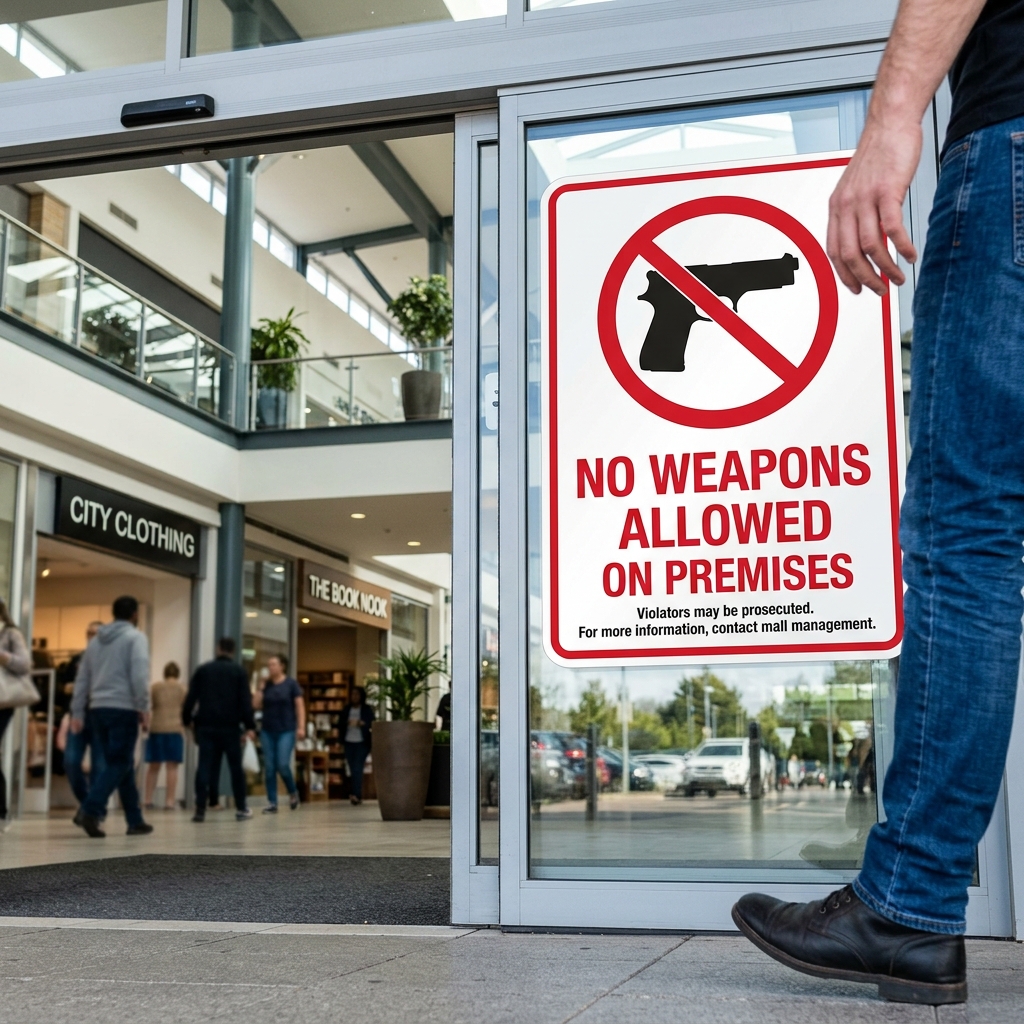
Can You Bring a Gun to a Mall?
The short answer is that the legality of bringing a gun into a shopping mall depends on state law, the type of firearm carry involved, and the mall’s own property rules. In many places, a privately owned mall may lawfully restrict firearms even if state law otherwise allows concealed carry in public.
That means the right question is not simply whether someone has a permit. It is also whether the mall is private property, whether the state recognizes posted notice, and whether any specific location-based restriction applies. In practice, the answer can change from one state to another and even from one entrance to another.
The first issue: public carry laws do not override private property rights
Many states allow some form of lawful public carry, including concealed carry by licensed individuals or, in some states, permitless carry for eligible adults. But a private shopping mall is still private property. The owner or operator may generally decide whether firearms are welcome on the premises.
That distinction matters. A person may be allowed to carry a handgun in ordinary public spaces under state law, yet still be required to leave the firearm outside a mall if the mall has a firearms restriction policy.
In other words, a state’s carry law answers one question, while the property owner’s policy answers another.
Why posted signs can matter
Many malls communicate their firearms policy through signs at entrances, entryway notices, or code-of-conduct rules. In some states, those signs create a legally enforceable restriction only if they meet specific statutory requirements. In others, the sign itself is enough to put a visitor on notice that firearms are not allowed.
For example, a Texas mall code of conduct can expressly prohibit firearms and cite the statutes used to give notice to concealed handgun license holders and open carriers. That kind of notice is not merely decorative; it is designed to support trespass enforcement if someone enters with a firearm after being warned.
Because sign rules are state-specific, a person should not assume that a generic “no guns” notice has the same legal effect everywhere. The safest approach is to treat any clear firearm prohibition as meaningful unless local law clearly says otherwise.
Concealed carry and open carry are not the same
Whether a gun is hidden or visible can change the legal analysis. Some states regulate concealed carry more strictly than open carry, while others impose separate notice requirements for each type of carry. A mall may choose to ban both forms of carry or only one of them.
That difference is important because a person who lawfully carries concealed may still violate a mall’s policy if the property bans concealed handguns. Likewise, a person openly carrying a firearm may violate a separate rule even if concealed carry is treated differently.
Where state law allows both options, the mall’s posted policy and any state trespass statute usually determine the practical outcome.
States often limit firearms in certain sensitive locations
Even where malls are not specially restricted, some states prohibit firearms in places such as schools, courthouses, polling places, correctional facilities, hospitals, and other designated sensitive locations. A shopping mall is usually not in that category by default, but a mall can contain sub-areas that raise separate issues, such as a courthouse annex, a polling site, or a tenant operating under its own restricted-use rules.
That is why it is not enough to ask whether a mall is a mall. A careful analysis looks at the exact property, the exact tenant space, and the exact applicable statute.
What happens if a mall says no firearms?
If a mall lawfully prohibits firearms and a person enters anyway, the issue may shift from gun possession to trespass. The visitor may be asked to leave, and refusing to comply can create legal problems even if the person otherwise has a valid carry license.
In some states, the mall’s notice must be posted in a particular way for trespass consequences to attach. In others, the property owner can simply direct a visitor to leave, and refusal can still become a trespass issue.
This is one reason gun policy in malls is not just about weapons law. It is also about property law and the rules that govern entry onto private land.
Can a mall security guard search bags for weapons?
Security screening depends on the mall’s policies and the state’s laws. Some large venues use metal detectors, guards, or controlled entrances to enforce firearms restrictions. When that happens, the mall is making a practical effort to prevent prohibited items from entering.
However, the presence or absence of screening does not itself decide whether guns are legally permitted. A mall with no screening may still have a no-firearms policy, and a mall with screening may still be located in a state where the owner must provide certain statutory notice before enforcing the rule against a license holder.
For visitors, the practical takeaway is simple: do not assume that a relaxed entrance means a firearm is welcome.
What about self-defense?
Some people believe a self-defense rationale automatically protects any gun-related conduct. It does not. Self-defense may be relevant if a person lawfully uses force in response to an immediate threat, but that does not erase separate issues involving trespass or property restrictions.
In other words, a valid self-defense claim and lawful carry status are related but distinct questions. A person may be justified in defending themselves and still have violated a mall’s firearms policy by bringing the gun inside in the first place.
The law also tends to treat the use of force and the right to enter private property as separate legal matters.
A state-by-state answer is the only reliable answer
There is no single nationwide rule that answers whether guns are allowed in shopping malls. State law controls the details of public carry, concealed carry licensing, sign requirements, trespass enforcement, and prohibited locations.
That is why one state may allow a concealed handgun in most private businesses unless properly posted, while another may recognize broader property-owner control or have different statutory notice requirements.
If someone is traveling, the laws can change quickly at the state line. A lawful carry practice at home may become a violation elsewhere.
Practical steps before carrying into a mall
Anyone considering carrying a firearm into a mall should review the rules in this order:
- Check the state’s concealed carry and open carry laws.
- Look for posted firearms notices at the mall entrance and interior entry points.
- Review the mall’s code of conduct or property policy if it is publicly available.
- Confirm whether any tenant space has a separate restriction.
- If the law is unclear, assume the property owner’s rule controls and leave the firearm elsewhere.
These steps do not replace legal advice, but they reduce the risk of an accidental violation.
Why mall policies are often stricter than general carry laws
Malls are busy public-facing spaces with families, stores, food courts, theaters, and entertainment venues. Because of that, operators often adopt broader safety rules than the minimum required by state law. The goal is usually not to debate gun rights in the abstract; it is to create a predictable environment for shoppers and tenants.
That is also why some malls post language that prohibits “firearms or other weapons of any kind.” Those policies are meant to be broad, easy to understand, and easy to enforce.
Comparison of common mall scenarios
| Scenario | Likely result | Why it matters |
|---|---|---|
| State allows concealed carry, mall has no firearms policy | Often lawful | State carry law and property rules do not conflict |
| State allows concealed carry, mall posts a valid firearms ban | Often not allowed | Private property rule can override ordinary carry permission |
| Mall uses statutory notice for no-gun policy | Restriction may be enforceable | Notice can support trespass enforcement |
| Mall contains a separately restricted space | Depends on the space | Special location rules may apply inside the larger property |
Common misconceptions about guns in malls
One common misconception is that a concealed carry license guarantees access everywhere. It does not. A license may authorize carry in many places, but it does not automatically defeat private property rules or statutory location restrictions.
Another misconception is that if a mall does not visibly screen everyone, guns are allowed. That is also not necessarily true. A mall can still ban firearms through posted notice or a written policy.
A final misconception is that if the law is silent about malls, carry must be allowed. Silence can mean that general property rules apply, which often favors the owner’s right to set conditions for entry.
When to get legal help
If a person has been cited, trespassed, or charged after carrying a firearm into a shopping mall, the details matter. The outcome may turn on the exact wording of the posted notice, the state’s carry statute, whether the person had a valid permit, and whether law enforcement relied on trespass or weapons charges.
Because firearm laws are highly technical and vary across states, a criminal defense lawyer or firearms-law attorney can help evaluate whether the mall had legally sufficient notice and whether the charge is properly supported.
FAQs
Are guns generally allowed in shopping malls? In some states, yes, but only if state carry law allows it and the mall does not lawfully prohibit firearms on private property.
Can a mall ban concealed carry even if I have a permit? Yes. Private malls can often set their own rules, and state law may allow those rules to be enforced through posted notice or trespass laws.
Do “no guns” signs always have legal force? Not always. The effect of a sign depends on state law and on whether the property owner followed the required notice rules.
What should I do if I see a firearms prohibition sign at a mall? The safest course is to leave the firearm outside and follow the posted policy unless a lawyer familiar with local law advises otherwise.
Can I be removed from the mall even if I am not breaking a gun law? Yes. A property owner may still ask a visitor to leave, and refusing to do so can create a trespass problem.
References
- Are Guns Allowed in Shopping Malls? — FindLaw. 2026-07-10. https://www.findlaw.com/legalblogs/criminal-defense/are-guns-allowed-in-shopping-malls/
- Are Guns Allowed in Shopping Malls? — FindLaw. 2026-07-10. https://www.findlaw.com/legalblogs/criminal-defense/are-guns-allowed-in-shopping-malls/
- Irving Mall Code of Conduct — Irving Mall. 2026-07-10. https://shopirvingmall.com/code-of-conduct
- Location Restriction Laws in Texas — Giffords Law Center. 2026-07-10. https://giffords.org/lawcenter/state-laws/location-restrictions-in-texas/
- Carry of Firearms — Texas State Law Library. 2026-07-10. https://guides.sll.texas.gov/gun-laws/carry-of-firearms
- In a gun prohibited zone like a mall in Alabama is it legal to conceal … — Avvo. 2026-07-10. https://www.avvo.com/legal-answers/in-a-gun-prohibited-zone-like-a-mall-in-alabama-is-3015995.html
Similar Articles








Read full bio of Sneha Tete




