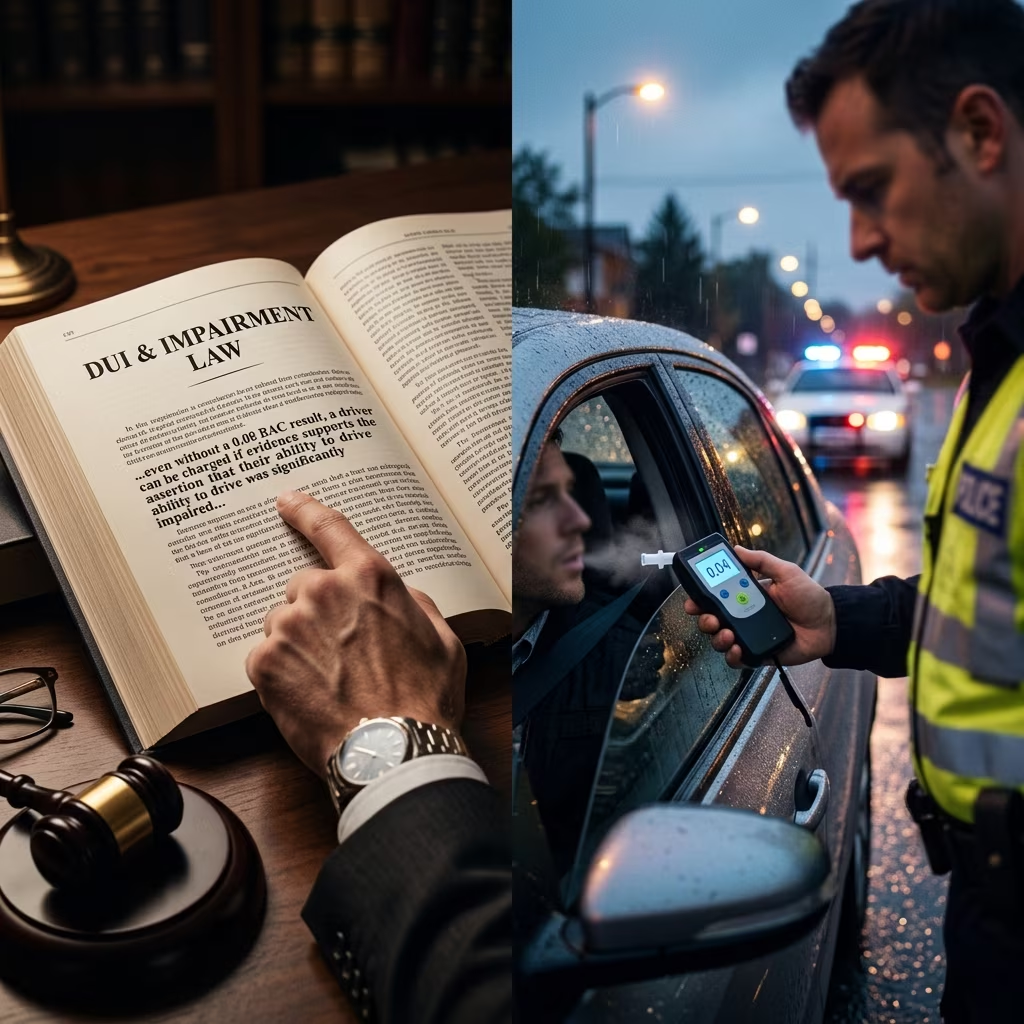
Many drivers assume that a breath test result under 0.08 means they are safe from a DUI charge. That assumption is often wrong. In many states, police and prosecutors can still pursue a case if they believe alcohol, drugs, or a combination of substances impaired the driver’s ability to operate a vehicle safely.
The key issue is not only the number on a test. In a typical DUI case, officers look at the total picture: driving behavior, physical signs of impairment, field sobriety test performance, and chemical testing results. A BAC below 0.08 may weaken the state’s case, but it does not necessarily end it.
Why the 0.08 Number Matters
The 0.08 BAC level is widely treated as the legal limit for adult drivers in the United States. In several states, a BAC at or above that level creates a “per se” DUI presumption or offense, meaning the government can rely on the test result itself to support a charge.
But that number is not the only path to a DUI arrest. Many state laws also prohibit driving while impaired to any degree by alcohol or drugs. Under those laws, a person can be charged even when the chemical test result is below 0.08, if the evidence suggests the person was not safe to drive.
How a Case Can Proceed Even When the BAC Is Low
Police do not need a breath test above 0.08 to begin an investigation. Officers may make a stop based on traffic violations, weaving, speeding, erratic braking, or other signs that a driver is not operating the vehicle normally. Once the stop occurs, additional observations can become evidence.
Common evidence used in a low-BAC case includes:
- Unsteady walking or difficulty standing
- Slurred speech
- Bloodshot or watery eyes
- Alcohol odor
- Poor performance on field sobriety tests
- Inconsistent answers to officer questions
- Driving patterns that suggest impairment
When those facts line up, prosecutors may argue that the driver was impaired even if the test result did not reach 0.08.
Per Se DUI and Impairment DUI Are Not the Same
There are generally two ways a DUI case may be built. One approach relies on a per se BAC statute. The other relies on proof that the driver was impaired by alcohol or drugs, regardless of the exact BAC.
That difference matters. A per se case is more straightforward because the state can point to the chemical result. An impairment case requires more proof, but it also gives prosecutors flexibility when the BAC is below the legal limit or when no test was performed.
What Prosecutors Look at Besides the Breath Test
A low BAC reading can be challenged, but it is only one piece of evidence. Prosecutors often combine the test result with what the officer observed before, during, and after the stop.
They may focus on:
- Lane departures, close following, or failure to signal
- Delayed reaction to sirens or commands
- Clumsy movements during roadside testing
- Statements made by the driver
- Open containers or signs of recent drinking
- Evidence of drug use or mixed alcohol-and-drug impairment
In practice, prosecutors try to tell a story that explains why the driver was unsafe even if the BAC number is under 0.08.
Alcohol Is Not the Only Substance That Can Lead to a DUI
Another reason low-BAC cases still result in charges is that alcohol may not be the only impairment factor. State DUI laws commonly cover drug impairment as well as alcohol impairment.
This can include prescription medicine, over-the-counter medication, illegal drugs, or a combination of substances. Some medications can slow reaction time, affect coordination, or cause drowsiness. Even when a chemical test shows little alcohol, a driver may still be charged if another substance appears to have affected driving ability.
California’s driver handbook, for example, warns that driving after taking any drug that affects the ability to drive safely can be illegal, and it specifically includes combinations of alcohol and drugs that reduce safe driving ability.
Underage Drivers and Special Rules
Drivers under 21 often face stricter standards than adult drivers. In some states, an underage driver can be penalized at very low alcohol levels, long before the 0.08 threshold applies to adults.
That means a young driver may face consequences for illegal alcohol consumption or an underage DUI-related offense even when the BAC is far below the adult legal limit. Those rules reflect a policy choice that treats alcohol use by minors differently from adult drinking and driving.
Commercial Drivers and Other Lower Limits
Not every driver is held to the same BAC threshold. Commercial drivers and certain other categories of motorists may face lower limits than the standard adult limit. California’s handbook lists a 0.04 BAC threshold for commercial drivers.
These lower limits show an important point: a BAC that is “under 0.08” is not automatically safe in every legal setting. The lawful limit depends on the driver’s status, the vehicle involved, and the state’s specific statute.
Why Field Sobriety Tests Matter So Much
When a breath or blood result is below 0.08, field sobriety tests may become more important to the prosecution. Officers often use standardized roadside tests to support their judgment that a driver was impaired.
These tests are not perfect, and many factors can affect performance, including fatigue, injury, anxiety, uneven pavement, medical conditions, or poor instructions. Still, prosecutors often use poor test performance to argue that the driver was not safe to operate a vehicle.
For the defense, that means the details matter. Small mistakes in how the tests were administered or recorded can become major issues later.
What a Low BAC Can Mean for the Defense
A BAC under 0.08 can be useful to the defense, but it does not automatically defeat the charge. It may support an argument that the driver was not legally intoxicated under a per se statute, especially if the rest of the evidence is weak.
Defense counsel may focus on:
- Problems with the traffic stop
- Testing errors or unreliable equipment
- Rising BAC levels or timing issues
- Medical or environmental explanations for the officer’s observations
- Lack of clear evidence that the driver was impaired
In some cases, the defense may also challenge whether the breath test was taken at the proper time or whether the reading accurately reflected the driver’s condition while driving. Those timing issues can matter because alcohol levels change over time.
State Laws Can Vary Significantly
Although the general concept is similar across the country, the exact rules differ from state to state. Pennsylvania, for example, recognizes multiple BAC-based DUI levels, while other states focus more heavily on impairment evidence.
Virginia law, as described in state legal resources and bar materials, allows prosecution below 0.08 when the government can prove impairment, and it also uses special rules for drivers under 21.
Maryland and California public materials likewise show that the legal consequences depend on more than one number and can involve different BAC standards for different drivers.
Practical Takeaways for Drivers
The safest assumption is that drinking and driving can still create legal risk even when a person feels “under the limit.” A low BAC may reduce the strength of the state’s case, but it does not guarantee dismissal.
Three practical lessons stand out:
- Impairment evidence can matter as much as a chemical test result.
- Different drivers may be subject to different legal thresholds.
- Alcohol combined with medication or drugs can still support a DUI charge.
Because DUI law is highly state-specific, a driver facing a case below 0.08 should review the exact statute, the officer’s report, and the testing record before deciding how strong the case really is.
Frequently Asked Questions
Can you really get a DUI with a BAC under 0.08?
Yes. Many states allow DUI charges based on impairment evidence even when the BAC is below 0.08.
Does a low BAC mean the arrest was invalid?
No. A low BAC may help the defense, but officers and prosecutors may rely on driving behavior, physical signs, and field sobriety test results.
Can drugs cause a DUI even if alcohol is below the limit?
Yes. DUI laws often cover drug impairment, including prescription and over-the-counter medications that affect driving ability.
Are the rules different for drivers under 21?
Yes. Many states impose stricter standards on underage drivers, and some treat very small amounts of alcohol as legally significant.
Is 0.08 always the legal limit?
No. It is the standard adult per se limit in many places, but special categories of drivers may have lower limits, and impairment-based DUI laws can apply below that number.
References
- Can You Get a DUI Below .08? Know the Facts — Intoxalock. 2024. https://www.intoxalock.com/knowledge-center/dui-under-08
- Driving Under the Influence (DUI) — Maryland Motor Vehicle Administration. 2025. https://mva.maryland.gov/your-mva-guide/drivers-revoked-or-suspended-licenses/driving-under-influence-dui
- Can You Be Convicted of DUI in Georgia Even if Your Blood Alcohol Content Is Below 0.08? — Mones Law. 2025. https://www.moneslaw.com/blog/can-you-be-convicted-of-dui-in-georgia-even-if-your-blood-alcohol-content-bac-is-below-0-08/
- Under 0.08 Charges in WV – The Wagner Law Firm — Wagner Law Firm. 2025. https://www.westvirginiaduilawyers.com/under-0-08-charges-in-wv-how-you-can-still-be-arrested-below-the-legal-limit/
- DUI Legislation — Commonwealth of Pennsylvania. 2025. https://www.pa.gov/agencies/dmv/resources/laws-and-regulations/dui-legislation
- Section 9: Alcohol and Drugs — California Department of Motor Vehicles. 2025. https://www.dmv.ca.gov/portal/handbook/california-driver-handbook/alcohol-and-drugs/
- Virginia DUI With BAC Below 0.08 — Greenspun Shapiro. 2025. https://www.greenspunlaw.com/faqs/virginia-dui-with-bac-below-0-08.cfm