
Can Shoplifting Damage Your Credit Score?
How shoplifting charges, civil demands, and unpaid judgments can ripple through your financial life and credit history.
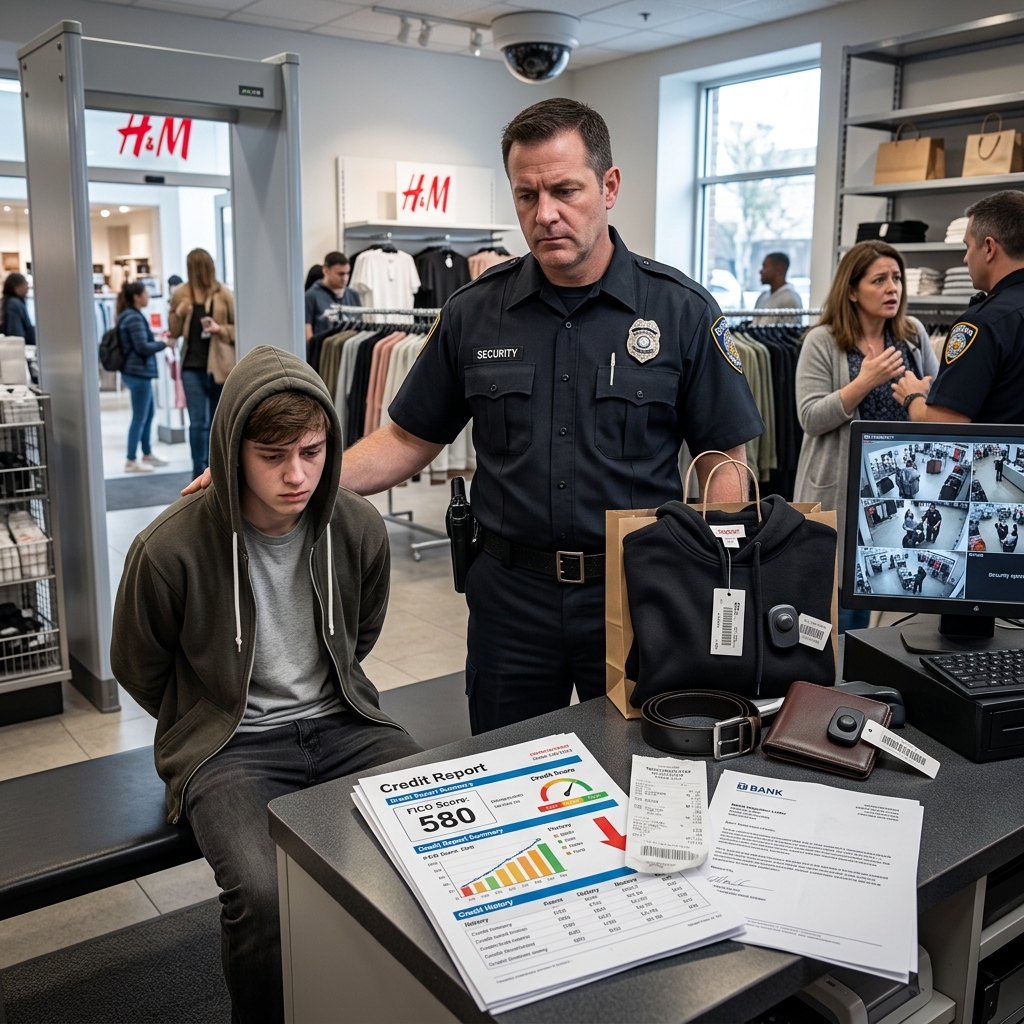
Shoplifting is often viewed as a momentary mistake or a minor offense, especially when the value of the items is low. Yet the consequences can reach far beyond the store exit. In some circumstances, a shoplifting incident can lead to court cases, civil judgments, and unpaid debts that may ultimately harm your credit report and credit score. Understanding how these pieces fit together is crucial if you want to protect both your legal rights and your financial future.
Shoplifting and Credit: How They Are Indirectly Connected
There is no dedicated “shoplifting” entry on a standard consumer credit report. A credit bureau primarily tracks information like loans, credit cards, payment history, and certain public records related to debt. However, the legal and financial fallout from a shoplifting case can create records that do appear on your credit file and affect your ability to borrow money or secure housing.
To understand the link, it helps to separate the criminal aspects of shoplifting from the civil and financial side:
- Criminal charges create a criminal record, which is separate from your credit report.
- Civil demands, fines, and judgments can become debts and court records that influence your credit profile if they go unpaid.
Criminal Case vs. Credit Report: Different Systems, Different Records
Shoplifting is typically prosecuted under state theft or larceny laws. For example, entering a commercial establishment during business hours intending to steal goods below a specific dollar threshold may be classified as misdemeanor shoplifting under some state codes. A conviction results in a criminal record but does not, by itself, create a credit entry.
| Aspect | Criminal Record | Credit Report |
|---|---|---|
| Primary Purpose | Tracks arrests, charges, convictions | Tracks credit accounts, payment history, certain debts |
| Created By | Courts, law enforcement agencies | Credit bureaus and lenders |
| Typical Entries | Criminal charges, sentences, probation | Loans, credit cards, collections, public civil records |
| Direct Shoplifting Entry | Yes, as a criminal offense if convicted | No, but related civil judgments or collections can appear |
When Shoplifting Can Affect Your Credit
While the act of shoplifting itself does not automatically show up in your credit history, several paths can carry financial consequences into your credit file:
1. Civil Demand Letters and Unpaid Claims
Retailers sometimes send a civil demand letter seeking payment for losses, security costs, or administrative expenses after a shoplifting incident. If you ignore or refuse to pay that demand and the business files a lawsuit, the store may obtain a civil judgment against you in court.
Civil monetary judgments related to unpaid debts can be reported in the public records section of your credit report, depending on how they are handled and current reporting practices. Historically, such judgments could negatively impact your credit score because they indicate a failure to pay what you legally owe.
2. Court Fines, Fees, and Collections
Courts may impose fines, court costs, or restitution payments in a shoplifting case. These obligations are legal debts. If they are not paid, they can be sent to collections, and collection accounts often appear on credit reports and lower credit scores.
Key risks include:
- Delinquent court fines referred to collection agencies.
- Unpaid restitution to the store or victim that becomes a long-term debt.
- Potential wage garnishment or liens associated with judgments, which can affect reported public records and perceived credit risk.
3. Civil Judgments and Public Records
When a court enters a civil judgment for a monetary amount, it creates a public record that may be considered by lenders and credit bureaus. Although industry standards on public record reporting have changed over time, unpaid judgments still signal financial problems and can affect underwriting decisions and risk assessments.
What Shoplifting Does to Your Criminal Record and Life Opportunities
Even if a shoplifting incident does not end up affecting your credit, it can still have serious consequences. Criminal records often influence employment, licensing, housing, and more. A petty theft or shoplifting conviction may remain on your record for years and can be permanent in some jurisdictions.
Potential impacts include:
- Job applications that ask about criminal history or conduct background checks.
- Professional licenses in fields like law, healthcare, or finance that scrutinize moral character and prior offenses.
- Rental housing decisions where landlords review criminal and court records.
- Immigration status in some cases, where certain theft offenses can create complications.
Organized Retail Theft and Financial Crime
At the more serious end of the spectrum, shoplifting can be part of organized retail theft, a coordinated scheme where groups steal large quantities of merchandise to resell for profit. These operations often involve additional financial crimes, such as:
- Using stolen or cloned credit cards to purchase goods.
- Manipulating bar codes to pay lower prices.
- Returning stolen items for cash, gift cards, or store credit.
In such cases, the legal exposure can be far more serious. Financial fraud and credit card theft directly intersect with the credit system because they may involve unauthorized transactions, chargebacks, and long-term damage to victims’ credit files. Law enforcement views these schemes as significant economic and public safety threats.
Economic Ripple Effects of Shoplifting
Beyond personal consequences, shoplifting harms communities and consumers more broadly. Research has shown that stolen goods reduce tax revenue and can contribute to higher retail prices and store closures. For example, one state-level analysis estimated that for every million dollars in goods stolen, tens of thousands of dollars in state and local tax revenue are lost.
Those losses can produce:
- Higher prices for law-abiding shoppers as businesses offset shrinkage.
- Reduced services and fewer jobs when stores close or relocate.
- Food and pharmacy deserts in neighborhoods where retail options disappear.
Although these community-level effects do not directly alter your individual credit score, they demonstrate that shoplifting is far from a victimless act and can contribute to broader economic instability.
Legal Penalties and Financial Obligations
Shoplifting laws vary by state, but many distinguish between misdemeanor and felony theft based on the value of the property taken. For example, some jurisdictions treat shoplifting under a set value threshold as a misdemeanor punishable by up to several months in jail and fines, while theft above that threshold may be charged as grand theft with potential felony penalties.
Typical financial consequences can include:
- Fines set by statute or the court.
- Restitution orders to compensate the store.
- Court costs and fees owed to the court system.
- Civil settlements or judgments arising from civil lawsuits by retailers.
Failure to pay these obligations on time is where the credit connection becomes important, because unpaid debts can be pursued through collection actions or civil judgments that may show up on or influence your credit profile.
Can a Single Shoplifting Incident Ruin Your Credit?
In many routine shoplifting cases, particularly low-value incidents that are resolved quickly, there may be no direct entry on your credit report. If you pay any fines, fees, and civil demands as agreed and there is no collection activity or long-term delinquency, the incident may remain confined to the criminal justice system or store records.
However, problems arise when:
- You ignore civil demand letters and a court issues a monetary judgment against you.
- You default on payment plans for fines or restitution, leading to collections.
- Additional financial crimes, such as credit card fraud, are involved in the incident.
It is these downstream events—not the simple fact of being accused of shoplifting—that pose the greatest risk to your credit profile.
Protecting Your Rights and Your Credit After a Shoplifting Accusation
If you are accused of shoplifting, you should approach the situation with both your legal and financial future in mind. Early action can reduce the chance that the incident will spiral into larger debts or judgments.
Steps to Consider
- Seek legal advice from a qualified criminal defense attorney in your jurisdiction, especially if formal charges are filed.
- Understand any civil demand letter you receive, including the basis for the amount and your options for response.
- Stay current on court fines and restitution to avoid delinquency and collections.
- Monitor your credit reports regularly to spot unexpected entries or public records related to the case.
- Document payments and agreements so you can demonstrate compliance if questions arise later.
Frequently Asked Questions (FAQs)
Does a shoplifting conviction appear on my credit report?
No. A shoplifting conviction appears on your criminal record, not your credit report. However, related unpaid fines, civil judgments, or collection accounts can affect your credit indirectly.
Can a civil demand letter from a store hurt my credit if I ignore it?
If a retailer sues you and obtains a monetary civil judgment because you did not pay a civil demand, that judgment can become part of public records and may influence how lenders view your creditworthiness. Ignoring legal demands increases the risk of debt-related consequences.
Will paying a shoplifting fine always keep my credit safe?
Paying fines, restitution, and court costs on time substantially reduces the risk that the case will lead to collections or unpaid judgments. However, each situation is fact-specific, and you should confirm how your obligations are recorded and reported.
Is organized retail theft treated differently from petty shoplifting?
Yes. Organized retail theft involves coordinated, large-scale theft and often includes financial crimes like using stolen credit cards or manipulating gift cards. Penalties and investigative attention are much more severe, and the credit-related harm to victims can be significant.
What should I do if I believe a shoplifting-related debt has been reported incorrectly on my credit file?
You can dispute inaccurate entries with the credit bureaus and contact the court or creditor involved. Keep copies of court records, payment receipts, and correspondence to support your position. Consulting an attorney or consumer rights advocate may be helpful if the dispute is complex.
References
- Consequences for Shoplifting Can Be Serious — A. MacDonald Law Firm. 2017-04-01. https://www.amacdonaldlaw.com/blog/2017/april/consequences-for-shoplifting-can-be-serious/
- Will Shoplifting Affect My Credit Report? — Avvo Legal Answers. 2013-06-01. https://www.avvo.com/legal-answers/will-shoplifting-affect-my-credit-report–390420.html
- Organized Retail Theft — Federal Bureau of Investigation. 2023-05-01. https://www.fbi.gov/investigate/transnational-organized-crime/organized-retail-theft
- Community Impact of Shoplifting — National Association for Shoplifting Prevention. 2020-01-01. https://www.shopliftingprevention.org/community-impact/
- Shoplifting Laws in California (Penal Code 459.5) — Eisner Gorin LLP Attorneys. 2022-01-01. https://www.egattorneys.com/shoplifting-penal-code-459-5
- Shoplifting Trends: What You Need to Know — Council on Criminal Justice. 2022-10-01. https://counciloncj.org/shoplifting-trends-what-you-need-to-know/
- Caught Shoplifting: Will the Store Ban Affect My Credit or Records? — JustAnswer Legal. 2011-01-01. https://www.justanswer.com/law/4ryhk-caught-lord-taylor-today-sign.html
Similar Articles








Read full bio of medha deb




