
Can Religious Schools Fire Pregnant Teachers?
A closer look at pregnancy discrimination claims, religious-liberty defenses, and what courts weigh when schools and teachers collide.
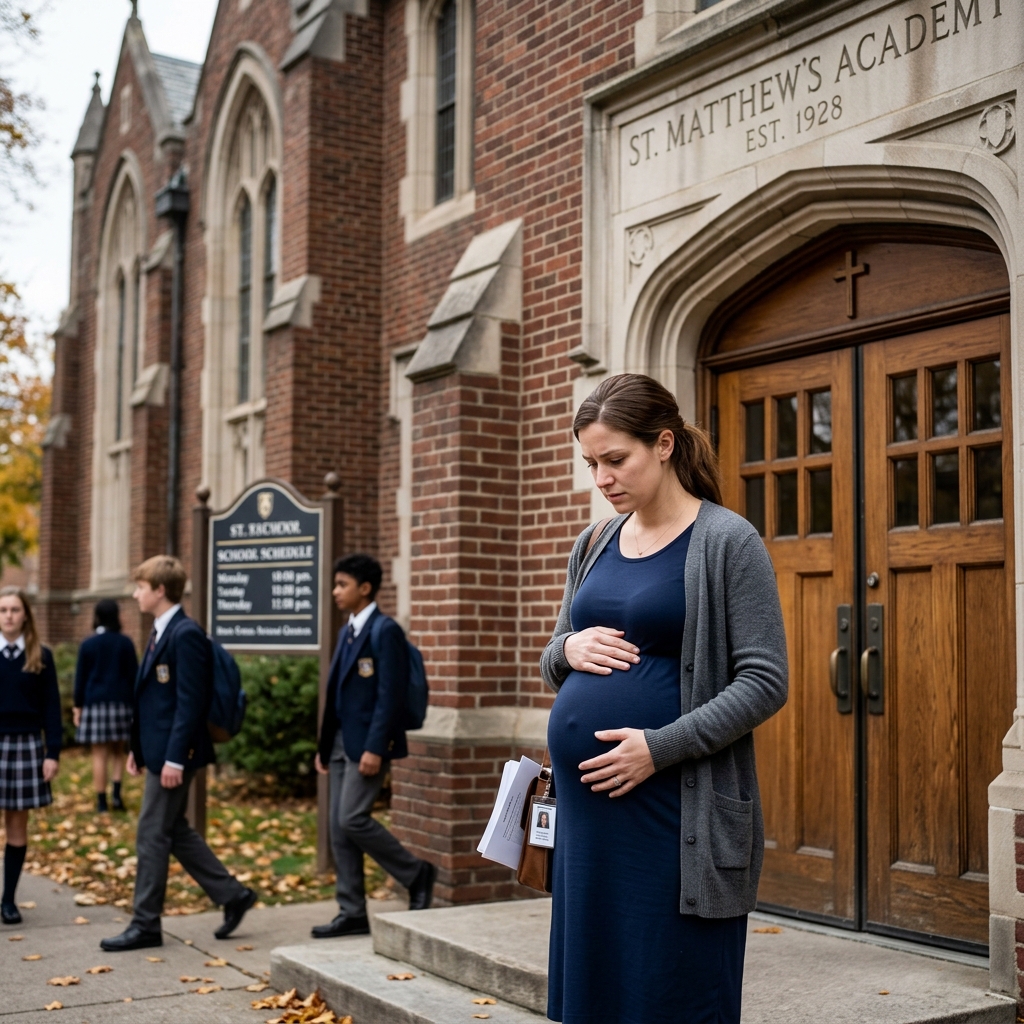
Disputes over pregnancy and employment become more complicated when the employer is a faith-based school. In that setting, courts may have to balance anti-discrimination rules against constitutional and statutory protections for religious organizations. The result is often a fact-specific legal fight rather than a simple yes-or-no answer.
Recent cases show that the outcome can turn on the employee’s role, the school’s written policies, the reason the school gives for the firing, and whether the school can show that its decision followed sincerely held religious doctrine. In some situations, a teacher may be able to sue for pregnancy discrimination. In others, a religious-school defense may block the claim before trial.
Why pregnancy-related firings at faith-based schools are legally difficult
Pregnancy discrimination law generally protects employees from being treated worse because they are pregnant, recently gave birth, or may become pregnant. But religious employers often have special protections that can limit how those rules apply. That is why two cases involving similar facts can end very differently depending on the jurisdiction and the school’s religious justification.
When a teacher is fired or not rehired after a pregnancy is discovered, the legal question is rarely just whether the employee was pregnant. Courts may also ask whether the employer acted because of marital status, sexual conduct, conduct it considers inconsistent with doctrine, or an express faith-based code of conduct.
- Pregnancy discrimination claims usually focus on whether an employee was treated differently because of pregnancy or related medical conditions.
- Religious employers may argue that the decision was based on faith rules, not on pregnancy itself.
- The legal analysis often depends on the exact wording of school policies and employment agreements.
How courts examine a religious-school defense
In a New Jersey case involving a Catholic school, the state supreme court held that the school could rely on a statutory religious exception after it fired an unmarried pregnant teacher. The court treated the exception as an affirmative defense, meaning the school could avoid liability if it showed that its decision was tied to religious tenets rather than ordinary employment preferences.
The court’s approach illustrates a key point: the employer must usually connect the decision to a genuine religious rule. If that connection is strong and the employee cannot create a real factual dispute, the case may end in the employer’s favor without a jury trial.
By contrast, another dispute involving a Christian school in Tennessee focused on whether the teacher was a “minister” for constitutional purposes. The employee argued she was a classroom teacher, not a minister, and that the school terminated her solely because she was pregnant and unmarried. That distinction matters because courts often give broader protection to religious institutions when the employee’s job is closely tied to religious instruction or leadership.
| Legal question | Why it matters |
|---|---|
| Was the firing based on pregnancy? | If yes, anti-discrimination law may apply. |
| Was the decision based on religious doctrine? | If yes, a religious exception may protect the school. |
| What was the employee’s role? | Religious duties can expand the school’s defense. |
| Did the school have written policies? | Policies can support or undermine the employer’s explanation. |
What kinds of evidence matter most
These cases often rise or fall on evidence rather than broad legal theory. A school may point to handbooks, contracts, ethics pledges, statements by administrators, or admissions by the employee that she knew certain conduct violated church teaching.
An employee may respond that the school’s stated religious reason is only a pretext for discrimination. For example, if the school ignored similar conduct by other employees, failed to enforce the rule consistently, or changed its explanation over time, a court may view the defense with more skepticism.
- Employment handbooks and morality clauses can show what the school said it expected.
- Email, meeting notes, and termination letters can reveal the real reason for the decision.
- Comparators may help show whether the rule was applied evenly.
- Job descriptions can matter if the school claims the role was religious in nature.
Federal and state law can point in different directions
Pregnancy claims are often brought under both federal and state law, but the outcome can depend on the specific statute and the court interpreting it. State anti-discrimination laws may include explicit religious exceptions, while federal constitutional doctrines can also limit how far employment law may reach inside a religious institution.
That means a teacher may have a viable claim in one state and a much weaker claim in another. It also means a school may win under state law even if the facts would appear troubling from a fairness standpoint. Courts are usually focused on legal standards, not on whether the outcome feels equitable in a general sense.
What the teacher’s job title can change
The title on a job application does not always determine the legal outcome. Courts may look beyond the title and ask what the employee actually did every day. A teacher who leads prayers, teaches religion classes, or models the school’s moral code may be treated differently from a purely secular instructor.
That issue matters because religious employers often receive greater latitude when the employee plays a role in advancing the institution’s faith mission. If the employee’s duties are mostly academic and nonreligious, the school may have a harder time proving that the firing was tied to religious belief rather than to pregnancy or marital status.
Practical lessons for employees
Teachers working for religious schools should understand that contract language, handbooks, and signed statements may become important evidence later. If a dispute arises, the records may show whether the school warned employees about conduct standards and whether those standards were tied to faith-based expectations.
Employees who believe they were fired because of pregnancy should preserve key documents and note who said what, when, and in what context. Statements about being unmarried, pregnant, or in violation of doctrine can become central to the case. At the same time, employees should recognize that some claims may be limited by religious-exemption rules that are broader than ordinary employment protections.
- Keep copies of contracts, handbooks, and policy acknowledgments.
- Save emails, text messages, and termination letters.
- Write down names of decision-makers and witnesses.
- Act quickly, because legal deadlines can be short.
Practical lessons for religious schools
Faith-based schools that want to enforce conduct standards should be careful and consistent. Clear policies are useful, but they should be drafted and applied with precision. Vague or uneven enforcement can create litigation risk, especially if an employee claims the school used religion as a cover for discrimination.
Schools also benefit from documenting the religious basis for major employment actions. If the decision is grounded in doctrine, the record should reflect that connection. If the school gives shifting explanations, a judge may find enough uncertainty to let the case continue.
- Use written policies that explain the school’s religious expectations.
- Apply rules consistently across employees in similar positions.
- Train administrators on how to document discipline and termination decisions.
- Review contracts to make sure they match the school’s actual practices.
Frequently asked questions
Can a religious school always fire a pregnant teacher?
No. The answer depends on the governing law, the teacher’s role, and whether the school can prove that the decision was based on religious tenets rather than discrimination.
Does pregnancy automatically mean a teacher has a winning lawsuit?
No. Pregnancy is a protected characteristic, but religious employers may have defenses that ordinary employers do not. Those defenses can be powerful if the school shows a sincere doctrine-based reason for the firing.
Does it matter whether the teacher was married?
Yes. In some disputes, the school’s stated concern is not pregnancy alone but unmarried pregnancy or premarital conduct that the school says violates its faith.
What if the teacher says the school only used religion as an excuse?
That argument can matter a great deal. Courts may look for evidence that the religious reason was a pretext, including inconsistent enforcement, contradictory statements, or a lack of support in school policy.
Why do some cases end quickly while others last longer?
Some judges conclude that the religious defense is strong enough to defeat the claim at an early stage. Others find enough disputed facts to send the case forward for more litigation or trial.
What this area of law means in real life
Pregnancy-related terminations at religious schools sit at the crossroads of employment law, religious liberty, and institutional identity. The law does not offer a single universal rule. Instead, courts examine the school’s doctrine, the employee’s job, and the evidence surrounding the dismissal.
For teachers, that means a pregnancy-related firing may be unlawful, but not always. For schools, it means that religious mission can provide protection, but only when the school can tie its decision to a legitimate and documented faith-based rule. The legal landscape remains highly fact-specific, and small differences in wording or evidence can shape the result.
References
- Court Upholds Catholic School’s Decision To Fire Unmarried Pregnant Teacher — LCW Legal. 2023-08-14. https://www.lcwlegal.com/news/court-upholds-catholic-schools-decision-to-fire-unmarried-pregnant-teacher/
- Christian school teacher claims ousting for ‘out-of-wedlock pregnancy’ — Knox News. 2018-04-11. https://www.knoxnews.com/story/news/crime/2018/04/11/lawsuit-teacher-west-knox-christian-school-ousted-over-out-wedlock-pregnancy/502095002/
- New Jersey Supreme Court Says Religious School Can Fire Teacher for Having Premarital Sex — Cole Schotz. 2023-08-14. https://www.coleschotz.com/new-jersey-supreme-court-says-religious-school-can-fire-teacher-for-having-premarital-sex/
Similar Articles








Read full bio of medha deb




