
Undefined: Can Police Read Your Text Messages? Know Your Rights
Understand when law enforcement can access your text messages, what legal limits apply, and how you can protect your digital privacy.
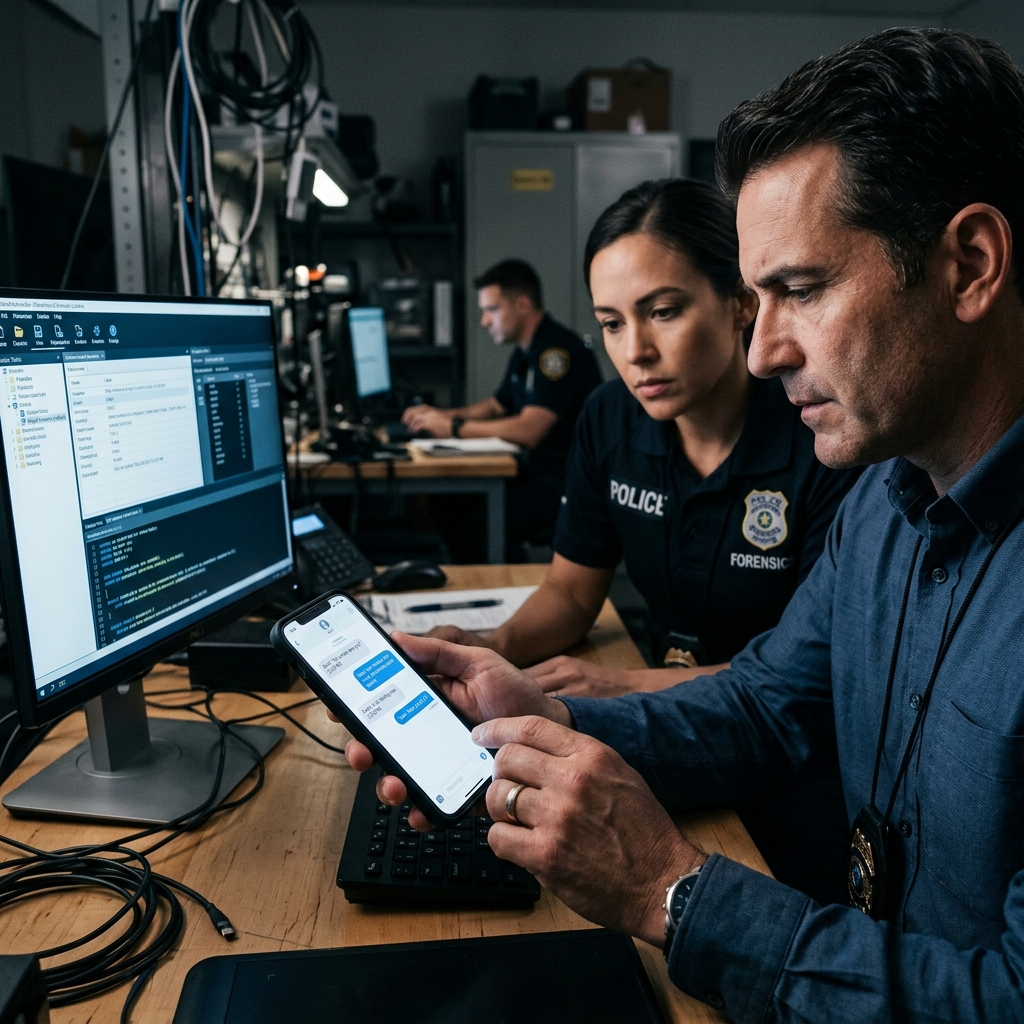
Text messages have become a central part of everyday life. They carry personal conversations, business discussions, and sometimes crucial evidence in criminal investigations. Understanding when and how police can legally access your messages is essential for protecting your privacy and asserting your rights.
This guide explains the legal framework around law enforcement access to text messages, the technical methods officers can use, the rules for using texts as evidence, and practical steps you can take to safeguard your communications.
Do Police Need a Warrant to Read My Text Messages?
In most situations, police need some form of legal authorization before they can read the content of your text messages. The most common tool is a search warrant based on probable cause, issued by a judge. When a warrant is required, officers must convince the court that your messages likely contain evidence of a crime.
However, the exact rules depend on:
- Where the messages are stored (on your phone, on your carrier’s servers, or in the cloud)
- Whether the messages are end-to-end encrypted
- Whether the investigation involves emergencies or national security
- Whether you voluntarily consent to a search
Warrants, Subpoenas, and Other Legal Orders
Law enforcement can use different legal tools to get access to your communications, each with different standards and protections.
| Legal Tool | Who Issues It? | What It Can Do | Typical Standard |
|---|---|---|---|
| Search warrant | Judge | Allows access to phone contents or stored message content | Probable cause that evidence of a crime will be found |
| Subpoena | Court or prosecutor (varies by jurisdiction) | Often used to obtain records such as logs, metadata, and sometimes unencrypted stored messages from providers | Lower standard; may only require relevance to an investigation |
| Emergency / exigent request | Law enforcement, sometimes later reviewed by a judge | Requests immediate access in urgent situations (e.g., risk of serious harm) | Claim of imminent danger or need to prevent destruction of evidence |
From a privacy standpoint, search warrants usually provide the strongest protection because they require judicial oversight and a clear factual basis.
Where Your Text Messages Live: Phone, Provider, and Cloud
Your messages can be accessed in different ways depending on where they are stored. Police do not always need your physical phone to read your texts.
Accessing Messages Directly from Your Phone
One route is for officers to search the device itself. Modern forensic tools can extract large amounts of data from a seized phone, including messages, images, documents, and app data.
- Physical access: If police take possession of your phone during an arrest or investigation, they may seek a warrant to search its contents.
- Device extraction: Specialized hardware and software can copy texts, call logs, and other data, even if some information has been deleted or hidden.
- Device hacking: In some contexts, law enforcement may use remote exploitation techniques to access data without physically holding the phone.
Courts have increasingly recognized that smartphones contain extensive personal information, so many jurisdictions require a warrant for comprehensive phone searches, subject to narrow exceptions.
Getting Messages from Your Mobile Provider
Standard SMS and MMS messages typically pass through your phone company’s servers. The provider may store some or all of the following:
- Message content (for a limited time, in some systems)
- Sender and recipient phone numbers
- Timestamps and delivery status
- Location data associated with the phone’s use
Law enforcement can request this information from the provider using legal processes such as subpoenas or warrants. The exact amount of content available depends on the provider’s retention policies and whether the messages were stored in readable form.
Cloud Backups and Message Apps
Many smartphones and messaging apps offer cloud backup features. Messages that appear end-to-end encrypted during transmission may still be stored unencrypted in backups, making them easier for police to obtain.
- Automatic backups to services like iCloud or Google may store text messages or chat histories in a way that providers can access.
- Some apps allow encrypted backups, which are more resistant to unauthorized access.
- Cloud extraction tools can pull data from online accounts belonging to the user, sometimes without their knowledge.
Because cloud backups can undermine the privacy benefits of secure messaging, understanding and configuring backup settings is an important part of digital self-defense.
Technical Methods Police Use to Read Text Messages
Beyond traditional legal requests, law enforcement agencies use specialized technologies to intercept or recover digital communications.
Mobile Phone Extraction Tools
Mobile extraction devices connect to a phone and copy data stored on it, including texts from SMS, chat apps, and other sources. These tools can often access:
- Message databases and caches
- Deleted or archived messages still present in storage
- Metadata, such as date, time, and contact information
Courts may allow use of this data as evidence as long as it is obtained in accordance with constitutional and statutory requirements, such as warrant rules and evidentiary standards.
Cell-Site Simulators and Interception
In some situations, police can intercept text messages as they travel through cellular networks using devices like cell-site simulators (often called IMSI catchers). These tools mimic cell towers and cause nearby phones to connect through them, allowing authorities to capture or track communications.
- They can log identifiers associated with nearby phones.
- They may allow interception or recording of SMS traffic, depending on configuration and legal constraints.
- Their use is typically regulated by internal policies and, in some jurisdictions, specific statutes or court orders.
Civil liberties groups have raised concerns about the breadth of data these tools capture, especially in protests and public gatherings.
Social Media and Messaging Apps
When you use messaging features within social networks or apps, law enforcement may obtain your communications from the companies that run those services.
- Public posts or messages in open groups can be accessed using social media monitoring tools.
- Private messages may be disclosed in response to legal orders served on the platform.
- If messages are not end-to-end encrypted, the platform can often read and provide them as plain text.
Can Text Messages Be Used as Evidence in Court?
Yes. Text messages are widely used as evidence in criminal and civil cases, as long as they meet basic evidentiary standards such as relevance and authenticity. Courts generally treat texts similarly to other written communications like emails or paper letters.
Key Requirements for Admitting Texts as Evidence
Before a judge allows text messages to be considered by a jury or court, they must satisfy several requirements.
- Relevance: The messages must relate to the issues in the case, such as proving intent, establishing timelines, or showing relationships.
- Authenticity: There must be reliable evidence that the messages came from the person alleged to have sent them, often through testimony, technical data, or context.
- Proper collection: If messages were obtained in violation of constitutional protections or statutory rules, a defense attorney may ask the court to exclude them.
Deleted messages, screenshots, and data recovered from backups or providers can sometimes still be used if they can be properly authenticated and if their collection complied with legal requirements.
Your Rights When Police Ask to Search Your Phone
Knowing your rights is critical if an officer asks to look at your phone or requests your passcode. In many situations, you have the right to decline consent and insist on legal process.
Consent Versus Compulsory Access
Police often ask for voluntary consent to search a phone because it is faster and avoids the need for a warrant. If you consent, officers may be able to examine texts and other data without further court involvement.
- You generally have the right to say no to a consent search.
- Declining consent does not authorize officers to force access; they must seek a warrant or another lawful basis.
- Once you grant consent, it can be difficult to later challenge the search scope.
Account Ownership and Third-Party Access
Access rights can be affected by who controls the account or device. For instance, the account holder for a phone line may have the ability to request records from the provider, including text logs.
- If someone else is the account holder for your phone service, they may be able to obtain certain records directly from the carrier.
- This can create complex privacy issues in shared plans or relationships where one person controls the account.
- Legal rules governing account access and data disclosure can vary by jurisdiction and contract terms.
How to Protect the Privacy of Your Text Messages
While it is impossible to guarantee complete secrecy, there are practical steps that make unauthorized access to your messages more difficult and enhance your legal protections.
Use Secure Messaging and Strong Device Protections
- Prefer end-to-end encrypted apps: Use messaging applications that encrypt content so only you and the recipient can read it. Avoid relying solely on regular SMS for sensitive conversations.
- Enable disappearing messages: Some apps let you set messages to delete automatically after a period. This reduces the amount of stored content that can be seized or extracted.
- Set a strong lock screen password: Use a complex passcode rather than simple patterns or easily guessed PINs, and update it regularly.
- Consider disabling biometric unlock in high-risk situations: If you anticipate possible arrest or coercion, some privacy advocates recommend relying on a passcode instead of fingerprint or face unlock.
Manage Cloud Backups and Account Security
- Review backup settings: Understand whether your phone and apps store message content in the cloud, and whether those backups are encrypted.
- Use encrypted backup options when available: Some services offer advanced data protection features or encrypted backup modes that limit provider access to content.
- Limit unnecessary retention: Avoid keeping sensitive conversations indefinitely, especially in accounts you rarely monitor.
- Strengthen account credentials: Use unique, strong passwords and enable multi-factor authentication on important accounts to reduce the risk of unauthorized access.
Be Thoughtful About What You Share
Even highly secure apps cannot protect you from risks created by oversharing or communicating sensitive details over inherently insecure channels.
- Limit the amount of sensitive information you send via text or social apps.
- Consider discussing particularly sensitive matters in person, when feasible.
- Verify identities through more than one channel if you are communicating about high-risk topics, such as protests or legal matters.
FAQs: Common Questions About Police and Text Messages
Can police read my texts without touching my phone?
Yes, in some circumstances. They may obtain stored messages and metadata from your mobile provider or cloud backups using legal orders, and in certain contexts they can intercept messages using cell-site simulators or other surveillance tools.
If I delete a text message, is it gone forever?
Not necessarily. Deleted messages can sometimes be recovered from the device’s storage, from backups, or from servers maintained by providers or platforms. Whether a specific message can be restored depends on the technology and retention policies involved.
Can my text messages be used against me in a criminal case?
Yes. Courts routinely admit text messages as evidence when they are relevant, properly authenticated, and collected in compliance with legal rules.
Should I unlock my phone if police ask?
You typically have the right to decline consent to a phone search and request to speak with a lawyer first. The best response depends on your situation, so consulting a qualified attorney is important.
Are encrypted messaging apps completely safe from police access?
End-to-end encryption significantly improves privacy by limiting who can read message content, but it is not a complete shield. Police can still access metadata, device contents, or unencrypted backups, and they may obtain information from recipients or from devices that have been compromised.
When to Seek Legal Advice
If you learn that your text messages are part of an investigation, or if police have requested access to your phone or accounts, speaking with a criminal defense attorney is strongly recommended. An attorney can:
- Explain your rights and obligations in your specific jurisdiction
- Assess whether message collection complied with constitutional and statutory requirements
- Seek exclusion of improperly obtained evidence
- Help you make informed decisions about cooperation, consent, and device access
Because laws and technical practices evolve quickly, professional legal guidance is the safest way to respond to police interest in your digital communications.
References
- Can Law Enforcement Access Your Text Messages? — Brinkley Law LLC. 2023-05-01. https://www.brinkleylawllc.com/post/can-law-enforcement-access-your-text-messages
- How the police can access your digital communications at a protest — Privacy International. 2021-03-25. https://privacyinternational.org/explainer/4505/how-police-can-access-your-digital-communications-protest
- Can the Government Read My Text Messages? — Digital Rights Bytes (Electronic Frontier Foundation). 2023-08-10. https://www.digitalrightsbytes.org/topics/can-the-government-read-my-text-messages
- Can Text Messages Be Used Against You? — Joel Chorny Law. 2022-11-15. https://www.chornylaw.com/blog/can-text-messages-be-used-against-you/
- What Information Can Police Get From Your Phone? — Sevens Legal, APC. 2024-02-20. https://www.sevenslegal.com/criminal-attorney/what-information-can-police-get-from-your-phone/
- 3 ways the police can read your text messages — Gagen McCoy. 2025-08-12. https://www.gagenmccoy.com/blog/2025/08/3-ways-the-police-can-read-your-text-messages/
Similar Articles








Read full bio of Sneha Tete




