
Can Police Go Door to Door Without a Warrant?
Understand when officers may knock, when they can come inside, and what rights you have if police or immigration agents show up at your door.
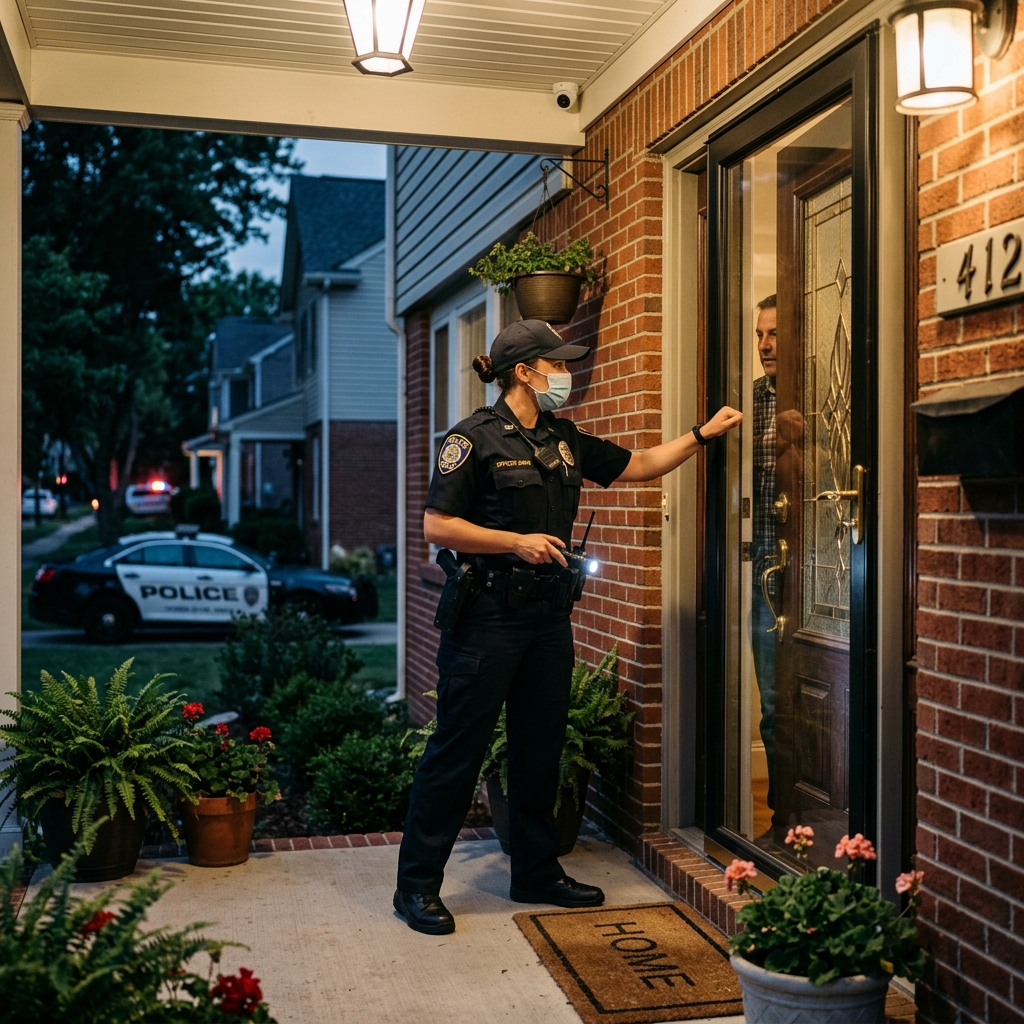
The front door of a home is often where everyday life meets law enforcement. Officers might go door to door looking for witnesses, investigating a crime, or serving an arrest warrant. Many people wonder whether police are allowed to do this without a judge-approved search warrant—and what their rights are when officers knock.
In the United States, the Fourth Amendment protects people from unreasonable searches and seizures in their homes and other private spaces. That protection does not always forbid officers from approaching your door, but it sharply limits when they can enter or search without permission or a warrant.
Core Rule: Home Searches Usually Require a Warrant
Courts treat the home as the most protected place under the Fourth Amendment. As a general rule, officers need a search warrant based on probable cause before they may enter and search a private residence, unless a recognized exception applies.
- Probable cause: Specific facts that would lead a reasonable person to believe that evidence of a crime or a suspect is inside the place to be searched.
- Search warrant: A written order signed by a judge that describes the location to be searched and the items or people to be seized.
Because the home is so strongly protected, warrantless searches are presumed unreasonable unless they fall within a narrow set of exceptions, such as consent, emergencies, or searches incident to a lawful arrest.
Door-to-Door Visits vs. Searches
It is important to distinguish between two different activities:
- Approaching and knocking: Officers walking up to a front door, knocking, and asking questions.
- Entering or searching: Officers going inside or physically inspecting the inside of the home.
Courts generally allow officers to approach a front door and knock without a warrant because members of the public—delivery drivers, neighbors, solicitors—are normally allowed to do the same. This practice is often called a “knock and talk” interview.
However, the right to knock does not automatically include the right to enter or search. Entering typically requires either valid consent, a warrant, or an exception such as emergency circumstances.
Common Exceptions to the Warrant Requirement
Although the default rule is that police need a warrant to search, several exceptions allow officers to act without one. These exceptions are narrowly defined and usually require specific facts.
| Exception | What Allows Entry or Search? | Typical Example |
|---|---|---|
| Consent | Occupant voluntarily allows officers inside and agrees to a search. | Resident says, “You can come in and look around.” |
| Exigent circumstances | Immediate danger, risk of suspect escape, or destruction of evidence. | Officers hear screams or sounds of evidence being destroyed inside. |
| Search incident to arrest | Officers lawfully arrest someone and search the person and immediate area. | Arrest inside the home followed by a limited search for weapons nearby. |
| Plain view | Officers lawfully present see contraband or evidence openly visible. | Officer lawfully at the doorway sees illegal drugs on a table. |
Consent: When Saying “Yes” Opens the Door
Consent is one of the most common reasons officers may legally enter a home without a warrant. If an occupant freely allows officers to come inside or search, the search may be considered reasonable under the Fourth Amendment.
Key points about consent:
- It must be voluntary, not the result of threats, deception, or force.
- Officers do not have to tell you that you may refuse consent.
- You generally may limit the scope of consent (for example, allowing a look in one room only).
- You may withdraw consent at any time, though you should not physically interfere.
Officers can also rely on consent given by someone they reasonably believe has authority over the premises, such as a roommate or co-tenant. If that person invites officers in, a warrant may not be required, even if another resident would have refused.
Practical ways people give consent without realizing it
Sometimes consent is explicit, such as saying “come in.” Other times, consent can be implied from behavior. Examples include:
- Opening the door wide and stepping back while gesturing officers inside.
- Saying, “Sure, you can look” when officers ask to search.
- Failing to object while someone with apparent authority allows officers into shared areas.
Simply opening the door to speak, by itself, does not automatically grant consent to search the home, but it does allow officers to see what is in plain view from the doorway. If contraband is clearly visible from a lawful vantage point, officers may lawfully seize it under the plain-view doctrine.
Exigent Circumstances: Emergencies at Your Door
Officers may sometimes enter without a warrant or consent when there are exigent circumstances—urgent situations where waiting for a warrant could place people in danger, allow evidence to be destroyed, or let a suspect escape.
Examples of exigent circumstances include:
- Hearing screams or signs of violence suggesting someone is in imminent danger.
- Seeing smoke or signs of fire inside the home.
- Observing a suspect run into a home during hot pursuit.
- Believing that critical evidence will be destroyed if officers delay.
In these scenarios, courts often allow officers to enter without a warrant if they have probable cause to believe a crime or emergency is occurring and immediate action is necessary. The entry must still be reasonable in scope and duration.
Knock and Talk: Door-to-Door Investigations
Police often conduct “knock and talk” operations, especially during neighborhood canvasses after a crime, or when they lack enough evidence for a warrant but hope to gather information or obtain consent.
During a typical knock and talk:
- Officers approach the home using walkways or paths a visitor would normally use.
- They knock, identify themselves, and may ask to speak with the resident.
- They may request consent to enter or search.
This approach is generally lawful without a warrant as long as officers limit themselves to behavior a regular visitor might engage in and do not overstay or intrude into areas where visitors are not expected to go.
Your options during a knock and talk
According to civil rights guidance, including materials from the ACLU, residents typically have the following options when officers knock without a warrant:
- Ask through the closed door who is there and whether they have a warrant.
- If there is no warrant, choose not to open the door at all.
- Refuse consent to enter or search and state that refusal clearly.
- Step outside and close the door behind you if you feel compelled to speak.
Refusing consent does not give officers extra authority to search; it simply preserves your constitutional rights. However, you should not use force or physically block officers, even if you believe they are acting unlawfully.
Search Warrants vs. Arrest Warrants at the Door
It is important to distinguish between search warrants and arrest warrants when officers are at your door.
- Search warrant: Authorizes officers to search a specific place for certain items or evidence. It generally allows them to enter and search the described premises, sometimes using force if necessary.
- Arrest warrant: Authorizes officers to arrest a particular person. Alone, it does not necessarily permit a full search of the residence, although officers may take reasonable steps to locate the person inside and may search limited areas where the person could be hiding.
Guidance from civil liberties groups explains that an arrest warrant by itself does not automatically allow a full search of your home, though officers may enter to take the named person into custody if they reasonably believe the person is inside. Once an arrest occurs, officers may search the arrestee and immediate surroundings for weapons or evidence as part of a search incident to arrest.
Immigration Agents Going Door to Door
Immigration enforcement raises special questions. Immigration and Customs Enforcement (ICE) often uses administrative warrants, which are internal documents signed by immigration officials rather than judges.
According to investigative reporting on internal ICE guidance:
- Administrative warrants typically authorize agents to arrest a particular noncitizen but do not carry the same authority as judicial warrants.
- Traditionally, these warrants did not permit agents to forcibly enter private homes or nonpublic areas without consent.
People inside a private home generally may legally refuse entry to immigration agents who have only an administrative warrant, with limited exceptions. Agents can still conduct knock and talk visits, request consent, and wait outside, but entry usually requires either consent, a judicial warrant, or an applicable emergency exception.
Your Rights When Police Show Up at Your Door
Multiple legal and civil rights organizations provide practical advice to help people assert their rights without escalating a situation. While details can vary by state, the following points are widely recognized in U.S. law.
What you generally have the right to do
- Stay silent: You usually have the right to decline to answer questions and to state that you wish to speak with a lawyer.
- Refuse consent: You may refuse permission for officers to enter or search your home if they do not have a proper warrant.
- Ask to see the warrant: If officers claim to have one, you can ask them to slip it under the door or show it through a window before letting them in.
- Observe and document: You may watch what officers do (from a safe distance) and note badge numbers, but should not interfere.
What you generally should not do
- Do not physically resist or try to block officers, even if you believe they are acting illegally.
- Do not provide false information or documents.
- Do not destroy evidence or encourage others to do so.
If you believe your rights have been violated, attorneys typically advise that you document the incident and challenge it later in court, rather than risking arrest or injury by resisting on the spot.
State-Level Rules on Knock-and-Announce
Beyond the federal Constitution, many states have their own statutes and case law governing how officers execute warrants at a residence. For example, some states require officers with a search warrant to knock and announce their authority and purpose before forcing entry.
In one state-level summary, officers executing a search warrant at a home must generally make some announcement of their authority and purpose before breaking and entering. However, courts often recognize exceptions when knocking and announcing would endanger officers, risk escape, or permit the destruction of evidence.
Some jurisdictions also authorize “no-knock” warrants when officers convince a judge that announcing their presence would jeopardize safety or undermine the investigation. These types of entries raise significant policy debates and may be restricted or banned in some areas.
FAQs About Door-to-Door Police Visits
Can police go door to door in my neighborhood without a warrant?
Yes, police may usually walk through a neighborhood and knock on doors to ask questions or seek witnesses, just like any member of the public could. This is generally allowed under the knock and talk doctrine and does not by itself violate the Fourth Amendment.
Do I have to open the door for police if they do not have a warrant?
In most situations, no. Civil rights groups advise that you can speak through the door, ask whether there is a warrant, and choose not to open the door if there is none. However, officers may enter without your consent if they have exigent circumstances or a valid warrant.
If I open the door, does that mean I consent to a search?
Opening the door by itself does not automatically consent to a full search of your home. Officers may stand at the doorway and speak with you, and they may see whatever is plainly visible from that lawful vantage point. To search inside, they still need consent, a warrant, or an applicable exception.
What if someone else in my home lets officers in?
If a roommate or co-tenant appears to have authority over the premises and voluntarily invites officers inside, police may rely on that consent to enter and search common areas. Disputes about authority and consent can be complex, so legal advice is often important in such cases.
Can immigration agents enter my home with an ICE warrant?
Administrative immigration warrants, typically issued by ICE itself, are not the same as judicial search warrants and usually do not authorize forced entry into a private home. You may generally refuse entry if agents only have an administrative warrant, although they can still remain outside and attempt to speak with you or obtain consent.
What should I do if police say they have a warrant?
You may ask to see the warrant before letting officers in, for example by having them show it through a window or slide it under the door. Check that it lists your address and specifies the areas or items to be searched. Even if you believe the warrant is defective, most rights groups recommend that you state clearly that you do not consent to any search and then step aside without interfering, challenging the warrant later in court.
References
- 14.2 Warrants and Illegal Searches and Seizures — University of North Carolina School of Government Defender Manual. 2013-01-01. https://defendermanuals.sog.unc.edu/sites/default/files/pdf/14.2%20Warrants%20and%20Illegal%20Searches%20and%20Seizures.pdf
- Memo tells ICE officers they can enter homes without a warrant — Associated Press. 2020-01-21. https://apnews.com/article/ice-arrests-warrants-minneapolis-trump-00d0ab0338e82341fd91b160758aeb2d
- Fourth Amendment — Legal Information Institute, Cornell Law School. 2022-06-01. https://www.law.cornell.edu/wex/fourth_amendment
- What to Do During a “Knock and Announce” in Massachusetts — Mucchiaro & Mucchiaro, P.C. 2023-04-10. https://muccilegal.com/what-to-do-during-a-knock-and-announce-in-massachusetts/
- Know Your Rights: What To Do If Police, Immigration Agents or the FBI Contact You — American Civil Liberties Union. 2014-01-01. https://www.aclu.org/sites/default/files/field_toolkit_file/kyr_english_3.pdf
- Search Warrants — Connecticut General Assembly Office of Legislative Research Report 98-R-0019. 1998-01-09. https://www.cga.ct.gov/PS98/rpt%5Colr%5Chtm/98-R-0019.htm
Similar Articles








Read full bio of Sneha Tete




