
Can Minors Drink With Parents? State Rules, Risks, And Limits
A clear guide to when minors may drink alcohol with parents, and where the law draws the line.
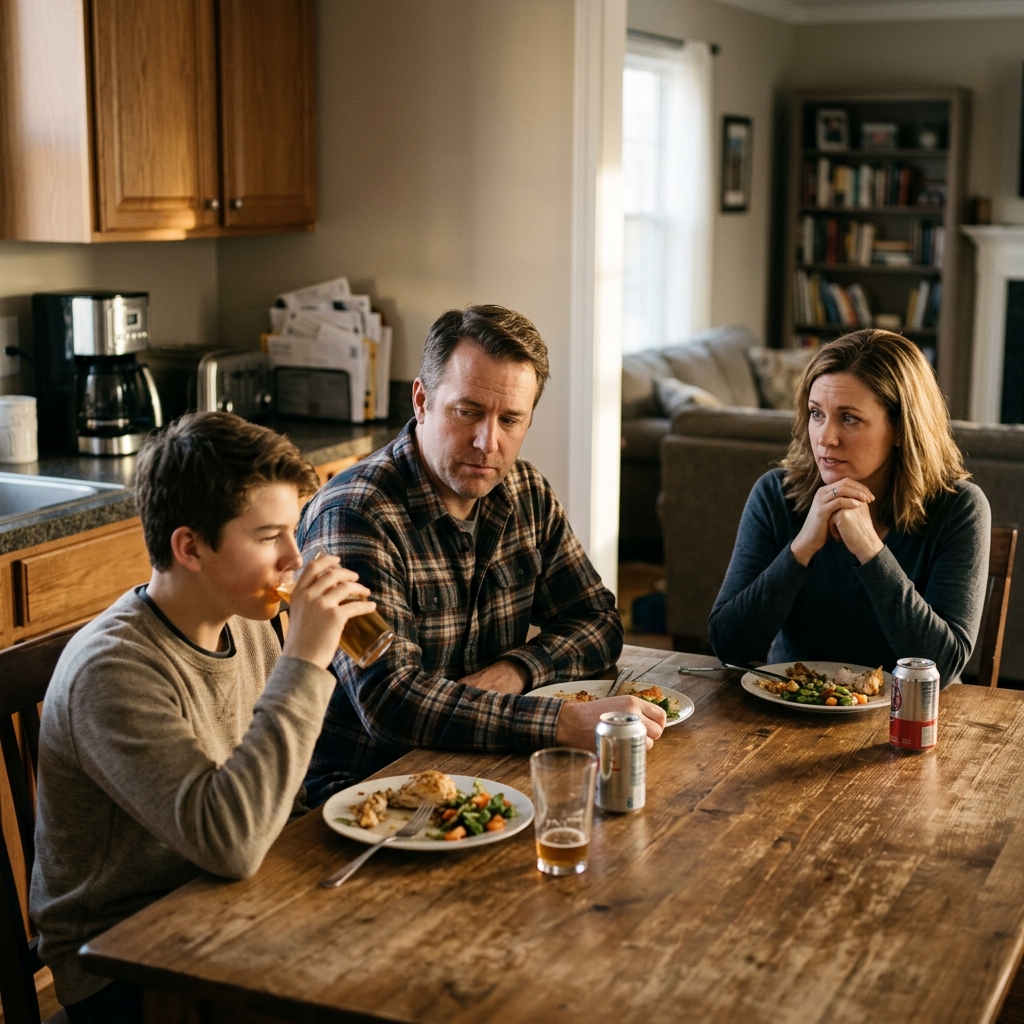
The short answer is that some states do allow minors to drink alcohol with a parent, but the rule is far from uniform. In many places, the exception applies only in a private home, only if a parent or guardian is present, and only if the alcohol is supplied by the parent or another narrow family exception.
Even where a family exception exists, it does not erase every other alcohol law. Selling alcohol to minors remains illegal everywhere in the United States, and many states still restrict possession, public intoxication, or drinking in licensed venues regardless of parental permission.
Why This Question Is More Complicated Than It Sounds
Alcohol law in the United States is mostly governed by state statutes, not a single nationwide rule. That means the legal answer depends on where the family is located, what the minor is doing, who supplied the alcohol, and whether the drinking happened in a private residence, a restaurant, a church setting, or some other location.
Many people assume that a parent can always decide whether a child may have a sip of wine or beer. In reality, that assumption can be wrong. Some states are permissive in private homes, while others are much narrower or define the exception in a way that still leaves room for enforcement.
The Main Pattern Across the States
Across the country, laws tend to fall into several broad categories. Some states explicitly allow minors to consume alcohol with family permission in a private setting. Others allow limited possession or consumption only under certain location rules. A separate group does not clearly forbid the conduct in the same direct way, but that does not necessarily mean drinking is freely allowed.
The Alcohol.org summary of state law reports that family exceptions exist in a substantial number of states, but the exact wording varies. In some places, a minor may drink only at home or on private property. In others, the parent must be physically present while the minor drinks. Some states also require that the parent directly provide the alcohol rather than merely approve it.
| Common legal model | What it usually means | Practical effect |
|---|---|---|
| Private-home exception | Drinking may be allowed at a parent’s home | Public places are still off-limits |
| Presence requirement | A parent or guardian must be present | Supervision matters as much as permission |
| Direct furnishing rule | The alcohol must be given by the parent | Friends or relatives cannot freely provide it |
| Limited-consumption rule | Only drinking, not general possession, is allowed | Holding the alcohol may still create a violation |
What States Usually Protect, and What They Still Prohibit
Even in states with family exceptions, the law often continues to prohibit the sale or furnishing of alcohol to minors by anyone other than a parent or legal guardian. The broad legal baseline remains that people under 21 generally may not buy alcohol, and businesses with liquor licenses cannot simply serve a minor because a parent says it is fine.
That distinction matters. A parent may be able to serve a glass of wine at home, but that does not mean the same parent may buy a drink for a 17-year-old at a bar or restaurant. One state example described in reporting on Washington law explains that a parent can have a minor consume alcohol in the parent’s presence, but cannot lawfully buy the minor an alcoholic beverage in a licensed business.
The same basic logic appears in other state summaries. The exception is often designed for private family settings, not public commercial ones.
Where Parents Are Most Likely to Run Into Trouble
Parents are most likely to face legal risk when they assume the family exception is broader than it really is. Common problem areas include social gatherings, rented venues, restaurants, and events where multiple families are present. If the alcohol is not clearly being consumed under the exact conditions required by state law, the exception may disappear.
- Private property is often safer than public space, but not every private location qualifies.
- Parent presence is required in many states, and absence can defeat the exception.
- Third-party alcohol can be a problem if the parent did not furnish it.
- Licensed venues usually follow stricter rules than homes.
These limits explain why a parent should not rely on a general internet claim that “kids can drink with parents”. The real question is which state, which location, and which type of supervision the law requires.
Different Types of Exceptions That May Apply
State laws do not all use the same model. Some create a narrow family-home exception, while others also recognize special circumstances such as religion, medical use, or educational programs. These are not the same as a broad permission to drink casually with family.
One common category is a religious exception. Many states allow limited alcohol use in religious ceremonies, but the rule is usually tied to the ceremony itself and the minimum amount needed for participation.
A second category involves medical use. In some places, alcohol may be administered for medical reasons if it is given by a parent, guardian, or doctor.
A third category covers education. For example, certain culinary or hospitality programs may permit tasting or instructional use under specific permits or school rules.
Why the Law Treats Public and Private Drinking Differently
States generally draw a strong line between family life and public alcohol consumption because public settings bring added risks: impaired driving, disorderly conduct, sales compliance, and easier access for other minors. Private-home exceptions are often justified as a narrow way to preserve parental discretion, while still preserving the broader 21-and-over drinking standard in public.
That policy choice also explains why a minor may be allowed to have a sip of alcohol at home but still face consequences if found intoxicated in public, in a car, or in another setting where the law treats the conduct differently. State enforcement rules can address possession, consumption, public appearance after drinking, and other conduct separately.
The Legal Consequences Can Reach Beyond the Minor
Underage drinking can create consequences for both the minor and the adult. A minor may face charges, school discipline, or driver’s license consequences depending on state law. Virginia’s underage drinking profile, for example, shows license-related penalties tied to underage possession and consumption, including minimum and maximum suspension periods.
Adults can also face exposure if they furnish alcohol unlawfully or allow conduct outside the scope of a state exception. In practice, the exact consequence depends on the statute involved, the age of the child, the location, and whether any aggravating facts are present.
What Parents Should Check Before Assuming It Is Allowed
Because the legal rules vary so much, parents should verify the following before letting a minor drink:
- State law: Does the state explicitly allow a family exception?
- Location: Is the drinking limited to a private residence or private property?
- Supervision: Must the parent be physically present?
- Source of alcohol: Must the parent supply it directly?
- Type of event: Is the setting a home gathering, restaurant, religious ceremony, or school program?
- Other consequences: Could the minor still face possession, intoxication, or driving-related penalties?
These questions matter because a parent may be right in principle but wrong in application. A state can allow one kind of family drinking and still forbid another.
A Practical Way to Think About the Issue
A useful way to understand the law is this: parental permission may matter, but it does not control everything. The state still decides whether the setting is acceptable, whether the alcohol was lawfully furnished, and whether the minor’s conduct falls inside a recognized exception.
That is why general statements such as “parents can always let their kids drink” are misleading. The safer formulation is that some states allow limited drinking by minors with parents under specific conditions, but those conditions can be strict and highly local.
Frequently Asked Questions
Can a parent let a minor drink at home in every state?
No. State law varies widely, and the presence of a parent at home is not enough on its own if the state does not recognize a family exception or if the facts fall outside the rule.
Can a parent buy alcohol for a minor at a bar or restaurant?
Usually not. Even states that allow family drinking in private settings often still prohibit furnishing alcohol to minors in licensed commercial venues.
Does parental permission always make drinking legal?
No. Parental permission may be one requirement, but many states also require private-property limits, direct furnishing by the parent, or actual supervision.
Are there exceptions for religion or medical care?
Yes, in some states. Separate exceptions can apply to religious ceremonies, medical use, or certain educational programs, but those exceptions are usually narrow and purpose-specific.
Can a minor still get in trouble even if drinking was allowed at home?
Yes. Other laws may still apply, including rules about public intoxication, driving, possession, or license penalties.
Why a Careful Reading of State Law Matters
Underage alcohol rules are often written in technical language, and small wording differences can change the result. One state may say a parent must be present; another may allow a guardian; a third may require the parent to be the one who directly furnishes the alcohol. Those differences matter more than the broad idea that family drinking is sometimes permitted.
For that reason, the most accurate answer to the question is not a universal yes or no. It is that parents should check their own state’s statute and, when needed, local enforcement guidance before treating the family exception as a green light.
References
- Alcohol Consumption by Youth in the United States — Wikipedia. 2025-01-01. https://en.wikipedia.org/wiki/Alcohol_consumption_by_youth_in_the_United_States
- When Is It Legal For Minors To Drink? — Alcohol.org. 2026-01-01. https://alcohol.org/laws/underage-drinking/
- Are parents allowed to give their kids alcohol in Washington? Here’s what the law says — Bellingham Herald. 2024-07-25. https://www.bellinghamherald.com/news/state/washington/article290137399.html
- Virginia – Underage Drinking — National Institute on Alcohol Abuse and Alcoholism, Alcohol Policy Information System. 2025-01-01. https://alcoholpolicy.niaaa.nih.gov/underage-drinking/state-profiles/virginia/98
- Georgia laws about parents allowing minors to have alcohol — The Macon Telegraph. 2023-06-30. https://www.macon.com/living/article277202388.html
- Alcohol Laws: Drinking Age and More — WebMD. 2025-01-01. https://www.webmd.com/mental-health/addiction/alcohol-laws
- Minors — California Department of Alcoholic Beverage Control. 2025-01-01. https://www.abc.ca.gov/education/merchant-education/on-sale-licensee-informational-guide/minors/
- 31 States Have Laws That Allow People Under 21 to Drink Legally — Food & Wine. 2025-01-01. https://www.foodandwine.com/underage-drinking-state-laws-11704248
Similar Articles








Read full bio of Sneha Tete


