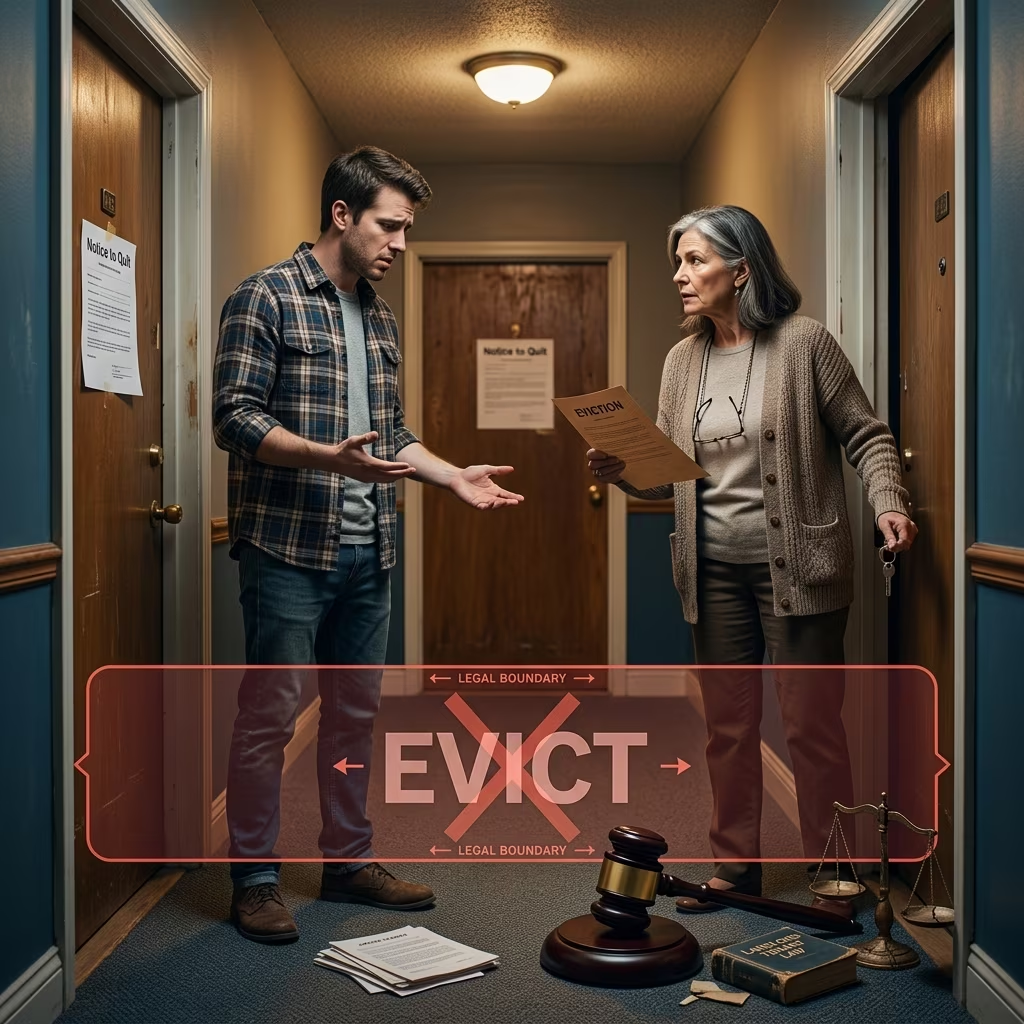
In most rental situations, only a landlord or a courtcannot evict other tenants
1. Who Actually Has the Power to Evict?
Eviction is a formal legal process that ends a tenant’s right to occupy a rental property and allows law enforcement to physically remove the tenant if necessary. It is not simply asking someone to leave or changing the locks. Two parties typically have roles in a lawful eviction:
- Landlord – The property owner (or property manager acting for the owner) who can start an eviction case in court by filing legal papers after giving proper notice.
- Court and law enforcement – A judge decides whether the tenant must move, and if the landlord wins, a sheriff or other authorized officer enforces the order.
By contrast, a tenant is simply an occupant with a legal right to use the property. That right does not include unilaterally removing other lawful occupants, even if those occupants are violating the lease or causing serious problems.
| Role | Can start eviction? | Can physically remove a tenant? |
|---|---|---|
| Landlord/property owner | Yes, by filing a court case after proper notice | No, must rely on law enforcement after court order |
| Tenant / co-tenant / roommate | Generally no, except in limited situations as a sub-landlord | No, self-help removal is usually illegal |
| Court (judge) | Decides eviction case brought by landlord | Issues judgment for possession / order of eviction |
| Sheriff / marshal / constable | No, acts only on court orders | Yes, enforces writ of possession or similar orders |
2. What Is an Eviction and Why Is It Different From Moving Out?
An eviction is a structured legal process Simply telling a roommate to leave or removing their property does not qualify as a lawful eviction. It bypasses required notices, court review, and official enforcement, and it can expose the person who attempts it to serious legal consequences. Most residential leases create a legal relationship between the landlordtenant(s)
3. Why Tenants Generally Cannot Evict Other Tenants
Key reasons tenants usually cannot evict other tenants include:
- No ownership interest – Tenants do not own the property and therefore cannot unilaterally terminate another person’s right to live there.
- Eviction statutes focus on landlord actions – State landlord-tenant laws typically regulate what landlords must do to evict, not what co-tenants may do to one another.
- Protection against self-help evictions – Many jurisdictions explicitly prohibit any eviction that happens without a court order and law enforcement involvement, making lockouts, threats, and removal of belongings illegal.
- Due process rights – Tenants are entitled to notice, a chance to respond, and a hearing before losing their housing, which an informal roommate removal cannot provide.
In practice, this means that if you want a difficult co-tenant or roommate to leave, you cannot simply issue your own “eviction notice” and call the police to remove them. Instead, you must use other lawful options or ask the landlord to take action when appropriate.
4. Illegal Self-Help Evictions: What Tenants Must Avoid
“Self-help eviction” is a term used when someone attempts to force a tenant out without following the legal process. This is usually illegal even when done by the landlord, and it is especially problematic
Common self-help tactics that are typically unlawful include:
- Changing locks to prevent a roommate or co-tenant from entering the home.
- Removing or disposing of belongings without consent.
- Shutting off utilities such as electricity or water to drive someone out.
- Threats, harassment, or intimidation intended to force a tenant to leave.
- Blocking access with physical barriers or refusing to let the person into shared spaces.
Legal consequences can include civil liability, damages for lost property or temporary homelessness, and in some cases criminal charges such as harassment or unlawful eviction under state law. Courts also often look unfavorably on parties who resort to self-help, which can weaken their position in any later legal dispute.
5. Special Cases: When a Tenant Might Act Like a Landlord
There are limited scenarios in which a tenant may have obligations similar to a landlord, including dealing with occupants in their unit. For example:
- Subtenants – A tenant who legally sublets part or all of the unit may be considered a “sub-landlord” to the subtenant under some state laws.
- Licensees or guests – Long-term guests may have fewer legal rights than tenants, depending on how the arrangement is structured and local law.
Even in these situations, the primary tenant or sub-landlord usually must follow the same broad rules
6. Lawful Alternatives for Handling Roommate and Co-Tenant Disputes
When living with someone becomes unmanageable, there are several lawful strategies to consider instead of trying to evict them yourself:
6.1 Communicate and Create Clear Agreements
- Written roommate agreements – Outline responsibilities for rent, utilities, cleaning, and guests to reduce future conflict.
- Structured conversations – Discuss issues calmly, focusing on specific problems and possible solutions instead of personal attacks.
- Time-limited plans – Agree on deadlines for changes (for example, quiet hours or a move-out date) and confirm these in writing.
6.2 Involve the Landlord
The landlord is usually the party with the legal authority to take action when lease terms are violated. Options may include:
- Reporting serious violations – Inform the landlord if the roommate is engaging in illegal activity, damaging property, or repeatedly breaking lease rules.
- Requesting lease changes – Ask whether the landlord is willing to remove a tenant from the lease by mutual agreement. This often requires everyone’s consent and may involve signing a new lease.
- Encouraging formal action – In severe cases, the landlord may choose to start an eviction case against the problematic tenant, subject to notice and court rules.
6.3 Mediation and Legal Help
When direct communication fails, neutral assistance can help resolve conflicts:
- Community mediation programs – Many municipalities offer free or low-cost mediation for housing disputes, allowing both parties to work with a trained neutral facilitator.
- Housing or legal aid attorneys – Legal services organizations and tenant clinics can explain your rights, help you understand options, and advise on how to avoid violating the law.
- Counseling or conflict resolution services – For non-legal interpersonal issues, counseling can sometimes ease tensions enough to make a planned move-out possible.
6.4 Choosing to Move Out Yourself
Although it may feel unfair, it is sometimes safer and more practical to move out yourself rather than escalate conflict. Before doing so, consider:
- Lease obligations – Understand whether you remain liable for rent until the lease ends or until a replacement tenant is found.
- Notice requirements – In some arrangements, especially month-to-month tenancies, you may be required to give written notice (such as 30 days) before ending your part of the tenancy.
- Security deposit – Clarify with the landlord how security deposits will be handled and what you need to do to receive a refund.
7. Tenant Rights During Any Eviction Process
If the landlord does decide to evict, your status as a co-tenant or primary tenant does not remove basic protections. Across many jurisdictions, tenants typically have the right to:
- Receive written notice before any court case is filed, explaining the reason for the proposed termination and when it will occur.
- Respond and appear in court to present defenses, evidence, and arguments against eviction.
- Raise legal defenses such as improper notice, retaliation for exercising legal rights, discrimination, or landlord failure to maintain habitable conditions.
- A fair hearing before a judge and an order that explains the decision.
- Lawful enforcement only – Removal must follow a court order and be carried out by authorized law enforcement, not by the landlord or other tenants.
These rights mean that even if one co-tenant urges the landlord to evict another, the targeted tenant still has due process protections and the opportunity to contest the eviction in court.
8. Practical Tips to Stay Within Legal Boundaries
To protect yourself and avoid unintended legal violations when dealing with difficult roommates or co-tenants, consider these practical guidelines:
- Never change locks or restrict access without a court order or explicit landlord instruction consistent with local law.
- Avoid unilateral property removal – Do not throw away, sell, or move your roommate’s belongings out of the unit.
- Document problems – Keep written records (texts, emails, photos) of serious issues, such as property damage, threats, or repeated lease violations.
- Use written communication – Summarize agreements or concerns in writing to reduce misunderstandings and create a clear record.
- Seek legal advice early – Contact a local legal aid office or housing clinic before taking any drastic steps that might be considered an unlawful eviction.
9. Frequently Asked Questions
9.1 Can I evict a roommate who is not on the lease?
Generally, you still cannot perform a self-help eviction Safety should come first. Call law enforcement if you are in immediate danger. Separately, protective orders or restraining orders may be available in serious cases of harassment, stalking, or violence, and these can sometimes affect who can remain in the home. However, protective orders do not automatically change lease obligations, so you should still consult a housing attorney or legal aid to address the tenancy issues. Nonpayment by a roommate is often a private agreement issue Whether you can stay depends on the lease structure and local law. In some cases, eviction actions name all tenants in the unit, and a judgment for possession affects everyone living there. In other situations, a landlord might agree to let one tenant remain and either sign a new lease or modify the existing one. You should discuss your status directly with the landlord and, if possible, seek legal advice. If a roommate or co-tenant threatens to change the locks, remove your belongings, or force you out without a court order: Prompt action can prevent escalation and ensure that your housing rights are respected.9.2 What if my roommate is violent or threatening?
9.3 My roommate stopped paying their share of the rent. Can I force them out?
9.4 If the landlord evicts my roommate, can I stay?
9.5 What should I do if another tenant tries to evict me?
References