Employers may verify a candidate’s military background in some hiring situations, but they cannot freely access a veteran’s personnel file as though it were public information. In most cases, access depends on the applicant’s consent, the type of record requested, and the purpose of the request.
For job seekers with military experience, this topic matters because service history can help prove training, work discipline, leadership, and specialized skills. For employers, it matters because military information can be useful in screening, but mishandling it can create privacy, discrimination, or compliance problems.
When military verification is allowed
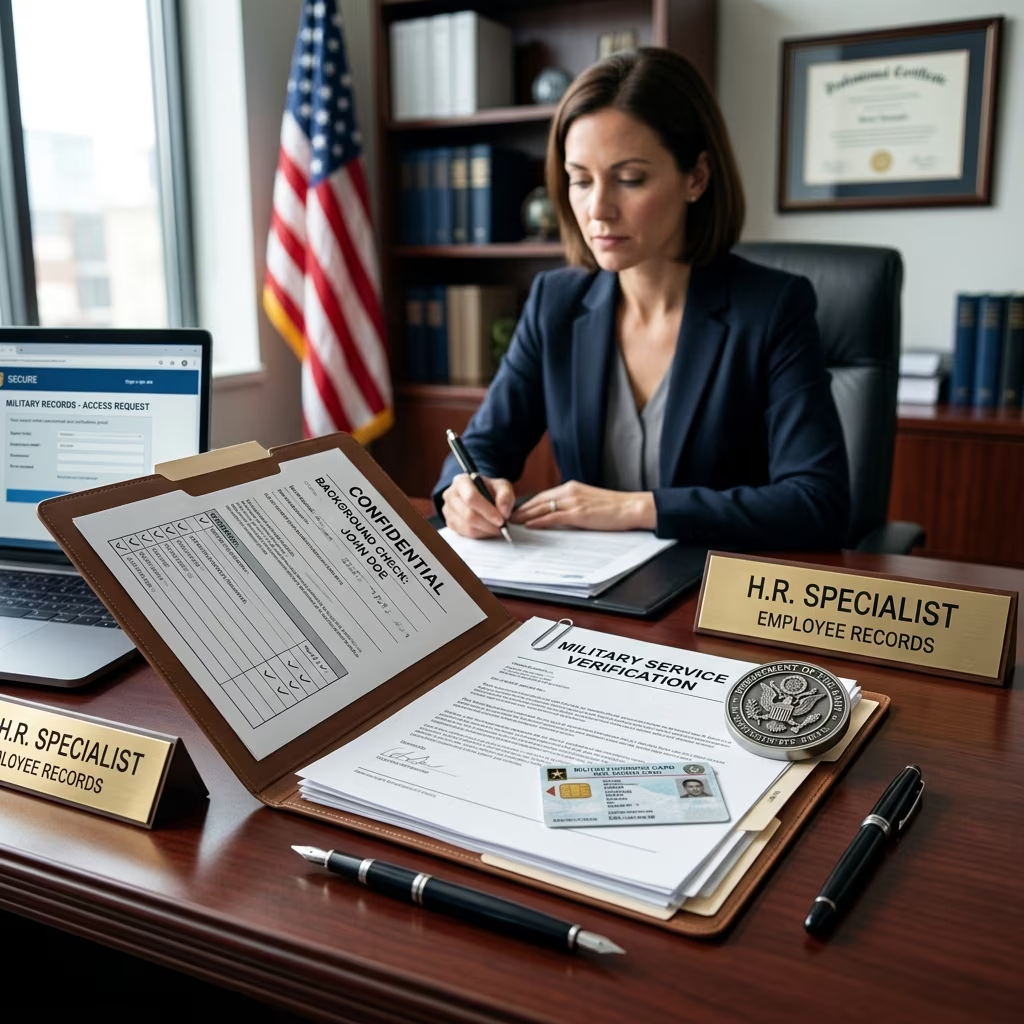
Employers generally may ask about military service if the information is relevant to the job and the applicant agrees to the check. Military service is often verified during standard background screening when the candidate lists it on a resume or application.
That does not mean an employer can search official records at will. Military personnel files are generally private, and access usually requires authorization from the person whose records are being reviewed.
- Employers may verify service dates, branch, rank, and training when those details are relevant to the job.
- Employers usually need the applicant’s written consent before requesting official records.
- Requests should be limited to lawful hiring purposes rather than curiosity or broad fishing expeditions.
What record employers usually rely on
The most common document used in hiring is the DD Form 214, also called the Report of Separation. This record can show the dates of service, branch of service, rank, awards, and the type of discharge.
Although the DD-214 can confirm important facts about a veteran’s service, it is not a license to dig into every detail of a person’s military history. Employers should focus on what is necessary for the hiring decision and avoid asking for sensitive information that is not job-related.
| Record or item | What it may show | Common hiring use |
|---|---|---|
| DD Form 214 | Service dates, branch, rank, awards, discharge type | Verifying claimed military experience |
| Official military personnel file | Broader service record | Usually only with consent and a legitimate need |
| Limited service confirmation | Basic proof of service | Employment screening where detailed records are unnecessary |
How applicants can obtain their own records
Veterans and many next of kin can request military service records through official government channels. The National Archives is the official repository for military personnel records for discharged service members from the Air Force, Army, Marine Corps, Navy, and Coast Guard.
According to the National Archives and the Department of Veterans Affairs, request methods include an online request tool, mail, or fax. The VA also explains that veterans can request copies of military service records, including the DD214, through National Archives procedures.
- Online requests may be made through the National Archives’ eVetRecs system.
- Paper requests can be submitted using Standard Form 180.
- Some recently separated veterans may access records through VA-related digital services.
Why consent matters so much
Consent is the main legal and practical barrier between an employer and an applicant’s military file. Even when a company uses a third-party background screening provider, the applicant typically must authorize the search before records can be obtained.
This requirement protects privacy and helps ensure the employer is not collecting more information than needed. It also creates a paper trail showing that the candidate agreed to the review as part of the hiring process.
- Written authorization is often included in a general background check release.
- Some employers use a separate release if military verification is especially important to the role.
- Without permission, a request for official records may be denied or limited.
Questions employers should avoid
Even when military service is relevant, employers must be careful about the kinds of questions they ask. One key restriction is that they should not ask an applicant to explain the reason for a military discharge during the hiring process.
That question can reveal protected or highly sensitive information that is not appropriate for routine screening. It may also lead to unnecessary bias or raise concerns about disability-related details that should not be solicited.
- Do not ask why the person was discharged from the military.
- Do not request medical details unless a lawful, job-related reason exists and the inquiry is handled separately under applicable rules.
- Do not use military records as a shortcut for making assumptions about suitability for civilian work.
What employers can usually learn
If an applicant authorizes a military records check, the employer may be able to confirm several basic facts that help with employment verification. These facts may include service dates, rank, branch, awards, and discharge classification.
That information can be helpful when a candidate claims military leadership experience, technical training, or a long service history. It can also help an employer confirm whether military experience lines up with a resume or application.
- Service dates can confirm how long the candidate served.
- Rank and awards can support claims of leadership or recognition.
- Discharge type may be visible, but the reason behind it should not be demanded.
How military checks fit into broader background screening
Military verification is usually just one part of a larger pre-employment review. Outside the military-record issue, veterans are typically screened in the same way as other candidates, depending on the job and employer policy.
That broader process may include education verification, work history checks, skills testing, drug and alcohol screening, or other assessments that are job-related. In other words, military service does not create a separate hiring universe; it is one element within ordinary employment screening.
- Drug and alcohol testing may be used where lawful and job-related.
- Academic credentials may still need verification.
- Technical, cognitive, or professional skills tests may be used as appropriate.
Public records versus private records
A common misunderstanding is that military service automatically becomes public after discharge. In reality, military personnel records are generally private, and access depends on the record type and the age of the file.
The National Archives explains that records become publicly accessible after a long period, and it also distinguishes between full records and limited information that may be available sooner. That means employers should not assume they can search a veteran’s file without following the official process.
| Situation | General access rule |
|---|---|
| Recent or current veteran records | Usually limited and protected |
| Older records | May become publicly accessible after the archival period |
| Employer requesting records during hiring | Typically requires applicant consent |
Best practices for employers
Employers can reduce legal risk by treating military verification like a narrow, documented, and job-related process. The safest approach is to request only the information needed, collect permission in writing, and avoid invasive follow-up questions.
- Limit requests to service facts that matter to the job.
- Use a standard written authorization with the background check package.
- Train recruiters and hiring managers not to ask about discharge reasons.
- Keep military information confidential and separate from casual hiring discussion.
Frequently asked questions
Can an employer look up my military record without permission?
Usually not. Official military records are generally private, and employers normally need the applicant’s consent to obtain them during hiring.
What is the most common document employers ask for?
The DD Form 214 is the most commonly used document because it summarizes core service information such as dates of service, rank, and discharge type.
Can an employer ask why I was discharged?
No. Employers should avoid asking for the reason behind a discharge, even if they can see the discharge type on a record they lawfully obtained.
Are military records public?
Not generally. Military personnel files are protected, though older records may become available through the National Archives after the archival period.
Do veterans get treated differently in background checks?
They should not be treated differently unless a job-related reason requires military verification. Outside that narrow issue, veterans are typically screened under the same general hiring standards as other candidates.
What job seekers should prepare for
If you have military experience, it is smart to keep a copy of your separation documents and be ready to explain your skills in civilian terms. That can make verification smoother and help employers understand how your service connects to the role you want.
You should also expect that a recruiter may ask you to sign a release form if your military history is relevant to the position. That request is normal in many background checks, but it should still be narrow and professional.
- Keep your DD-214 or other separation documents accessible.
- Review how your service experience translates into job skills.
- Read any authorization form before signing it.
Why this issue matters in hiring
Military service can be an important part of a candidate’s background, but it should be handled with the same care as any other sensitive employment information. Employers need enough information to verify qualifications, while veterans need clear protection from unnecessary disclosure and improper questions.
That balance is the central point of military-record checks: useful when limited, lawful, and consent-based; problematic when broad, intrusive, or unrelated to the job.
References
- Can Employers Look Up Military Records? — Barada Associates. n.d. https://baradainc.com/can-employers-look-up-military-records/
- About Military Service Records and Official Military Personnel Files — National Archives and Records Administration. n.d. https://www.archives.gov/veterans/military-service-records/about-service-records
- Request Your Military Service Records (including DD214) — U.S. Department of Veterans Affairs. n.d. https://www.va.gov/records/get-military-service-records/
- Military Verification Services for Accurate Background Checks — Employers Choice Screening. n.d. https://employerschoicescreening.com/services/military-verification/
- National Archives Veteran Records Request Information — National Archives and Records Administration. n.d. https://www.archives.gov/veterans/military-service-records