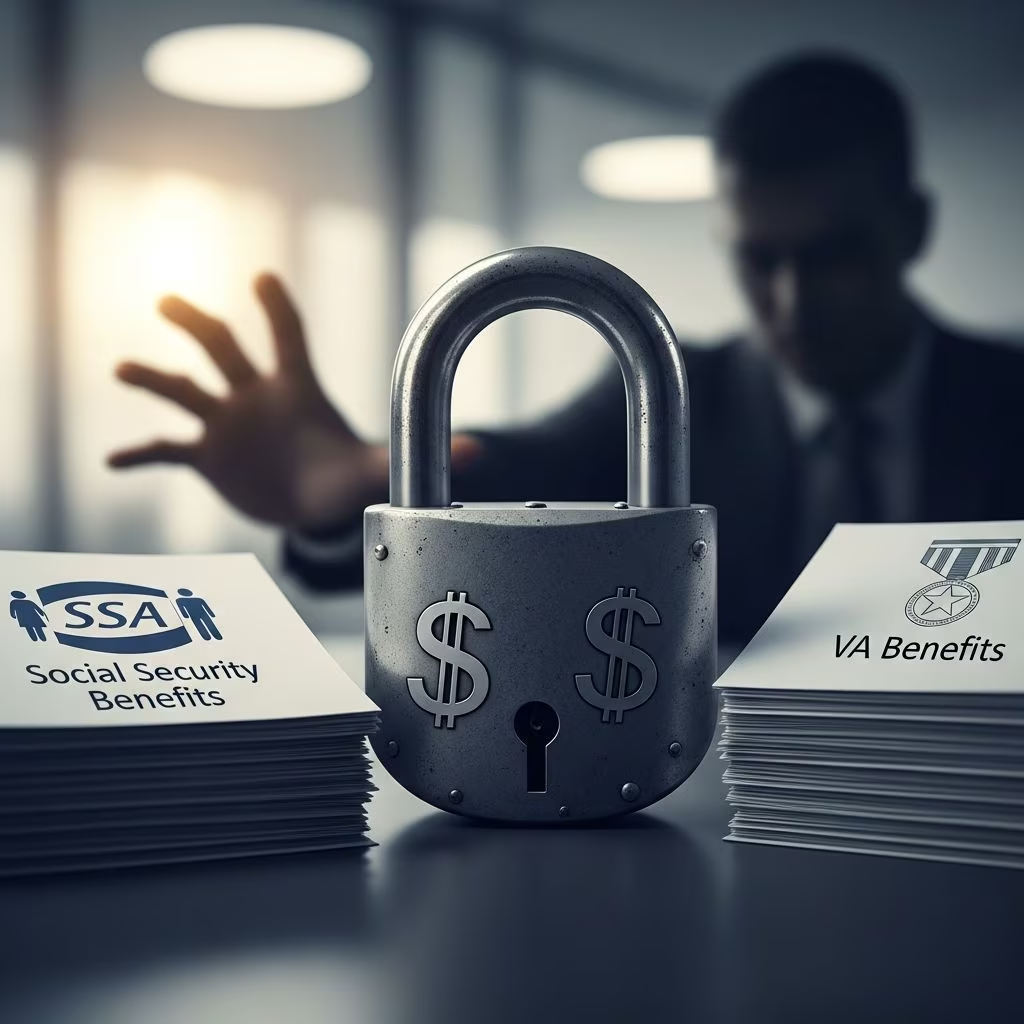
Federal benefits such as Social Security, Supplemental Security Income (SSI), and many veterans’ benefits receive powerful legal protection from most debt collection efforts. However, there are important exceptions, especially for government debts and family support obligations.
This guide explains when your benefits are protected, when they can be taken, how bank account garnishments work, and practical steps to safeguard the money you depend on.
1. Overview: How Federal Benefits and Debt Collection Interact
In general, private creditors and debt collectors cannot directly seize your federal benefits to pay ordinary consumer debts like credit cards, medical bills, or personal loans. Federal law protects many types of government payments from most forms of garnishment or levy when they are directly deposited to your account.
However, certain creditors – especially government agencies and those collecting child or spousal support – have enhanced authority to garnish part of your benefits under specific rules.
- Usually protected: Consumer debts such as credit cards, medical bills, personal loans, and many collection agency accounts.
- Possible garnishment: Unpaid federal taxes, defaulted federal student loans, child support, and spousal support in some situations.
Understanding the difference between private debts and government or court-ordered debts is key to knowing how safe your benefits are.
2. Which Federal Benefits Are Generally Protected?
When deposits are made electronically into your bank or prepaid card account, federal rules require financial institutions to shield certain government benefit payments from most garnishments.
Common types of protected benefits include:
- Social Security retirement benefits
- Social Security Disability Insurance (SSDI)
- Supplemental Security Income (SSI)
- Veterans’ compensation and pension benefits
- Federal civil service retirement and disability benefits
- Military pay and certain military retirement and survivor benefits
- Railroad retirement benefits
- Some federal student aid payments
- Certain disaster assistance from FEMA
These protections are grounded in federal law, such as Section 207 of the Social Security Act, which restricts assignment and garnishment of Social Security benefits by most creditors.
3. How Bank Account Garnishments Work With Federal Benefits
Even though collectors usually cannot garnish your benefits at the source, they may still sue you, obtain a court judgment, and try to garnish the money after it lands in your bank account. Federal rules require banks and credit unions to conduct a special review when they receive a garnishment order against your account that may hold federal benefits.
3.1 The Two-Month Automatic Protection Rule
When your financial institution receives a garnishment order, it must look back over the previous two months of your account history to identify whether protected federal benefits were directly deposited during that period.
If so, the bank must:
- Calculate the total amount of qualifying direct deposits from the last two months.
- Protect up to that total amount in your account, allowing you to access those funds.
- Restrict only the remaining balance (if any) for potential garnishment.
For example, if you receive $1,000 in Social Security by direct deposit each month and your account shows two such deposits in the past two months (total $2,000), the bank must leave up to $2,000 available to you, even if a creditor has a court order.
3.2 What Happens to Funds Above the Protected Amount?
Money in your account beyond the two-month deposit total is not automatically protected by the bank rules. A creditor with a valid garnishment order may be able to reach those excess funds, depending on state and federal law and the type of debt.
If your account balance includes older benefit deposits or other income sources (such as wages or non-federal pensions), part of that balance may be subject to garnishment, although you can often raise exemptions in court to protect some or all of it.
3.3 Direct Deposit vs. Paper Checks
It is especially important how you receive your federal benefits:
- Direct deposit or prepaid card: Triggers the automatic two-month protection review by your bank or credit union when a garnishment order is received.
- Paper check that you later deposit: The bank is not required to automatically shield any amount under the federal garnishment rule, even if the funds are clearly from federal benefits.
If you deposit paper checks, a creditor may be able to freeze your entire account balance until you go to court and prove that some or all of the money comes from protected federal benefits.
4. Key Exceptions: When Your Benefits Can Be Garnished
While many consumer debts cannot reach your federal benefits, several important categories of obligations are treated differently under federal law.
| Type of Debt | Can Social Security/SSDI Be Garnished? | Can SSI Be Garnished? | Notes |
|---|---|---|---|
| Federal income taxes | Yes, up to a percentage of benefits | No | IRS can levy benefits without a court judgment under federal law. |
| Defaulted federal student loans | Yes, limited percentage | No | Garnishment subject to federal limits and procedural safeguards. |
| Child support and alimony | Yes, within specified limits | No | Court or agency orders may direct Social Security to withhold part of benefits. |
| Credit cards, medical bills, personal loans | Generally no direct garnishment | No | Collectors may still try bank account garnishments; protections apply. |
4.1 Federal Tax Debts
The Internal Revenue Service (IRS) can use a process called the Federal Payment Levy Program to withhold part of your Social Security retirement or disability benefits if you owe federal taxes.
- Up to a fixed percentage (often up to 15%) of your monthly benefit can be taken.
- The IRS generally sends multiple notices and opportunities to resolve the debt before levying benefits.
- Supplemental Security Income (SSI) is exempt from federal tax levies.
4.2 Defaulted Federal Student Loans
Federal law allows the government to offset a portion of certain retirement and disability benefits to recover defaulted federal student loans, subject to statutory maximums and minimum protected amounts.
While student loan policies can change over time, federal agencies typically must provide advance notice and an opportunity to contest or arrange payment before offsetting benefits.
4.3 Child Support and Spousal Support
Courts and state agencies can order that a portion of your Social Security retirement or SSDI benefits be withheld to pay overdue child support or alimony (spousal support).
- Social Security is required to honor valid garnishment orders related to domestic support obligations.
- Specific limits apply to how much of your benefits can be withheld, depending on your circumstances and state law.
However, SSI benefits are fully protected from garnishment, even for these types of obligations.
5. Why Direct Deposit Matters for Protecting Benefits
Choosing how you receive your federal benefits can significantly affect how easily they can be protected from bank account garnishments.
5.1 Advantages of Direct Deposit or Government Prepaid Cards
Using direct deposit into your bank account, credit union, or an authorized government prepaid card offers several advantages:
- Triggers the mandatory two-month account review and automatic protection of recent benefit deposits.
- Makes it easier for the bank to identify which funds are protected federal benefits.
- Reduces the risk that your entire account will be frozen before you can claim exemptions.
5.2 Risks of Depositing Paper Benefit Checks
If you receive your federal benefits by check and deposit them manually, your bank is not obligated to automatically identify and protect those funds when a garnishment order arrives.
That means:
- Your full account balance could be temporarily frozen.
- You may need to appear in court and provide evidence that the money comes from protected federal benefits.
- Access to critical funds for rent, food, and medicine could be interrupted until the issue is resolved.
6. What Debt Collectors Can and Cannot Do
Even when collectors cannot legally seize your benefits, they may still attempt to pressure you into paying by making misleading statements or threats about taking your Social Security or VA income.
- Under federal consumer protection laws, collectors cannot legally threaten to take Social Security or VA benefits if such action would be unlawful or if they have no intention of doing so.
- You still may be sued for a legitimate debt, but many federal benefits remain exempt from direct garnishment for ordinary consumer debts.
If you believe a debt collector is violating your rights, you can document the communications and consider contacting a legal aid organization, consumer attorney, or appropriate government agency for guidance.
7. Practical Steps to Protect Your Benefits
To reduce the risk that your federal benefits will be wrongfully garnished or frozen, consider these strategies:
- Use direct deposit for Social Security, VA benefits, and other federal payments whenever possible to trigger automatic protections.
- Keep clear records showing the source of deposits (such as benefit award letters and bank statements) in case you need to prove funds are exempt.
- Avoid commingling large amounts of other income with your benefits if you are concerned about garnishment, as mixed funds may be harder to protect.
- Respond promptly to any court papers or notices from creditors; ignoring a lawsuit can lead to default judgments and garnishment attempts.
- Seek legal advice from reputable nonprofit legal aid groups, elder law clinics, or consumer law attorneys if you are sued or your account is frozen.
8. Frequently Asked Questions (FAQs)
Q1: Can a debt collector directly take money from my Social Security or VA check?
For most consumer debts, private debt collectors cannot directly garnish your Social Security or VA benefits before they are paid to you. They typically must sue you, win a judgment, and then try to garnish funds in your bank account, subject to federal protections for recent benefit deposits.
Q2: Are my Supplemental Security Income (SSI) payments always safe from garnishment?
SSI benefits receive the highest level of protection. They are generally exempt from garnishment, even for federal tax debts, student loans, child support, or alimony. However, you may still need to prove in court that seized funds came from SSI if your bank account is frozen.
Q3: What happens if my entire bank account is frozen because of a garnishment?
If your account is frozen, contact your bank to request information about the order, then review whether your benefits were directly deposited in the previous two months. If you think protected federal benefits have been improperly frozen, you may be able to file paperwork with the court to claim exemptions and request a prompt hearing. Legal assistance can be very helpful during this process.
Q4: Can Social Security withhold money from my benefits to pay child support?
Yes. If a court or authorized agency issues a garnishment order for child support or alimony, the Social Security Administration is required to withhold part of certain benefit types, such as retirement or SSDI. SSI benefits are not subject to these garnishments.
Q5: Is it legal for a collector to threaten to take my Social Security if it is my only income?
If a collector threatens to seize benefits that are protected by law, such as Social Security that is your primary income for consumer debts, that statement may be deceptive or abusive under federal debt collection rules. You can document the threat and consider submitting a complaint to the appropriate consumer protection agency or seeking legal advice.
Q6: How can I tell whether the garnishment is for a government debt or a private debt?
Notice letters, court documents, or communication from your bank should identify who obtained the garnishment order. Government agencies such as the IRS, the Department of Education, or state child support enforcement offices will usually be clearly named. If you are unsure, ask your bank for a copy of the garnishment order and review it carefully or show it to a legal professional.
References
- Can creditors take your Social Security? — Bankrate. 2023-09-18. https://www.bankrate.com/personal-finance/debt/can-creditors-take-social-security/
- Can a debt collector take my federal benefits, like Social Security or VA benefits? — Consumer Financial Protection Bureau. 2024-01-08. https://www.consumerfinance.gov/ask-cfpb/can-a-debt-collector-take-my-social-security-or-va-benefits-en-1157/
- When Can Creditors Garnish Your Social Security? — Debt.org. 2023-03-15. https://www.debt.org/retirement/social-security/can-social-security-be-garnished-for-credit-card-debt/
- How to Protect Social Security Income from Creditors — AFM Morgan Law. 2022-10-05. https://afmorganlaw.com/how-to-protect-social-security/
- Can my Social Security benefits be garnished or levied? — Social Security Administration. 2023-05-11. https://www.ssa.gov/faqs/en/questions/KA-01873.html
- Debt Collectors — California Department of Justice, Office of the Attorney General. 2022-06-01. https://oag.ca.gov/consumers/general/debt-collectors
- Debt Collection and Social Security Benefits — LawHelp Minnesota. 2021-04-01. https://www.lawhelpmn.org/self-help-library/fact-sheet/debt-collection-and-social-security-benefits