
Can Bankruptcy Eliminate Your Credit Card Debt?
Learn when and how bankruptcy can clear credit card balances, what it cannot erase, and the long-term consequences for your finances and credit profile.
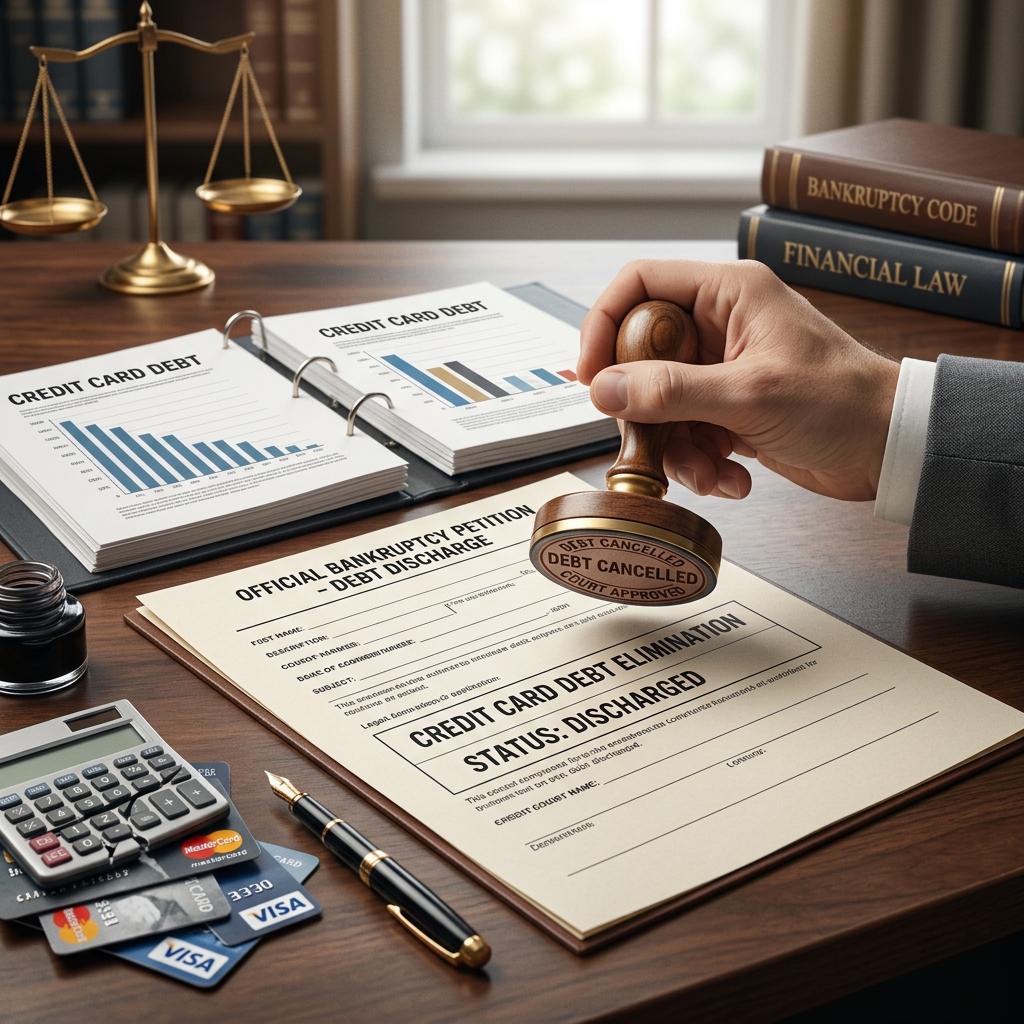
Mounting
credit card balances
are one of the most common reasons people explorebankruptcy
as a form of relief. In many cases, bankruptcy can erase or reduce credit card debt, but the outcome depends on the type of bankruptcy you file, your recent card activity, and the broader financial picture presented to the court.[10]This article explains how bankruptcy treats credit card obligations, when those debts can be discharged, important exceptions (especially involving fraud or recent luxury purchases), and what filing means for your credit, future borrowing, and daily finances. It is for educational purposes only and is not legal advice; speaking with a qualified bankruptcy attorney is the best way to understand your specific situation.
Understanding How Bankruptcy Works With Credit Card Debt
Bankruptcy is a court-supervised legal process that helps people who cannot realistically repay their debts gain a
fresh financial start
.[10] Credit card balances are usually treated asunsecured, nonpriority debt
, meaning they are not backed by collateral (like a house or car) and typically sit behind obligations such as taxes or child support in payment priority.When you file, your overall financial situation is presented to a bankruptcy court and a trustee. Depending on the chapter used, your credit card debt may be:
- Fully discharged, so you are no longer legally responsible for paying it.[10]
- Partially repaid through a court-approved plan, with any remaining eligible balance discharged at the end.
- Excluded from discharge if it involves fraud, certain luxury spending, or cash advances shortly before filing.[10]
Most consumers file under
Chapter 7
orChapter 13
, and each handles credit card debt differently.[10]Chapter 7 vs. Chapter 13: Two Very Different Paths
Choosing between Chapter 7 and Chapter 13 is one of the most important decisions in any bankruptcy case. The chapter you use will determine how quickly credit card debt can be eliminated and whether you must repay part of what you owe.
| Feature | Chapter 7 (Liquidation) | Chapter 13 (Repayment Plan) |
|---|---|---|
| Primary purpose | Erase eligible unsecured debts quickly.[10] | Restructure debts into an affordable 3–5 year plan. |
| Treatment of credit card debt | Typically discharged entirely if no fraud or recent luxury spending.[10] | Included in plan payments; remaining eligible balance discharged at the end. |
| Need to pass a means test? | Yes, based on income and allowed expenses.[10] | No means test, but you must show ability to fund the plan. |
| Time to discharge | Generally a few months after filing.[10] | After completing 3–5 years of plan payments. |
| Risk to property | Non-exempt assets may be sold to pay creditors.[10] | You usually keep property while repaying over time, subject to plan terms. |
Chapter 7: Fast Discharge of Eligible Credit Card Debt
Chapter 7 is often called
liquidation bankruptcy
because a trustee may sell non-exempt assets to pay creditors, and most remaining unsecured debt—often including credit card balances—is discharged.[10]Core features of Chapter 7 include:
- Means test requirement: To qualify, your income and expenses must meet specific criteria that show you cannot reasonably repay your debts.[10]
- Short timeline: Many Chapter 7 cases are completed in a matter of months, and eligible credit card debts are discharged at the end.[10]
- Fresh start: A discharge order releases you from personal liability on discharged debts and bars creditors from collecting them.[10]
However, Chapter 7 does not automatically erase every card balance. Debts involving
fraud, luxury purchases shortly before filing, or large cash advances
can be challenged as nondischargeable.[10]Chapter 13: Structured Repayment Before Discharge
Chapter 13 is a
reorganization
bankruptcy. Rather than immediately wiping out credit card debt, you propose a repayment plan that typically lasts three to five years.Key aspects of Chapter 13 include:
- Court-approved budget and plan: You make regular payments to a trustee, who distributes funds to creditors under the plan.
- Inclusion of credit card debt: Card balances are generally treated as nonpriority unsecured claims and may receive only partial payment.
- End-of-plan discharge: After successfully completing all payments, remaining eligible unsecured debt—often including the unpaid portion of credit cards—is discharged.
Chapter 13 can be useful if you are behind on a mortgage or car loan and want time to catch up while dealing with credit card debt in the same proceeding.
The Automatic Stay: Immediate Relief From Collection Pressure
One of the most powerful features of bankruptcy is the
automatic stay
, a court order that takes effect as soon as you file your petition. The stay generally stops:- Collection calls and letters from credit card companies.
- Ongoing lawsuits or wage garnishments related to card debt.
- Foreclosures, repossessions, and certain other enforcement actions.
The automatic stay remains in place until your case is dismissed or completed, or until the court modifies it. For many people, this immediate pause in collection activity is one of the most tangible benefits of filing for bankruptcy.
When Credit Card Debt May Not Be Discharged
Although most credit card debt can be discharged in Chapter 7 or Chapter 13, the law includes important
consumer protection and anti-fraud provisions
.[10] Certain behaviors before filing can cause some or all of your card balances to be treated aspresumptively nondischargeable
unless you overcome that presumption or the creditor does not challenge it.Luxury Purchases Shortly Before Filing
If you run up credit card balances on
luxury goods or services
shortly before filing for bankruptcy, the law presumes those debts were incurred without an honest intent to repay. Under federal bankruptcy rules, buying more than a specified dollar amount of luxury goods within roughly 90 days of filing can cause that portion of the debt to be treated as nondischargeable, unless the presumption is rebutted.Luxury spending might include high-end vacations, jewelry, or other nonessential items. Everyday necessities like food, utilities, or basic clothing generally are not considered luxury purchases.
Recent Cash Advances
Similarly,
large cash advances
taken from a credit card in the 70 days before filing may be presumed nondischargeable. The rationale is that taking substantial cash right before seeking a discharge can resemble borrowing money with no intent to repay.If a creditor believes your recent credit card activity was fraudulent or improper, it can file an adversary proceeding asking the court to exclude that portion of the debt from your discharge.[10]
Fraud, Misrepresentation, and False Pretenses
Beyond specific timing rules for luxury purchases and cash advances, more general
fraud-based grounds
can prevent discharge of certain credit card debts. If the card issuer can show that you obtained credit or made charges through misrepresentation, false pretenses, or other fraudulent conduct, the court can declare those debts nondischargeable.[10]Examples could include:
- Using a card after knowingly giving false income information to get approved.
- Charging expenses while intentionally concealing that you were about to file for bankruptcy.
- Making charges with no realistic ability or intention to repay.
Fraud determinations are fact-specific and can involve litigation. Honest mistakes, financial hardship, and job loss are different from deliberate deception, and courts distinguish between them.[10]
Debts Bankruptcy Generally Does Not Erase
Even if bankruptcy eliminates your credit card balances, other obligations may remain. Federal law restricts discharge of several categories of debt that are considered higher priority or socially important.[10]
- Child support and alimony: Domestic support obligations are typically nondischargeable.[10]
- Most recent tax debts: Certain income tax claims and other tax-related obligations generally survive bankruptcy.[10]
- Student loans: These are only dischargeable in limited circumstances, usually requiring a separate court finding of undue hardship.[10]
- Debts arising from certain wrongful conduct: For example, debts from willful and malicious injury or fraud can be excluded from discharge if properly challenged.[10]
Because these obligations often continue after filing, it is important to consider how eliminating credit card debt may (or may not) improve your overall budget.
Long-Term Impact on Your Credit and Future Borrowing
While bankruptcy can provide immediate relief, it also carries
long-term credit consequences
. Bankruptcy information can remain on your credit report for up to10 years
, and other negative entries typically remain for up to seven years.Key implications include:
- Lower credit scores in the short term: A bankruptcy filing generally reduces your score, especially early on.
- Higher cost of borrowing: You may face higher interest rates or stricter terms when seeking loans or new credit lines.
- Limited immediate access to unsecured cards: Many issuers close existing accounts and may hesitate to approve new, unsecured cards soon after a discharge.
That said, rebuilding credit is possible. After discharge, some consumers open
secured credit cards
, become authorized users on another person’s account, and focus on paying remaining debts on time and keeping credit utilization low. Over time, consistent positive behavior can gradually improve your credit profile.Steps to Take Before Filing for Bankruptcy Over Credit Card Debt
Filing for bankruptcy is a major decision. Before using it to deal with credit card balances, consider these steps:
- Assess total debt and income: List all obligations (including cards, loans, and support payments) alongside your monthly income and essential expenses.
- Attempt negotiation: You can contact card issuers yourself to request lower interest rates or structured repayment plans; this is often free and may reduce payment pressure.
- Explore non-bankruptcy options: These may include debt management plans through reputable nonprofit counseling agencies, careful budgeting, or consolidation loans, when appropriate.
- Complete required counseling: Federal law requires credit counseling from an approved organization within six months before filing, as well as a post-filing debtor education course.
- Consult a qualified attorney: A lawyer can help you decide between Chapter 7 and Chapter 13, evaluate risks related to recent card use, and explain local rules and exemptions.[10]
FAQs: Bankruptcy and Credit Card Debt
Does bankruptcy always wipe out credit card debt?
Usually, yes. Credit card balances are typically unsecured, nonpriority debts that are eligible for discharge in Chapter 7 and often significantly reduced or discharged at the end of a Chapter 13 plan.[10] However, recent luxury purchases, cash advances, and debts involving fraud can be excluded.
Is there a minimum amount of credit card debt required to file?
There is no legal minimum debt threshold to file for bankruptcy. The more important question is whether your overall obligations are realistically repayable given your income and necessary living expenses.
What happens to my credit cards after I file?
Most credit card accounts are closed when you file, even if you intended to keep some cards. Issuers often view bankruptcy as a significant risk and shut down accounts, regardless of whether a particular card’s balance is reaffirmed or repaid.
Can I keep using a credit card while in Chapter 13?
Typically, you will not keep actively using existing cards once you file. Any new credit during a Chapter 13 case generally requires trustee or court approval, and many people focus on cash-based budgeting during the plan period.
How long will bankruptcy stay on my credit report?
Bankruptcy information can remain on your credit report for up to 10 years, while other accurate negative information can usually be reported for up to seven years. Over time, maintaining timely payments and low utilization on any new credit can help improve your score despite the bankruptcy notation.
Should I talk to my credit card company before filing?
Speaking with card issuers may uncover alternatives, such as lower interest rates or hardship plans, that reduce payment pressure without bankruptcy. Exploring these options first is often wise, especially if your card debt is manageable with budget changes.
References
- Chapter 7 – Bankruptcy Basics — United States Courts. 2022-06-01. https://www.uscourts.gov/court-programs/bankruptcy/bankruptcy-basics/chapter-7-bankruptcy-basics
- What Is Chapter 7 Bankruptcy? A Guide to Liquidation and Debt Relief — NerdWallet. 2023-05-09. https://www.nerdwallet.com/finance/learn/chapter-7-bankruptcy
- Credit Card Debt Under Bankruptcy Law — Justia. 2023-01-12. https://www.justia.com/bankruptcy/collections-credit/credit-card-debt/
- How To Get Out of Debt — Federal Trade Commission (FTC). 2023-02-01. https://consumer.ftc.gov/articles/how-get-out-debt
- Filing Bankruptcy for Credit Card Debt — American Bankruptcy Institute. 2022-11-10. https://www.abi.org/feed-item/filing-bankruptcy-for-credit-card-debt
- How to Get Credit Cards After Bankruptcy — Discover. 2022-09-15. https://www.discover.com/credit-cards/card-smarts/how-to-get-a-credit-card-after-bankruptcy/
- Can You File Bankruptcy on Credit Cards? — Best Lawyers. 2023-03-21. https://www.bestlawyers.com/article/can-you-file-bankruptcy-on-credit-cards/7187
Similar Articles








Read full bio of Sneha Tete




