
Can A Minor Sign A Contract: What Adults Should Know In 2025
A practical guide to when a minor’s signature counts, when it can be canceled, and which exceptions matter most.
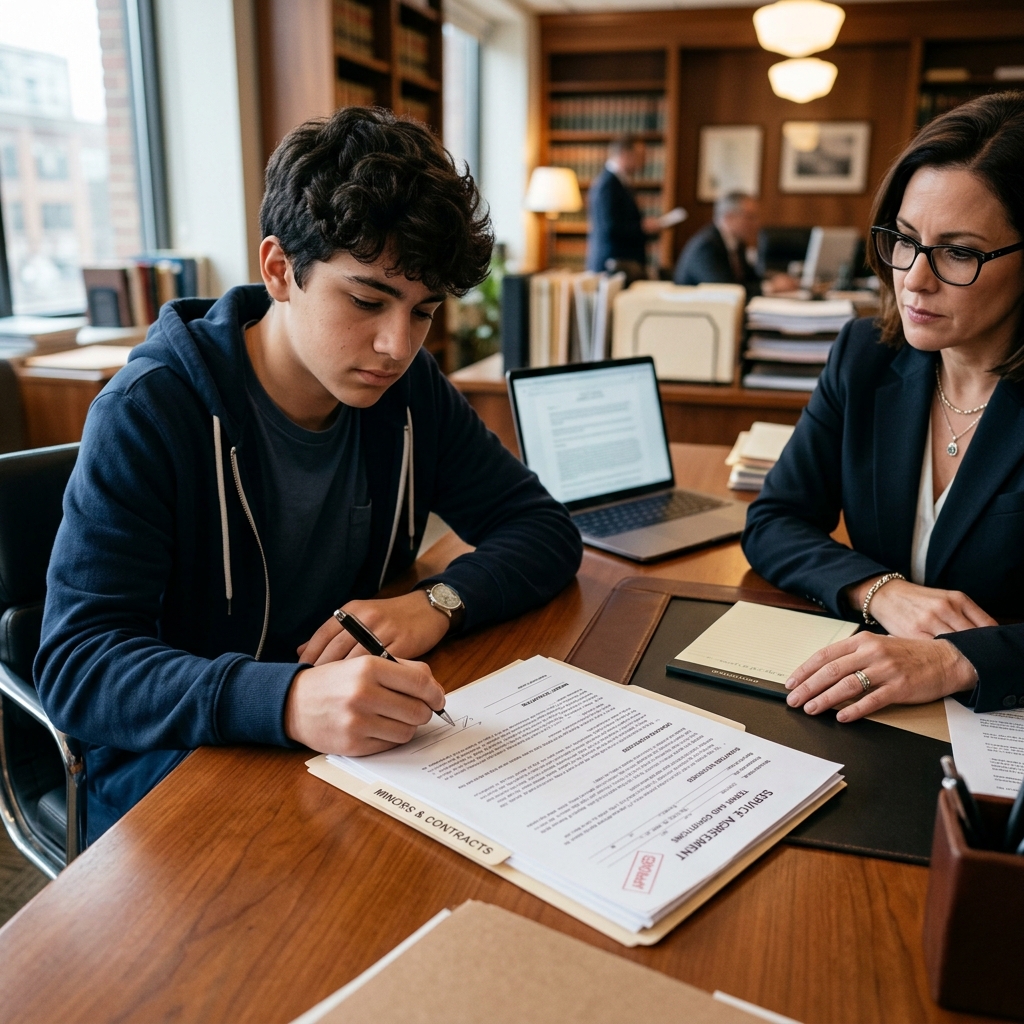
In many situations, a minor can sign a contract, but the signature does not always create the same legal effect as it would for an adult. Under U.S. contract law, agreements made by minors are usually voidable, which means the minor may choose to cancel the deal instead of being fully bound by it. The exact rules can vary by state, and several important exceptions can make certain contracts enforceable even when a minor signs them.
What the law means by “minor”
A minor is generally someone who has not yet reached the age of majority, which is usually 18 in most states. Until that age, a person is often treated as lacking full contractual capacity. That does not mean a minor can never enter a valid agreement. It means the law gives special protection because minors are considered less able to understand long-term financial or legal consequences.
This protection is designed to prevent unfair pressure and one-sided deals. At the same time, the law recognizes that minors still need to make many everyday agreements, such as part-time work arrangements, school-related commitments, or purchases of ordinary goods. As a result, the law does not automatically erase every contract a minor signs.
Voidable is not the same as void
One of the most important ideas in minor contract law is the difference between a contract that is void and one that is voidable. A void contract has no legal effect from the start. A voidable contract, by contrast, is valid unless and until the protected party chooses to cancel it.
For minors, most contracts fall into the voidable category. That means the adult party may be bound immediately, but the minor usually has the power to disaffirm the contract. In practice, this gives the minor a legal exit that adults do not have. The minor may use that right during minority and, in many jurisdictions, for a reasonable time after reaching adulthood.
Why the law gives minors extra protection
The main policy behind this rule is to prevent exploitation. Adults are usually assumed to understand the consequences of contract terms, while minors may not have the same experience or judgment. The law also tries to reduce the risk that a minor will be locked into a bad deal for years because of a signature made too early.
That protection does not mean minors are free to act without responsibility in every situation. Instead, the legal system balances two goals: shielding minors from unfair bargains and preserving the usefulness of contracts in ordinary life. That is why the law allows many contracts involving minors, but makes them easier to undo.
When a minor can still be bound
Some contracts are enforceable against minors because public policy favors allowing the transaction to stand. The most common category is contracts for necessaries, which are items or services essential to a minor’s well-being. Courts commonly treat necessities as including food, clothing, shelter, medical care, and sometimes education or transportation, depending on the circumstances.
Whether something counts as a necessary depends on facts such as the minor’s existing support, living situation, and available resources. For example, a basic apartment may be a necessary for a minor living independently, while a luxury vehicle usually would not be. The law looks at real need, not convenience or preference.
Other common exceptions
Beyond necessities, some agreements may be enforceable because of specific statutes, public programs, or special legal rules in a particular state. Examples can include certain educational obligations, court-approved arrangements, military-related commitments, or contracts where the minor has been authorized to act in a limited legal capacity.
State law matters a great deal here. One state may treat a particular agreement as voidable, while another may enforce it under a special statute. In entertainment, athletics, and business settings, for example, some jurisdictions provide tailored rules for work permits, court approval, or trust-account arrangements. Those exceptions are narrow and should never be assumed without checking local law.
How disaffirmance works
If a contract is voidable, the minor may usually disaffirm it. Disaffirmance is the legal act of canceling the contract. It can happen expressly, such as by giving notice, or by conduct that clearly shows an intent not to be bound. In some cases, a minor can also raise minority as a defense if sued for breach of contract.
Once a minor disaffirms, the goal is usually to restore the parties to their pre-contract positions as much as possible. That may mean the minor returns the property received if it is still available and within control. However, the exact restitution rules vary. Some courts require the minor to return what remains, while others place more of the loss on the adult party as part of the protection given to minors.
Ratification after reaching adulthood
A contract that was voidable during minority can become binding if the person later ratifies it after reaching the age of majority. Ratification can be express, such as by signing a new agreement or stating an intent to be bound, or it can sometimes be implied by conduct, such as continuing to make payments or using the benefits of the contract without objection for too long.
Because ratification cuts off the right to cancel, timing is important. A former minor who wants to disaffirm should act promptly after turning 18, or after reaching whatever age of majority applies in the relevant state. Waiting too long may be treated as ratification or waiver of the right to avoid the deal.
Can the minor keep the benefits and cancel the deal?
Usually, no. A minor who disaffirms generally cannot choose only the favorable parts of a contract and reject the rest. The usual rule is that the contract must be accepted or rejected as a whole. This prevents selective use of a bargain where the minor keeps the upside but eliminates the obligations.
That said, courts often try to be fair about what must be returned. If the item has depreciated, been used up, or cannot be returned in perfect condition, different states handle that problem differently. Some places focus on the minor’s right to protection, while others try to prevent unjust enrichment. The result often depends on local law and the type of property involved.
Practical examples of contracts involving minors
Minors sign contracts in everyday life more often than many people realize. Common examples include job applications, entertainment work, membership agreements, mobile phone plans, car purchases, online subscriptions, and rental arrangements. The legal effect of each one depends on the subject matter, the state law, and whether any exceptions apply.
For instance, a summer job agreement may be practical and generally enforceable in many settings, while a contract for a car purchase may be voidable if it is not tied to a necessity or special statutory exception. A service contract for tutoring may be treated differently from a luxury purchase or a long-term financial product. The label on the contract matters less than the underlying legal category.
What adults should check before contracting with a minor
Businesses and individuals should be cautious before relying on a minor’s signature. If the agreement is important, the adult party should verify age, consider whether a parent or guardian must sign, and review whether the contract falls into a category that may be enforceable despite the person’s age. In some cases, it may also be wise to structure the transaction with court approval or another legally recognized safeguard.
Some practical steps can reduce risk:
- Confirm the signer’s age before finalizing the deal.
- Check whether state law creates a special exception for the transaction.
- Use a parent, guardian, or authorized representative when appropriate.
- Keep written records showing any verification or authorization.
- Avoid depending on a minor’s promise alone for major financial commitments.
How state law can change the result
Although the core rule is widely recognized, state law can affect nearly every detail of the analysis. States may differ on the age of majority, the time allowed for disaffirmance after adulthood, the treatment of necessaries, and whether misrepresentation of age limits the minor’s right to cancel. Some states also have specific rules for entertainment contracts, education loans, or business activity.
Because of those differences, a contract that is manageable in one state may be risky in another. The safest approach is to treat minor contracts as jurisdiction-specific. A form that works for adults may need extra language, parental signatures, or compliance steps when a minor is involved.
Common questions about minor contracts
Can a minor legally sign a contract?
Yes. A minor can sign many types of contracts, but the agreement is often voidable rather than fully binding. That means the minor may later cancel it unless an exception applies.
Does a parent automatically cancel a minor’s contract?
Not always. In many situations, the minor holds the right to disaffirm. A parent or guardian may have authority in some cases, but that depends on the contract, the child’s status, and state law.
What happens if the contract is for food or housing?
Contracts for necessities are often enforceable. If the item or service is essential to the minor’s support or welfare, the minor may not be able to simply walk away from the deal.
Can a minor lie about their age and still cancel?
Some states limit the right to disaffirm if the minor misrepresented their age, especially when the other party reasonably relied on that statement. Other states are more protective of the minor. The answer depends on local law.
What should happen when the minor turns 18?
The former minor should decide quickly whether to ratify or disaffirm the agreement. Continued performance or silence for too long can weaken the right to cancel.
Key takeaways for businesses and families
For families, the most important point is that a minor’s signature does not always create a permanent obligation. For businesses, the main takeaway is that signing with a minor carries real risk unless the contract falls within a recognized exception or is backed by the right adult authorization. The safest agreements are the ones that account for age before the signature is collected.
When a minor is involved, the contract should be reviewed with extra care. The question is not just whether the paper is signed, but whether the law will treat the signature as binding, cancellable, or unenforceable from the start. That distinction can change the outcome of a dispute completely.
References
- Minors in Contracts: Legal Rights and Key Restrictions — Attorneys Media. 2025-01-01. https://attorneys.media/minors-in-contracts-legal-rights-and-key-restrictions/
- 8.2 Minors (or “Infants”) – Business Law I – Interactive — RVCC Pressbooks. 2024-01-01. https://rvcc.pressbooks.pub/businesslaw131interactive/chapter/8-2-minors-or-infants/
- Minors and Contracts — Washington Courts. 2024-01-01. https://www.courts.wa.gov/content/lessonPlans/MinorsAndContracts.htm
- Can a Minor Enter Into a Legal Contract in California? — Schorr Law. 2024-01-01. https://schorr-law.com/can-a-minor-enter-into-a-contract/
- Understanding Minors and Contract Law: A Legal Guide — UpCounsel. 2024-01-01. https://www.upcounsel.com/contracts-signed-by-minors
Similar Articles








Read full bio of Sneha Tete


