
DUI And Immigration: How A DUI Can Affect Non-Citizens In 2025
Understand when a drunk driving charge can threaten your immigration status, visa, green card, or future entry to the United States.
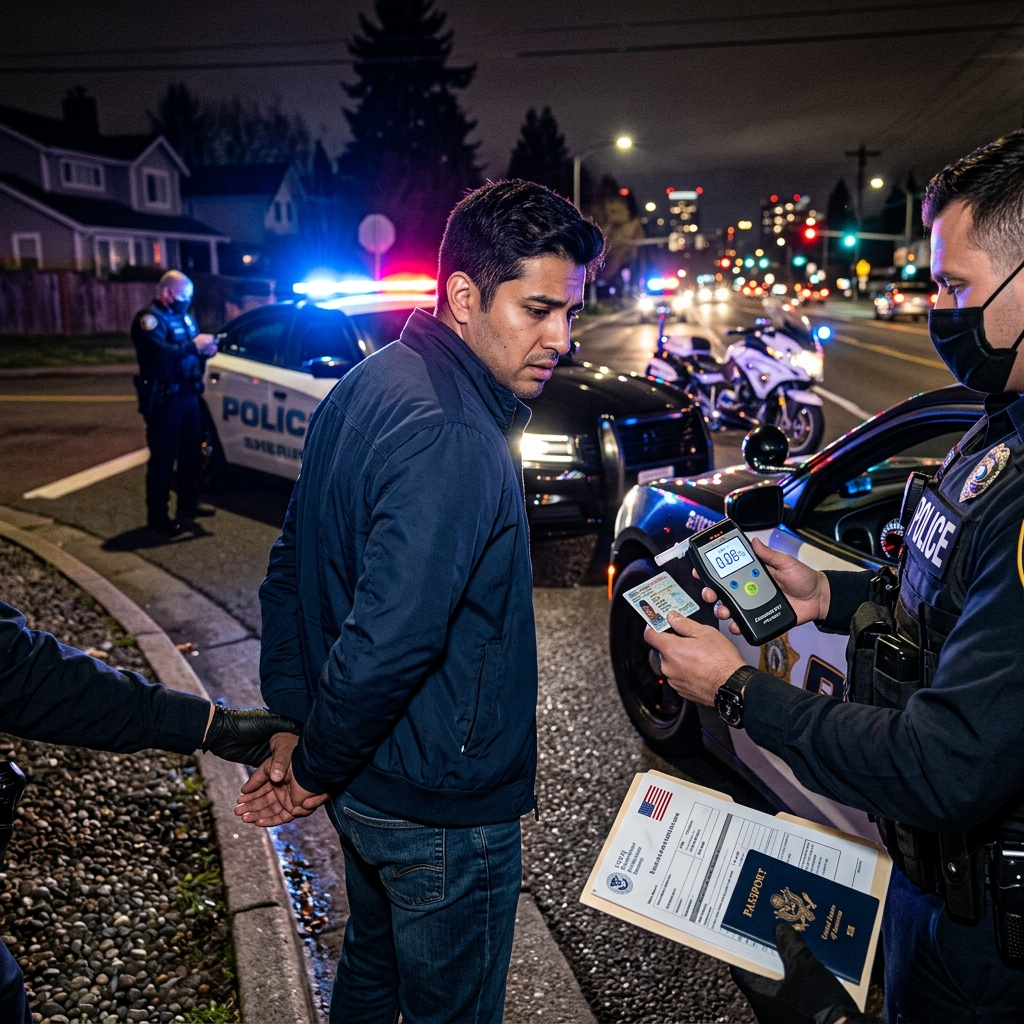
Driving under the influence (DUI) or driving while intoxicated (DWI) is a serious criminal offense in every U.S. state. For immigrants and other non‑citizens, it carries an additional layer of risk: immigration consequences that may include loss of status, denial of future immigration benefits, and, in some circumstances, deportation. Understanding where those lines are drawn is essential if you live in the United States without citizenship and face, or worry about facing, a DUI charge.
This guide explains how DUI and DWI interact with U.S. immigration law, when a drunk driving case can become a deportation problem, and what practical steps non‑citizens can take to protect their rights.
Why DUI Matters So Much for Non‑Citizens
For U.S. citizens, a DUI typically leads to criminal penalties such as fines, probation, license suspension, or even jail time. Non‑citizens face all of those consequences plus the possibility that immigration authorities will review their case and decide that they should be removed from the country or denied future entry.
- Criminal law determines whether you are guilty of DUI and what punishment you receive in court.
- Immigration law determines whether that DUI makes you deportable, inadmissible, or ineligible for certain benefits like a green card or citizenship.
These are separate systems. A state court judge does not decide your deportation case, and a DUI conviction that seems minor under state law can still be taken seriously in immigration court.
Is a Simple DUI Automatically a Deportable Offense?
Under current federal law and long‑standing case decisions, a single, uncomplicated DUI involving alcohol only, with no injuries, no minor children in the car, and no other serious charges, usually does not by itself qualify as a deportable offense. That rule comes from how immigration statutes define grounds of deportability, particularly aggravated felonies and crimes involving moral turpitude.
In practice:
- A first‑time DUI with standard penalties is generally not treated as an aggravated felony.
- Ordinary DUI is usually not classified as a crime involving moral turpitude when it lacks reckless, harmful, or extreme conduct.
However, immigration law is complex, and relatively small changes in the facts of a case can push an otherwise standard DUI into a category that triggers deportation proceedings.
Deportation Risk by Immigration Status
Whether a DUI can lead to removal also depends heavily on the type of immigration status you hold. The same conviction can have very different consequences for an undocumented person, a temporary worker, or a long‑time permanent resident.
| Status Type | Typical DUI Impact |
|---|---|
| Undocumented | Arrest may alert immigration authorities; removal may be pursued regardless of DUI outcome. |
| Temporary visa holder (student, worker, visitor) | Visa can be revoked; future entries can be denied; deportation possible in serious or repeat cases. |
| Permanent resident (green card) | A single simple DUI often not deportable, but aggravated or multiple offenses can lead to removal. |
| Asylum seeker or other humanitarian status | DUI may affect discretionary relief and future benefits; serious cases can jeopardize protection. |
Key Scenarios Where a DUI Can Trigger Deportation
Even though a basic DUI is usually not enough by itself, there are several common scenarios where a DUI becomes dangerous from an immigration standpoint.
1. Aggravated or Felony DUI
States can treat certain drunk driving incidents as more serious crimes, sometimes labeling them as felony or aggravated DUI. Immigration law focuses on the nature of the offense, the potential or actual harm, and the sentence imposed.
Aggravating elements may include:
- Causing serious bodily injury or death to another person
- Driving with a very high blood alcohol concentration (BAC)
- Driving while your license is suspended or revoked
- Having a minor child in the vehicle
When these elements are present, the DUI may be considered an aggravated felony or a crime involving moral turpitude under federal immigration law, which can be grounds for deportation.
2. DUI Involving Drugs or Controlled Substances
Immigration law treats controlled substance violations much more harshly than many other types of crimes. If your DUI involves illegal drugs or misuse of prescribed controlled substances, it may be classified as a controlled substance offense under federal law.
Consequences can include:
- Being charged with a deportable controlled substance violation
- Permanent inadmissibility for many future immigration applications
- Loss of eligibility for several forms of relief from removal
Because of this, a drug‑related DUI is far more dangerous to your immigration status than an alcohol‑only case.
3. Multiple or Repeat DUI Convictions
Even if each individual DUI is relatively minor, a pattern of repeated drunk driving can signal to immigration courts that someone presents an ongoing risk to public safety. In some cases, repeat offenses may be reclassified as crimes involving moral turpitude or be charged as aggravated felonies depending on state law and the facts.
Repeated DUI convictions may lead to:
- Arguments that you lack the “good moral character” required for immigration benefits
- Greater scrutiny during green card renewals or naturalization
- Increased likelihood that immigration authorities will initiate removal proceedings
4. DUI Combined With Other Criminal Charges
Often, a DUI arrest brings additional charges, such as resisting arrest, possession of illegal drugs, reckless driving, or assault. While the drunk driving count might not be deportable on its own, these companion offenses can create deportation grounds.
Examples include:
- Possession of a controlled substance at the time of the DUI stop
- Reckless behavior that leads to serious injury
- Endangering a child who was in the vehicle
The total picture of your criminal case is what immigration judges consider, not just the label “DUI” on one count of the complaint.
5. DUI Arrest That Exposes Undocumented Status
For people living in the United States without lawful status, the biggest danger is often not the criminal conviction itself but the fact that an arrest brings them into contact with immigration authorities. Once Immigration and Customs Enforcement (ICE) learns someone is undocumented, the agency can start removal proceedings regardless of whether the DUI case ends in conviction, plea, dismissal, or acquittal.
In other words, the DUI may simply be the event that reveals a person’s presence to immigration enforcement systems and leads to deportation on that basis alone.
Impact of DUI on Visas, Green Cards, and Citizenship
Beyond deportation, a DUI can affect nearly every type of immigration benefit. Because many benefits are discretionary, immigration officers have leeway to deny or delay applications if they conclude that an applicant poses a public safety risk or lacks good moral character.
DUI and Non‑Immigrant Visas
Temporary visa holders (students, tourists, temporary workers, business visitors) often face strict scrutiny when arrested for drunk driving.
- Your current visa can be revoked, sometimes even if you are not ultimately convicted.
- Future visa applications may be denied due to criminal history or perceived danger.
- U.S. consulates can require medical evaluations to determine whether you have a substance‑related disorder.
DUI and Permanent Residency
For lawful permanent residents, a single simple DUI rarely leads directly to loss of a green card. However, immigration authorities review your criminal record whenever you apply to renew your card, request certain travel documents, or seek other benefits.
Risks to permanent residents include:
- Removal proceedings based on aggravated or repeat DUI offenses
- Denial of certain discretionary waivers or relief due to lack of good moral character
- Problems returning to the U.S. after travel if an outstanding warrant or conviction surfaces at inspection
DUI and Naturalization (Citizenship)
To become a U.S. citizen, an applicant must show good moral character for a specific statutory period, usually five years. Multiple DUIs, or a single serious DUI with harmful consequences, can lead officers to conclude that you do not meet this standard.
Potential impacts include:
- Delayed or denied naturalization
- Requests for more evidence about rehabilitation, treatment, or behavioral change
- Referral to removal proceedings in extreme or aggravated cases
Emerging Legislative Changes: H.R. 875 and Similar Proposals
In recent years, Congress has considered and, in some cases, passed legislation that would expand the immigration consequences of drunk driving. One such proposal is H.R. 875, often referred to as the “Protect Our Communities From DUIs Act.”
Key features of this bill, if enacted in full, would include:
- Making DUI and DWI deportable and inadmissible offenses across the board
- Allowing the Department of Homeland Security to seek removal for any non‑citizen with a DUI or DWI conviction
- Applying to undocumented immigrants, visa holders, and permanent residents alike
As of recent updates, the bill has passed the House of Representatives and awaits further legislative action before it can become law. This demonstrates a trend toward stricter treatment of DUI in immigration policy and underscores the need for up‑to‑date legal advice; the legal landscape may change quickly.
Practical Steps If You Are a Non‑Citizen Facing a DUI
If you are arrested or charged with DUI and you do not hold U.S. citizenship, you should treat the situation as both a criminal and an immigration emergency.
- Contact a criminal defense attorney immediately. DUI law is highly technical, and early legal help can affect the outcome.
- Consult an immigration lawyer. Look for someone experienced in the interaction between criminal and immigration law (often called “crimmigration”).
- Do not assume a plea deal is safe. A plea that seems favorable in criminal court may ruin your immigration options.
- Gather evidence of rehabilitation. Completing treatment programs, community service, and safe‑driving courses may help demonstrate behavior change.
- Avoid additional arrests or violations. Repeat incidents significantly worsen immigration consequences.
Because immigration law is federal and DUI law is largely state‑based, competent advice requires someone who understands both systems and how they intersect in your specific jurisdiction.
Frequently Asked Questions
Does one alcohol‑related DUI automatically mean I will be deported?
Generally, a single DUI involving alcohol only, with no injuries, no minor passengers, and no other serious charges, does not automatically create a deportation ground under current federal law. However, it may still affect visa decisions, green card applications, or citizenship eligibility, so you should treat it seriously.
Can an undocumented immigrant be deported because of a DUI?
Yes. The DUI itself may not be the legal basis, but the arrest often brings an undocumented person to the attention of immigration authorities, who can then pursue removal because the person lacks lawful status.
What if my DUI involves drugs instead of alcohol?
DUI involving illegal drugs or controlled substances is far more likely to trigger immigration problems. Controlled substance convictions are specific grounds of deportability and inadmissibility under federal statutes, so you should seek immigration counsel immediately if your case involves drugs.
Can a DUI affect my future green card or citizenship application?
Yes. Immigration officers review your criminal history when you apply for permanent residence or naturalization and assess your moral character and respect for the law. Multiple or serious DUI convictions can lead to denial or delay of these applications.
Should I tell my immigration lawyer about prior DUIs if they were “minor”?
Absolutely. Your immigration attorney needs a complete and accurate picture of your criminal record to advise you safely. Even older or seemingly minor DUI convictions can matter for certain applications or in light of new legislation.
References
- Immigration Consequences of Criminal Activity — U.S. Citizenship and Immigration Services (USCIS). Last updated 2022-03-10. https://www.uscis.gov/policy-manual/volume-12-part-f-chapter-5
- Can a DUI Affect My Immigration Status? — Super Lawyers. 2023-06-01. https://www.superlawyers.com/resources/dui-dwi/dui-life-impacts-and-other-areas/can-a-dui-affect-my-immigration-status/
- Can I Be Deported If Convicted for a DUI in Florida? — Musca Law. 2023-10-15. https://www.muscalaw.com/blog/can-i-be-deported-if-convicted-dui-florida
- DUI & Immigration Status — Portner & Shure. 2023-09-20. https://www.portnerandshure.com/criminal-defense/dui-dwi/dui-immigration-status/
- Can You Be Deported for a DUI or DWI Conviction in Texas? — Harber Law. 2024-01-05. https://harberlaw.com/dwi-deportation-texas/
- House Passes Bill Mandating Immediate Deportation for DUI Offenses — Detzky & Associates. 2025-06-27. https://www.detzkylaw.com/house-passes-bill-mandating-immediate-deportation-for-dui-offenses/
- DUI to Deportation: What H.R. 875 Could Mean for Immigrant Communities — USC Dornsife Equity Research Institute. 2025-09-05. https://dornsife.usc.edu/eri/2025/09/05/dui-to-deportation-hr-875/
Similar Articles








Read full bio of Sneha Tete




